Watching your children step into financial independence is one of the most rewarding and complex milestones families experience. As young adults begin earning income, managing expenses, and making major life decisions, the habits and financial knowledge they develop can shape their long-term success.
The consumer is still spending, but with a higher level of caution. Inflation remains a persistent pressure point, particularly for lower- and middle-income households. This has caused the U.S. personal saving rate to fall to 3.6% as of March 2026, leaving significantly less breathing room for discretionary purchases.
Veteran strategist Jeff Currie said the world is in the early stages of a commodity supercycle that may last another decade or more as the artificial intelligence buildout collides with chronic underinvestment in energy and materials capacity.
The 30-year rate increased six basis points to 5.18% on Tuesday, a level last seen on the brink of the global financial crisis in 2007, rising alongside US government yields across maturities.
I think inflation is heading higher. That is going to take a rate cut off the table. Warsh is going to start reducing the balance sheet quickly. And will use the balance sheet contraction as a way to deal with inflation rather than actually raising rates.
Rising bond yields curbed traders’ appetite for risky bets early Friday, sending stocks lower following a weeks-long record-setting rally driven by a rush of cash into all things artificial intelligence.
AI is surely the zeitgeist at industry conferences across sectors right now. Emerging technology, increased efficiency, and scalability are all talking points. But so too are headcount reductions, reduced tech-sector free cash flow, and growing worries about a 1990s-like bubble.
Investors are growing increasingly optimistic about Amazon.com Inc.’s position in artificial intelligence, lighting a fire under the stock and sending the company’s market capitalization soaring toward the rarefied $3 trillion level.
That skepticism isn’t contrarianism for its own sake, but rather the recognition that when a thesis achieves consensus, the crowd has usually already priced the easy part of the move, and the hard part is what comes next.
When it comes to investing, it’s the Wild West out there. Our clients are hearing things from less scrupulous members of the financial services industry that appear true on the surface but are really aimed at separating people from their money.
While the ETF leaderboard continues to be dominated by S&P 500 index-based products, there are many other success stories that are likely being missed. There are now more than 5,100 products for advisors, investors, and even analysts to keep up with. Let’s take a look at some funds that have sprouted in just the last few months.
With the proverbial ceasefire negotiation can kicked down the road for the second time in a week, the U.S. and Iran remain in a stalemate over the Strait of Hormuz.
The defining feature of a Ponzi scheme is that it persuades investors to pay for future cash flows that, at least in part, don’t actually exist, while creating the impression that those cash flows imply an attractive return on the price investors pay. If we look carefully at the record valuation extremes in the equity market, and the wildly elevated profit margins that investors appear to view as permanent, we can already see the potential for difficult, even tragic outcomes for investors.
No one likes that heart-drop feeling of missing an important detail. And yet, this happens all too often when it comes to healthcare planning. Healthcare and health insurance are complex topics. Without an expert or the right resources, it can be very difficult for financial advisors to do on their own.
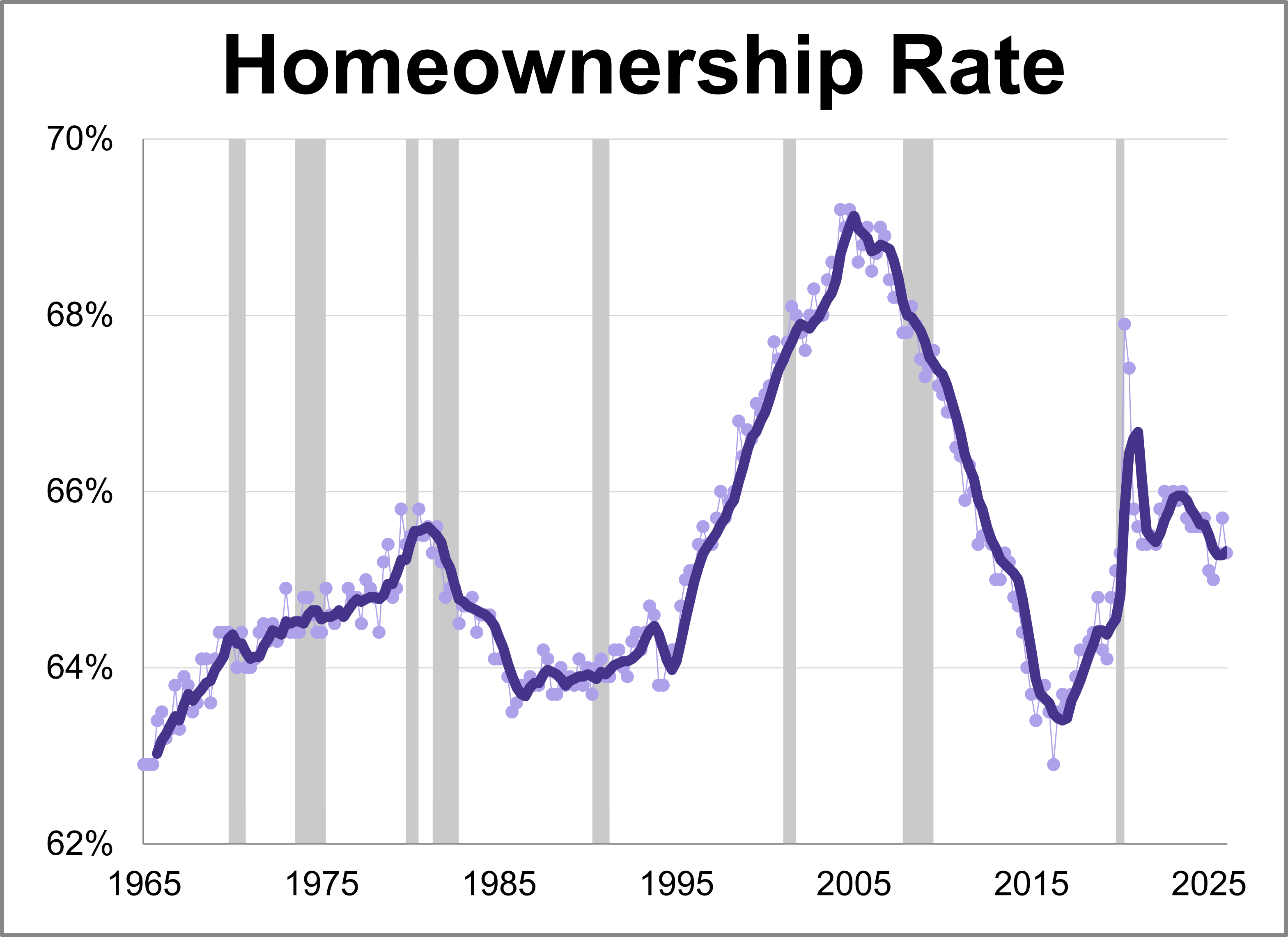
The Census Bureau released its latest quarterly report for Q1 2026 showing the latest homeownership rate is at 65.3%.
You don’t have to agree with Chater and Loewenstein’s “crowding-out” hypothesis or their policy prescriptions to benefit from It’s on You, which will, at a minimum, allow the reader to identify and deconstruct i-frame PR when they come across it.
United Airlines Holdings Inc. Chief Executive Officer Scott Kirby confirmed he approached American Airlines Group Inc. and that talks have ended, laying out the virtues of a merger that he said could have strengthened corporate America and won approval from regulators.
Amid rising college costs and mounting student debt, parents are looking for more ways to lessen the financial burden of higher education. Luckily, 529 college savings plans can help. These unique savings vehicles offer several tax breaks for parents as they save for their children’s future education.
As the spring session for my graduate class, Leadership Lab, comes to a close I am in Chicago working with middle management leaders in the financial advisory space on leading teams. It seems appropriate at this time to offer some reminders about simple things you can do to be a better leader for your team.
Today we're going to look at the underlying data and find that while the world is not ending anytime soon, there are actually good reasons for the disparity in forecasts. So, it’s okay if you’re confused. The stock market just hit an all-time high, energy is volatile and will be a negative on global growth, to say the least.
On Wednesday, April 15, Sprott Asset Management expanded its lineup of exchange-traded funds with the debut of the Sprott Rare Earths Ex-China ETF (REXC). According to Sprott, REXC is the only ETF on the market that is offering a focus on rare earth companies outside China.
The escalating conflict in the Middle East — especially the closure of the Strait of the Hormuz — had an adverse effect on many investment strategies in March, and gold was no exception. The spot gold price closed out March at $4,668.06.
Behavioral finance is the study of how emotions, cognitive biases, and human behavior may influence financial decisions, often in ways that can conflict with logic, data, and long-term goals.
The first quarter of 2026 ended with a downpour of volatility as the CBOE Volatility Index (VIX) rose 69%. Nonetheless, Goldman Sachs (GS) reported first-quarter 2026 earnings that outpaced Wall Street expectations though a thick fog of uncertainty still lingers in Q2.
In a rapidly shifting geopolitical environment, gold continues to demonstrate both its resilience and its complexity as a financial asset.
For financial advisors, tax season should not be the only time to talk to clients about municipal bonds. However, with April 15 arriving this week, the timing is ideal to examine how muni bond ETFs are rapidly becoming a cornerstone of fixed-income allocations in 2026.
In this episode of ETF of the Week, Todd Rosenbluth, and Chuck Jaffe discuss why the Goldman Sachs Municipal Income ETF (GMUB) is a timely addition to portfolios. With tax season in full swing, Rosenbluth explains the unique appeal of municipal bonds, highlighting the historical tendency for these assets to perform well following the April 15th deadline
Ship traffic through the Strait of Hormuz remained blocked Thursday, even as a handful of Chinese vessels lined up to escape, with a very fragile ceasefire between the US and Iran yet to improve traffic flows in the region.
As AI continues to reduce software development costs, investors need to reconsider what makes a competitive moat durable, particularly for technology companies.
Investors are starting to understand that robotics and AI each represent an industry of industries. Not a sector. Not a theme. The foundational technology stack that every other industry increasingly depends on. In Q1, the market decided to stress-test that thesis, and the results tell a more nuanced story than the headline numbers suggest.
Cinthia Murphy, investment strategist at VettaFi, joined Nate Geraci on this week’s ETF Prime to discuss record ETF flows in the first quarter despite challenging market conditions. The industry exceeded $460 billion in total flows, a 50% year-over-year increase from Q1 2025, according to Murphy.
At Exchange 2026, key thought leaders from firms across the country gathered in Las Vegas to share their ideas for navigating today’s macroeconomic uncertainty and the future of ETFs.
March 2026 was a rough month for financial markets. Broad indexes experienced large selloffs, led by international stocks, though many of these still remain up in 2026. The dollar rallied strongly, breaking its year-plus downtrend.
Unilever Plc’s Fernando Fernandez haslucked out by selling the company’s food businesses, including Hellmann’s mayonnaise and Knorr stock cubes, to McCormick & Co. But Fernandez, who’s been chief executive officer for just over a year, shouldn’t squander his good fortune; he needs a clear vision for what comes next.
BlackRock Inc. plans to launch a fund next month focused on large Southeast Asian stocks, according to people familiar with the matter, a move supporting Singapore’s drive to boost liquidity in the local market.
Gold has fallen roughly 21 percent from its all-time high of nearly $5,595 reached in late January to approximately $4,430 as of this writing, and the prevailing narrative in markets is that this correction reflects a genuine shift in the metal’s outlook
Investors have no shortage of metrics to evaluate equities, but not all measures capture the same economic reality. In an environment defined by elevated capital spending and market concentration, earnings-based measures may not fully reflect how efficiently companies convert investment into cash.
For investors, understanding the full anatomy of fixed income is critical, not only to capture attractive risk-adjusted returns in today’s environment but also to appreciate its indispensable role in powering economic growth and financial stability.
Sharp moves in energy prices rarely arrive at a convenient moment for policymakers. When shocks occur, governments are left juggling two competing imperatives: cushioning households from rising costs while preserving fiscal credibility. T
Weight loss pills and treatments have exploded in popularity since GLP-1 drugs hit the market. From Ozempic to Wegovy, those pills have changed the lives of countless people around the world. They’ve also paid dividends to the companies that produce them.
If it weren’t for the financial industry, in my opinion, the United States wouldn’t be suffering the serious social ills that have worsened in the last 40 years — primarily, the hollowing out of the middle class, and all the problems that have accompanied it and resulted from it.
In this episode of ETF of the Week, Chuck Jaffe sits down with Todd Rosenbluth, Head of Research at VettaFi, to discuss why the SPDR Gold MiniShares Trust (GLDM) is a top pick for investors looking for gold exposure.
he shock to global oil supply this month has already been declared the greatest ever by the International Energy Agency, so it’s natural to draw parallels with the great shocks of the 1970s. But numerous other factors determine how serious the impact of any given hit to supply will be on the global economy.
When Walt Disney Co. announced in November 2022 that Bob Iger would return as chief executive officer, the market took it as an auspicious sign. The stock jumped more than 6% on the news, its biggest increase in nearly two years.
Every financial crisis has a moment — usually identified only in retrospect — when an obscure product intended to mitigate risk spreads through what author Rick Bookstaber called “tightly coupled” interconnections to cause widespread damage.
Spending on data center projects in the US has exploded, surpassing offices for the first time at the end of last year. It’s a trend Matt Kunz saw early on when Meta Platforms Inc. built a computing hub outside Columbus, Ohio.
Corporate pension sponsors don’t enjoy unwelcome surprises, particularly those that create financial strain. Many experienced significant financial stress following the Global Financial Crisis and the prolonged decline in interest rates that followed.
Back in 2008, executives at Goldman Sachs Group Inc. were zealots for valuing their assets at exactly the prices where they could be sold. Critics said this fervor for fair value inflamed the financial crisis, while supporters argued it helped investors and lenders at least know where they stood.
In this second installment of our series, Chuck Carnevale, co-founder of FAST Graphs and widely known as Mr. Valuation, takes a deeper dive into the S&P 500 to demonstrate how investors can uncover potential opportunities within an otherwise expensive market.
Adam Hetts and Oliver Blackbourn discuss where they assess the market implications of sustained conflict with Iran, examining energy shocks, inflation pressures, and what prolonged instability could mean for investors.