Despite a confluence of economic shocks in the first quarter, markets have held up remarkably well, but cracks appear to be forming beneath the surface.
Active management is gaining traction as investors navigate a market paradox where high valuations meet geopolitical uncertainty, according to Chris Davis, chairman and portfolio manager at Davis Advisors.
While infrastructure companies are not immune to a potential economic slowdown, they may provide a longer-term investment opportunity amid an uncertain macroeconomic backdrop.
The traditional 60/40 portfolio is undergoing a structural renovation, but the fixed income sleeve is proving difficult to stabilize.
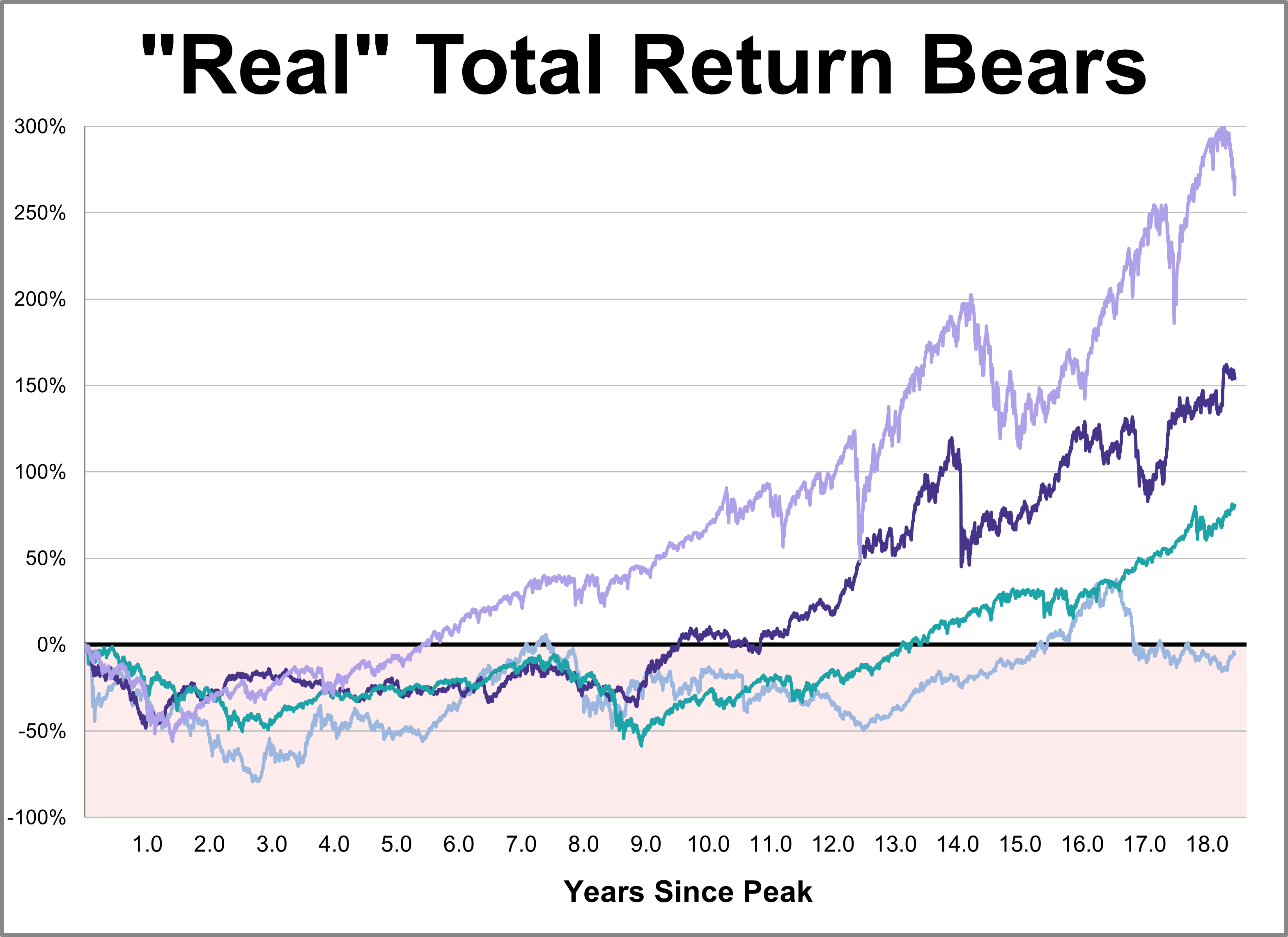
While every market downturn is unique, history offers a crucial lens for understanding recovery. This chart series provides a comprehensive overlay of the Four Bad Bears in U.S. history since the 1929 peak, comparing their recovery paths through the S&P 500's close on March 31, 2026.
As AI continues to reduce software development costs, investors need to reconsider what makes a competitive moat durable, particularly for technology companies.
It was a rough first quarter for the Broadleaf Growth Equity Portfolio and the markets in general as investors tried to identify market leadership buffeted by AI spending concerns, talk of escalating private credit market risks, and ultimately, the emergence of War in Iran.
With oil prices spiking and inflation concerns remaining elevated, many investors are looking for ways to diversify beyond the S&P 500. This week, Chuck Jaffe and Todd Rosenbluth, dive into the FlexShares Morningstar Global Upstream Natural Resources Index Fund (GUNR).
The debate over ETFs versus mutual funds has never been particularly useful for advisors who actually build portfolios. In practice, the question was never which vehicle is better — it was always which vehicle is better for this objective, in this sleeve, for this client. In 2026, that discipline matters more than ever.
Rising demand for critical microelectronics, bolstered by AI capex and defense spending, is driving semiconductor prices higher and posing upside risks to global goods inflation.
Every March people around the country start talking about their brackets. Most are referring to their basketball tournament bracket, hoping to predict the winners and maybe earn some office bragging rights.
Discover why Strait of Hormuz disruptions extend beyond oil, how supply shocks are transmitting into agriculture markets, and what third-order commodity effects may mean for portfolios.
As the ETF industry witnessed expansive growth during the past decade, providers have been engaging in a fee war as competition heats up. Industry giants like Vanguard and BlackRock have slashed expense ratios to near-zero, but that era of fee compression could be reaching an inflection point.
Franklin Templeton is partnering with Ondo Finance to offer tokenized versions of its ETFs that trade around the clock through crypto wallets, bypassing the brokerage accounts and limited trading hours that have defined fund investing for decades.
In today’s era of automation, some situations demand a more active approach. Municipal bond investing is one.
The convergence of ETFs, mutual funds, and tokenization is gaining momentum as asset managers seek to modernize product structures, expand distribution, and future-proof their businesses without abandoning established regulatory frameworks.
ETF fees are falling, along with mutual fund fees, according to a new report looking back over multiple decades.
If you’re not sure what direct indexing means, you’re not alone. Even after the recent growth, direct indexing remains relatively unknown. As our risk review team never fails to remind us, you can’t invest directly in an index. So what exactly is direct indexing?
Nate Geraci explored active ETFs and sector investing on this week’s ETF Prime, featuring Baron Capital’s Matt Camuso and VanEck’s Michael Cohick.
As 2026 unfolds, market leadership is shifting in ways that go beyond the usual sector rotation. While AI-driven growth fueled recent gains, rising capital expenditures, energy demands, and valuation pressure are forcing a reassessment across both public and private markets. At the same time, economic data—particularly beneath headline job growth—suggests a more uneven expansion than many expected.
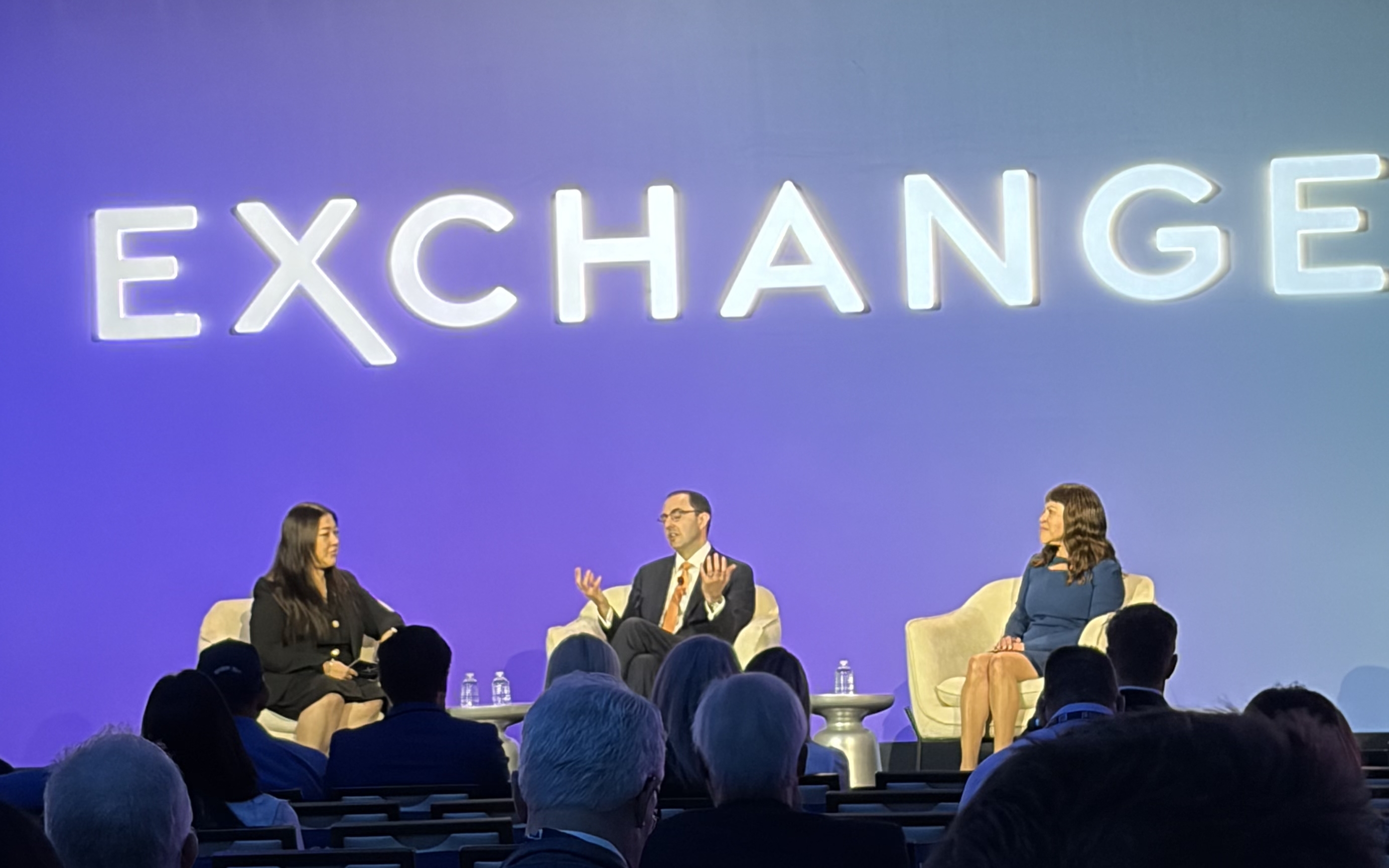
The Securities and Exchange Commission should focus on enabling retail investor access to innovation rather than limiting products through merit-based judgments, according to Commissioner Hester Peirce. In a discussion with Todd Rosenbluth, head of research at TMX VettaFi, during the Exchange conference in Las Vegas, Peirce shared insight from her term at the SEC and examined the agency’s role moving forward.
Thanks to Section 351 of the US tax code, investors can contribute their appreciated assets directly into an ETF structure without realizing gains at the time of transfer. Here, we briefly explain the mechanics, limitations, and potential benefits and risks of a 351 exchange to seed a new ETF with appreciated assets.
Dimensional Fund Advisors is becoming the first asset manager to launch an exchange-traded fund share class of a mutual fund since Vanguard Group’s patent on the model expired nearly three years ago.
In February, market sentiment was shaped by escalating US-Iran geopolitical tensions and sector-specific selloffs driven by concerns about AI’s potential disruption to existing business models.
In practice, many advisors use SMAs alongside ETFs, not instead of them—combining the scalability of ETFs with the customization and tax management SMAs can provide.
History made: Dimensional launches first active ETF share class. Access 40 years of micro-cap expertise in a tax-efficient ETF wrapper.
Muni bonds have been a strong performer so far in 2026, benefitting from an important transition to the ETF wrapper from mutual funds.
As advisors explore 2026 ETF Trends, Exchange presented a session covering top-of-mind stories. The session featured members from Women in ETFs, that inlcuded J.P. Morgan’s Julie Abbett, American Century Investments’ Cleo Chang, Fidelity Investments’ Lubna Lundy, and moderator Roxanna Islam from VettaFi, who unpacked the state of ETF markets in 2026.
In this article, Russ Koesterich notes the year-to-date strength of both cyclical and defensive stocks, a pairing that seems too strange to last.
Volatility spiked as investors questioned the Federal Reserve's next move, adding to existing concerns about private credit markets. Here's why investors shouldn't overreact.
Recessions are a regular part of the economic cycle, which means planning ahead is essential. You can't control the economy, but you can take steps to help protect your savings, manage debt, and keep your goals on track. Here are some smart ways to prepare when the economy shifts.
Stocks were choppier in January, but most areas of the market showed gains. The one laggard was large-cap growth, which was strong in recent years and for most of 2025, but trailed other stock indices.
In this episode of ETF of the Week, Chuck Jaffe and Todd Rosenbluth (Head of Research at VettaFi) break down the Capital Group Dividend Value ETF (CGDV). While many dividend funds focus solely on high yield, CGDV takes a different approach by focusing on high-quality companies with the potential to pay and grow dividends. With a perfect five-star rating from both Morningstar and Lipper, this fund has rapidly grown to $30 billion in assets by consistently landing in the top 10% of its peer group.
A bidding war for Janus Henderson Group Plc broke out Thursday as Victory Capital Holdings Inc. offered to buy the money manager for $57.04 a share, in a move that topped a previous offer from Nelson Peltz’s Trian Fund Management.
Almost 1,000 active ETFs launched in 2025, but did their performance substantiate the demand? Across the universe of funds, active managers for ETFs and mutual funds found that outperformance was elusive compared to their passive peers based on the latest Morningstar US Active/Passive Barometer report.
Income rather than price is the primary driver of FRN returns. As policy rates and SOFR move, FRN coupons adjust accordingly, allowing income to rise in higher-rate environments and decline when rates fall.
The central theme of 2025 was the disconnect between market sentiment and economic reality. The year began with widespread apprehension regarding aggressive tariffs and forecasts of a recession.
Many software stocks have been under pressure in recent months, as investors have started to perceive them as vulnerable to emerging artificial intelligence technology. As highlighted in the “6-Month Price History of the S&P Software and Service Index” chart, software stocks have declined roughly 27% from their September 2025 high.
For years, loading up on the biggest US technology stocks delivered a steady stream of riches — and avoiding them was a surefire ticket to the unemployment rolls. In 2026, the opposite has been true.
To love a bubble but hate a crash is to misunderstand the market. A bubble is a crash on its way to becoming. A crash is a bull market on its way to becoming. All we can do is to accept, and as difficult as it may be – embrace – whatever form we have in the present moment, so we can do our best with each of them.
Artificial intelligence fears have ripped through stock and bond markets, but investors in loans and private credit are still playing catch-up.
To make alternative investments appear attractive, promoters often claim that their products are only weakly correlated — or even uncorrelated — with traditional investments, while still offering competitive returns.
In this article, Russ Koesterich discusses the merits of continuing to hold tech companies while also exploring diversification outside of the sector.
SEC White Paper: Do fund mergers lower fees? Explore how economies of scale impact expense ratios and performance for ETFs and mutual funds.
It’s hard not to marvel at how America’s capital markets have rallied to finance the artificial intelligence boom. If all goes as expected, “hyperscalers” such as Meta Platforms Inc. will invest more than $3 trillion through 2030 in data and power infrastructure.
Is your portfolio too focused on U.S. large-cap stocks? In this episode of ETF of the Week, Chuck Jaffe and Todd Rosenbluth (Head of Research at VettaFi) dive deep into the Vanguard Emerging Markets Stock Index Fund (VWO).
Vanguard Group Chief Executive Officer Salim Ramji is putting his imprint on the world’s second-largest asset manager by siphoning talent from Wall Street firms to fill key roles.
Client demand for tax planning is high, yet many advisors may still fall short of meeting expectations. Direct indexing can offer tax benefits such as the potential for tax-loss harvesting but remains underutilized across the advisor community.
Active fixed income ETFs stand out amid the broader transition from mutual funds to ETFs, with DSCO a recent switch.
In this episode of ETF of the Week, Chuck Jaffe sits down with Todd Rosenbluth, Head of Research at VettaFi, to break down why this "computer-enhanced" active fund is outperforming its peers and its benchmark by massive margins