For this edition of Bull vs. Bear, Karrie Gordon and Nick Peters-Golden debated the long-term investing case for gold ETFs. Have the yellow metal’s fundamentals fundamentally changed?
Research has shown that investing in IPOs has been a bad deal – you lose money compared to a comparable index fund. But a new paper shows that certain VC-backed IPOs deliver alpha for investors.
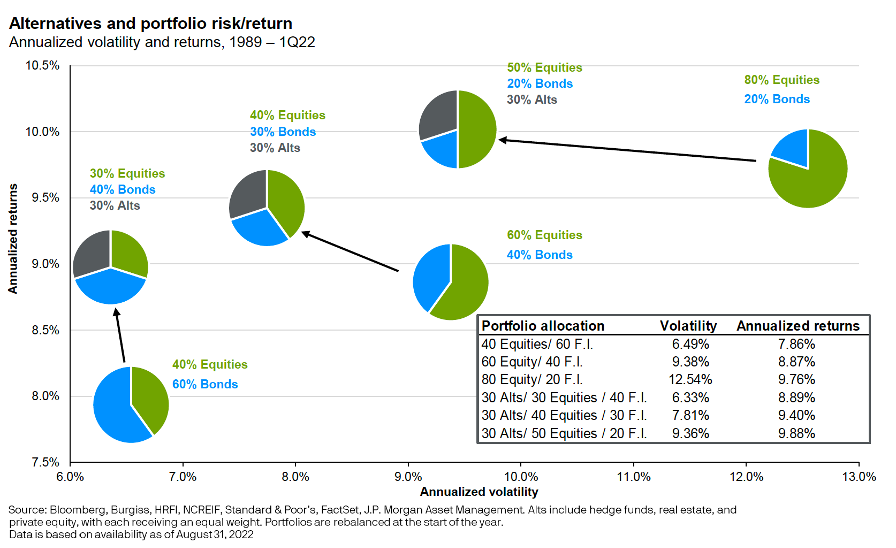
Investments in a selection of private markets – also known as “alternatives” – reduced the volatility of portfolios in 2022.
We hope you enjoy the latest NewsLetter from Harold Evensky.
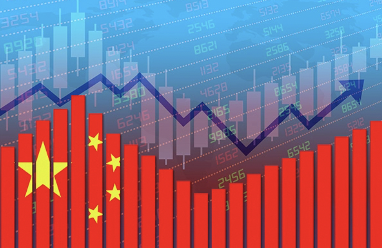
Chinese economic data blew expectations out of the water this week, reflecting a strong comeback for the Asian giant as it finally emerges from the world’s most restrictive pandemic-era lockdown.
There are many reasons to buy and hold physical gold. The lack of counterparty risk, the diversification, and the hedge against inflation are among the top reasons to own the monetary metals.
Despite recent headwinds, structural drivers underpinning China’s growth remain intact. Sectors that will benefit from the structural trends include healthcare, industrial automation, and domestic brands targeting increased spending by Chinese consumers.
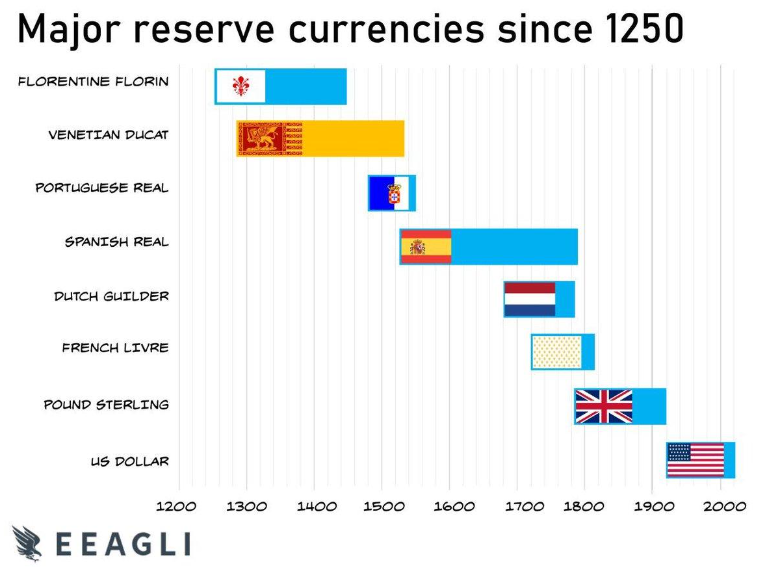
There are four critical reasons why the dollar will not lose its global reserve status anytime soon.
Following a great deal of hype last year, companies now seem to be reining back their investments in the metaverse.
As central banks wrestle with how to respond to volatile economic data and banking turmoil, while also fighting inflation, Franklin Templeton’s economists provided their perspectives on what’s next for economic growth, interest rates, inflation and fixed income markets.
“Thinking the Unthinkable.” What does that phrase bring to mind? To me it suggests a situation that has become so stressed you are forced to consider undesirable solutions.
Gold appears to be well-positioned for a strong pump that could carry it to new all-time high prices in 2023—and beyond. As you know, I’ve been following and writing about the precious metal market for a very long time, and I see a number of unique catalysts at the moment that could contribute to higher gold prices.
The economic signals and a host of geopolitical risks confronting investors suggest that 2023 could be as challenging as 20022 for both stocks and bonds.
I am drained having my colleagues and team members come to me with problems because of their frustration with my company.
A Singapore-based fintech investment firm is close to raising $100 million to back finance and blockchain startups in China and Southeast Asia.
We have been reminding everyone that we believe we are unwinding a financial euphoria episode that Charlie Munger called the biggest of his career, “because of the totality of it.”
Sixty-six million Americans currently receive monthly benefits from Social Security, which, if nothing changes, is expected to be insolvent by 2035 at the latest. It’s time for Americans to take a greater role in their own retirement planning.
When it comes to value, you can’t deliver too much. Here are five ways to deliver even more value to your clients this week – without beating them over the head.
Here is some research on why our clients built a sizable portfolio while others had high income but little savings. I’ll address specifics on how to get savers to enjoy their money.
As automakers seek stakes in lithium miners to lock in supplies for electric-vehicle batteries, they’re following a path already forged by their shareholders.
Lufthansa’s blockbuster report is just the latest signal that commercial aviation, one of the hardest-hit industries during the pandemic, may be ready to make a landing again in investors’ portfolios.
We just finished up our annual report on the $20 billion club, and we've concluded that 2022 was a weird year for pension plans.
Medical Properties Trust’s dividend at the 2022 rate of $1.16 is safe even if Prospect, its third-largest operator, does not pay a single cent in 2023.
Stop burning up fuel and generating heat in the lower gears, doing general marketing activities that only attract more non-ideal clients and overload your system.
The S&P 500 is rising after falling the past four sessions as equites have shown some volatility amid festering uncertainty regarding the ultimate economic impact of aggressive global central bank tightening.
Some of the world’s largest economies ramped up calls to increase support to troubled emerging countries ahead of a Group of 20 finance chiefs meeting.
On February 5, 2023, Charlie Munger sat down as the Chairman Emeritus of the Daily Journal Corporation (DJCO) to answer questions from shareholders and the public.
The common narrative is that we’ve (the US) been enjoying a long period of globalization and now that it is going into reverse, it will upend many of the benefits brought by globalization, to the US in particular.
Microchips are the foundation of the modern economy, but what are the geopolitical implications of this new power player? In this episode of The Active Share, Hugo spoke with Tufts University associate professor Chris Miller, author of the book Chip War: The Fight for the World’s Most Critical Technology, about the decades-long, globe-spanning battle to control one of the world’s most critical resources.
From Home Depot Inc. to Walmart Inc., the biggest US retailers are about to grab the earnings spotlight, providing investors crucial insight into consumer demand, the trajectory of economic growth and Corporate America’s profitability.
Federal Reserve officials like to call their decisions “data dependent.” Business leaders say it a little differently, often “data driven.” The point, in both cases, is something like: “We consider relevant data when making important decisions.”
What is social death, and how can you harness it in your marketing?
The US government is exploring narrowly focused trade pacts on critical minerals with Japan and the UK, in addition to talks with the European Union, the latest salvo in its push to counter Chinese influence in key sectors, officials familiar with the matter said.
Federal Reserve officials stressed the need to keep raising interest rates, including the potential for borrowing costs to peak at a higher level than previously expected amid ongoing price pressures.
Northern Trust Asset Management (NTAM) is a leading global investment manager with $1 trillion in assets under management. It released “The Risk Report” late last year, which is an aggregated analysis of 280 institutional equity portfolios across the globe. The report revealed six common drivers of unintended investment results. As an investment manager that employs a quantitative risk-aware approach, NTAM regularly partners with investors and their consultants to provide them with a distinct analysis of underlying risk components impacting their portfolios’ ability to achieve intended outcomes. Of utmost importance to our Advisor Perspectives listeners and readers, the findings of the research are as applicable to portfolios managed by advisors for individual investors as they are to institutional investors. NTAM does indeed serve individual advisors through a number of offerings, including Northern Mutual Funds, FlexShares ETFs, and Diversified Strategist model portfolios. NTAM’s purpose in conducting the research behind the Risk Report was to help investors make needed adjustments consistent with NTAM’s core philosophy, which is that investors should get paid for the risks they take – in all market environments and in any investment strategy.
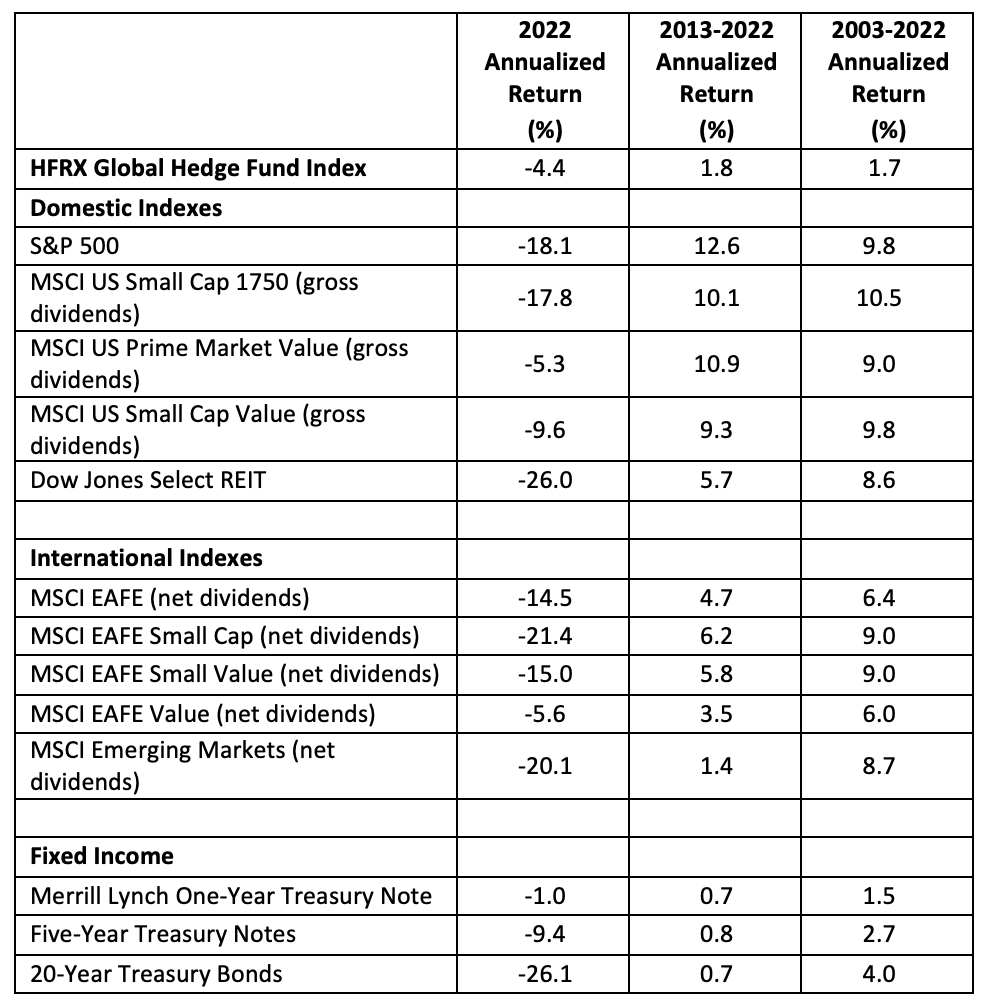
The greatest anomaly is that despite decades of poor performance and the failure to effectively hedge exposure to conventional security classes, assets under management among hedge funds have grown from about $300 billion 25 years ago to about $5 trillion today.
U.S. stocks declining, as the markets trim a strong start to 2023 ahead of this week's host of key economic and earnings data, as well as the Fed's monetary policy decision.
Over the past couple of decades, I’ve told clients many very important things. Most of them are timeless, which is why I find myself saying the same things repeatedly. Here are the top 10, and I’ve saved my most important for last.
Slowly but surely, investment bankers from New York to London are chipping away at the tens of billions of dollars in leveraged buyout debt that remains famously stuck on their balance sheets.
Formed in 2005 to serve educational and resource needs of professional business advisors, the Exit Planning Institute is a trendsetter in the field of exit planning for business owners across the globe. It is the only organization that offers the Certified Exit Planning Advisor Program (CEPA) and qualifies for continuing education credits with 12 major professional associations, making it the most widely endorsed professional exit planning program in the world.
Six Wall Street banks are being pressed by a group of shareholders to move faster on reducing their financing of fossil fuels to meet global climate goals.
U.S. equities finished mixed in a lackluster trading session, as Q4 earnings season shifted into a higher gear today.
U.S. stocks are extending a late last-week rally, with Q4 earnings season set to shift into high gear.
The world’s leading CEOs, politicians, and various do-gooders were in Davos, Switzerland, this week, discussing ways to solve our collective problems and create opportunities for their own companies. The most important conversations were off the record and many of the public speeches were simply performance art.
Behind the five-decade low US unemployment rate of 3.5% lies a 2.6 million-person mystery.
In 1817, David Ricardo developed his theory of comparative advantage to explain why countries engage in trade together, even when one country has an absolute advantage.
Big global banks are eying some of the world’s most fragile countries for a new experiment in financial engineering: debt relief in exchange for environmental protections.
Money managers for the ultra-wealthy are eschewing traditional private equity funds and betting directly on upstart companies.
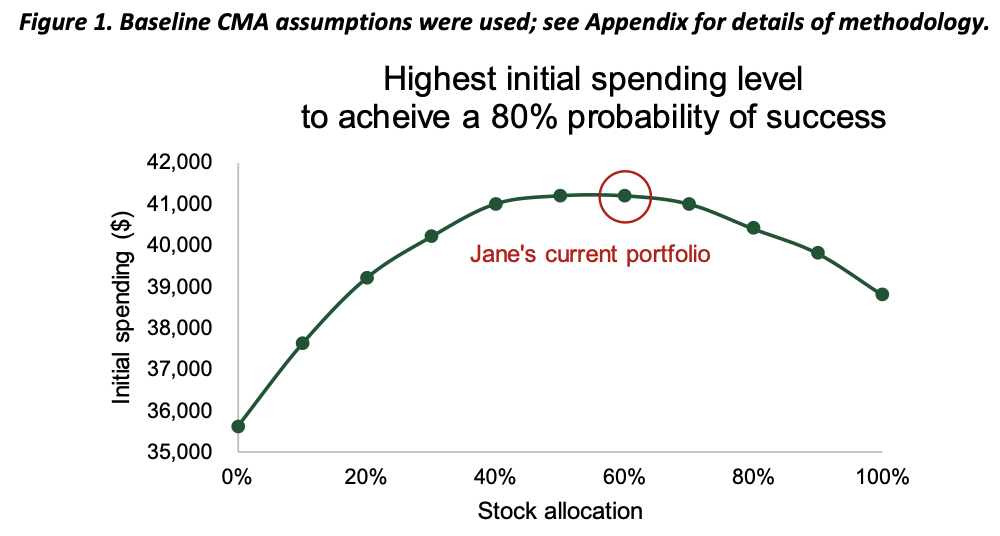
Probability-based retirement income strategies are highly sensitive to the capital market assumptions used in Monte Carlo analysis. Seemingly small changes in those assumptions can mean the difference between projecting a comfortable lifestyle and financial ruin.