According to a recent J.D. Power study, fewer than 15% of clients say their advisor provides an ideal advice experience; and yet many advisors likely suffer from Dunning Kruger cognitive bias, where they think they are among that 15% when for the majority, that’s impossible.
Why is financial advice in such a state? Because, despite their best efforts, financial advisors aren’t hitting the core attributes of comprehensive advice.
To solve this, Practice Intel, a new firm led by Dr. Preston Cherry, Tom Rieman, Larry Shumbres, and Nick Gudz, among others, has launched. Combining practice-level insights with innovative e-learning resources and a proprietary index that benchmarks a firm’s valuation against its peers, Practice Intel helps advisors enhance their advice experience while achieving more organic growth and, ultimately, increasing their valuation.
VettaFi’s financial futurist, Dave Nadig, and VettaFi’s Head of Research Todd Rosenbluth sat down with one another to discuss some of the highlights from the year.
Experts have been puzzling over a seeming disconnect in America: By most measures the economy is doing well, but it's not giving people much satisfaction or confidence. Could it, they wonder, have something to do with social media, or the human propensity to share bad news first?
The stock market is getting ahead of itself on bets the Federal Reserve’s fiscal tightening is over, according to Wells Fargo’s Chris Harvey.
The arrival of a US investment strategy that offers amped-up stock leverage is putting a spotlight on an industry popular with retail traders, but prone to extreme volatility and frequent blow-ups.
Even a slight pushback from the Federal Reserve on interest-rate cuts could unravel the relentless stock rally since late October.
The bond market’s bold bet on US interest-rate cuts is set for its biggest test yet.
With Exchange 2024 less than three months away, I’ve started mapping out “the weird session” at the event: my 100-minute block on the “Silent Disco”-style stage.
Municipal bonds posted historic total returns of 5.90% in November. Rallying interest rates led the way, while strong demand aided outperformance versus Treasuries.
If the artificial intelligence (AI) theme remains hot heading into 2024, this could help push the Direxion Daily NVDA Bull 1.5X Shares (NVDU) even higher in the new year as the chipmaker expands its market share.
US consumer prices picked up in November, reinforcing the Federal Reserve’s resolve to keep interest rates elevated in the near term.
VettaFi’s Financial Futurist Dave Nadig sat down with Som Seif, the founder & CEO of Purpose Investments, to give investors and advisors more insight into what is going on in Canada. In addition, the pair discussed a multitude of different topics, including Bitcoin, to help give investors a better understanding of the Canadian market overall.
I had a recent experience with an ultra-high net-worth investor that was disturbing.
VettaFi’s Dave Nadig offers his 2024 ETF predictions. Valkyrie’s Steven McClurg provides an update on the spot bitcoin ETF race.
‘Tis the season for headlines about the prices of some very specific items, such as a 16-pound turkey (down from last year) or a Christmas tree (up). None of these prices, however, is a good barometer of the overall cost of living.
Bitcoin traded near $42,000 after a turbulent stretch that lopped almost 8% from the largest digital asset and stirred predictions of more volatility heading into year-end.
Do you use your company email for personal purposes? If so, think twice. Then stop.
Investors are pouring cash into the world’s largest exchange-traded fund tracking emerging-market debt as confidence mounts that the US Federal Reserve is nearing the end of its aggressive monetary tightening campaign.
The mid-cap universe offers compelling sector diversification and opportunities to participate in the upside of the broader market, according to Dina Ting, Head of Global Index Portfolio Management.
Domestic aggregate bond strategies are on pace for decent showings this year. And there is mounting speculation that the Federal Reserve will lower interest rates next year, perhaps multiple times.
It’s the time of year when you look back at all that’s been accomplished. VettaFi’s covered strong net inflows into fixed income ETFs, covered call funds, and many, many, many new product launches. But VettaFi also accomplished a lot as a firm.
We are speaking on November 3, but the big headline for 2023 has already been written. This will be the year of artificial intelligence (AI) and machine learning (ML). Not only have AI and ML driven the soaring valuations of stocks like NVDIA, but they have also demonstrated the potential to increase the efficiency of advisory practices.
My guest today will provide an update on the latest in AI/ML and how solutions such as ChatGPT will positively impact financial professionals. Prepare to be informed, inspired, and equipped with the knowledge to navigate the exciting horizons that lie ahead.
On this episode of the “ETF of the Week” podcast, Tom Lydon discussed the SPDR® Gold Shares (GLD) with Chuck Jaffe of “Money Life.” The pair talked about several topics regarding the fund to give investors a deeper understanding of the ETF overall.
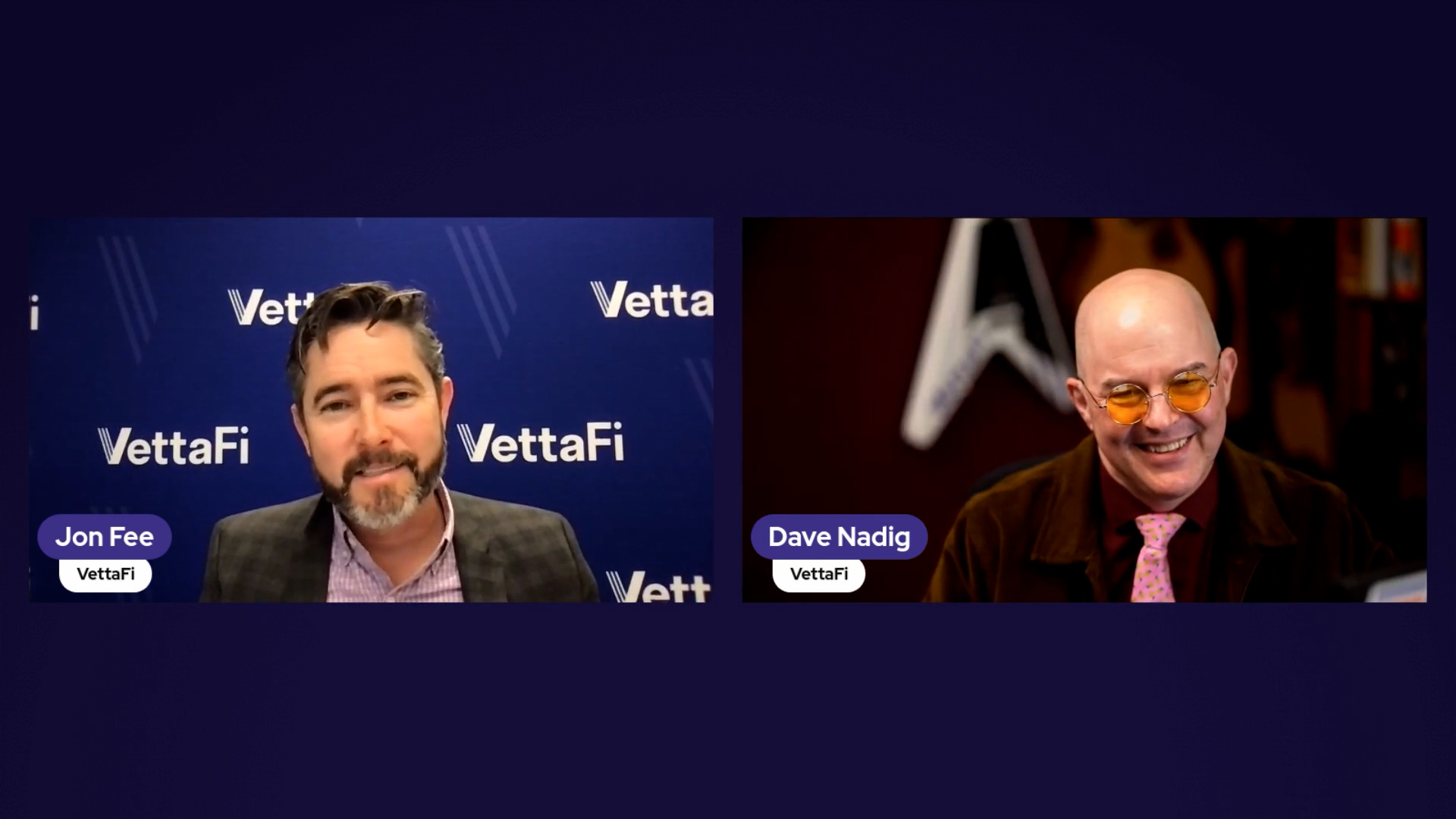
Jon Fee and Dave Nadig, Financial Futurist at VettaFi talk about the ETF marketplace in Canada.
Passive investing means buy and hold, and that’s not what I do for my own portfolio or recommend to clients. Here are eight ways I’m an active investor.
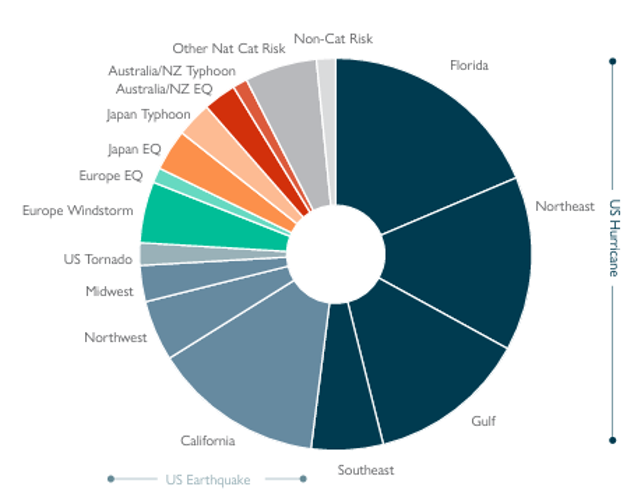
The Stone Ridge High Yield Reinsurance Fund (SHRIX) was introduced a decade ago to provide pure exposure to catastrophe-reinsurance risk that had historically delivered excess returns. Let’s look at how it performed over that period.
Investors are facing a pivotal week as a key measure of inflation that hits Tuesday and the Federal Reserve’s interest-rate decision on Wednesday are expected to set the tone for the stock market and economy heading into 2024.
Well, the strength of the US economy surprised everyone once again on Friday. We learned that the unemployment rate fell to 3.7% in November, average hourly earnings grew by 0.4%, and 199,000 more jobs were added when economists were expecting around 185,000.
The fate of the S&P 500 is increasingly resting on whether a handful of the biggest technology companies can parlay artificial intelligence investments into even higher profits.
Chinese stocks staged a sharp recovery in afternoon trading, with a spike in volumes for an exchange-traded fund tracking state-owned shares fueling speculation of government buying.
Following a tumultuous 2022, this year has been better, though not entirely sanguine for fixed income investors. 2024 is right around the corner, and expectations of rate cuts by the Federal Reserve are rising. Now is the ideal time for advisors to evaluate opportunities in the bond market.
It’s been a very good year for U.S. high yield. In fact, BondBloxx Investment Management has noted that riskier fixed income assets have outperformed U.S. Treasuries.
We see potential opportunity in municipal bonds in 2024, although there may be more volatility.
One thing you learn when writing about the debt problem, as I have been in recent weeks, is that many people think it’s not a problem at all.
Airline consolidation is not only relatively common but necessary for growth and competitiveness, and the recent announcement of Alaska Airlines’ planned acquisition of Hawaiian Airlines is a prime example of this trend.
Bitcoin prices are near $44,000 and excitement is pouring into the space again. That’s largely due to the focus on the potential launch of spot bitcoin ETFs in January.
The Market Outlook Symposium is coming on December 14. The latest symposium from VettaFi will offer investors a deep and incisive look at how to position for 2024 and beyond. In today’s unusual market environment, this is a critical topic.
Funds will begin paying out their 2023 distributions this month which could lead to a tax bill for your clients. While capital gains distributions will likely be lower this year than in recent years, interest income is expected to be higher.
When it comes to commercial real estate, a lot of attention is obviously paid to offices. But it's not the only sector facing strains.
Jeremy Grantham is a famous bubble hunter, quick to point out speculative excess on Wall Street and beyond.
Jeremy Grantham will be a keynote speaker at Exchange, joining an exceptional roster of luminaries, thought leaders, and industry titans.
American consumers are becoming more frugal this holiday season.
The winter holiday season is here, and I wanted to join in the festivities. Recently, advisors have become more comfortable turning to active ETFs to help them and their clients navigate the uncertain market environment. Actively managed ETFs have gained traction in 2023.
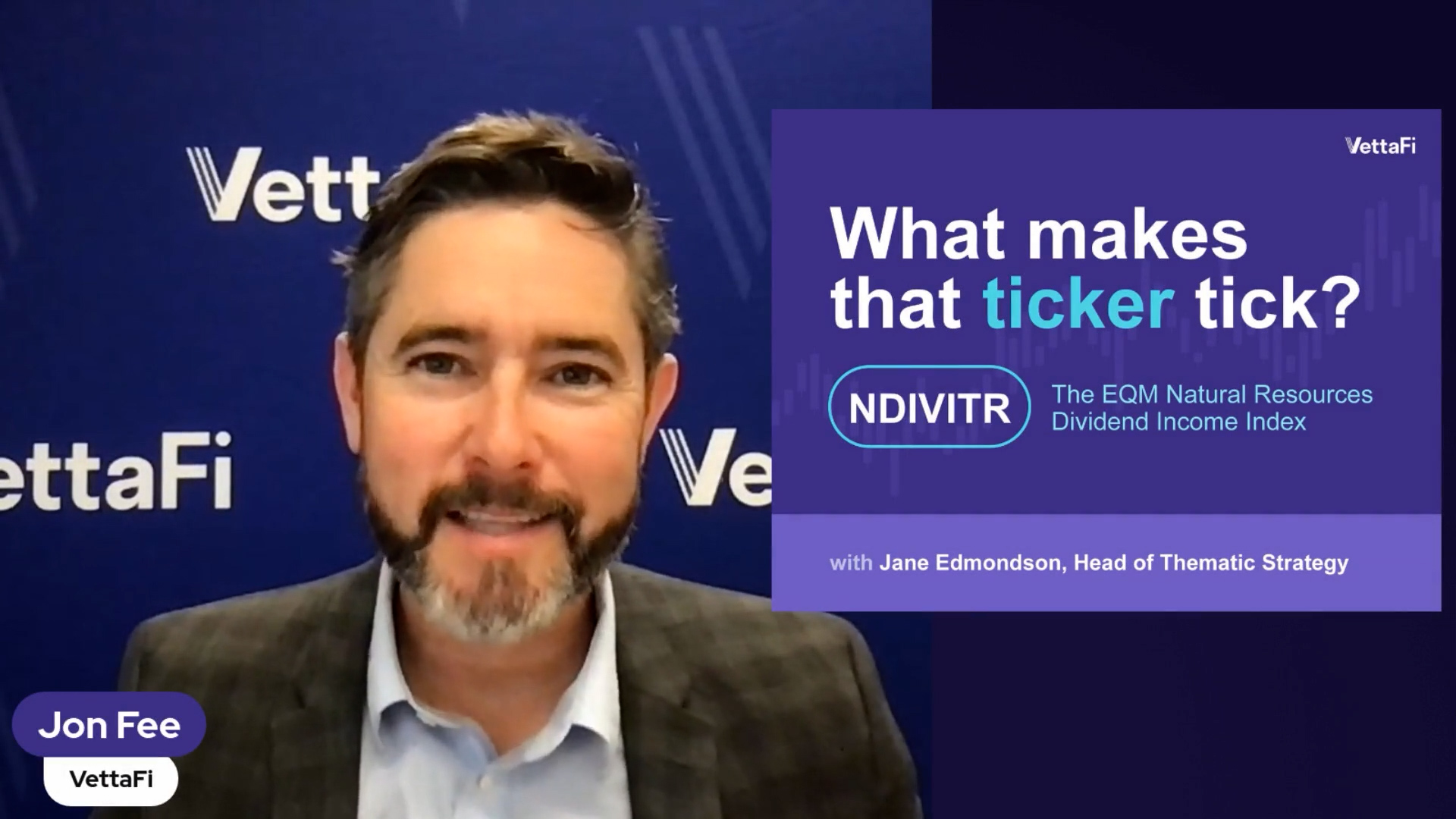
Show host, Jon fee, and Jane Edmondson, Head of Thematic Strategy at VettaFi, discuss the EQM Natural Resources Dividend Income Index (NDIVITR).
Investing in “smart beta” was the rage in the early 2000s, as small-cap-value stocks vaulted over large-cap-growth stocks. But like all supercharged investment strategies, it didn’t last. Factors premiums have not materialized since the financial crisis. For most of the last decade, value has underperformed growth, driving the underperformance of the largest category of smart-beta strategies. We’ll go over the case for and against factors in this interview with long-term investment adviser, Rick Ferri.
It should be no surprise that Bitcoin sold for over $44,000 this week, more than double its March 13 price. Going back to 2014, it has taken the cryptocurrency an average of nine months and 21 days to double; the milestone came 28 days early this time.
Artificial intelligence holds far-reaching consequences for modern economies. Many of the jobs we are asked to do will change; a lot of them might disappear altogether.
Bond traders who powered a ferocious rally in the $26 trillion US Treasury market are about to find out if they’ve gotten ahead of themselves.
History shows that returns are greatest when capital is scarce. But investors need to also realize that risks escalate when there is a glut of capital.
The capital markets are already pricing in rate cuts ahead of 2024, causing yields to fall. One way to continue supplementing income amid a potential drop in yields is to diversify income using a pair of active exchange-traded funds.