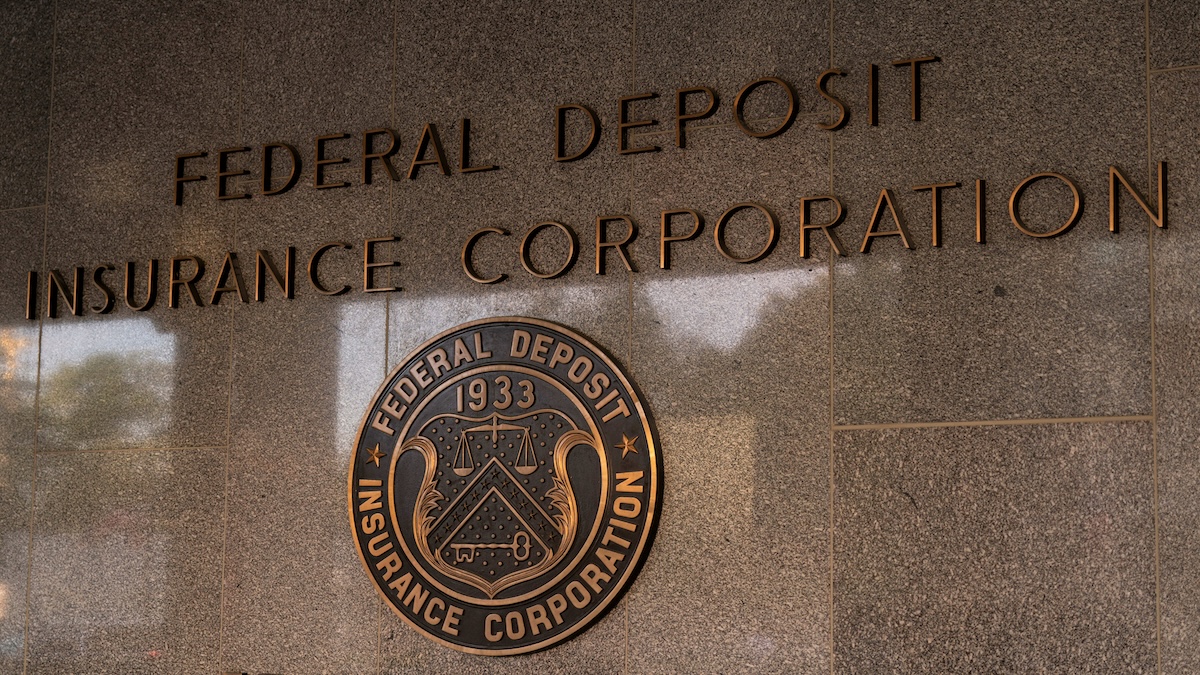
Banks in the US have plenty to celebrate these days, from record profits and higher stock prices to a strong economy and easier regulation. One thing they don’t need is an added discount on their deposit insurance — a crucial buffer that should be reinforced when times are good.
Abdul El-Sayed, the Democratic candidate for Senate in Michigan, has a simple pitch to voters. Imagine, he says, a health-insurance plan with “no premium, no copay, no deductible — just healthcare when you need it.” El-Sayed and other proponents call the idea Medicare for All.
The confusion surrounding a proposed civil nuclear deal with Saudi Arabia hasn’t exactly disappeared: The White House is still claiming it depends on the country normalizing relations with Israel, even if that’s not part of the written agreement.
For at least eight years, Congress has been trying and (mostly) failing to create a special set of rules for digital assets and the markets they trade on. It’s worth asking how much, if any, of that was advisable.
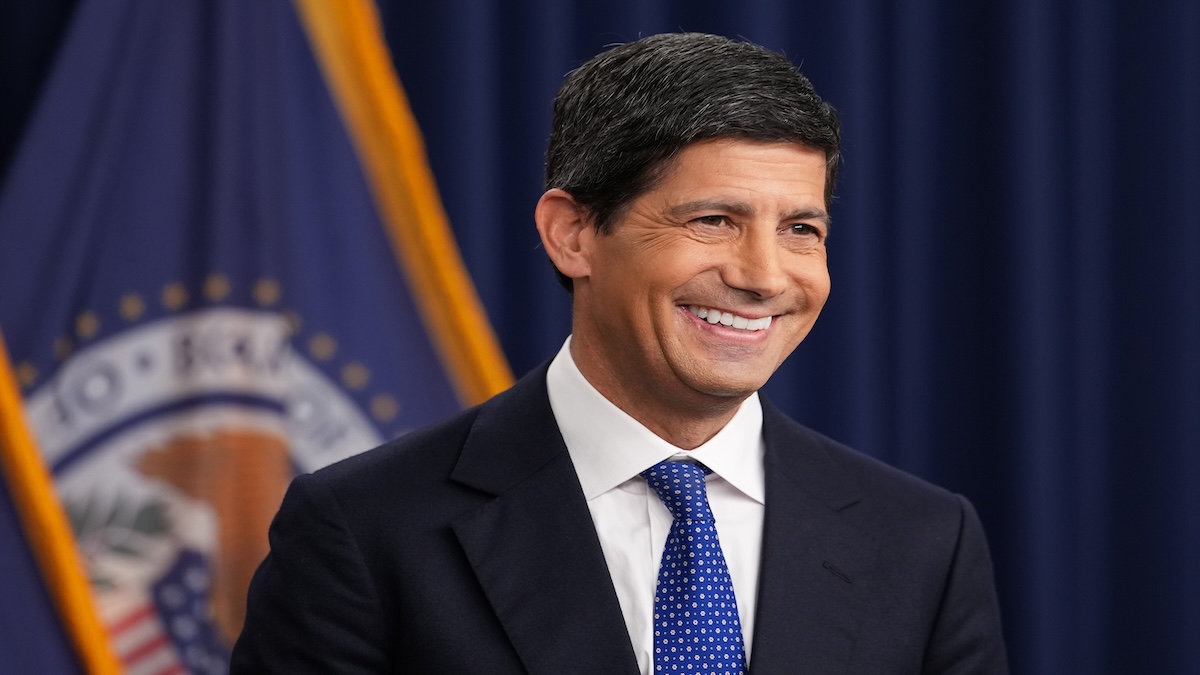
Federal Reserve Chairman Kevin Warsh had ground to make up on Wednesday — and, for the most part, did what was necessary.
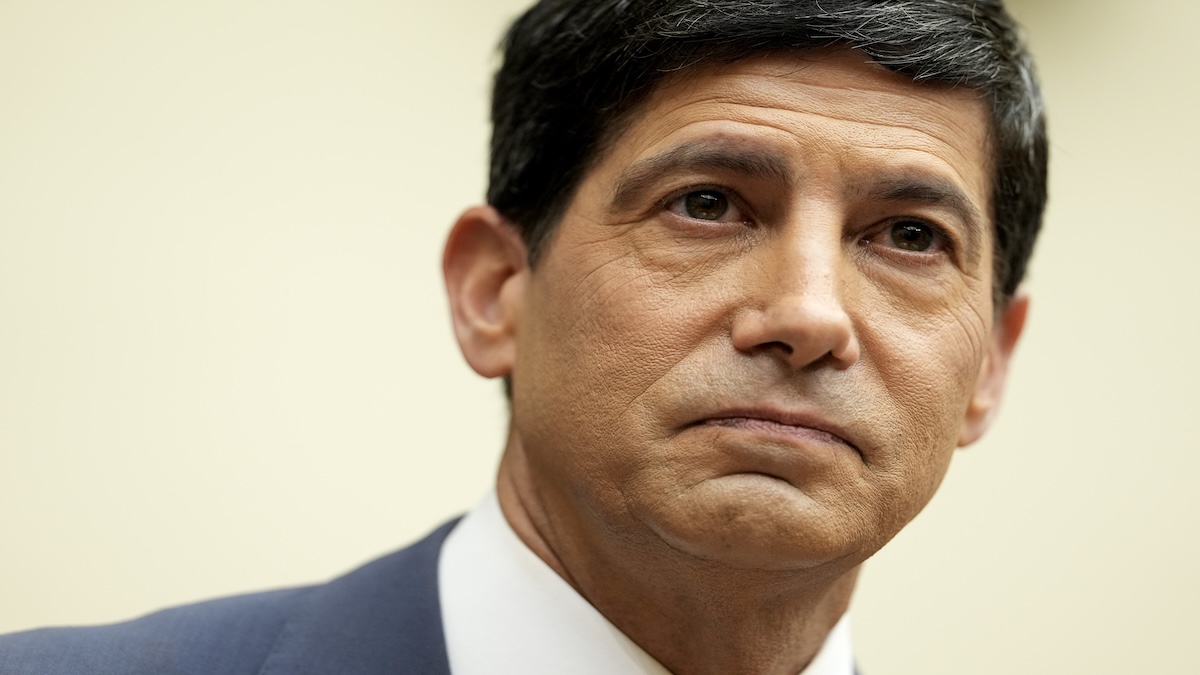
Kevin Warsh has rightly called into question the effectiveness of the Federal Reserve’s communications — but his arrival as chairman only seems to have made the problem worse. To put this right after the next Fed meeting this week, he’ll need to rethink his approach to explaining where things stand.
Every year, Americans send hundreds of billions of dollars of retirement savings to life insurers in return for annuities that promise a future income. It’s an industry built on trust and prudence.
Kevin Warsh’s inauspicious start as chairman of the Federal Reserve has guaranteed that his speech on Friday at the central bank’s annual Jackson Hole conference will command rapt attention. He might wish it were otherwise: Investors demanding clear answers to their many questions are almost certain to come away disappointed.
No doubt, AI can be an unnerving tool. But it isn’t magic, malevolent, or secretly sentient. With some reasonable rules in place, policymakers should be able to keep the bots in line, and unleash the benefits for everyone else.
Social Security is now just six years away from insolvency, according to the latest annual assessment. Many in Congress might like to keep on ignoring the problem, as they have for years, but this won’t be an option much longer. Senators elected in November will see the system’s trust fund empty during their terms.
With stocks near all-time highs, the need for change is hardly obvious. Proponents argue that requiring fewer reports will reduce the time and cost of compliance. Some blame an increase in disclosure demands over the last three decades for a sharp decline in the number of public companies.
For a bunch of unremarkable warehouses, they’re generating a lot of controversy. Data centers — low-slung facilities that house the server racks and energy systems that underpin the digital economy — have become a heated issue on the campaign trail. Politicians from both parties are pushing bills to restrict them. Some want a nationwide “moratorium.” That would be a historic mistake.
Throughout Europe, companies are facing a quandary: How can they afford immense investments in decarbonization when a combination of now-surging energy prices, Chinese overproduction and US tariffs threatens to undermine their existing businesses?
Streamlining the rules is undoubtedly appealing. The new proposal would do this, in part, by allowing the largest banks to use one method to calculate the risk of their assets instead of two, as currently required. That makes sense as far as it goes. Yet other requirements — including leverage ratios and certain capital surcharges — are being loosened or otherwise made more bank-friendly at the same time.
Less than two months ago, projections showed the US government on track to borrow some $2 trillion this year with budget deficits exceeding 5% of gross domestic product indefinitely. Since then, this dire outlook has worsened — thanks to the Supreme Court’s ruling on tariffs, the war with Iran, the prospect of slowing economic growth and rising interest rates.
California, like a careless heir who squanders a fortune, keeps menacing its top taxpayers. Unless lawmakers start showing some restraint, the state’s many economic strengths are likely to further erode.
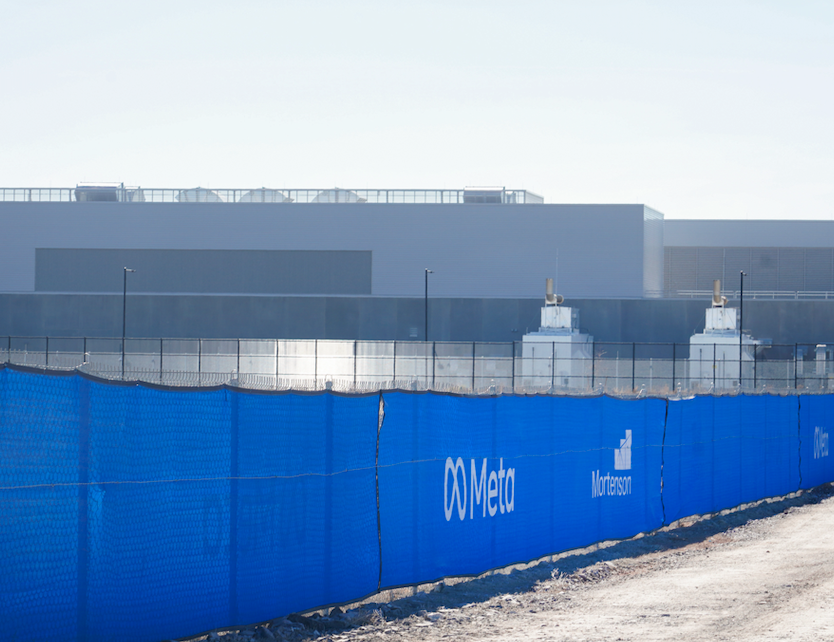
It’s hard not to marvel at how America’s capital markets have rallied to finance the artificial intelligence boom. If all goes as expected, “hyperscalers” such as Meta Platforms Inc. will invest more than $3 trillion through 2030 in data and power infrastructure.
Buying a house is expensive enough these days. But the costs of owning one have been rising, too — not least because of soaring insurance premiums. As policymakers of both parties have made housing affordability a top priority in recent years, they’ve done far too little to address this crisis in the making.
Bitcoin and other digital tokens, once touted as the uncontrolled and decentralized future of money, have proved to be lucrative tools for fraudsters, terrorists and rogue regimes.
The speculation that has pushed its notional market capitalization beyond $20 billion — and that of all pure cryptocurrencies, including Bitcoin, to more than $2 trillion — is a social phenomenon that could end as suddenly as it arose.
How worried should the US be about private credit? Already this year, more than 1 in 10 private credit borrowers are deferring cash interest payments and at least 45 firms have been taken over by their lenders, the most in six years.
The growing list of US credit busts, from subprime auto lender Tricolor Holdings to Broadband Telecom Inc., raises a troubling question: If such “cockroaches” proliferate — if many more enterprises collapse under the weight of excessive debt — who will ultimately bear the losses?
Investors expect the Federal Reserve to cut its policy rate on Oct. 29, and once more by the end of the year. Right now, amid enormous uncertainty about where the economy is headed, the case for cutting is weak. The Fed would be wiser to pause.
American taxpayers spend billions of dollars annually supporting pharmaceutical development. Yet the US continues to pay more for medicine than any other country in the world.
As expected, the Federal Reserve cut its policy rate on Sept. 17 by a quarter of a percentage point. Officials had signaled the move in advance and Chair Jerome Powell explained the reasoning well enough.
If there’s one thing the European Union’s leaders agree on, it’s that the bloc needs to regain competitiveness — a key prerequisite for meeting urgent challenges such as rebuilding defenses, combatting climate change and reviving economic growth.
Consider the humble bank note. Wrinkled and torn as it may be, it’s the only government-issued legal tender — the only direct obligation of a central bank — to which most people have access.
In news of the future, Google is buying a boatload of fusion energy. The only problem is that its supplier lacks a power plant, has produced no energy to date, and may never do so on commercially viable terms.
With the price of digital assets testing the boundaries of plausibility, and Congress promising legislation to boost the industry further, now might be a good time for bank regulators to take notice.
Just a few decades ago, Europe led the world in adopting nuclear. It relied on the technology for more than 30% of its electricity and accounted for more than 40% of global production.
Amid the relentless chaos in Washington — tariffs, trade war, terminally rising deficits — at least one sensible idea has recently emerged: The federal government wants to free up more land to build homes. It’s a great ambition. The devil, as ever, will be in the details.
The price of Wegovy, Novo Nordisk’s blockbuster weight-loss drug, is $1,349 a month in the US; in Germany, it’s $328. The US price for Keytruda, a cancer treatment, is $191,000 a year; in Japan, it’s $44,000.
For most of human history, an enchanted box that contained all knowledge and answered all questions would’ve been the stuff of allegory. For modern internet users, Google is one more thing to take for granted.
It was a glimpse of a very appealing future: A sleek 18-wheeler powered by Aurora Innovation Inc. trundled down Interstate 45 from Dallas to Houston last week with a trailer full of goods and a completely empty cab. At long last, autonomous trucking may have arrived.
Treasury Secretary Scott Bessent has a plan to prop up a government-bond market destabilized by Washington’s chaotic economic policies: Let banks load up on federal debt.
If there’s one thing investors have learned in recent days, it’s that there’s no way to guess what America will do next. With its on-again, off-again tariffs, the US administration has demonstrated a rare and reckless willingness to shock markets.
Social Security is at the center of the fiscal emergency that threatens the US. Yet Washington is always reluctant to grapple with it honestly, partly because the issue is misunderstood.
Ideally, nobody would have to worry about the burgeoning and multifaceted realm of nonbank finance: Let hedge funds, securities dealers and the like take whatever risks they want, as long as they bear the full consequences.
The Federal Reserve’s decision to leave interest rates unchanged was right — but easy to misinterpret.
After years of poor decision-making, the federal government’s $1.64 trillion student loan program is in critical condition. Congress needs to stanch the bleeding — and give serious thought to overhauling this flawed system for the longer term.
Some of America’s leading financial firms are hoping to sell the White House on what sounds like a compelling idea: Open employer-sponsored retirement plans to the private investments they manage, so regular folks can reap returns currently reserved for the wealthy.
Why would a bank suddenly shut down a customer’s adequately funded account? Some leading Republicans, echoing tech titans like Marc Andreessen, have warned of a conspiracy among regulators to “debank” conservatives and crypto enthusiasts.
A lot has changed since a new administration took charge on Jan. 20, so the Federal Reserve’s decision last week to maintain its policy rate might seem odd.
For the new Congress, deciding the fate of the 2017 Tax Cuts and Jobs Act will present an immediate dilemma. Allowing the law’s provisions to expire as scheduled at the end of the year would effectively raise taxes on tens of millions of Americans.
Every year, millions of Americans living abroad suffer a profound administrative indignity: complying with a US income-tax regime that treats them like miscreants and complicates the lives even of those who owe nothing.
Since the start of the new year, the bond market has been urging Congress to come to terms with America’s spiraling budget problems. Soon it might be demanding immediate action.
The Federal Reserve faces a reckoning: Sometime soon, it’ll probably have to subject its stress tests to public scrutiny, highlighting serious flaws in what has become its primary tool for ensuring the resilience of the banking system.
A rude surprise could be in store for the millions of Americans who get health coverage through the Affordable Care Act. If Congress doesn’t act next year, enhanced premium subsidies will expire by December, causing enrollees’ payments to increase by more than 75% on average.
Take it from Niels Bohr: “Those who are not shocked when they first come across quantum theory cannot possibly have understood it.”
Investors see recent inflation data as a green light for the Federal Reserve to trim another quarter point from the short-term interest rate.