While planning for a CMA (Capital Market Assumptions) at the close of the year—and in the wake of an unexpected U.S. election result—it’s tempting to adopt a short-term perspective, focusing on the uncertainties and anxieties generated by President-elect Trump’s policies and their potentially disruptive impact on the economy and the market.
Calamos’ Matt Kaufman explains the mechanics and rationale behind the Calamos Bitcoin Structured Alt Protection ETF – January (CBOJ). VettaFi’s Roxanna Islam examines the best-performing ETFs so far this year and discusses a recent surge of legacy asset managers entering the ETF space.
DeepSeek, a Chinese artificial intelligence startup, has developed a model that can apparently answer questions as well as any chatbot in the US. It might even help answer a long-running question on Wall Street without being asked.
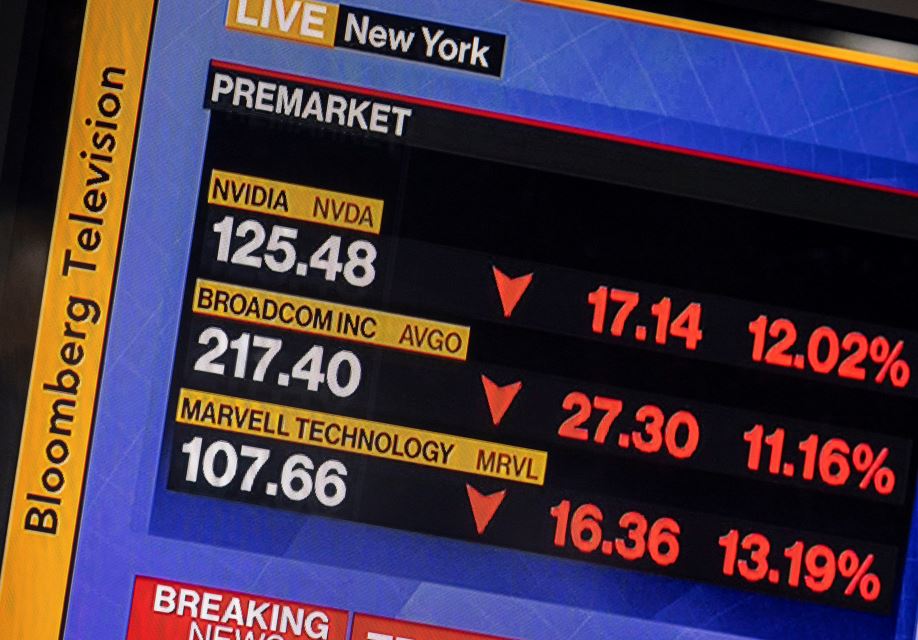
The S&P 500 Index plummeted as much as 2.3% on Monday over DeepSeek, a Chinese artificial intelligence startup that developed a model competitive with the US’s very best — and, supposedly, on the cheap.
Pacific Investment Management Co. is among asset managers looking at buying a portion of $3 billion of debt tied to Elon Musk’s buyout of X, according to people with knowledge of the matter.
Tech leaders gathered at the White House to announce Stargate Project, a new venture that plans to invest $500 billion over the next four years on AI infrastructure and datacenters.
As the Federal Reserve’s two-day meeting begins, investors have accepted that the central bank probably won’t be cutting interest rates this time.
Bosses at artificial intelligence companies aren’t worried about the end of the world or the start of government regulations. Their biggest worry is more mundane: finding enough electricity to keep servers running at data centers.
The Q4 earnings season continued on a positive note after big banks and other financials struck a bullish tone in the first two weeks of reporting.
Not all companies in emerging markets will be hurt by President Trump’s agenda. Here’s what equity investors should look for.
Donald Trump’s second term as president came with a flurry of executive orders and his policies are rippling across the global markets.
Tax and spending cuts will face Congressional roadblocks.
I recently read three very different books which were published in the last three years, all of them speaking to the problems created by the neoliberal order that has been in the ascendancy since the late ’70s but has faltered of late. The solutions that these books offer are, respectively: tweaking; evolution; and revolution.
Let's discuss the recent strong correlation between the appreciating dollar and rising yields, and the reasons for the relationship.
Join Matt Kaufman, Calamos Head of ETFs, as he explores the opportunities and mechanics of Protected Bitcoin ETFs.
Exchange-traded fund investors who placed record bets on the US technology space last week are getting crushed Monday as anxiety over competition from a Chinese startup’s AI model is hitting tech stocks hard.
Treasuries rallied on Monday as investors flocked to the safety of US government bonds after equities slumped in a selloff driven by technology shares.
Chinese artificial intelligence startup DeepSeek’s latest AI model sparked a $1 trillion rout in US and European technology stocks, as investors questioned bloated valuations for some of America’s biggest companies.
Are U.S. stocks in a massive valuation bubble? We don’t think so. Will U.S. stocks outperform their European and Asian counterparts over the next 10 years? Maybe.
Bitcoin and other cryptocurrencies tumbled, following technology stocks lower, as the emergence of a new Chinese artificial-intelligence model triggered a global selloff in riskier assets.
Three factors heavily influenced the financial landscape over the last 12 months — AI-focused technological optimism, hoped-for leveling up, and higher government bond yields.
Today, if you only invest in the US, you’re experiencing two hells. Your stocks are underperforming, and even inexpensive stocks are expensive. Yes, welcome to double hell. European stocks, however, offer paradise today.
The Second Trump Era has begun. If you are confident about what it will bring (either good or bad), I would like to gently suggest you reconsider. None of us should be sure what is coming.
Markets have responded with gusto since November’s presidential election, especially in a few key—and perhaps expected—industries. The biggest winner so far is the automobile industry...
As we kick off 2025, the landscape is rich with competing narratives and evolving dynamics.
Four strategies for navigating crosswinds in the municipal bond market.
Bonds look attractive again after the most recent rise in interest rates. Markets are likely to continue to overreact to every new employment report and inflation reading, keeping interest rate volatility elevated as yields dance up and down with each data point.
On this episode of “ETF of the Week” podcast, VettaFi’s Head of Research Todd Rosenbluth joined Chuck Jaffe of Money Life to talk about the WisdomTree US Quality Dividend Growth Fund (DGRW).
Two months from now, the ETF community of advisors and industry folks will come together. The Exchange conference kicks off in Las Vegas on March 23.
The fourth quarter of 2024 was not just a period of optimism and recovery but also one of reflection and recalibration.
Four years after handling the first conversion of a hedge fund to an ETF, Wes Gray is gearing up to lead a surge of tax-busting deals aimed at investors big and small.
In mid-2023, the estimated costs to roll S&P 500 futures on a quarterly cycle was roughly 0.40%, or 40 basis points (bps) annualized—a fairly justifiable expense for most investors considering the benefits of the instrument.
The world’s biggest stock market is heading for its best start for a new US president since Ronald Reagan was sworn in to power in 1985.
Raw data needs sophisticated infrastructure to drive AI innovation. Snowflake provides critical infrastructure provider for the AI age.
In December, most strategists predicted positive returns for the S&P 500 in 2025. The range of reasonable outcomes for stocks is wide.
Apple Inc.’s stock has had a rough start to the year and is now flirting with a key level that could signal more downside ahead if breached.
A seemingly unstoppable flood of money has Vanguard Group Inc. on the brink of claiming a crown that State Street Corp. has held for decades.
The Northern Trust Economics team shares its outlook for key APAC markets.
For stocks, Christmas came with a 'Santa Clause' rally soon after the election. Since then, there's been a correction in US markets.
Investor appetite for growth really is something to behold.
This article provides the Beaumont Capital Management Q4 2024 Market and Strategy Commentary - Decathlon Strategies.
Meta Platforms Inc. plans to invest as much as $65 billion on projects related to artificial intelligence in 2025, including building a giant new data center and increasing hiring in AI teams, Chief Executive Officer Mark Zuckerberg said Friday.
Sales of previously owned homes in the US rose for the third straight month in December, entering 2025 with some momentum after the worst year in nearly three decades.
General Electric Co., known now as GE Aerospace, has reclaimed its position as the largest industrial company by market value as jet engine production and after-market service both ramp up.
For the third time in four years, the stock picker beating everyone is Fidelity Investments Inc.’s decoder of computer chips, crushing every measure of performance as the more popular passively managed index funds tracking market benchmarks proved little more than also-rans in 2024.
As growth extends to more regions, we see expanding opportunities across countries and assets.
As we head into 2025, investors are giddy over the market returns of the last two years. As shown, the annual returns, while elevated, have come with only average volatility along the way.
While every new year arrives with its own unique set of opportunities and challenges for institutional investors, we believe 2025 could offer more than the typical share.
When investors have been looking to allocate funds within the U.S. fixed income markets, credit has seemingly been viewed as being perhaps too “rich,” or expensive, in relative terms.
We explore how advancements in indexing solutions have allowed investors to tailor their portfolios according to their specific objectives or risk profiles.