The fund is rated 5 stars in the Small Cap Growth category for the 5-Year, 3-Year, & Overall Periods. As of November 30, 2021, the fund was rated against 507 small cap growth funds in the 5-year category and 574 funds in the 3-year and overall categories, based on total returns.
Don’t let the rush of the holidays deter you from engaging with clients on one of the most important financial planning topics—charitable giving. This article offers four ways advisors can deepen client relationships and help clients expand the impact of their philanthropy.
New research on corporate bonds shows that investors driven by ESG mandates have reduced the cost of capital for “green” companies – thereby achieving their goal of addressing concerns around climate change.
There are a number of key investment themes for 2022 I feel most people would agree on. Below are just a handful.
Given all the municipal bonds to choose from, how do you decide which ones should make up the core of your portfolio? With $3.9 trillion of muni debt outstanding1 spread among tens of thousands of issuers, the choice may seem daunting, but we’ll help you break it down.
Historically, fourth quarter tax loss selling of closed-end funds (“CEFs”) has been prevalent in the market. CEFs may be more susceptible to tax loss selling given they trade on a stock exchange and market prices (investor return) can deviate from underlying net asset values (“NAVs”) (fund return).
Taxable assets make up nearly half of the U.S. mutual fund universe. Helping your clients reduce the tax bite on these assets could help you differentiate your value proposition.
Inflation continues to be a concern these days, and many investors are looking for investments that can keep pace with, or hopefully beat, the rate of inflation. As a result, Treasury Inflation-Protected Securities, or TIPS, have become a popular investment option.
Wall Street is trying to bottle ESG, but ESG has other ideas.
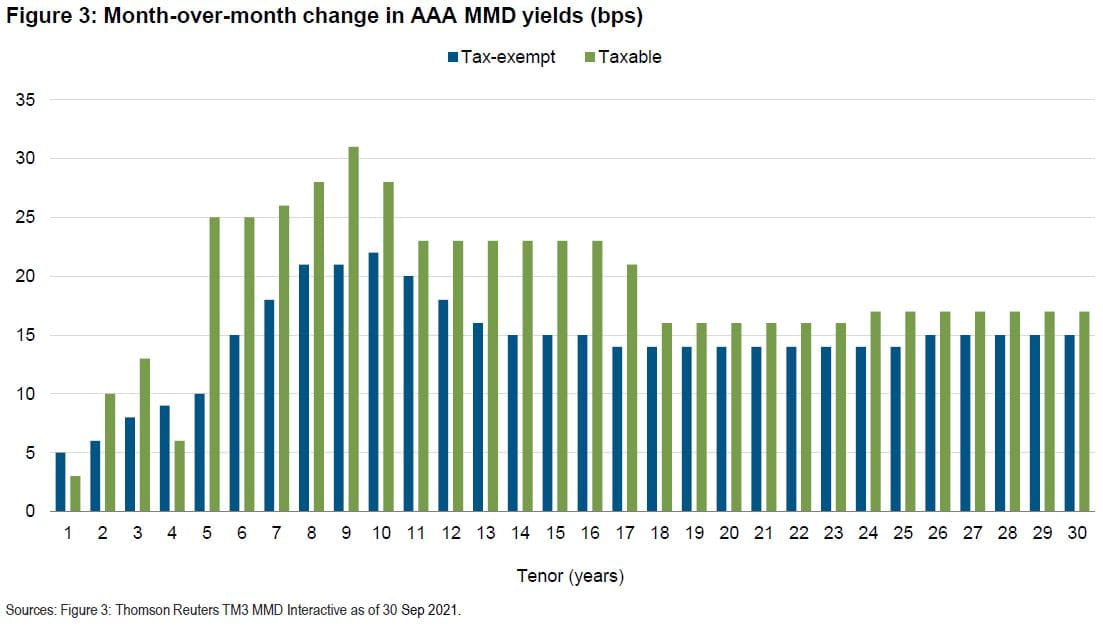
Interest rates were mixed in November, as shorter maturity yields continued to rise while longer maturity yields fell further. The continued flattening of the yield curve reflects the market’s expectation that the Fed will be more aggressive in their tapering of official purchases and potentially raise the fed funds target rate more quickly and aggressively than previously thought.
While I’m a huge proponent of passive and factor investing, the argument that direct indexing is akin to active management is imprecise.
The employers who kept DB plans without adequately funding them and/or generating returns sufficient to pay the promised benefits. It is a systemic problem that affects others. Today we’ll discuss this problem and some of its macro-level consequences.
Bear with us as (no pun intended) you read this longer-than-usual outlook!
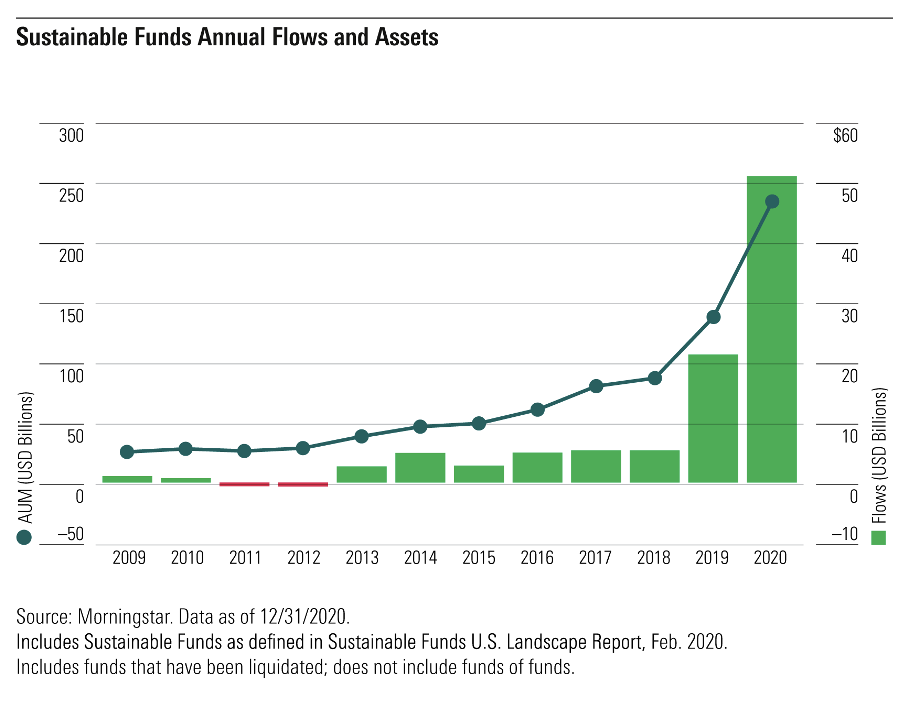
Research shows that funds with positive Morningstar sustainability ratings deliver inferior performance. Nonetheless, funds have sought to increase their holdings of “green” stocks to improve those ratings and have benefited from additional asset flows.
The climate crisis has provoked a debate about whether asset managers should disinvest from the most polluting companies or use their influence as shareholders to persuade firms to curb their carbon emissions.
Will Consensus on Electric Vehicles, Solar and Wind Crush Investors? How similar is cleantech today to 1999?
When guiding advisors on how to transition their practices to the RIA model, this is a question I commonly address.
Current low yields and tight spreads in the municipal bond market have made it difficult for investors to find opportunities to earn attractive interest income on their investments. We expect that to change in 2022.
The pandemic is over. The pandemic is not over. The transition from the pandemic to the endemic phase of Covid-19 is rife with uncertainty and confusion. This is why the world economy, and particularly the U.S. labor market, look so weird right now.
You’ve researched the nuts and bolts of cryptocurrencies and considered whether you should invest in them. Now you want to participate in the cryptocurrencies market. How do you do it?
Bitcoin and other cryptocurrencies have been growing in popularity, but if you’re considering investing in them, there are some key things you should know first.
With less than two months left in what has been an extraordinary (and mystifying) year on multiple fronts, stocks have maintained a largely uninterrupted trek higher (at the index level) in the face of myriad headwinds...
The bonds that held market expectations and central bank policies closely together during the COVID-era are starting to break. BlackRock's quant bond experts discuss the latest developments in inflation dynamics, liquidity in the financial system, and changes in China's policy reaction.
Homeowners are taking advantage of a global housing boom by pulling equity out of their homes at the highest volume since the financial crisis.
There are at least three approaches that have been demonstrated effective in identifying skill in asset managers, offering investors the likelihood of superior future performance.
We communicate better with our clients when we stay away from industry jargon. Explain things the way you would talk with a child.
The 60/40 is not dead, will never die, and you can’t kill it. That won’t stop the financial media and investment firms from staging mock funerals.
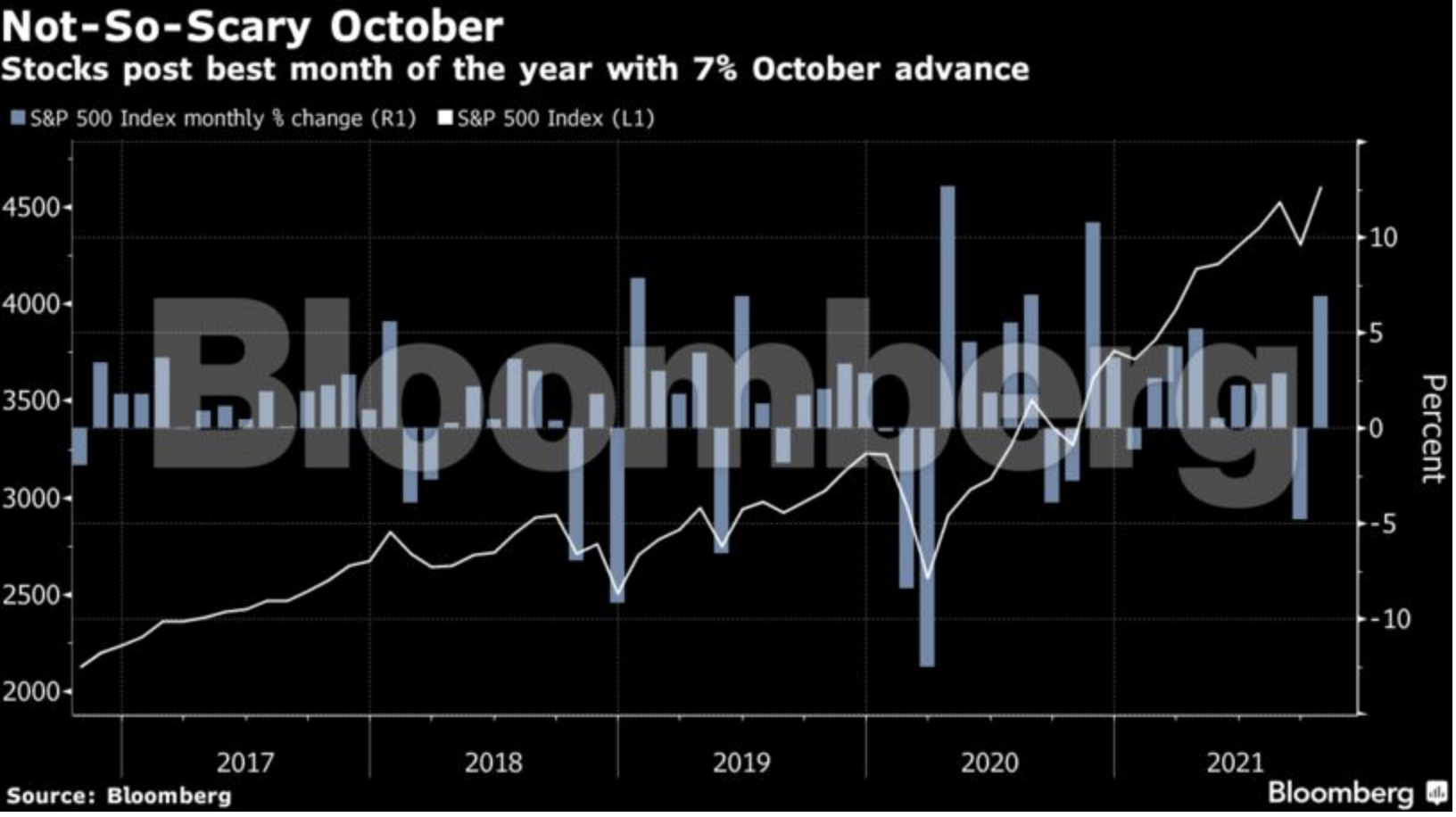
From a global tremor in sovereign bonds to a spike in energy costs, October lived up to its reputation as one of the most volatile months for markets. To stock bears’ chagrin, though, the tumult did nothing to halt the relentless rally in equities.
Just as leaves fall in autumn, you can count on the financial press to litter websites and other media with year-end “take losses and re-balance your portfolio” stories.
In this interview, Kevin Knowles and Nick Zylkowski discuss Russell Investments’ Personalized Managed Accounts (PMA) program, a suite of advisor-sold customized SMAs that support tax-loss harvesting and ESG mandates.
For financial advisers, cryptocurrencies just might be internet 2.0.
Tom Giachetti counsels a confused and befuddled advisor (played by me, Bob Veres) who is seeking advice on common but complicated issues that have come up recently around the profession.
New research shows that funds with a good track record of social responsibility have attracted more assets. But that is a historical effect; additional fund flows do not lead to further improvements in social responsibility.
New research shows that mutual funds routinely select the benchmark that provides the greatest degree of outperformance. They even switch benchmarks if a different one will boost their performance numbers.
In addition to the robo-advisors discussed in Part I and Part II of our series, traditional investment companies, including Goldman Sachs, Vanguard, Schwab, and Merrill have developed their own robo-advisory services.
Demand is so strong for green bonds, or debt that funds environmentally friendly projects, that investors are accepting lower yields for securities that are harder to trade, according to Barclays Plc.
Politics today is in large part about pitting one group against another and convincing one side they've been treated unfairly. One of those groups is the younger generation of workers known as Millennials, who are supposedly up to their eyeballs in debt and lagging well behind prior generations.
The Fed's more hawkish stance at September’s FOMC meeting, rising upside inflation pressures, and near-term volatility drove Treasury yields higher at the end of the month.
Many mutual funds will distribute capital gains every year—no matter what the market does. As 2021 comes to a close, advisors can begin to prepare their clients for the impact of those distributions and take steps to minimize the tax bite going forward.
The strong economic and market trends of the first half of 2021 wavered during the third quarter. The coronavirus delta variant caught up with the US at the height of the summer, just as vaccinations slowed and concerns grew that inflation might flare and persist.
The recent synchronized selloff in equities and Treasuries was likely just the beginning of what’s to come for the popular 60/40 stock-bond portfolio strategy, a growing chorus of Wall Street strategists warn.
The battle between mutual funds and exchange-traded funds is over. ETFs won.
New research shows that mutual funds and ETFs with an ESG mandate failed to live up to their promises. Those funds, for example, had worse track records for compliance with labor and environmental laws and were less likely to voluntarily disclose emissions data than non-ESG investments.
There is a cost to waiting for interest rates to rise—you may be missing out on higher coupon rates and yields elsewhere. Rather than waiting on the sidelines for yields to rise, investors should consider short-term corporate bonds today—specifically those with fixed coupon rates.
In case there was any uncertainty about the moral hazard created by the Federal Reserve’s decision to buy junk-bond exchange-traded funds, a group of former senior leaders at BlackRock Inc., JPMorgan Asset Management and HSBC is leaving no room for doubt.
I am neither for nor against cryptocurrency. If someone wants to use their hard-earned fiat currency to buy bitcoin or ether, go for it. But when you buy cryptocurrency, you own nothing.
With potential tax increases on the horizon, advisors can take steps now to minimize the impact of any changes in tax policy.
Bulls betting that a revival of the reopening trade would keep the U.S. stock market afloat had to face a hard fact on Monday: The technology giants are hard to ignore.
Investors have renewed interest in tax-efficient investment models in search of better after-tax returns. Municipal bonds can be impactful in a tax-efficient portfolio, but equity tax-efficiency can be harder to find. Investors could consider tax-advantaged investment vehicles, dedicated tax-efficient strategies, and active mutual funds with tax-efficient alpha.
The SEC has totally abandoned its consumer protection mission, which is clearly spelled out in the law, and has been for at least the past 81 years.