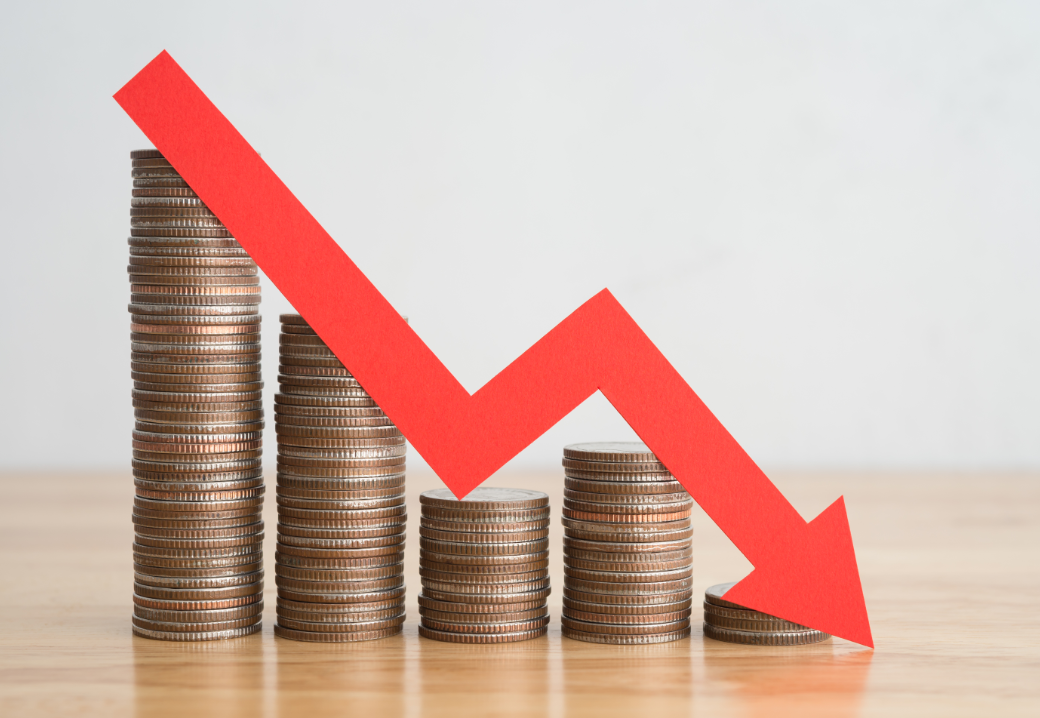
The US Federal Reserve faces a crucial decision at its policy-making meeting this week: Ease off slightly on monetary restraint with a 25-basis-point interest-rate cut, or go for a rare 50-basis-point cut to fend off a recession.
For a brief moment, when volatility picked up in early August and again in early September, we saw some appetite reappear for low volatility ETFs
With tax-loss harvesting season on the horizon, investors may want to consider a pair of tax-conscious, active fixed income ETFs.
The S&P 500 index is a critical benchmark for the U.S. equity market, and its performance often dictates investor sentiment and decision-making. Between November 1, 2022, and September 6, 2024, the S&P 500 experienced a significant rally but not without volatility. Currently, investors have very mixed views about where markets are heading next as concerns of a recession linger or what changes to monetary policy will cause.
In my cycles book I’m reviewing the forecasts of Neil Howe, Peter Turchin, George Friedman, and Ray Dalio. For different historical reasons and patterns, all see a crisis culminating at the end of this decade. Some readers have legitimately pushed back, saying no one knows the future.
As we move into the final stretch of 2024, many investors may be asking themselves: Is it time to give airline stocks another look? According to a new report from Bank of America (BofA), the answer might very well be yes
What is interesting about the growth of hedged equity is that most of the assets are held in passively managed structures.
Due to balance sheet concerns, the higher-for-longer interest rate environment has been a significant headwind for the relative performance of U.S. small-cap equities.
China’s bond traders defied signs of intervention to push sovereign yields to a record low, setting the stage for a showdown with authorities seeking to tame the blistering debt rally.
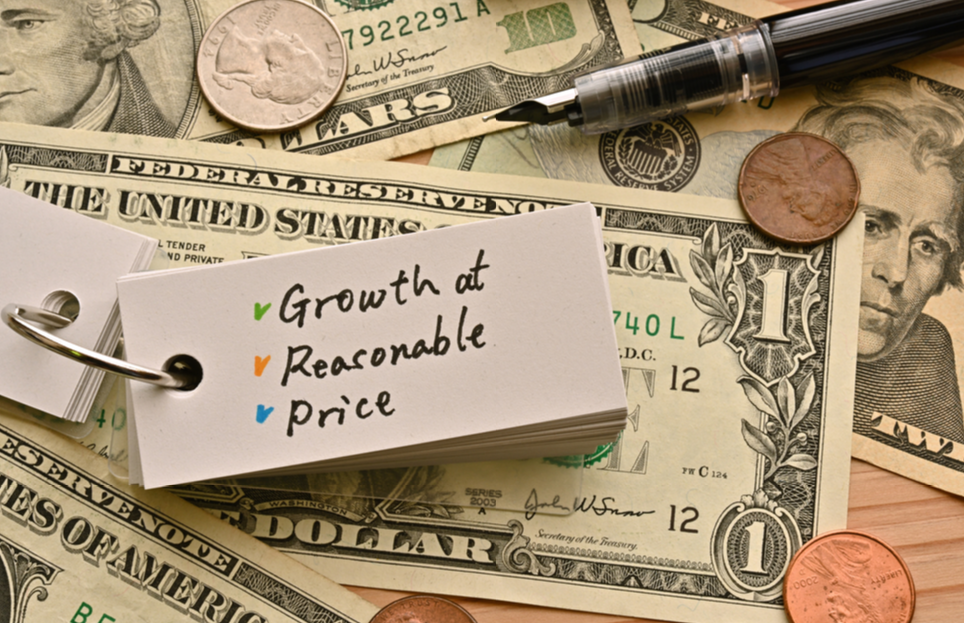
In this video, Chuck Carnevale, Co-Founder of FAST Graphs, a.k.a. Mr. Valuation and Professor Nathan Mauck, Phd. are going to talk about how to approach growth stock investing. As Mr. Valuation, Chuck is a proponent of growth at a reasonable price, often referred to as GARP investing, and Professor Mauck is going to provide some insights into what that actually means.
“Fracking” is an expletive in environmental circles. Yet the spirit of shale is creeping into a business with transformational potential for the energy transition. Schlumberger NV, the industrial giant best known for sucking oil and gas from shale, the seabed (and other places besides), this week announced a breakthrough in direct lithium extraction, or DLE.
The single-stock ETF frenzy is going global, with a new bid to launch products that give US traders a way to bet directly on overseas companies — without fretting about currency risk.
Earlier this year, the Federal Reserve seemed to have time on its side. Payrolls were growing at a healthy clip and the unemployment rate hovered near a five-decade low. Even though there were signs that inflation was licked, there didn’t appear to be much harm in keeping interest rates elevated for a while longer — just in case.
In a niche corner of the bond market, an almost $140 billion wave of maturing debt is poised to lend momentum to what is already one of Wall Street’s hottest hedge fund trades.
Nvidia’s strong earnings exceeded expectations, but the stock fell as investors recalibrated their expectations given its high valuation.
Passive fixed income index investing has evolved significantly over the previous decade, offering investors the flexibility to align risk requirements and investment goals. Learn more from our experts.
Here we dispel three common myths about elections and investments, demonstrating why we think sticking to a long-term investment plan might be a better path to success than trying to predict political cycles.
As AI's usage becomes increasingly widespread around the globe, energy consumption is soaring, along with a demand for additional power.
Last week, the labor data showed a weakening labor market, but didn't give clear signals for the Fed to cut rates by 50 bp at the next FOMC.
Recent Fed commentary and economic data have crystallized investor confidence in rate cuts coming in less than a week
Gold climbed to a record after another faster-than-forecast US inflation print and an uptick in applications for unemployment benefits substantiated bets that the Federal Reserve will cut interest rates next week.
All signs point to a tough few months ahead for investors charting the dollar’s path, after the US presidential debate and a key inflation reading left markets anticipating heightened volatility through year-end.
Tech companies of a certain size have long expected an easy ride from authorities, and for good reason. They always got it. Apple Inc. for years abused loopholes to pay virtually zero tax in the European Union while generating record profits there, thanks to special treatment from Ireland, where it bases its European headquarters.
With U.S. equities perhaps calling for diversification, an active international ETF like TOUS could play a helpful role.
History typically shows that election years don't produce major volatility swings in the municipal bond market.
Here’s a quote attributed to P. J. O’Rourke, an American author, journalist and political satirist: “There is a simple rule here, a rule of legislation, a rule of business, a rule of life: beyond a certain point, complexity is fraud.”
When you pay attention to details in the financial services industry, you elevate your firm’s standing and demonstrate to clients that their relationships are valued. Small, considerate gestures can transform clients’ perception of your service, often bridging the gap between a satisfactory experience and an exceptional one.
Try to understand specifically where you are going off track. Many times these are behavioral disconnects. If you have a boss who is highly attuned to rules and quality and you are someone who doesn’t notice details as much, you might be failing in their eyes. First, start with seeking to understand.
Mario Draghi wants Europe to follow the United States and China down the road marked “industrial strategy.” As Europe’s most influential economist — a former head of the European Central Bank, prime minister of Italy and technocrat supreme — Draghi had enormous leeway in preparing his report on European competitiveness.
Banks and shadow banks are meant to exist in separate worlds, but the financial links between them are increasingly seen as a source of potential instability. That’s a problem for banks because the business of forging those ties has lately been among the hottest activities on Wall Street.
Forecasters expect a monthly report on US consumer prices to show another month of muted increases, possibly playing into a Federal Reserve debate over how much to cut interest rates.
US Treasuries rallied ahead of a closely watched inflation reading that could cement bets on the size of the Federal Reserve’s interest-rate cut this month.
Is now the time for a small-caps ETF? Rate cuts and other potentially positive indicators could position the space to benefit.
While technology is a powerful driver of economic growth, it also presents challenges that can negatively impact productivity, equality, mental health, and societal cohesion. Addressing these issues ensures that technological advancements promote sustainable and inclusive economic growth.
In emerging markets, technological advancements present a unique opportunity to empower underserved communities.
Andrea Eisfeldt, Professor of Finance at UCLA, explains the indices underpinning two Simplify ETFs focused on companies with high levels of intangible capital. VettaFi’s Roxanna Islam discusses Tradr ETFs, the Research Affiliates Deletions ETF (NIXT), gold ETF flows, spot ether ETFs, and more.
On this episode of the “ETF of the Week” podcast, VettaFi’s Head of Research Todd Rosenbluth discussed the Alps Equal Sector Weight ETF (EQL) with Chuck Jaffe of “Money Life.” The pair talked about several topics regarding the fund to give investors a deeper understanding of the ETF overall.
The safest way to ensure retirement security is to match, on a year-by-year basis, future spending needs with a reliable stream of inflation-adjusted income and maturing fixed-income assets. As we’ve already seen, a conventional stock/bond portfolio may not cut that mustard.
State Street Global Advisors and Galaxy Asset Management are launching a trio of cryptocurrency-focused exchange-traded funds even as investors pull back from spot Bitcoin funds.
Given the backdrop of monetary policy stimulus, the global economy is poised for growth and international stocks for continued leadership.
Investors weighing election risks ahead of the first US presidential debate between Vice President Kamala Harris and former President Donald Trump are already a lot more jittery than they were before Trump and his onetime opponent, President Joe Biden, met onstage in June.
The all-in view of Tesla Inc. was summed up in a line from a report this summer by one of the more all-in analysts covering the company: “The car is to Tesla what the video game chip is to Nvidia.
When John D. Rockefeller wanted to punish a rival, he cut prices to force them to operate at a loss. The father of the modern oil industry had a name for it: a “good sweating.” A century later, OPEC+ is giving Big Oil the modern equivalent of Rockefeller’s time-tested tactics. Not everyone will be fit enough for it.
On the back of recent cooling in economic growth, an uptick in unemployment, and moderating inflation, the Federal Reserve (Fed) looks set to begin its rate-cutting cycle at its September meeting.
The BRICS Pay initiative aims to better integrate currencies for trade and facilitate cross-border transactions among its members.
Last week, the BlackRock Target Allocation Team reduced their equity exposure and reduced some growth allocations in favor of value.
Shares of Nvidia are down 17.22% for the week ending Sept. 4. The firm is widely viewed as one the equity proxies on the AI investment theme.
To tackle the costs of higher education, many families use a 529 plan to bolster savings. An ETF strategy can bring long-term savings growth.
78 million baby boomers are about one-third of the voter-eligible population and 77 percent of them vote, so there are 60 million baby boomer votes. That 60 million is 38 percent of the 158 million votes cast in the 2020 presidential election. The baby boomer voters’ bloc is a big deal.
Part one of this series described the burgeoning bull steepening yield curve environment and what it implies about economic growth and Fed policy. It also discussed the three other predominant types of yield curve shifts and what they suggest for the economy and Fed policy.