Artificial intelligence (AI) and the Federal Reserve rate hike have dominated headlines recently—and investors might be wondering how these things will affect them.
This month, our experts discuss how Federal Reserve tightening has historically affected the markets; whether European stocks might be worth a second look; and the news from the most recent Federal Open Market Committee (FOMC) meeting. We provide the supporting documentation for all claims summarized below in the linked articles.
Investors are remaining cautious about the markets, according to our U.S. stocks and economy report this month. Our report notes that while investors have continued to pile into the market via strong ETF flows and high margin debt balances, they've done so reluctantly with more subdued attitudes.
Tech and AI are driving a greater share of global equity market returns and earnings growth, raising concentration risks and the need for broader diversification.
It seems to be the end of the Great Moderation Era for the U.S. economy. The Great Moderation Era—which marked most of the two decades leading up to the COVID-19 pandemic—is drifting away into what we call the new Temperamental Era.
During this time of year, we like to take stock of what happened in the first half of the year and compare it with the expectations we had at the beginning of the year when we published our full-year outlooks.
Equity markets should remain supported by strong earnings and capital investment trends through 2026, but market concentration and macro risks leave less room for error.
Emerging market stocks have rebounded to new highs following their correction at the onset of the Iran war. The recent rally has been concentrated around AI. Can this continue?
Iran war-related headlines continue to cause volatility in the markets and oil prices to rise, but our experts remind readers that uncertain times might also present opportunities.
While infrastructure companies are not immune to a potential economic slowdown, they may provide a longer-term investment opportunity amid an uncertain macroeconomic backdrop.
Iran-related geopolitical risk has boosted stock volatility, especially in sectors like Energy. Uncertainty remains high and there are a range of scenarios for how this conflict could be resolved and how it might affect economic conditions and markets.
The worsening energy shock from the Iran War has raised risks of a more severe crisis. It may resolve quickly, but the longer it persists, the larger the possible economic damage. Asia and Europe are most vulnerable.
If tensions de-escalate soon, there could be relatively little impact on international markets. However, risks will rise if global energy supplies face a prolonged disruption.
Fourth-quarter earnings results have been generally solid so far, albeit a bit weaker relative to prior quarters when it comes to beat rates and price reactions. On the international front, weakening global ties may lead to economic disruption and lasting investment implications. Meanwhile, bond market volatility has remained low despite economic and policy uncertainty.
Weakening global ties may lead to economic disruption and lasting investment implications. Here's what investors should know about navigating the changing landscape.
EM stocks have increasingly become tied to the fortunes and risks of the growth in AI. Should the AI capex race continue, and earnings estimates are realized, EM stocks have the potential to continue to rise, because valuations are not yet extended.
Investors are navigating not just uncertainty, but an unstable environment influenced by tariffs and inflation, among other factors. While volatility may increase, there is likely room for another solid year in 2026, especially for fixed income and international stocks
International stocks could be poised for another strong year in 2026 due to accelerating global growth, attractive valuations and the potential for dollar weakness.
While stock and bond markets wait for U.S. federal data to become available again, private-sector reports suggest lukewarm overall economic growth.
German officials announced a massive stimulus program in early 2025. The results have been underwhelming so far, but we believe the economic boost to Germany and Europe is still coming.
Earnings growth and attractive valuations for Japanese companies, reforms to corporate governance, and other shifts in the Japanese economy may create opportunities for investors.
The stock and bond markets are taking the government shutdown—and lack of data releases—in stride, but how long the calm might last is an open question.
The full impact of U.S. import tariffs on the broader economy has yet to be felt and may not happen for some time—or even at all. Economic distortions from tariffs are still filtering through the global economy, but so are offsets such as fiscal and monetary stimulus, as well as spending on artificial intelligence (AI).
Chinese equities have surged amid investor optimism about AI innovation and certain government initiatives, despite a slowdown in China's economy.
A Federal Reserve rate cut won't necessarily lower longer-term bond yields or mortgage rates.
Progress on reducing fiscal deficits has stalled in some large economies around the world. Should investors be worried?
International stocks have outperformed the broad U.S. stock market so far this year. If the U.S. dollar continues to weaken, it could boost international returns even more.
U.S. economic growth slowed decisively in the first half of the year amid concern about rising tariffs, although corporate fundamentals have remained strong.
While growth may slow in the near term, Europe's longer-term outlook appears to be improving.
Globally, stock markets are near their highest levels for the year, reversing the losses that came in the wake of the U.S. tariffs announced on President Donald Trump's declared "Liberation Day," April 2nd.
Israel-Iran hostilities brought a short-term market focus on oil. Longer term, artificial intelligence (AI) electricity needs could create a power shortage, as well as opportunities and risks for investors.
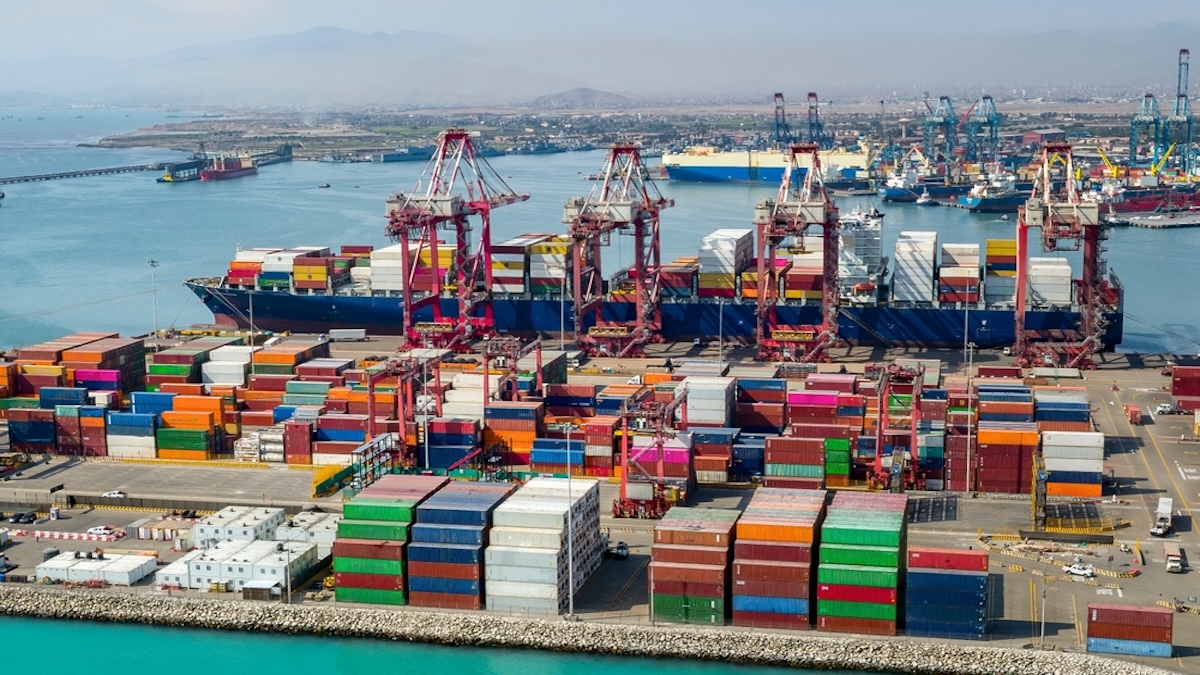
What happens in global supply chains can provide insight into how tariffs and the trade war may affect economies around the world.
Investors may revisit international exposure in their portfolios amidst reduced market reactions to tariff announcements, uncertain U.S. policy and lagging U.S. stock performance.
A U.S. trade court has blocked most of the Trump administration's "reciprocal" tariffs, but the legal battle will continue. Here's what investors should know.