While occasional bouts of volatility are likely, we expect the fixed income markets to provide ballast for portfolios and are likely to deliver solid returns in 2026.
Despite headwinds, ESG ETFs saw a 6.62% growth in AUM in 2025, according to State Street Investment Management.
Gold’s stomach churning volatility – up some 30% in less than a month since the start of the year, only to subsequently lose 20% in a matter of days – has, unsurprisingly, left some investors doubting its role as a hedging asset.
Private assets are gaining traction in many portfolios, as investors seek new frontiers given a more challenging market landscape. Returns of traditional asset classes in the years ahead are likely to be lower on an inflation-adjusted basis, and public markets offer fewer options for diversification today, at a time when managing risk is becoming increasingly important.
The year is young, but already, a clear theme is emerging: investors are looking to add international equities exposure to their portfolios. ETFs already offer a wide variety of options for investors to get that exposure, but which fund or funds make th
The surge in active ETF launches aligns with broader market trends. For example, active ETF strategies accounted for roughly 60% of new ETF launches in the early months of 2025, underscoring the category’s growing momentum and advisor interest.
The year is young, but already, a clear theme is emerging: investors are looking to add international equities exposure to their portfolios. ETFs already offer a wide variety of options for investors to get that exposure, but which fund or funds make the most sense?
The AI spending scare that rattled investors during Microsoft’s earnings call nearly two weeks ago intensified last week as Alphabet and Amazon followed suit. On Wednesday, Google’s parent company reported record annual revenues exceeding $400 billion and a 48% surge in Google Cloud growth.
Is your portfolio too focused on U.S. large-cap stocks? In this episode of ETF of the Week, Chuck Jaffe and Todd Rosenbluth (Head of Research at VettaFi) dive deep into the Vanguard Emerging Markets Stock Index Fund (VWO).
For the last year, any discussion of the obesity-drug market has come with an asterisk: Everything will change once pill versions of the popular GLP-1 drugs arrive. Those potentially cheaper alternative to injectables could mean a larger slice of the millions of Americans with obesity will try out the medicine.
New research connects intensifying natural perils to their future implications for asset classes.
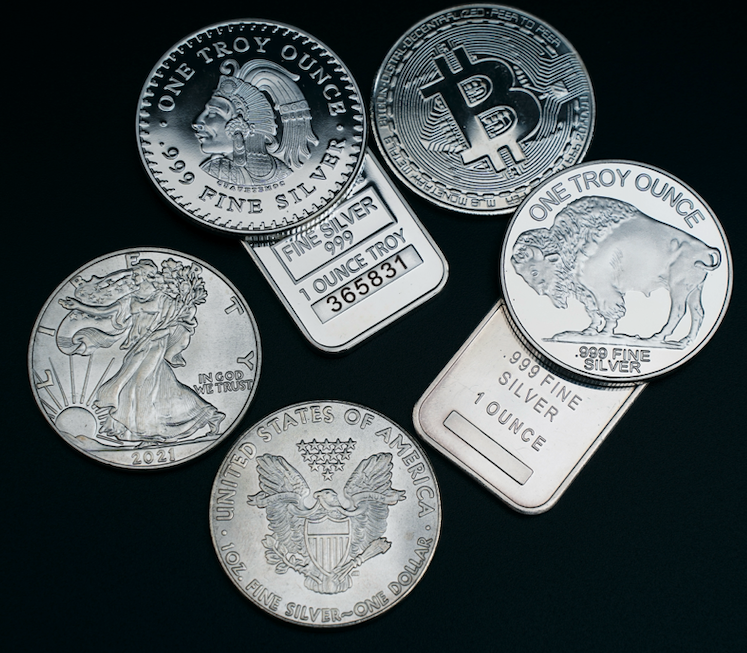
Throughout most of 2025, silver has recently outperformed gold, proving (ironically) that it is not always second place. Strength in silver built gradually through last year, but the latest pullbacks are a reminder that near-term market reactions can outweigh fundamentals and long-term investor sentiment.
Oil smuggling has been so enormously profitable that no matter how many obstacles Washington and Brussels put up, the barrels kept flowing. With a daily turnover of $1 billion, the black market has been just too attractive.
We believe we’re entering a new era of dispersion in the performance of financial assets. Behind buoyant index averages are sharply bifurcated cohorts of winners and losers.
As the ETF universe continues to expand, a fundamental shift is underway with investors moving beyond simple market access toward outcome-driven construction. Dina Ting, Head of Global Index Portfolio Management, discusses how different index-based ETF strategies are being used to design portfolios aligned with specific goals rather than just reacting to market noise.
Despite an aging credit cycle, private credit still plays a starring role.
Precious metals, cryptocurrency, and currency speculation appeal to fear-driven parts of us that want certainty, protection, or a shortcut to wealth. Unfortunately, for most investors, that promise is never fulfilled.
Since ChatGPT burst onto the scene in 2022, artificial intelligence (AI) has moved from science-fiction to reality. For many, AI has become a necessity. The transformation has been swift. Nearly every company now wants to integrate generative AI into their business model, while governments are scrambling to develop sovereign AI infrastructure.
Headline whiplash returned to US equity markets last week, but this time the drama wasn't geopolitical. On Thursday, the tech-heavy Nasdaq fell 1.3% as the market digested mixed results from some Magnificent Seven earnings reports.
The ETF industry has carried its record-breaking momentum from 2025, surpassing $100 billion in flows before the end of January.
Joel Mokyr has made a valiant and mostly convincing effort — deeply researched and extensively documented — at explaining the Great Enrichment. His Nobel Prize is not only richly deserved but long overdue.
In a move that underscores the relentless downward pressure on investment costs, Vanguard announced that it has slashed fees for 84 mutual fund and exchange-traded share classes. These reductions, spanning 53 different funds, represent nearly $250 million in estimated savings for investors in 2026 alone.
Today we’re going to explore this “affordability” issue, looking at economic facts, survey data and simple intuition. As you’ll see, it’s not as simple as some people think. I also make a quick comment about the appointment of Kevin Warsh as Fed chair at the end.
VettaFi recently sat down with Morten Paulsen, head of research for robotics & machinery at CLSA, to discuss the transition of physical AI into a tech-driven industrial up-cycle. Paulsen projects that persistent U.S. labor shortages will drive domestic robot shipments toward a historical high of 40,000 units in 2026.
At GMO, we have always defined a bubble as a two-standard deviation divergence of the price of any asset class above its long-term real price trend. The U.S. stock market has now been in bubble territory for a prolonged period. Sooner or later, the bubble will burst and the price will return to its historic level.
Stock market volatility has a way of triggering powerful emotions. Rising prices foster confidence. But when markets fall, fear can take over, leading investors to make decisions that may undermine long-term returns.
In this article, we look both back and forward, first at the 2025 capital markets to analyze not just what happened but also how it fits in the historical context and what we believe it means for 2026 and beyond. We then pivot to our return expectations for major asset classes in the next decade.
Over the past year, Tether has quietly become one of the biggest players in the global gold market — the embodiment of a meeting of the crypto and gold worlds whose shared distrust of government debt is a major factor behind the surge in prices to never-before-seen highs above $5,200 an ounce.
LPL Research examines how rising productivity, AI adoption, and structural shifts toward services are supporting U.S. economic growth in 2026.
According to Baiocchi, advisors are reevaluating portfolios and recognizing gaps in exposure to companies driving major market themes.
Each year on January 28, Data Privacy Day underscores the global imperative to protect personal information in an increasingly digital environment. For high-net-worth (HNW) and ultra-high-net-worth (UHNW) families, this responsibility carries exponential weight.
Equity markets have delivered strong returns in recent years, leaving many investors with substantial unrealized gains across their portfolios. Let’s consider how a tax-managed long-short strategy could be a powerful tool in the pursuit of tax efficiency—for the right investor.
Ultra-affluent families face risks that differ significantly from those of the general population. Complex structures, such as multiple entities, trusts, K-1s, and investment partnerships, create more opportunities for sensitive information to be shared across advisors and custodians. Large refunds and tax payments represent enticing entry points for criminals.
The real hero of the late-week recovery was the Information Technology sector. Despite a jarring 16% slide from Intel (INTC) following a tepid outlook shared on their Q4 2025 earnings call, the broader semiconductor space and "Magnificent Seven" megacaps provided the necessary ballast.
When investors think about risk in equity portfolios, the usual suspects come to mind: market risk, sector risk or maybe even macroeconomic risk. But lurking beneath the surface is a less obvious, often underestimated threat—style and factor risk.
Looking ahead to 2026, Franklin Templeton Fixed Income Municipal Bond Director Ben Barber says there are a few key factors that will likely shape the municipal bond market.
Our view from the portfolio management desk is that there seems to be a concurrent affordability crisis in the public stock markets as well. The biggest names appear to be “priced for perfection” at this moment.
Several dynamics have converged to drive silver higher, including spillover effects from the gold bull market, steady industrial demand, surging investment demand, inflation, and geopolitical uncertainty. However, one factor is the key driver – there isn’t enough metal.
The MSCI Emerging Markets index rallied more than 30% in U.S. dollar terms, easily outpacing the S&P 500 and other developed market benchmarks. And many are expecting that broader outperformance to continue in 2026 – thanks to a combination of macro developments, valuations and AI exposure.
In order to develop prudent spending plans for clients that are consistent with their spending goals, advisors should employ reasonable client-specific LPP assumptions. The three-step process and tools highlighted in this article can help advisors get started.
For advisors breaking away to start their own practice, there’s no avoiding the risks that come with entrepreneurship — but in the current economic climate that includes high inflation, market volatility and heightened uncertainty — advisors need to be doubly prepared when going out on their own.
Today, we continue my 2026 economic and market forecast. Last week, I described our current environment as The Bipolar Economy, and noted that the real goal here isn’t to tell you what will happen. It’s to help you know what could happen so you can be prepared.
There’s a lot of buzz about the opportunity in US small cap stocks this year. There’s a confluence of factors that seem aligned just right for the segment, chief amongst them earnings growth expectations.
Last year, gold rose by over 64 percent, setting 53 new record highs along the way. Silver gained just under 148 percent. Platinum’s price increased by 125.9 percent. Palladium was up just over 80 percent.
Portfolio Managers Benjamin Wang and Zoey Zhu explain how a historic valuation discount in small caps versus large caps combined with quality’s worst performance in 30 years creates a noteworthy setup in 2026.
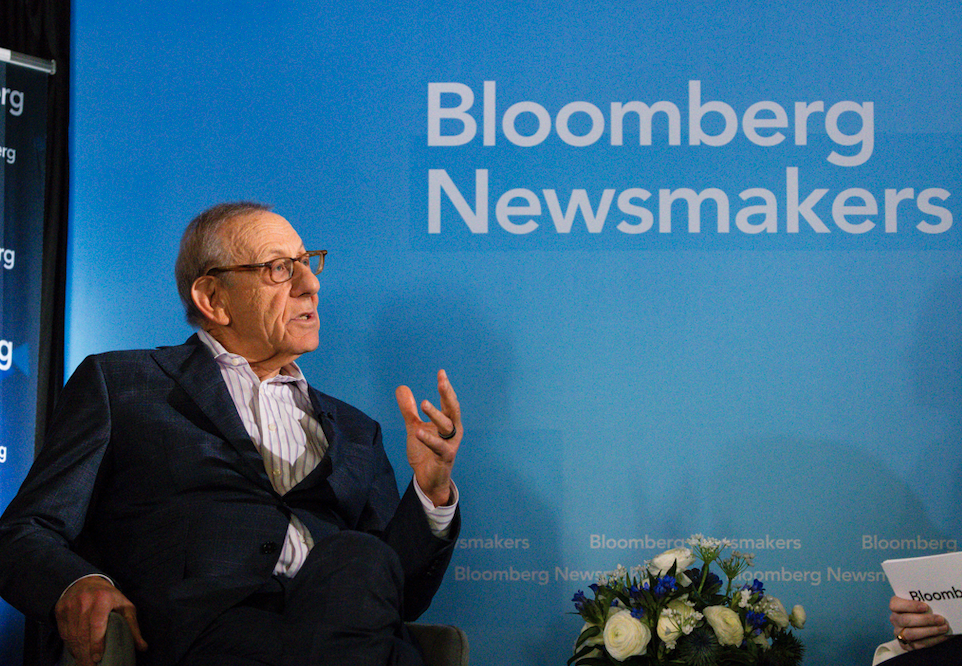
Billionaire Stephen Ross aims to position Florida’s Palm Beach County as the next Silicon Valley, calling the region a more business-friendly environment for tech investors and executives than California.
The billionaire Ellison family said this week that it will try to overhaul the board of Warner Bros Discovery Inc. unless the Hollywood studio engages with their $108 billion takeover bid. But winning support in a corporate fight won’t be easy as long as their offer contains holes.
EM stocks have increasingly become tied to the fortunes and risks of the growth in AI. Should the AI capex race continue, and earnings estimates are realized, EM stocks have the potential to continue to rise, because valuations are not yet extended.
What happened in Venezuela last weekend may turn out to be the most consequential energy and geopolitical event of the decade. In a swift, coordinated operation that stunned the world, U.S. forces captured Venezuela’s longtime socialist dictator, Nicolás Maduro.
The materiality of ESG factors differs across sectors and markets. Investors need to understand how.