Back before clocks went digital, you could say “a stopped clock is right twice a day” and even youngsters would know what you meant. A mechanism could be nonfunctional but occasionally correct.
Former Treasury Secretary Lawrence Summers rejected speculation that the dollar is rapidly losing its dominance in the global economy, and highlighted China’s detractions in providing an alternative reserve currency.
China’s economy has turned the corner, and is on a path towards a gradual, domestic demand-driven recovery. Andy Rothman outlines the reasons why China’s recovery is likely to be sustainable.
Big Tech earnings next week will offer investors a dose of reality following this year’s impressive gains in the sector that were powered by hype over artificial intelligence.
While Asian financial companies have by no means been safe from the recent banking turmoil scything through other developed economies, regional banks have had a far less punishing month in terms of sales and earnings estimates than their peers in other markets.
Despite continued geopolitical events and a potential banking crisis, markets remained focused on the economy and central banks’ attempts to control inflation.
Nexus or Icebreaker? Two competing ideas are jostling for attention, each promising to reshape the inefficiency-ridden landscape of moving money from one country to another. Instead of trying to choose between them, central banks ought to give both a shot.
To kick off the beginning of 2023, there continues to be a bias we see in equity investor portfolios. These portfolios have many of the traits investors see at the endpoints of the economy like software, consumer products and computer chips.
It’s believed that to meet this goal, two out of every three passenger vehicles manufactured in the U.S. would need to be electric models.
What does a potential change in Federal Reserve policy mean for markets and the economy?
Despite recent headwinds, structural drivers underpinning China’s growth remain intact. Sectors that will benefit from the structural trends include healthcare, industrial automation, and domestic brands targeting increased spending by Chinese consumers.
Kyle Bass has some advice for real estate investors: Tear it down. The founder of Dallas-based Hayman Capital Management says office buildings in cities need to be demolished because demand isn’t returning and it’s impractical to turn most towers into apartments.
Xi Jinping led a parade of officials this spring vowing to revive China’s economy, hoping to repair the damage wrought by years of Covid Zero and regulatory clampdowns. Some of the world’s biggest investors are selling anyway.
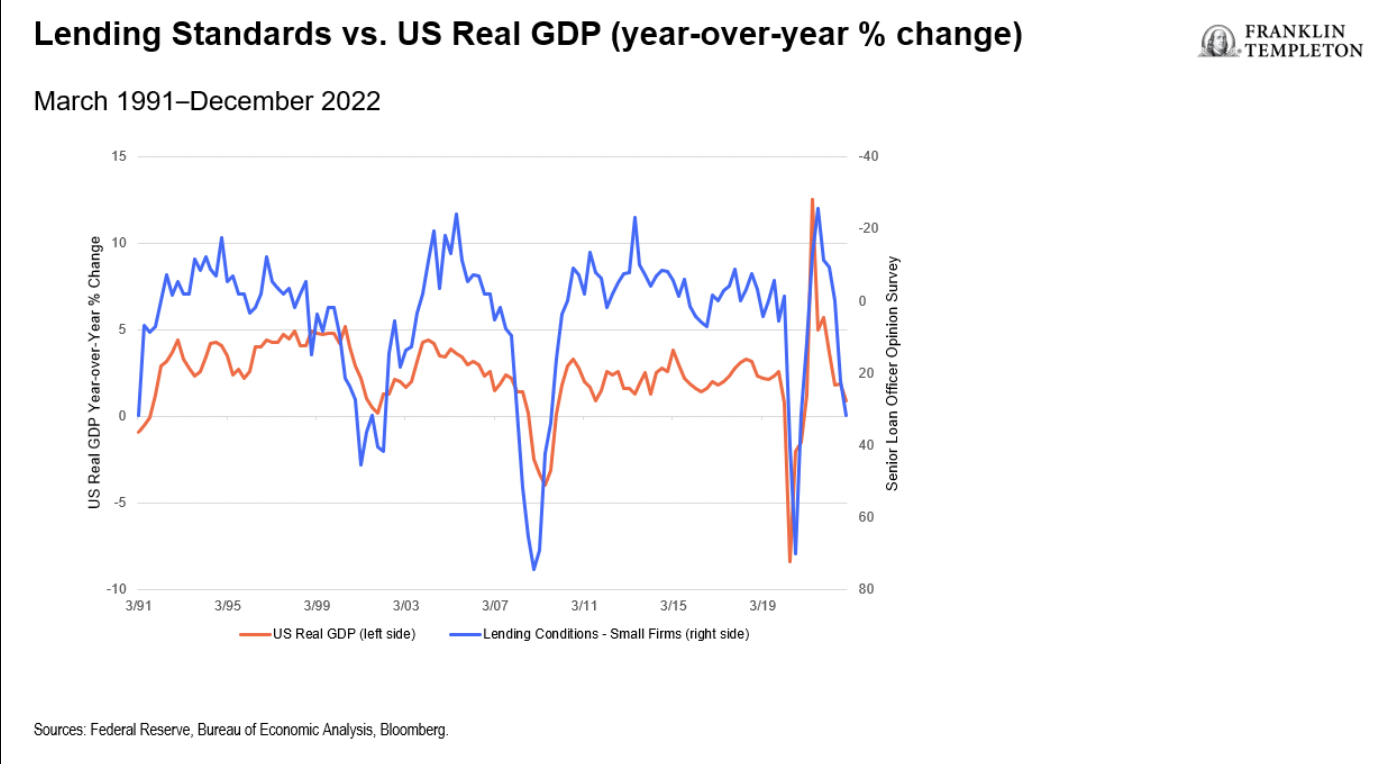
As central banks wrestle with how to respond to volatile economic data and banking turmoil, while also fighting inflation, Franklin Templeton’s economists provided their perspectives on what’s next for economic growth, interest rates, inflation and fixed income markets.
Central banks accumulated gold at the fastest pace on record in the first two months of 2023. In January and February, central banks collectively bought a net 125 tonnes of the metal, the highest amount for the year-to-date period since banks became net buyers in 2010.
“Thinking the Unthinkable.” What does that phrase bring to mind? To me it suggests a situation that has become so stressed you are forced to consider undesirable solutions.
Shares of China’s state-owned enterprises have been a hot trade in a mostly lackluster equities market this year, but disappointing earnings are causing investors to reassess their bullish bets.
Asian equities are likely to extend their gains as the year progresses, boosted by the region’s relatively better growth prospects and a broadening economic recovery in China.
It’s a familiar story: a once-dominant US industry is challenged by low-cost competitors overseas and gradually loses market share. This time, however, the pressured industry isn’t a manufacturer. It’s the American farm.
This essay focuses discusses a February visit by Secretary of State Blinken to Astana, and the EU-Central Asian Economic Forum in May.
If I did not have bad luck, I would have no luck at all.
Alibaba Group Holding Ltd. and JD.com Inc. have begun preparations for a trio of the year’s biggest Chinese debuts, heralding a wave of initial public offerings that promise to breathe new life into the struggling technology industry and Hong Kong’s stock market.
Stock and bond markets were shaken by the recent banking crisis in the US and Europe.
Recently I saw someone share a clip from their weather app. It said, “Rain expected at 3 pm,” right above a little graphic showing a 30% chance of rain at 3 pm. What’s wrong with that picture?
China’s economy is in the early stages of a gradual, consumer-led recovery. In this issue of Sinology, Andy Rothman outlines why China’s opportunities outweigh risks.
Easing financial conditions globally have made Morgan Stanley “outright bullish” on growth stocks in Asia and emerging markets versus their value peers.
A Singapore-based fintech investment firm is close to raising $100 million to back finance and blockchain startups in China and Southeast Asia.
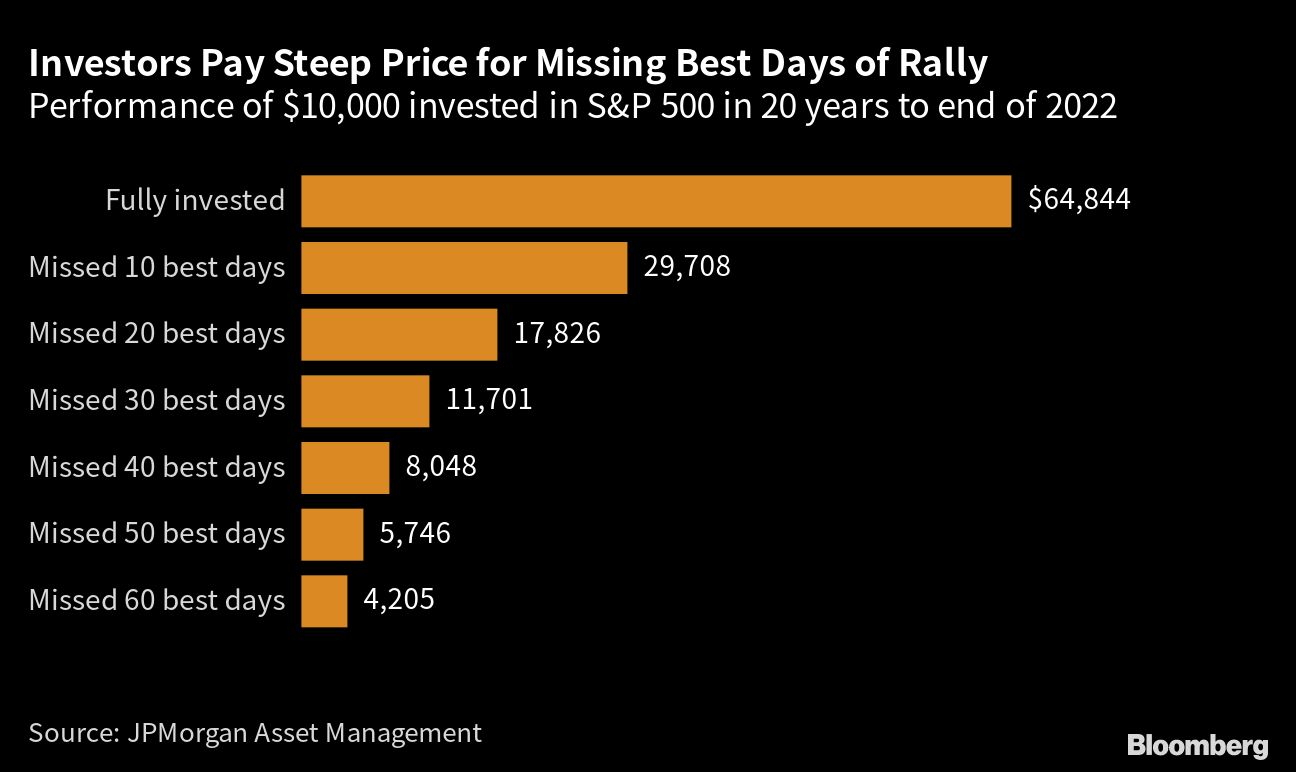
Some of the world’s biggest investors are looking beyond interest-rate hikes, bank failures and the threat of recession to one of the greatest fears of all money managers — missing out on the next big rally.
UBS Group AG agreed to buy Credit Suisse Group AG in a historic, government-brokered deal aimed at containing a crisis of confidence that had started to spread across global financial markets.
Franklin Templeton Investment Solutions explores the shared macro concerns that set the stage for the recent banking crisis, its ripple effects on the broader economy and implications for multi-asset investing.
U.S. equities are lower as pressure has returned to the banking sector, which remains top of mind.
Portfolio manager Peeyush Mittal and research analyst Swagato Ghosh say India has a fiscal playbook to chart a path of stability and growth.
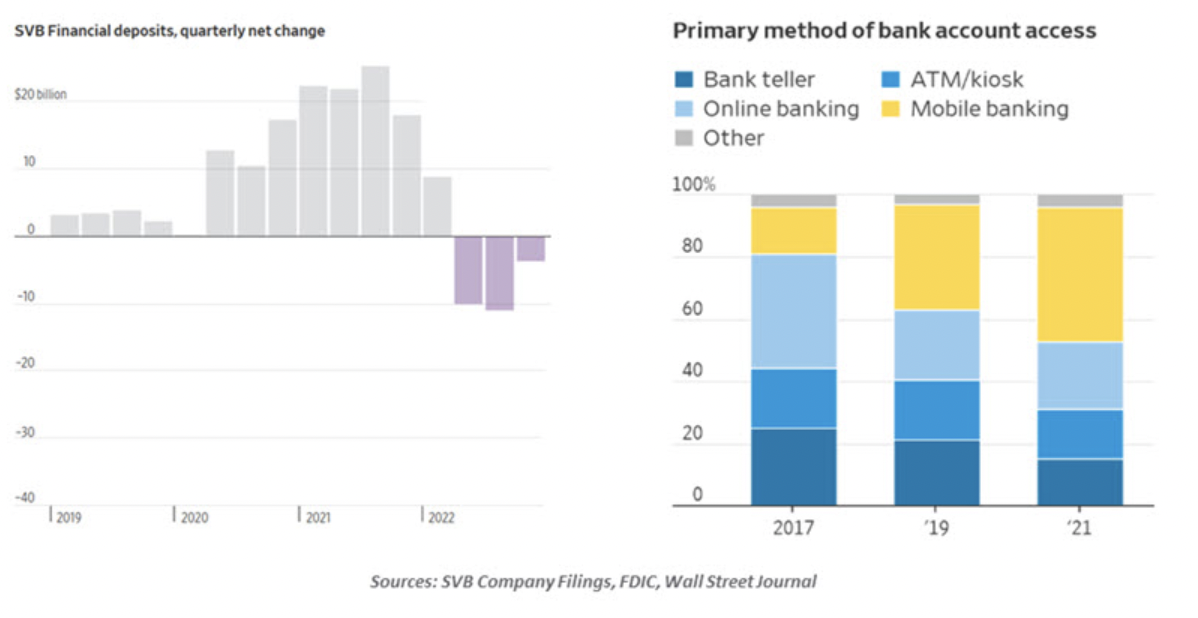
Financial market volatility has followed the collapse of Silicon Valley Bank. Stephen Dover, Head of Franklin Templeton Institute, shares his thoughts on possible implications outside the United States.
U.S. stocks are falling in pre-market trading as recent banking turmoil on this side of the pond made its way to Europe.
Some of the world’s top money managers are sitting on a windfall after the collapse of Silicon Valley Bank spurred the biggest rally in US Treasuries since the early 1980s.
U.S. stocks are extending last week's sharp declines that have come amid worries regarding the ultimate impact on the banking sector of the recent collapses of SVB Financial and Silvergate Capital.
Like face recognition, artificial intelligence (AI), mRNA vaccines and other modern technology, Bitcoin is a key component of the ongoing, rapidly accelerating digital transformation.
U.S. equities are modestly higher in pre-market action following the February labor report that was only modestly above estimates.
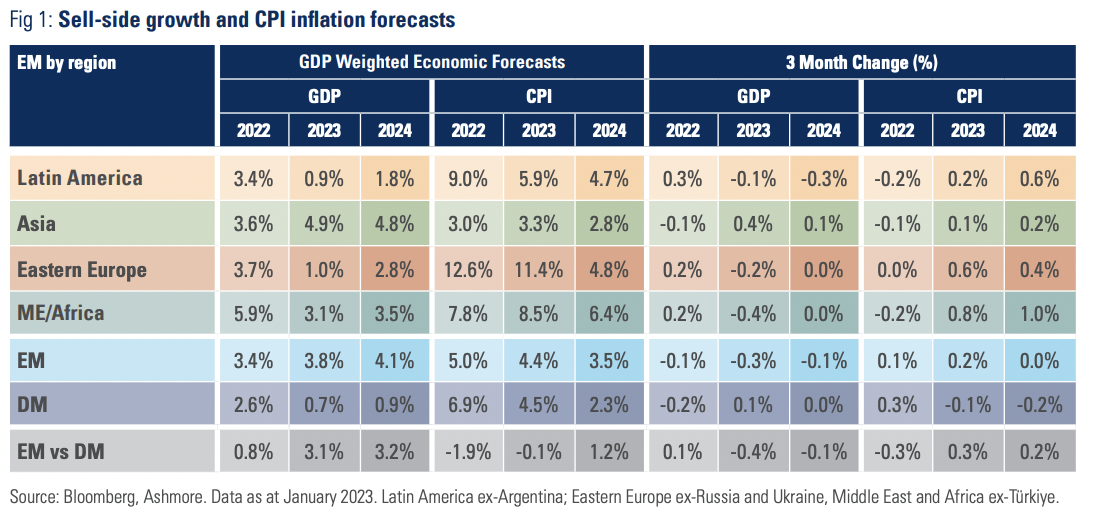
Head of Portfolio Strategy David Dali explains why it’s an opportune time to add emerging-market exposure.
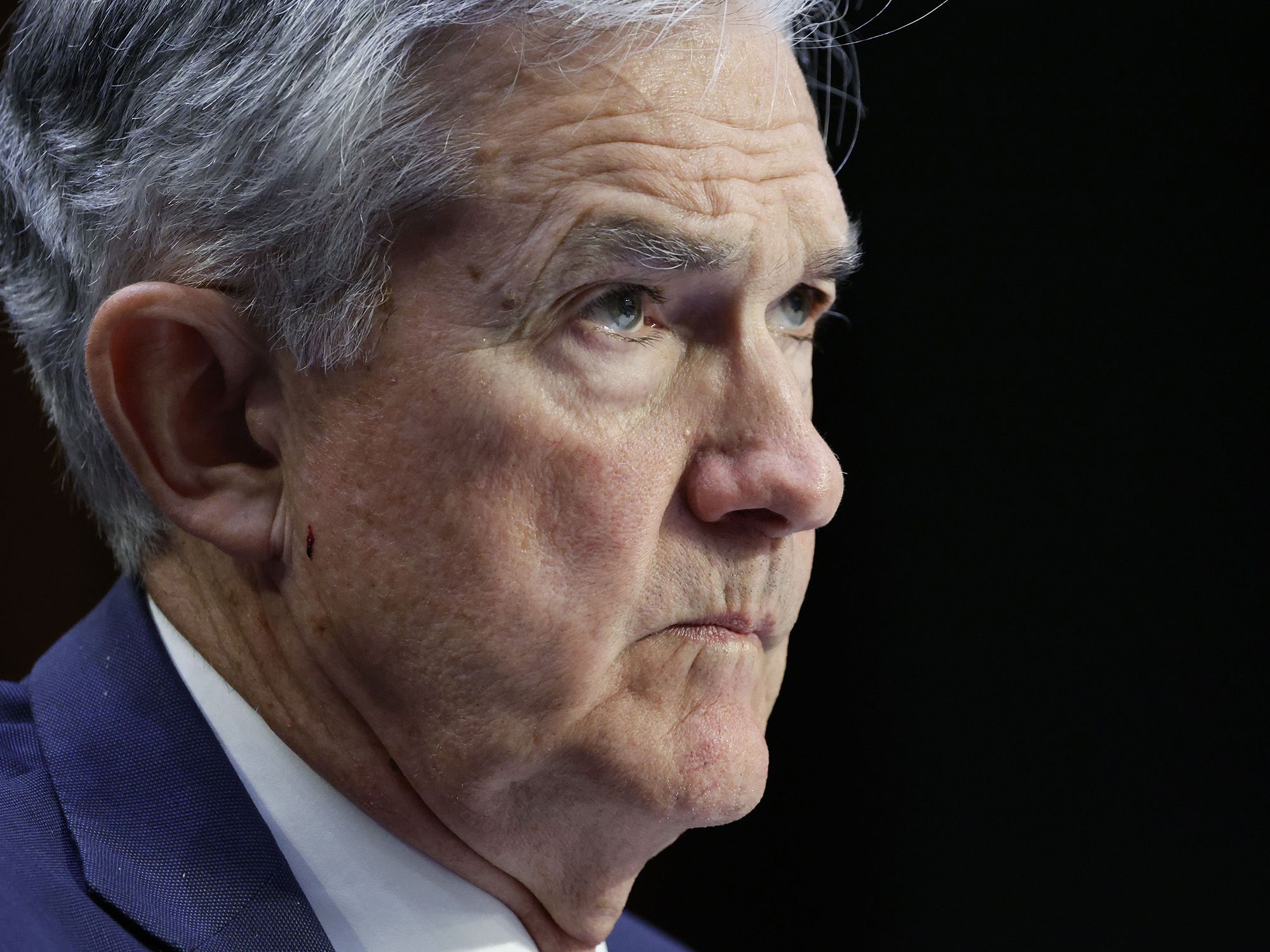
U.S. stocks are higher, paring weekly losses though the markets remain choppy following this week's hawkish Congressional testimony from Fed Chairman Jerome Powell.
The problem with speculation is that there’s usually a gap between the underlying risk and the inevitable outcome.
US job growth probably moderated last month after a blistering January pace, while the unemployment rate likely held at a 53-year low, illustrating a labor market that’s proved mostly impervious to the Federal Reserve’s massive interest-rate hikes.
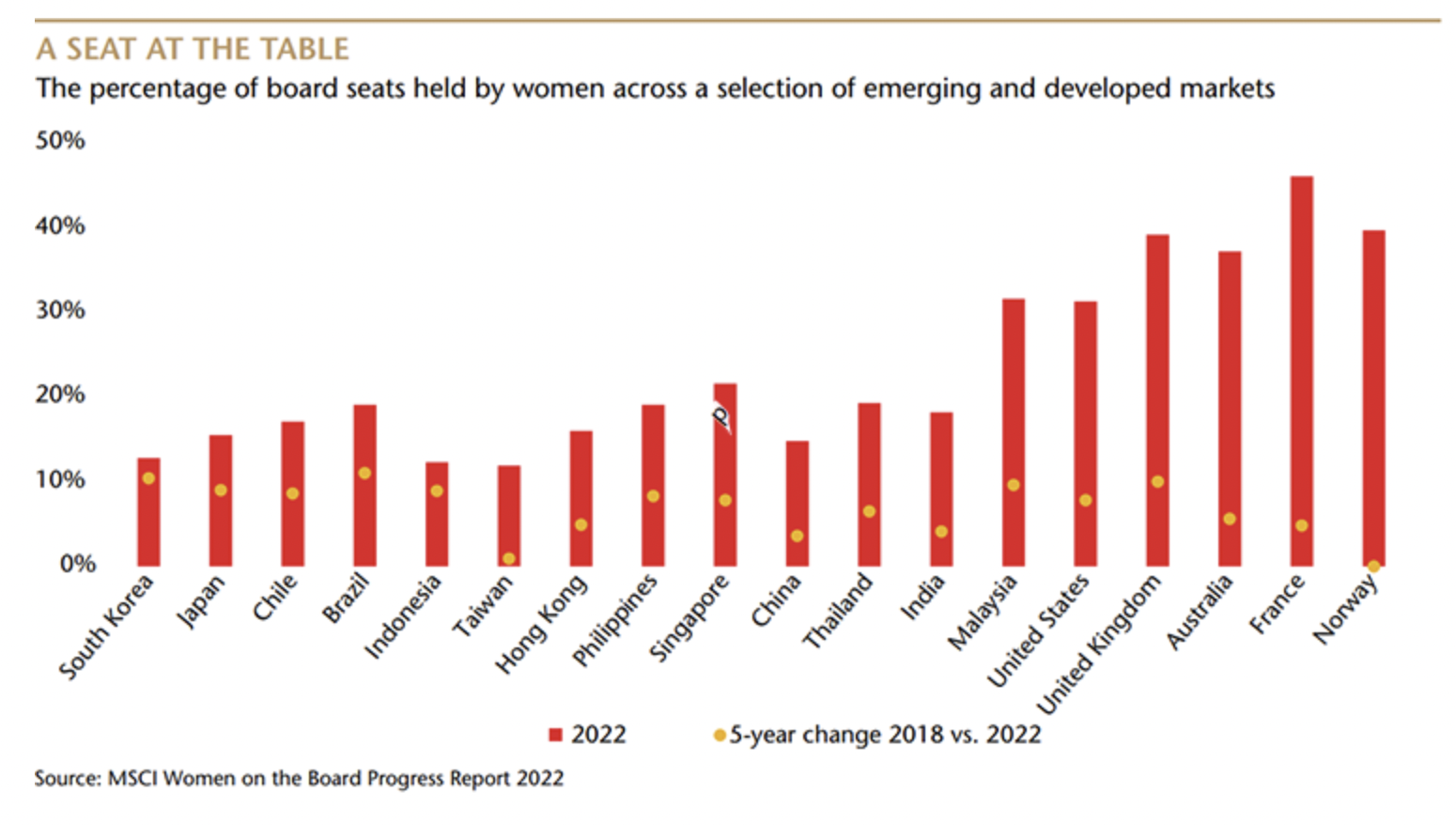
More women in senior roles will support the long-term success and sustainability of emerging markets.
Lufthansa’s blockbuster report is just the latest signal that commercial aviation, one of the hardest-hit industries during the pandemic, may be ready to make a landing again in investors’ portfolios.
Hedge funds and proprietary trading firms are beefing up agricultural markets expertise by hiring traders as big swings in prices have made even relatively niche corners of commodities trading lucrative during the past year.
Economic growth and inflation have surprised to the upside so far in 2023, not only thanks to the reopening of the Chinese economy, but also due to the resilience of the labour markets.
U.S. stocks are subdued in pre-market action as the global markets remain choppy amid the backdrop of uncertainty regarding the ultimate impact of aggressive monetary policy tightening.
The asset management industry is overlooking what promises to be a major new ESG risk: biodiversity.
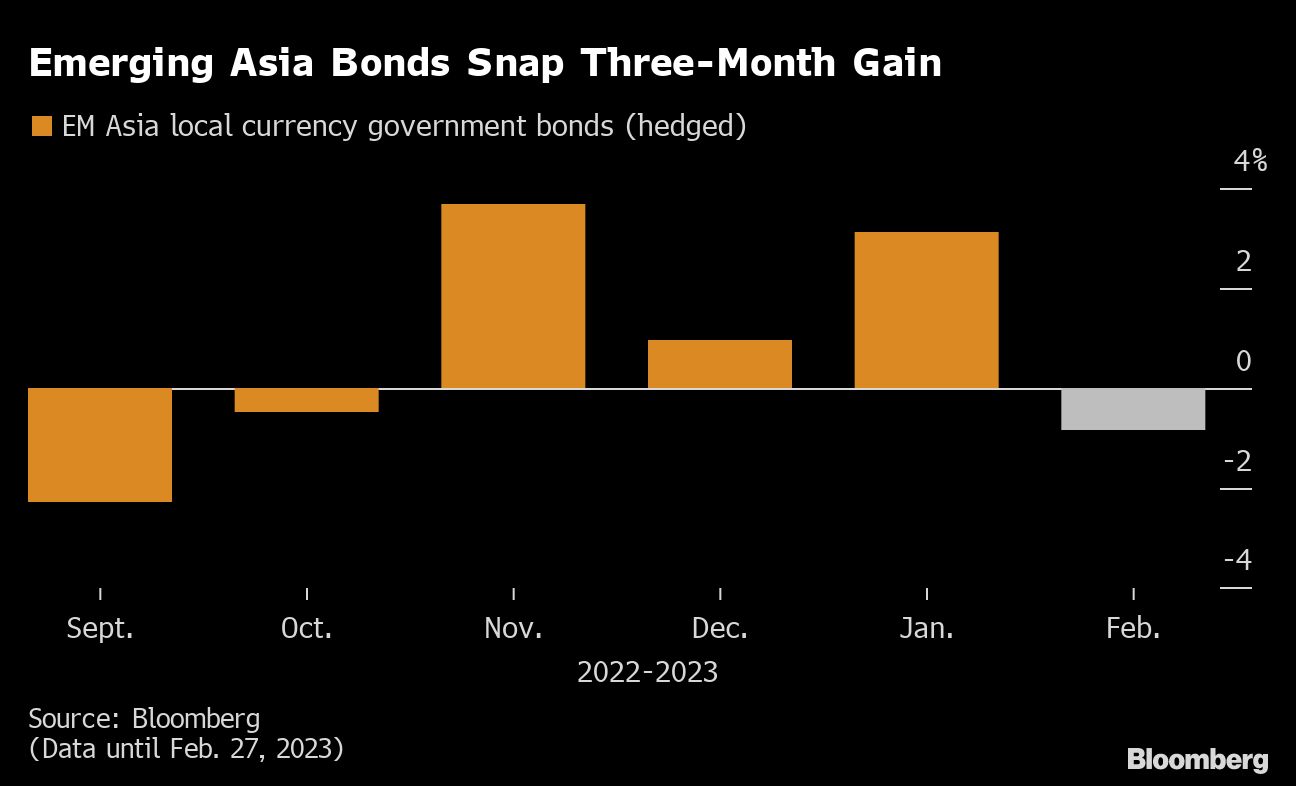
In just one month, emerging Asian assets have gone from a buy to sell. And all signs point to continued caution as March draws near.
A cohort of Wall Street’s emerging-market bulls is growing wary of calling a new dawn for riskier assets, opting for a more cautious approach to developing-nation currencies.