Investors are choosing bonds in record numbers – in 2023, global bond ETFs gathered an annual record of over $300 billion in flows with iShares leading with $113 billion. My guest today will explain why this will continue, as many investors are still significantly underweight to fixed income, with a 22% average allocation. You will hear why investors need to step out of cash and move faster into fixed income because, historically, the market has priced in rate actions long before they occur.
On October 24, 2022, precisely a year ago, we published an article by Allan Roth in Advisor Perspectives, The 4% Rule Just Became a Whole Lot Easier. The idea for that article came from a conversation that Allan and I had. I noted that real rates, as expressed by TIPS, were about 1.75%. I thought that it would be possible to lock in the proverbial 4% safe withdrawal rate. Allan did the analysis and found that, indeed, a 4.36% safe withdrawal rate was possible. That article received widespread attention throughout the financial media. Perhaps it even had a role in the introduction of BlackRock’s new suite of defined-maturity TIPS ETFs.
Few of the advisors who will listen to this podcast have had professional careers that spanned a period of rising interest rates. But rates have been rising, and passive allocations to bonds or stocks cannot be counted on to provide the same results they did for the last 40 years.
Given that regime change, my guest today is here to discuss what should be the appropriate allocation to fixed income in a multi-asset portfolio. We will discuss how advisors should think about liquidity in their bond allocations, and to what extent tactical adjustments will be needed.
This year, 2023, markets are poised for performance dispersion among equities (i.e., some stocks will do quite well and some quite poorly). That means it pays for growth and tech equity investors to be selective. We face a challenging economic outlook, from rates to a potential recession, but there are themes will shine within growth and technology. Here to explain how advisors can be more precise about where to find opportunities to navigate challenging near-term economic conditions, while seeking to capture exposure to long-term structural megatrends, is Jay Jacobs.
We see central banks on a path to overtighten policy.
Millennials were more comfortable with the stock market this year, a May survey found. We explore the outlook for equities through a generational lens.
Growth stocks enjoyed a supercharged post-COVID rally before higher rates and inflation dealt a heavy blow in 2022.
We’re here to talk about misconceived notions that advisors have about millennial investors. While it is often reported that millennials are rejecting financial advisors, my guest says this is not the case. The biggest issue that he sees is that financial advisors have minimums that make it difficult to serve millennials at the tail-end of the age bracket (those born between 1990-1996, or age 26 to 32). That cohort typically has not accumulated enough money to meet the minimum requirement needed to work with fee-based advisors.
Inflation and hawkish central bank talk have spooked investors and led to bond losses not seen since the 1980s in developed markets (DMs).
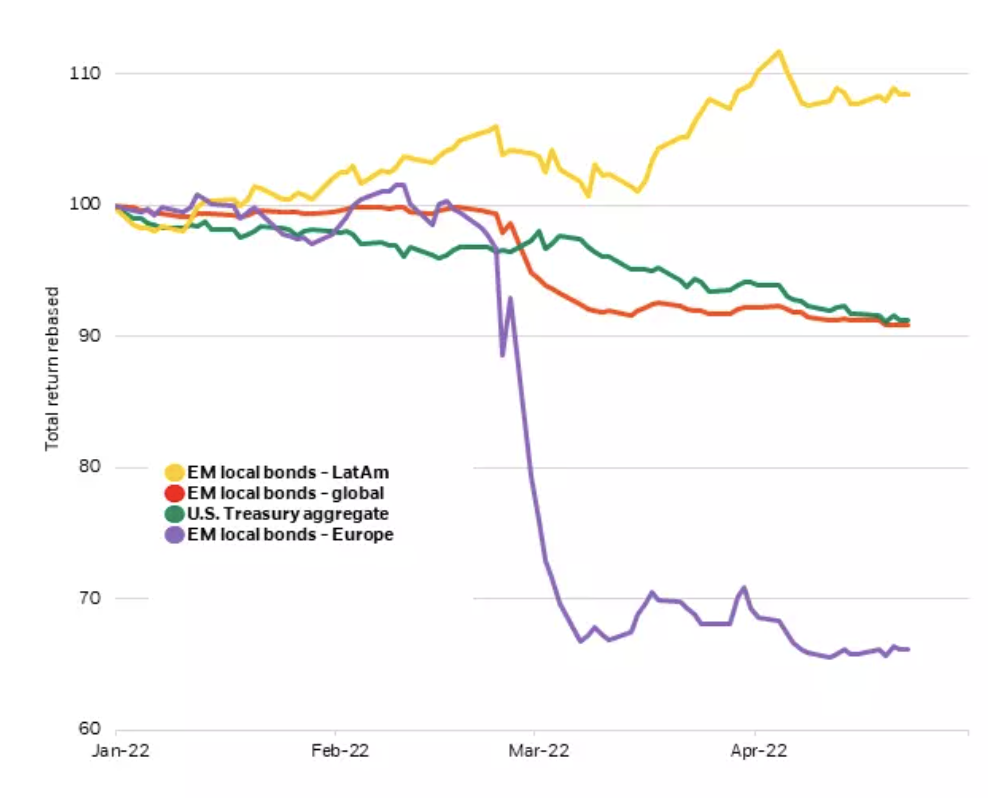
War in Europe comes at a time when the global economy was just emerging from the COVID-19 pandemic.
Supply chain issues are making headlines, particularly as consumers are seeing prices rise and delivery times lengthen amid product and component shortages. International equity investors Gareth Williams and David Vos offer four Investment takeaways.
The busy retail season is in full swing, but what can investors make of the longer-term outlook for consumer stocks? Sophie Steel of BlackRock Fundamental Equities looks beyond the seasonalities to three factors that are reshaping the opportunities across consumer sectors.
According to research from Cerulli, nearly half of advisors use a model portfolio to manage $2.7 trillion in assets. We’ll discuss how those models are permeating all aspects of investment management in the financial advisory industry.
The BlackRock Investment Institute shares the implications of Donald Trump's unexpected election win.