Tesla Inc. shares kicked off the new year on an ominous note, buckling this week under renewed concerns about weakening demand for its electric cars, and sending its market value briefly below Facebook parent Meta Platforms Inc.’s for the first time in over a year.
Welcome to 2023. It’s Forecast Season on Wall Street, the time when everyone tells us what to expect for the new year. Do they really know? Of course not. Forecasters don’t know, investors know they don’t know, yet we all go through this exercise anyway.
Investors who use a 60/40 portfolio had a rough year. In the past, putting 60% in stocks and 40% in bonds has often helped investors hedge against losses in either asset class. But 2022 had other ideas.
U.S. equities are solidly higher in afternoon action, paring some of the losses that have plagued the start of 2023.
In our Quarterly Strategy Report, we illustrate the relative attractiveness of select developed international sectors.
Advanced economies and emerging markets are increasingly engaged in necessary "wars" – some real, some metaphorical – that will lead to even larger fiscal deficits, more debt monetization, and higher inflation on a persistent basis.
U.S. equities closed out 2022 in the red, and all three major indexes registered solid losses on a yearly basis. The stock market posted its worst yearly decline since 2008.
Any way you slice it, 2022 was a turbulent year, from Russia’s invasion of Ukraine to historic inflation and jumbo rate hikes to multiple failures in the digital asset space.
US companies had a lot to overcome in the latter half of 2022 with rising interest rates, more budget-conscious consumers and a sagging stock market.
U.S. stocks are rising in pre-market trading, looking to rebound from yesterday's drop.
U.S. stocks continue to oscillate around the unchanged mark.
U.S. stocks are rising in pre-market action in the first trading session of the week following the long holiday weekend.
U.S. equities are modestly higher but near the unchanged mark in pre-market action.
U.S. stocks are falling sharply, giving up yesterday's rally.
Investors ready to turn the page on the worst year for equities since the global financial crisis should brace for more pain heading into 2023.
Oil rose in a session marked by waning liquidity ahead of the holiday season, strengthened by a softer dollar and a potential boost in energy demand after China abandoned its Covid Zero policy.
This important milestone is the culmination of decades’ worth of research and lots of trial and error, and it makes good on the hope that humanity will one day enjoy 100% clean and plentiful energy.
U.S. stocks are solidly lower as the markets continue to digest the economic implications of yesterday's 50-bp rate hike from the Fed.
Andy Rothman explains the three reasons why he’s now bullish on China after being cautiously optimistic.
On this webcast, experts from the Matthews Asia investment team will share their perspectives on where the global economy is headed and why now may be an opportune time to invest.
The world’s biggest bond market got the ammo it needed from a below-forecast consumer price figure to fully lock in a Federal Reserve downshift in their policy-rate tightening pace, though not enough to wave an all clear sign for Treasuries.
Goldman Sachs Group Inc., UBS Group AG and Deutsche Bank AG are among banks profiting as the growth of Brazilian hedge funds forces them to look overseas to fuel returns.
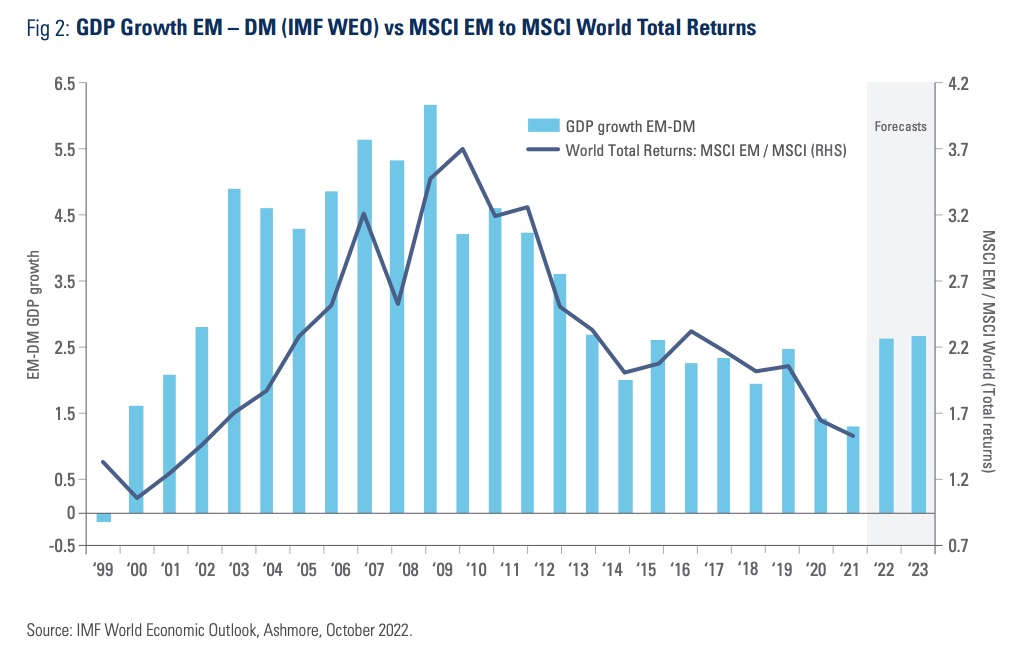
Emerging Markets (EM) assets were subject to three strong headwinds in 2022, namely, China’s zero Covid-19 and real estate crisis, aggressive interest rate tightening from the US Federal Reserve (Fed), and the Russia invasion of Ukraine.
U.S. stocks are soaring in pre-market trading amid a softer-than-expected November consumer price inflation report.
On his first visit to Japan since the pandemic, portfolio manager Shuntaro Takeuchi found new opportunities as well as familiar ones intact.
A near-total ban on imports of Russian crude into the European Union is finally hitting Russia’s oil revenue. Concerns that it would provide the Kremlin with a windfall to fund its war in Ukraine have been confounded — for now.
Ole Hansen, respected commodity strategist at Denmark’s Saxo Bank, says it’s possible once markets realize that global inflation will remain hot despite monetary tightening. I believe, as I’ve said before, that gold could climb as high as $4,000.
Some of the world's biggest investors predict that stocks will see low double-digit gains next year, which would bring relief after global equities suffered their worst loss since 2008.
U.S. stocks ended higher in a quiet day, trimming some of the week's losses.
Are Chinese stocks good value? It’s a question we’re getting asked by a lot of clients. Some Chinese stocks may appear attractive from a valuations perspective – but you need to think differently about value investing in emerging markets.
Markets may continue to see volatility in 2023 as they navigate between global economic growth and inflation fears, with central banks' decreasing rate hikes and China's reopening.
Oil fell the most in more than two weeks as broader equity markets collapsed and risk-averse investors pared crude positions ahead of the end of the year.
Emerging-market central banks face a Catch-22 where plunging economic growth means they can’t keep monetary conditions tight, but elevated inflation doesn’t allow them to halt rate hikes either.
U.S. stocks are lower as the new week kicks off, even as China took further measures to ease COVID restrictions.
Reports of the death of globalization are looking greatly exaggerated.
After months of planning and negotiations, the biggest tranche of sanctions on Russian oil to date are about to take effect -- how big their impact will remain uncertain.
Over the past 12 months, global container shipping rates have steadily declined to their long-term averages as supply chain snarls have receded and backups at ports have disappeared. Now, another segment of the cargo shipping industry is seeing day rates explode to record highs.
U.S. equities are sliding as investors sift through the November labor report that showed stronger-than-expected job growth.
Ethical debt deals are set to become the majority in Europe’s market for corporate loans for the first time next year.
Global bonds rebounded in November, adding a record $2.8 trillion in market value, as investors bet that central banks are getting a grip on inflation. But how long the party lasts is another matter.
One of the biggest trades this year has lost steam and its outlook for the next year has become much more mixed.
David Dali, head of portfolio strategy, explains how emerging markets can give investors ballast to navigate macro headwinds and position portfolios for growth.
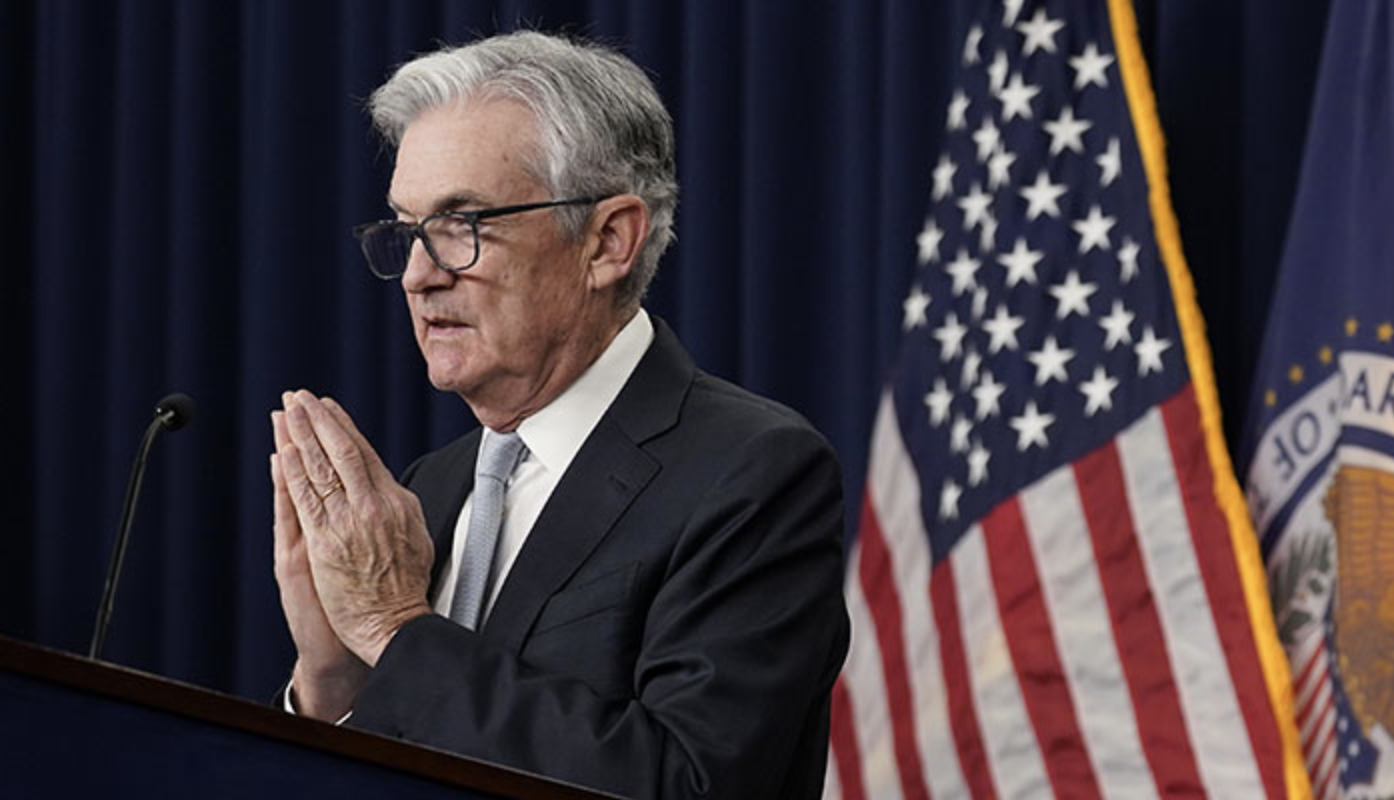
U.S. stocks are choppy in pre-market trading on the heels of yesterday's drop ahead of tomorrow's comments from Fed Chairman Jerome Powell.
Emerging markets have been rattled by inflation, weakness in China’s growth and the war between Russia and Ukraine. Wave after wave of bad news came in 2022; however, there are reasons for optimism as we approach 2023. Emerging markets are resilient and better positioned than developed markets to face the uncertain environment and lead the global recovery.
All is not lost for equity capital market bankers.
The global economy’s dire and deteriorating prospects, together with the scale of the climate challenge, have apparently opened world leaders’ eyes to the risks that deglobalization poses. But it remains to be seen whether this realization will be followed by the action needed to reverse course.
Americans who work remotely, either full-time or part-time, can save between $2,000 and $7,000 in transportation and work-related costs. They can also gain back the equivalent of two to three weeks per year in commuting time.
Commodities are heading for a challenging finish to a year of turmoil, with geopolitical tensions and global demand uncertainty set to buffet markets from oil to copper and crops through December.
Presidential administrations never stay the same from beginning to end. Top personnel come and go for various reasons, and we seem to be seeing that now with the Joe Biden administration.
U.S. equities are mixed in pre-market trading, but the markets are on track to post weekly gains for the holiday-shortened week.