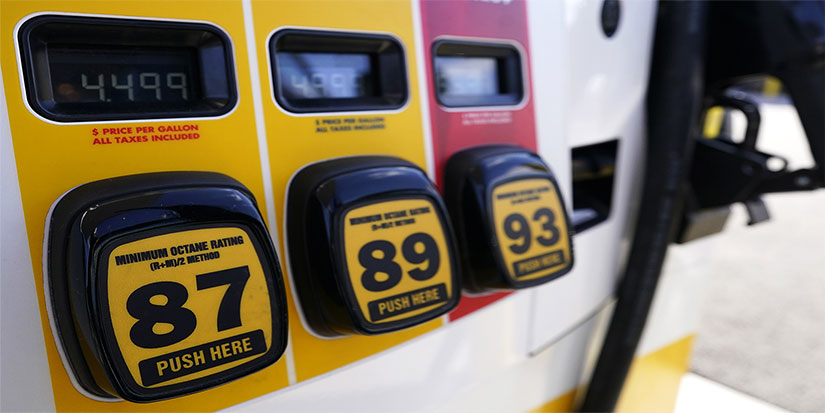
Oil execs are walking on eggshells.
While it’s likely we are already in an as-yet-undeclared recession, it’s a very weird one if so. I have lived through quite a few of them and I don’t recall any other recession coinciding with record-low unemployment, plentiful job openings, and jammed airports.
It’s been a rough couple of months for copper.
We can draw a direct line from the Fed’s low rate regime to today’s surging inflation, asset inflation, and income and wealth inequality. Low rates produce asset bubbles which ultimately pop, but not before blowing themselves larger and multiplying into other bubbles. The process that pushed stock prices higher is the same one that is now pushing food, energy, labor, and every other cost higher. Just follow the bouncing ball.
These people, whose very job is to know the lessons of the past, either forgot them or chose to ignore them. Today we’ll look at how this manifested in the 2008 crisis period—and set up the conditions we face today.
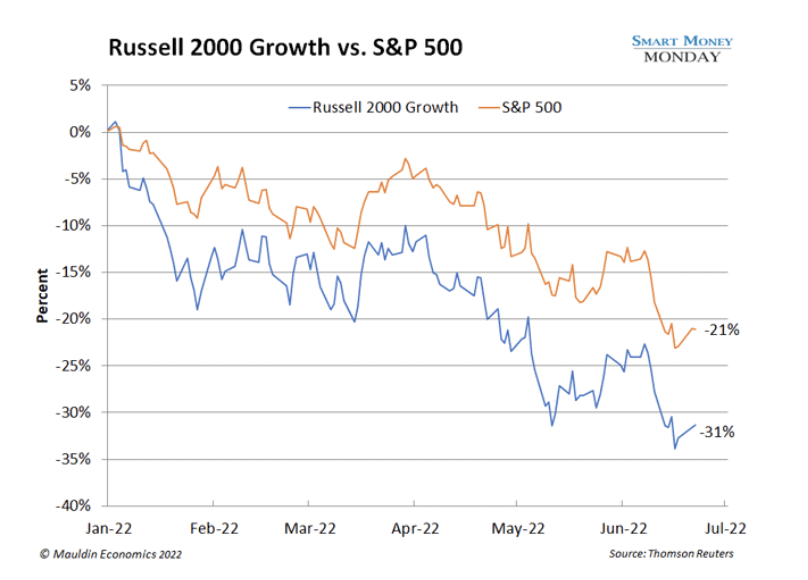
There’s more pain ahead for still-frothy tech stocks…
The economics profession has long had a vigorous academic argument over “natural” interest rates. What would rates be if we could somehow remove all the subjective actors—central banks, commercial lenders, government agencies—that conspire to set them? What would nature do if we left it alone?
The bond market is weird, but it’s full of clues. We have 8.6% inflation, but the highest interest rates have gone recently is about 3.4%, meaning real rates were still negative to the tune of 5%. This is confusing to me and a lot of other people.
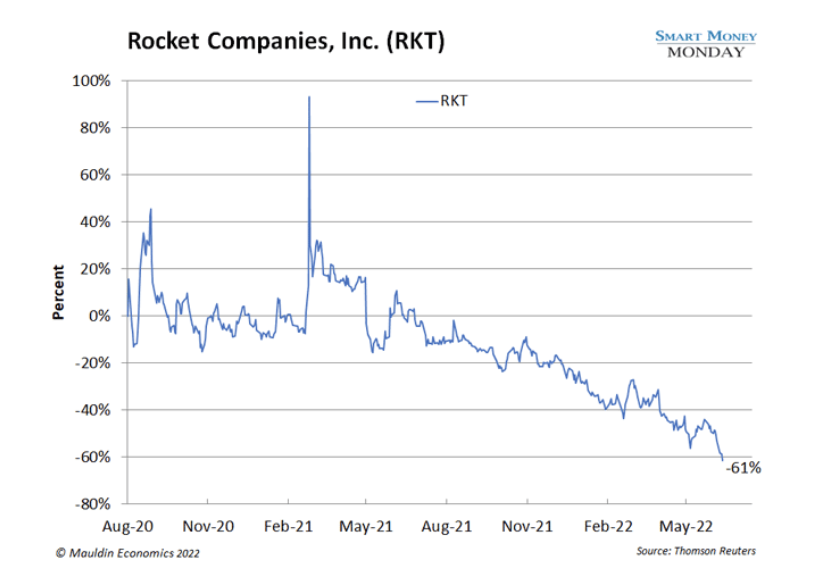
Three of my biggest winners have one thing in common…
Let’s start with a basic question. If you have unused property—cash or anything else—why would you lend it to another party?
Last Thursday, Elizabeth Warren expressed skepticism about the Fed tightening monetary policy, saying it would make people poor.
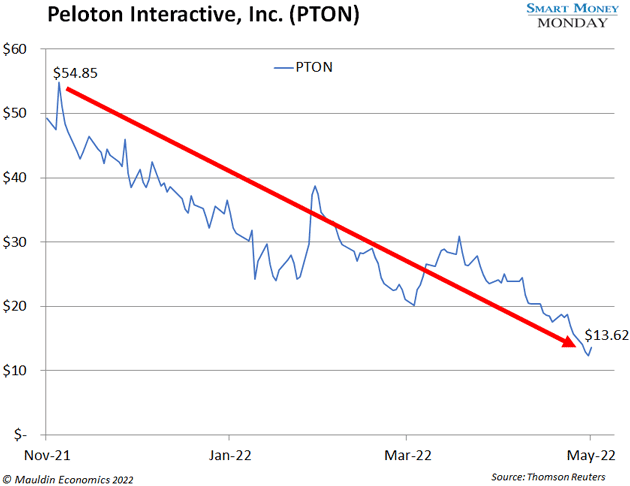
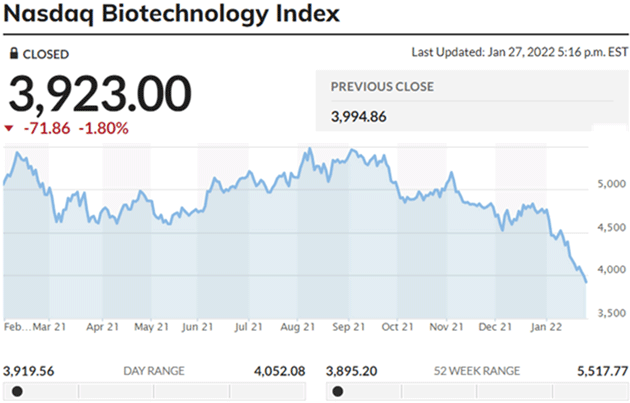
This bear market is punishing everyone and everything.
Interest rates aren’t simply the price of borrowing money. They are also information, providing signals telling economic players what to do. Interest rates are in fact the price of time. Low interest rates don’t value time very much. Bad signals produce bad outcomes… and that’s where we are now.
Crypto meltdowns. Tech implosions. The biggest rate hike in decades.
Today we’ll look at some evidence this period could even be worse than the 1970s. Then we’ll read the mea culpa regrets of someone who had a big part in that drama.
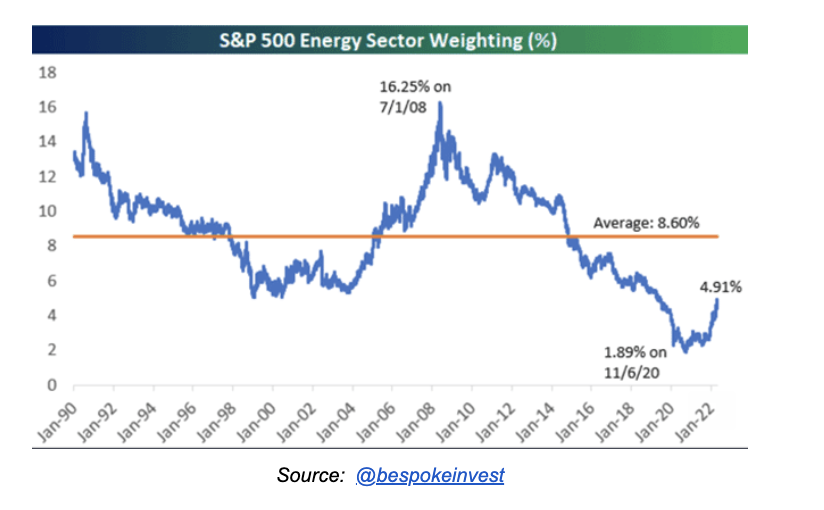
Energy has been on quite a run.
Complaining about federal debt is a time-honored American tradition. Remember Ross Perot and his hockey-stick charts? Then there was Harry Figgie’s 1992 best-selling book, Bankruptcy 1995. It was quite a sensation at the time.
The chance that all the necessary pieces will line up that way? Somewhere between slim and none, and as my dad used to say, “Slim left town.” And while my memory isn’t perfect, I don’t believe any speaker at the conference believed in the possibility of a soft landing. And even if we get one, we have serious problems that predate this inflation. They haven’t gone anywhere.
There’s a silver lining to the current bear market…
It looks like the economy will grow for a while, just not very fast. And we simply don’t know what will happen when the Federal Reserve tightens in the face of a slowing economy.
As with bodily atherosclerosis, curing our economic condition may require lifestyle modifications. But in one sense, it will be even worse: We’re all going to get the cure whether we want it or not. We’ll get its side effects, too… and you can bet there will be many.
Investors are in a pickle.
The Strategic Investment Conference wrapped up this week with another wave of strong, fascinating speakers and panels. Today I have more to share and, as you’ll see, the plot thickened considerably.
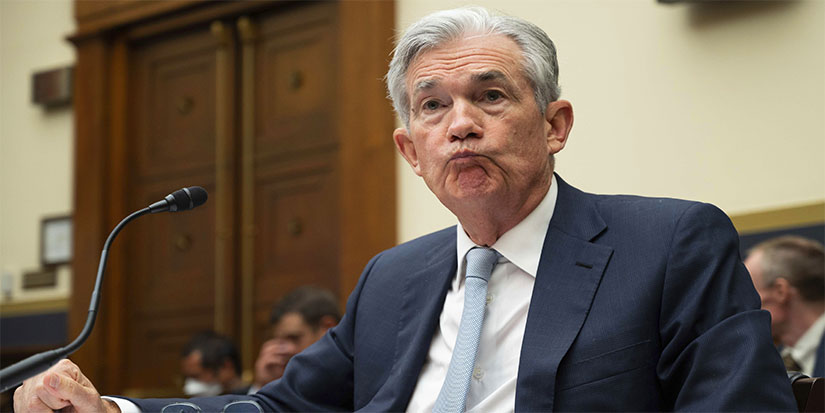
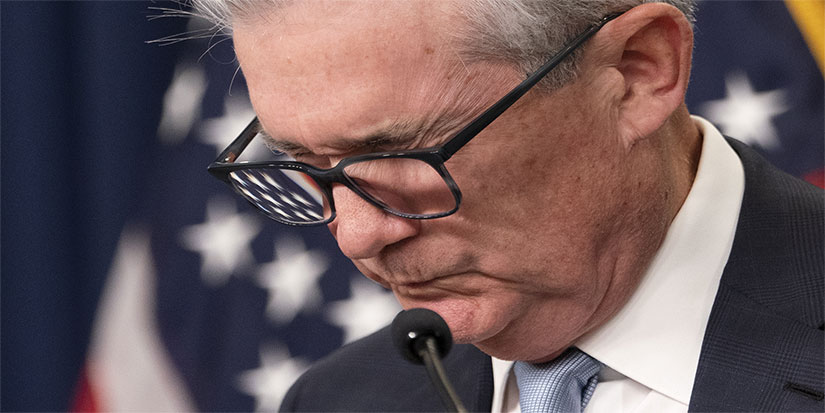
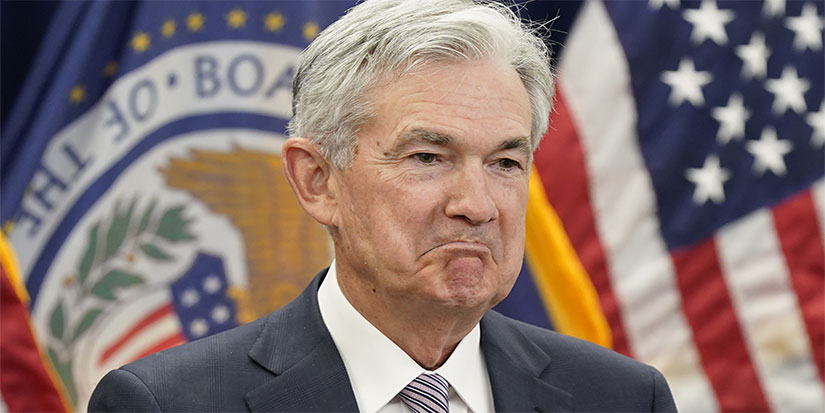
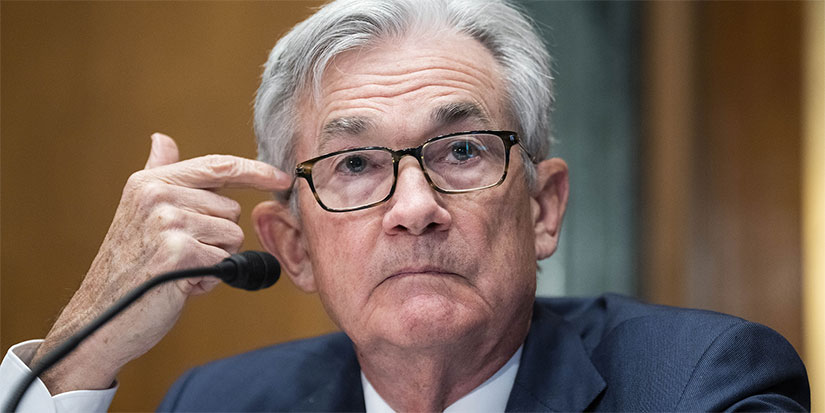
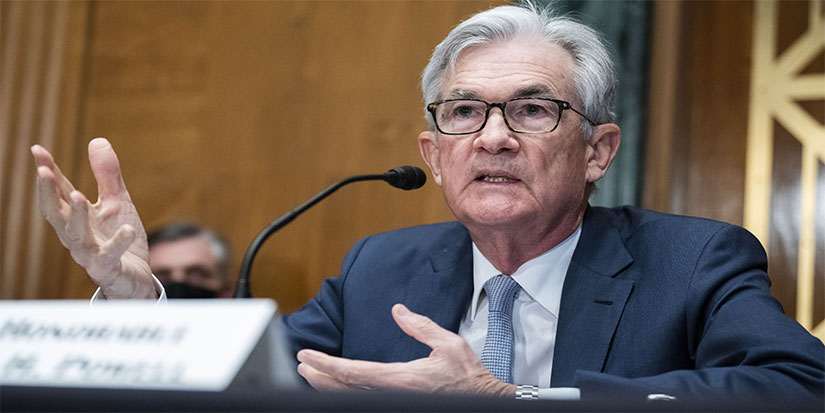
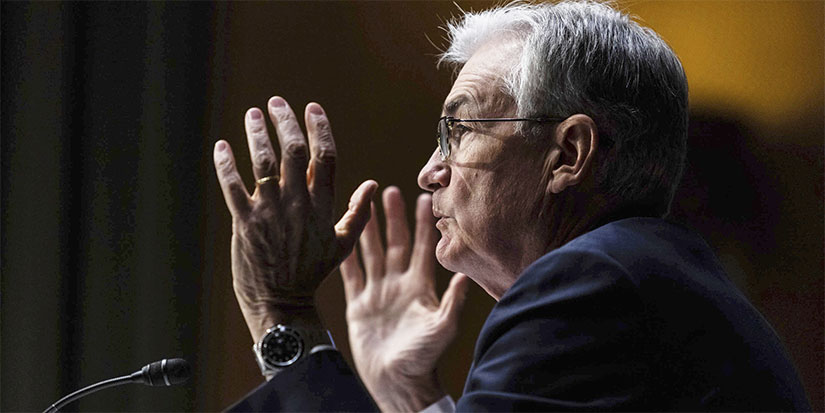
Jay Powell may think he is Paul Volcker, but he is not Paul Volcker.
I borrowed this letter’s “Soft Now, Hard Later” headline from Dave Rosenberg. It was the title of his leadoff SIC presentation, for reasons I’ll explain.
My good friend Ben Hunt of Epsilon Theory has written what I think is one of his most powerful letters ever. He’s basically saying the Fed just isn’t going to make it. I wish I had written it. He is such a wordsmith. With that, let’s turn it over to Ben.
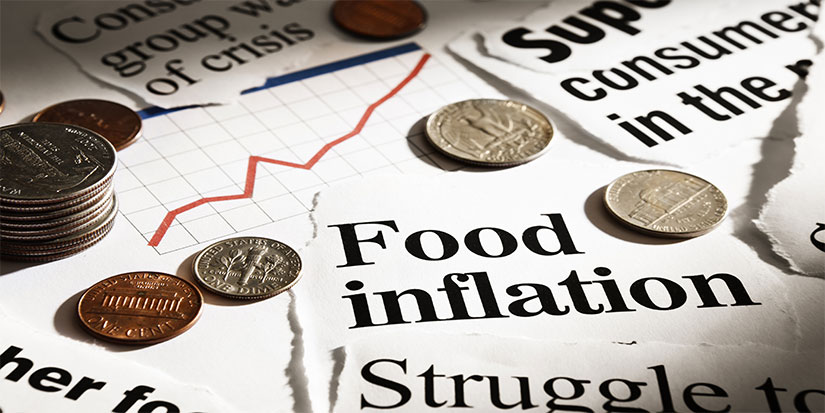
If you haven’t noticed—perhaps because you live on Mars—inflation is here. Not just in the US but almost everywhere. Prices for everyday goods and services, including necessities like food, are climbing rapidly. The US Consumer Price Index rose 8.5% in the 12 months through March… and we know it understates categories like housing.
Interest rates are structurally set up to go higher.
It’s Easter weekend, so we are going to revisit a 2018 letter about the yield curve. The yield curve is much misunderstood and misused by many analysts. This letter will give you the tools to understand the correct importance and relevance of the yield curve. And then, a few comments about Ukraine.
Today, we’re talking about why the war in Ukraine was such a dud for the bears.
Today we’ll consider the risks to my stagflation forecast. Note that’s different from the risks of my forecast, should it prove accurate. I’ve described those already but it’s important to ask how I might be wrong.
What is in store for the capital markets and the economy in 2022? John Mauldin has dedicated more than 30 years to answering questions like that and keeping people informed about financial risk.
The yield curve is really just a symptom. I like to compare it to a fever—not serious in itself, but a sign you have an infection or some other ailment. An inverted yield curve means something is wrong in our economic body. So today we’ll consider what it means.
Today I want to focus just on good news and sometimes great news. The world is getting better, but it doesn’t make the headlines like the problems and catastrophes do. The byword in newspapers when I was growing up was “If it bleeds, it leads.” Today’s online headlines are even more so. Crisis and gloom sell. Good news, not so much.
Recession is where we are headed. So let’s review what it will be like.
Recession is here, or will be soon. And unfortunately, it will be a global recession. Like the COVID recession, this one has little to do with the business cycle. It’s a recession of choice—not your choice or mine, but Vladimir Putin’s. He clearly miscalculated how hard capturing Ukraine would be and how the West would react.
Today we’ll start what I’m sure will be a series of letters on Change2. I’ve said for some time the 2020s would be a turbulent period leading to a much better 2030s. I still believe that. I also believe the events we’re watching right now will define what that new order will be.
This week’s news is seemingly all about Ukraine and Russia. It is a terrible situation. But as an economic matter, we still have serious economic challenges no matter how it develops.
How much inflation is okay? People have different answers. I think it should be very low, but definitely positive to forestall deflation. Whatever your ideal may be, there’s a range of possibilities that would at least satisfy you. Political scientists call this range the “Overton Window,” a hypothetical box around the limits of acceptable policy. Anything outside the box is, by definition, unacceptable.
Near-zero, zero, and below-zero interest rates changed the incentive calculations and decisions from what they were a mere 30 years ago. You can’t look at policies or almost anything else prior to the early 2000s as a standard for today. The incentives of low interest rates have literally screwed (that’s a technical economic term) things up.
I believe Fed officials are largely responsible for the cycles of bubbles, booms, and busts over the last 30 years. Further, they share some of the blame (clearly not all) for the growing divisions and tribalism in our society. Much of it springs from the wealth disparity they aided and abetted.
We’ll review what may be the most compelling bear case I’ve seen in a long time, along with some other unpleasant data. Then we’ll look at some equally compelling reasons those views may be wrong.
Many analysts project China will soon be larger by GDP than the US—which shouldn’t be so hard with a population four times larger—but it’s not clear to me that China’s seemingly unlimited linear growth will continue three or four more decades. I can remember when the same was said about Japan.
Today I’ll continue the annual forecast I began last week. New COVID developments are unfolding rapidly. If we’re lucky, they may carve out a nice bookend for us. But my worry is that rather than bookends it could be economicus interruptus. 2019 was not portending the most robust of economies. What if, in Groundhog Day fashion, we end up back where we were?
Twenty-two years of tradition dictate I begin the new year by forecasting what lies ahead.
Thompson Clark sits down with Mauldin Economics publisher Ed D’Agostino to discuss three of his top stock picks for 2022, how inflation could affect his Wealth Accelerator strategy, and how investors can better prepare for the year ahead.
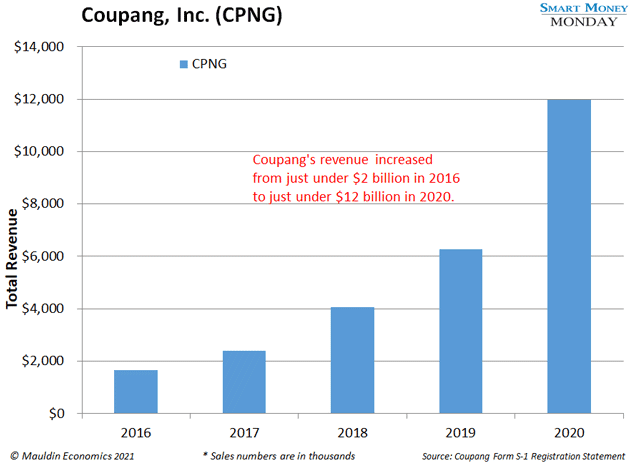
For many Americans, between Christmas presents and their regular Amazon (AMZN) deliveries, the number is high. After all, Amazon delivers over 600 million packages a year. That’s a lot of cardboard. Things are a little different in South Korea. The country’s ecommerce powerhouse, Coupang (CPNG), offers all the perks Amazon does, like free delivery. But it takes a “zero packaging” approach, with 75% of deliveries arriving in reusable packages.
I’ll share a story from my good friend Vitaliy Katsenelson. He immigrated to the US with his family from Russia over 30 years ago. I’ve always been fascinated by this story when we get together. All he knew of America came from movies and propaganda, which wasn’t altogether flattering.
Last week’s What Really Caused Inflation letter generated an unusual number of questions and comments. That tells me I need to go a little deeper. We know inflation by the higher prices it generates, but exactly how it flows through the economy isn’t always obvious.
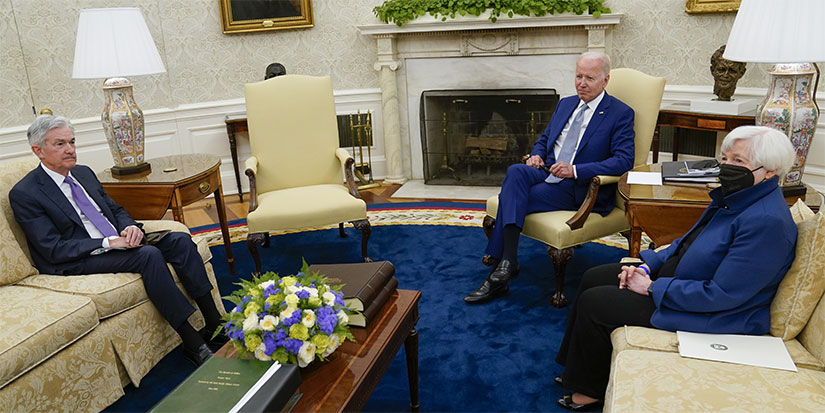
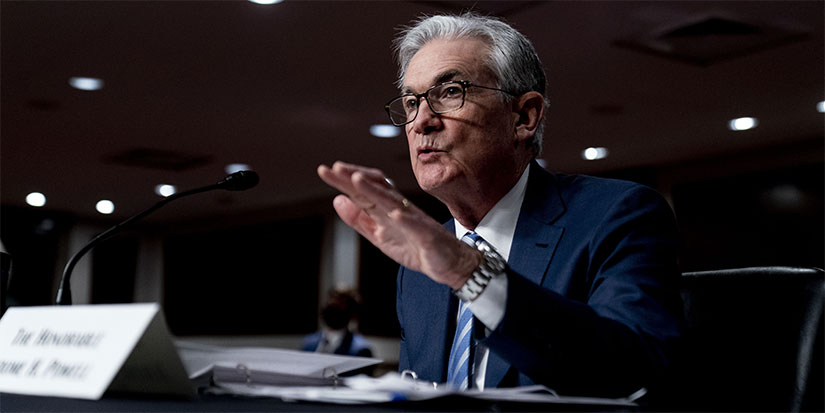
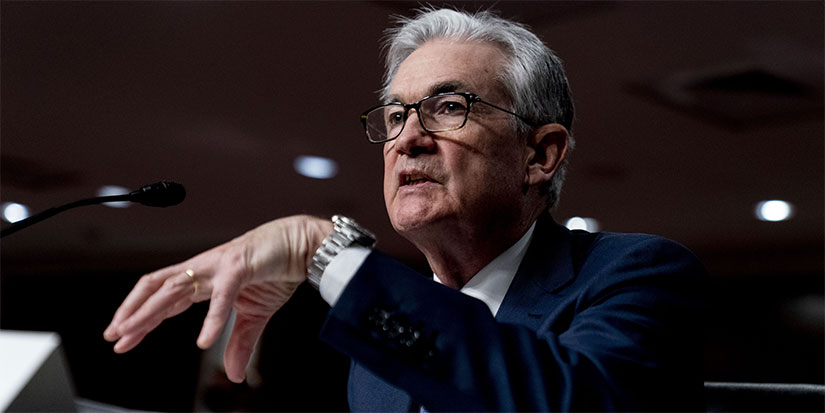
Today we’ll “war game” what the Fed is facing as it wrestles with inflation, growth, employment, and political considerations. We’ll try to entertain those thoughts as if we’re sitting in the conference room with Jerome Powell.