This article argues that the pursuit of high returns by institutional investors, like insurers and pension funds, through illiquid and opaque private market investments is a repeating mistake that risks underfunding future liabilities.
The article argues that making productive use of AI requires strong critical thinking, statistical, and analytical abilities, a necessity challenged by weakening standards in math and reading in educational institutions.
There is a frenetic, sweaty-palm feel to the US economy lately. Markets are looking frothy and consumers are anxious, and meanwhile the gambling and stock markets are converging as people bet on all sorts of strange assets and events.
First, it would mean lower monthly payments, unless interest rates rise a lot. Yes, buyers who stay in their home for 50 years and pay off their mortgage over that time will pay much more in interest than they would have with a 30-year mortgage.
If owning a home is still the American dream, then it is increasingly out of reach for many young Americans. The average age of a first-time homebuyer is now 40, up from 33 just a few years ago and 29 in 1981.
The question of the moment in markets is whether we are in an AI bubble, as stocks seem awfully expensive amid hopes that artificial intelligence will transform the economy. But there is another curiosity that is far more concerning: low credit spreads. That suggests a low-risk environment — which describes precisely nothing about this market.
Being a millionaire isn’t what it used to be. This isn’t a lament, it’s a fact: As Bloomberg News reported last week, almost one-fifth of US households have a net worth of more than $1 million. Fully one-third of them have gained that status since 2017.
As the world faces a future of lower growth, there is a temptation among policymakers to have the government take a more active role in the economy. Policy certainly has a role to play. But all governments should realize that abundance doesn’t come from better planning.
Over the next decade, the US economy will face two big challenges: higher interest rates and AI-generated disruption. Each invites the same solution: policies to keep rates below their market level.
The jaw-dropping spike in gold prices is a reminder of what primal creatures we humans are — especially the species among us known as active traders. But the surge should also remind us of the importance of calling on the more evolved parts of our brain.
Over the next decade, almost every rich country will have to face fiscal reality. All have expanded their welfare state to serve not only the needy but also the middle class, with expensive pensions, health care and worker benefits.
Once again, the president is questioning what purpose is served by publicly traded companies issuing quarterly earnings reports. Not only did Donald Trump raise this issue back in 2018 — so did Barack Obama in 2015.
The Dutch have long been famous — at least to pension nerds like me — for their retirement system, which is well-funded and well-managed. Now that reputation is in jeopardy: As it turns out, providing generous, guaranteed pensi
For decades, betting that long-term bond rates would rise was known as the widow-maker trade: It was simultaneously the most sensible and the most consistently money-losing wager an investor could make.
On paper, these are good times for the US economy. The latest GDP numbers show growth was at 3.3% in the second quarter. Business investment is up. The unemployment rate remains low, and the inflation rate is reasonable.
President Donald Trump’s efforts to stack the Federal Reserve with economists willing to cut interest rates is providing all the drama this week.
The difference in wealth and income between the top 1% and the rest of America tends to get more attention, but one of the more striking wealth gaps is generational: Older Americans are far richer than young Americans.
Almost 15 years ago, I had a finance job in Austin which I did from my apartment in Manhattan. Although I was under constant pressure to move to Texas, I argued that because I worked in finance and media, leaving New York would hurt my career, and I’d have to be compensated for that loss.
America is a free country. People are allowed to take all sorts of ill-considered risks.
The popularity of lab-grown diamonds is making me question the beauty of markets, which is their ability to place a value on pretty much anything.
We are entering a Golden Age of big business. Or, depending on how you look at it, a Dark Age for small business.
One idea unites the left and right lately: a zero-sum view of the world. Unfortunately, nice as it would be to hail a rare instance of ideological harmony, both sides are very much mistaken.
Crypto does have a future — as a speculative asset that enhances risk for gamblers, the paranoid, and less sophisticated investors, all the while diverting capital from more productive uses.
I have been a pension nerd since I was 20 years old. So I have been hearing for literally decades that there is a simple, magical solution to all our retirement funding problems: Just take more risk! When the investments pay off, the coffers will be replenished and all will be well.
Opinions of the One Big Beautiful Bill tend toward the extreme. One of its main authors calls it “the greatest piece of Republican legislation in a generation,” while one of its most authoritative critics says it makes him ashamed to be an American.
They have been called “the four most costly words in the annals of investing,” and surely that’s true: This time is different. Still — hear me out! — there are reasons to entertain the possibility that, well, this time really is different.
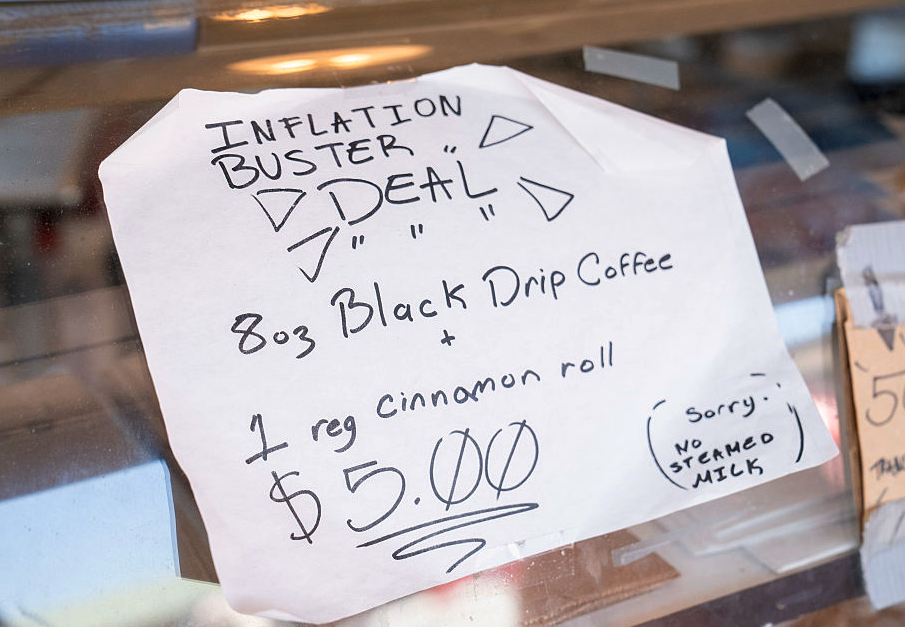
When it comes to inflation, America has reached a “Mission Accomplished” moment. Rule No. 1 of inflation reports is never to read too much into one report, but there have now been several months of fairly low inflation, so it seems safe to call it: The Fed did its job. Pandemic inflation is over.
My unifying theory of finance is that everything goes seriously wrong when people start seeing something — a bond, a mortgage-backed security, a crypto exchange — as risk-free when it isn’t.
The federal government, financial markets and most Americans are all in a state of denial about interest rates.
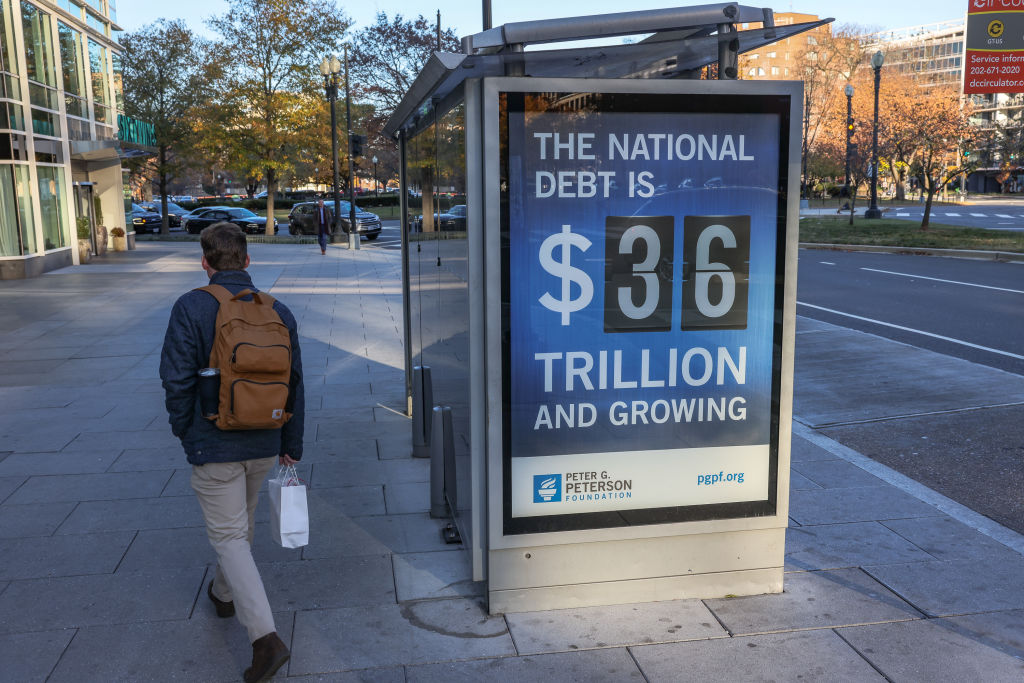
America’s holiday from history is over: Debt matters again. It is not just that the national debt is so big it cannot be ignored.
Long-term interest rates have become much less predictable, and that means volatile prices for long bonds.
The wise minds at Moody’s Investors Service finally acknowledged last week what the other two main credit rating agencies did years ago.
Markets are desperate for good news about tariffs — or no news at all. It only took a pause on the reciprocal tariffs and vague promises of future trade deals for the bond market to stabilize and stocks to recover.
Practically every financial meltdown or crisis can be traced back to a misunderstanding of which assets are “risk-free.” Investors think they have a risk-free asset — it could be a mortgage-backed security, shares in a Bernie Madoff fund, Greek debt — and are surprised when it turns out not to be.
Despite the talk of austerity — and amid the possibility of a global trade war, the reality of a stock-market correction and fears of a US recession — there is still a chance that President Donald Trump’s agenda could increase economic growth. As usual, it will depend on the execution.
The virtue economy, the only bubble I have ever called, has now completely burst.
Private equity wants access to Americans’ retirement accounts, and is lobbying President-elect Donald Trump’s administration to get it.
I will be looking at a few indicators in 2025 to tell me where financial markets are going. Most of them relate to the bond market, because it is both a window into the overall economy and an important component of how stocks and other risky assets are valued.
People often make a distinction between “good debt” and “bad debt,” in terms of both personal finances and public spending.
I think I finally understand value of cryptocurrencies: They add some volatility to your portfolio. Maybe that’s why they have found such a champion in Donald Trump, who if nothing else adds some volatility to our politics.
Even if he does oversee a soft landing for the US economy, Fed Chair Jerome Powell will not deserve a place in the annals of history as the greatest central banker of all time.
It is hard to be “the most pro-union president in American history,” as Joe Biden likes to claim, while also leading an effort to “reimagine and rebuild a new economy,” as he has also promised. That’s because these goals are fundamentally incompatible: America’s unions no longer fit the modern economy.
Just as the industrial revolution changed the way goods are manufactured and consumed, so the technological revolution will do for services. Once something can be made at scale, the market for it can expand and be segmented. The same goes for financial planning.
America’s financial industry has long had trust issues. Never mind the Great Financial Crisis of 2007-08; mistrust of the markets dates back to at least 1929, if not the Dutch East India collapse of 1769. But this history has an upside: Financial institutions have a lot of experience creating systems to build, maintain and restore trust — and have learned lessons that can be applied across the economy.
Last week’s meeting of central bankers in Jackson Hole was a kind of victory lap for the Fed. It may have also marked the peak of its power.
Decisions made by the Treasury get much less attention than those made by the Federal Reserve, but they can be even more consequential for interest rates — and the entire US economy.
Turmoil in the markets has renewed fears that the US did not escape history after all, that a hard landing — a recession — is coming. Whether this is all a blip from a rising yen or a justified reaction to an actual weakening of the US economy is still unknowable.
A young colleague came to me recently with a shameful admission: Despite the lecturing of her friends and family, as well as her own best intentions, she had not yet signed up for the company 401(k) plan. She lives in an expensive city and is nervous about tying up her money for the next 40 or 50 years.
Markets today pose a new existential question: Can there be a bubble in something if it has no price?
My financial education didn’t have the most auspicious start. I suppose I was lucky that in high school I had a class on basic investing and finance.