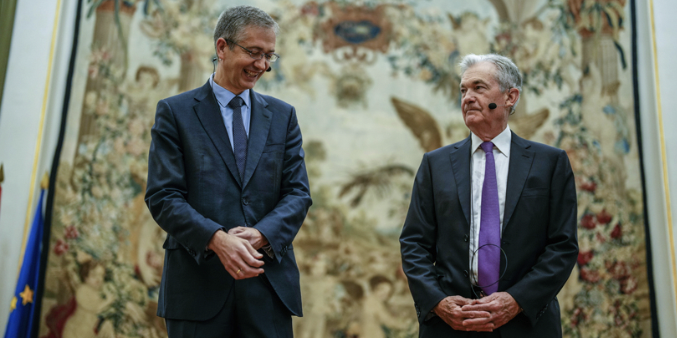
Greetings from Europe. I promised to write a letter describing my personal investment portfolio. I still plan to, but it won’t be this week.
I am traveling for business this week, but I’ll return with a fresh interview for Global Macro Update next Friday. For those of you who missed my interview with Louis Gave last week, read on… There’s a reason this was one of our most-watched Global Macro Update interviews of the year.
I write a few newsletters, and I frequently get feedback from my subscribers. Sometimes, they’re just saying hello, and sometimes, they’re ripping on me, but sometimes, they’re telling me about things they see in the economy that are of interest.
There’s one question I try to answer with any beaten-down stock: Is this a good company with temporary, solvable issues?
Look up the word “cycle” in a dictionary, and you’ll find something like this: “A regularly recurring sequence of events.” Sounds simple, but that definition leaves a lot of ambiguity.
First, let me start with a tweet by Larry Summers, though this chart has been passed around by Andreas Steno Larsen and others.
Today we continue our study of the historical cycles suggesting a major crisis is in our near-term (5‒8 years) future. We don’t know the precise timing or nature of the crisis, but the patterns indicate one is coming and could be severe.
Interest rates are the penalty you pay for purchasing something today instead of postponing consumption until tomorrow. They are also the reward you receive for saving and engaging in delayed gratification.
My last three letters reviewed Neil Howe’s new book about the Fourth Turning. Today we’ll look at another set of patterns observed by my friend George Friedman in the geopolitical realm. George’s view of how patterns shape countries is different but not inconsistent with Neil’s generational cycles.
You put on a trade. You are short bonds, or something like that. It may be tempting to see the people on the other trade as the “bad guys,” while you are the “good guys.”
When a mega-cap stock is sitting on a 30-year low, I can’t help but look.
Today we’ll continue reviewing Neil Howe’s magisterial new book, The Fourth Turning Is Here, focusing on the Millennial Generation’s important role in the coming crisis. Then we’ll think about what the crisis may look like. Finally—because I always try to look on the bright side—we’ll consider what Neil expects in the “First Turning” that will follow.
We are in the last half of what is the most disruptive and violent of the generational periods.
I am a Wall Street guy, and, being a Wall Street guy, sometimes I forget that 99.9% of the planet has no clue what the stock market is doing on any given day. Or cares. It has zero bearing on their lives whatsoever.
We talk frequently about the way central banks and governments affect the economy. In the grander scheme of things, though, whatever the Fed does is more like throwing a hand grenade into a large building. Yes, you’ll make some noise and cause some damage. People may be hurt. But the building won’t care, and the owner will fix it.
Morgan Stanley strategist Mike Wilson finally capitulated and apologized for getting the market wrong the last nine months. He was everyone’s favorite analyst in 2022. King of the Bears. I haven’t seen that much drooling over a strategist since Abby Joseph Cohen in 1999.
Housing is by far the biggest expense for most American households. Any inflation analysis that ignores housing misses not only the elephant in the room, but the room itself.
The market, and maybe all of us, would like to believe the latest 3% annual CPI number was a harbinger of ever-lower inflation, and we are on the road to 2% inflation by year end. I would argue, “Not so fast.” Inflation is far from dead, and CPI will likely go slightly up between now and the end of the year.
Yesterday, we got a 3.0% inflation reading, which was a touch below expectations. Markets responded about as you might expect.
One of the hardest parts of economic forecasting is separating what we expect from what we want.
Central bankers think they can handle a situation and fire the artillery. It always has an effect… but ultimately it is rarely the effect they wanted. Doing nothing at all might have been better but that wasn’t an option. They’re trapped in an endless spiral of intervention.
A month or two ago, people were having a conniption about commercial real estate. An absolute meltdown.
Is recession still coming? Of course. But some funny things are happening on the way there.
I was watching NBC Nightly News the other night, and they ran a story about how there is no housing inventory because people are trapped in their mortgages.
A year ago, the US Consumer Price Index was rising at an almost 9% annual rate. The Federal Reserve was trying to change that trend with tighter policy. But it wasn’t just the Fed. All of us—businesses, consumers, everyone—responded to the pain.
Wall Street is a strange place. In 2017, the top Wall Street banks published over 40,000 pieces of research… every week. Yet investors read less than 1% of that, according to Quinlan & Associates.
In economics we often talk about cycles. “Business cycle theory” is an entire academic sub-field whose basic idea is that economic history really does repeat itself. Not in every detail, of course, but as a recurring sequence of expansions and recessions.
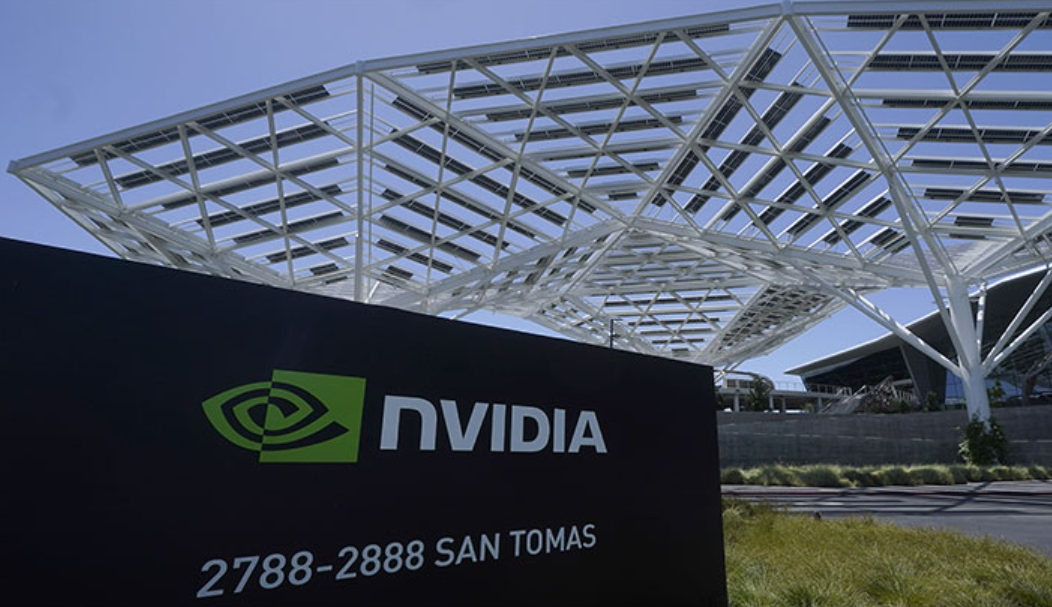
Nvidia’s (NVDA) management team is sending a signal to the market.
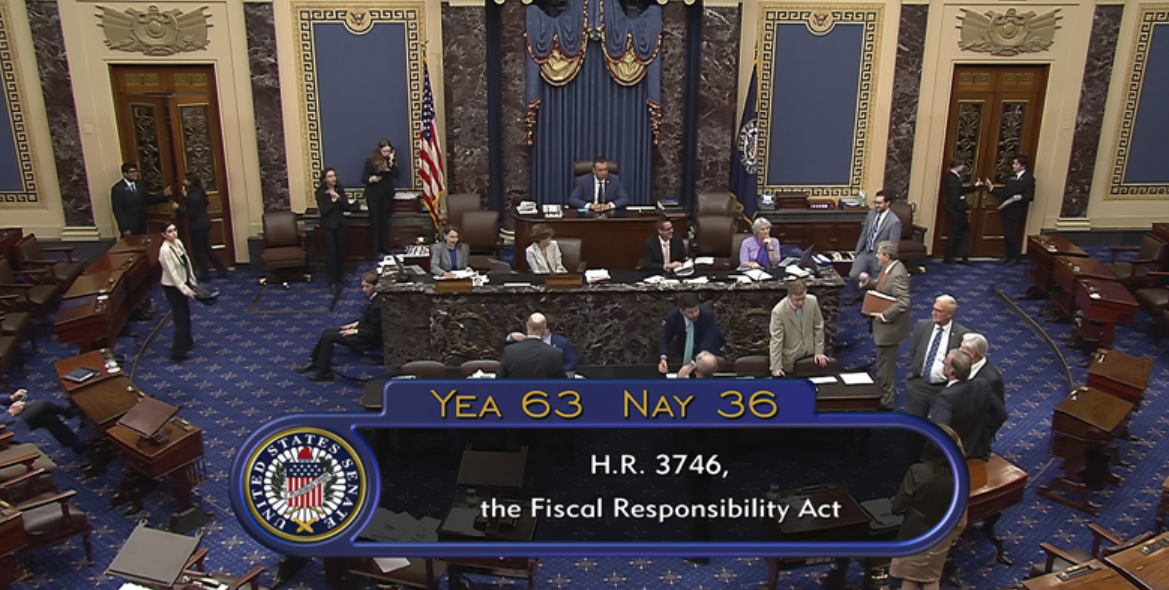
“Crisis” is an overused word. Actual crises are those rare times when we are on the knife edge of disaster. It’s not a crisis when a bank fails, or Congress can’t agree on a budget. Those are annoyances (unless it's your bank). While not good, they don’t spell immediate catastrophe.
The private equity (PE) industry has been all the rage over the past 10 years.
Swiss money manager Felix Zulauf is a crowd favorite at SIC. His 2022 presentation was right on target, so I asked him back to tell us what he expects for the rest of 2023 and beyond. Unfortunately, he thinks a slowdown is coming that will hit markets hard.
I was a math major in college. My favorite class was Probability and Statistics, taught by Dr. Wolcin. He warned us from the beginning that the final exam was the grandaddy of final exams—that it was really hard, and he would probably end up curving it.
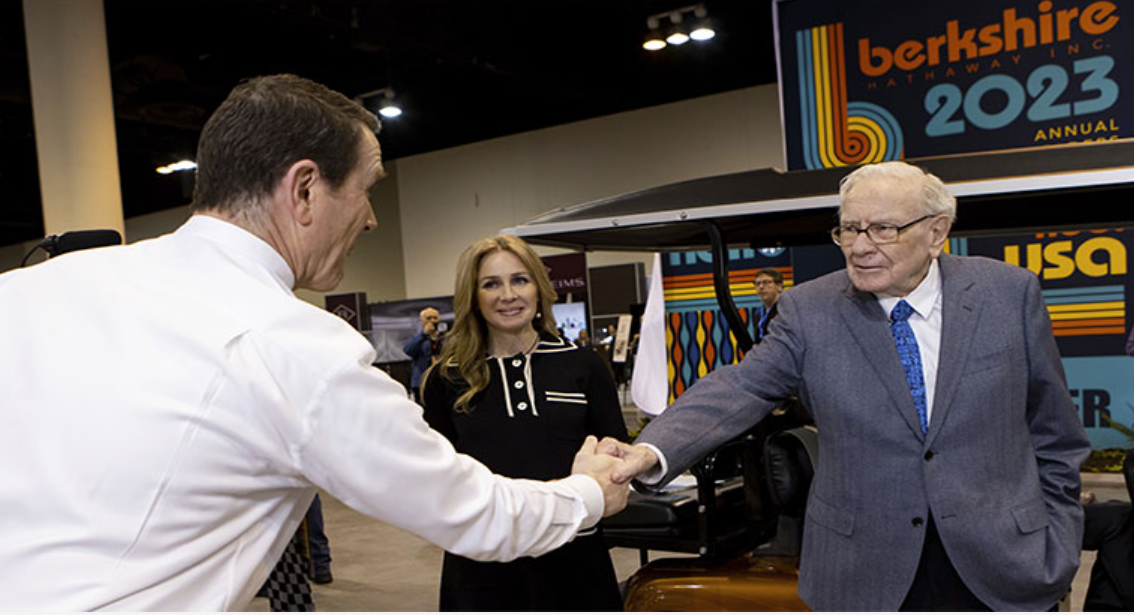
According to Buffett, the US economy just went through the “most extraordinary economic period since World War II.” That’s a heck of a statement.
We often talk about technology’s influence on the economy. After the Strategic Investment Conference, though, I’ve decided that isn’t strong enough. It’s more correct to say technology is the economy.
I once had a cat who liked movies. His name was Otto—he passed away in 2014 at 15 years old. His favorite movie was The Matrix because there’s lots of action and explosions. All the action on the screen could hold his attention.
The economy co-exists and interacts with broader society, including government. Public policies—and the political processes that determine them—can change the economy in deep and lasting ways. We may not like them, but we can’t ignore them.
We are presented with this decision in finance a lot. There is a small probability of something bad happening and a large probability that everything will be fine. What do you do to insure yourself against something bad happening? Because there is no such thing as a free lunch.
World economic growth is slowing. That’s so obvious, very few will disagree. I suppose there are people out there predicting imminent 1990s-like expansion, but they are few and far between. If recession begins soon, it will be the most anticipated one in history.
I want to write a bit about artificial intelligence from the standpoint of a market person who knows little about technology.
Next week also brings what could be a pivotal Federal Reserve policy meeting. We use this word “pivotal” to say an event is important. Taken literally, it means to turn in a different direction than you were previously going.
A few months ago, the internet was filling up with predictions that we’d have a 2008-style crash in home prices. The thinking was that the increase in interest rates would cause mortgage payments to skyrocket and price out an entire generation of homebuyers.
Back before clocks went digital, you could say “a stopped clock is right twice a day” and even youngsters would know what you meant. A mechanism could be nonfunctional but occasionally correct.
When I worked on Wall Street, it was the golden age of hedge funds. They were on the bleeding edge of finance in the mid-2000s, swashbuckling market pirates who did all kinds of exotic stuff to earn alpha for their investors.
Spotting trend changes is the key to economic forecasting. They don’t happen often. Most of the time, this year will be similar to last year. The pace varies but the overall trend continues… until it doesn’t.
Yesterday’s CPI report showed that inflation continues to slow to 5% on an annualized basis. That is a lot better than it was last year. We should be happy about this.
“Thinking the Unthinkable.” What does that phrase bring to mind? To me it suggests a situation that has become so stressed you are forced to consider undesirable solutions.
Remember when banks were small? Those old enough to have a bank account in the 1970s should. Back then, most people did their banking with a locally owned institution, often the First National Bank of (Your Town).
Recently I saw someone share a clip from their weather app. It said, “Rain expected at 3 pm,” right above a little graphic showing a 30% chance of rain at 3 pm. What’s wrong with that picture?
For years I’ve used a sandpile metaphor to describe complex systems like banking. Keep dropping grains of sand long enough and you will eventually trigger an avalanche.
If a picture is worth a thousand words, this will be the “longest” letter I’ve sent you in a while, as there are quite a few pictures. It may also be the most wide-ranging.