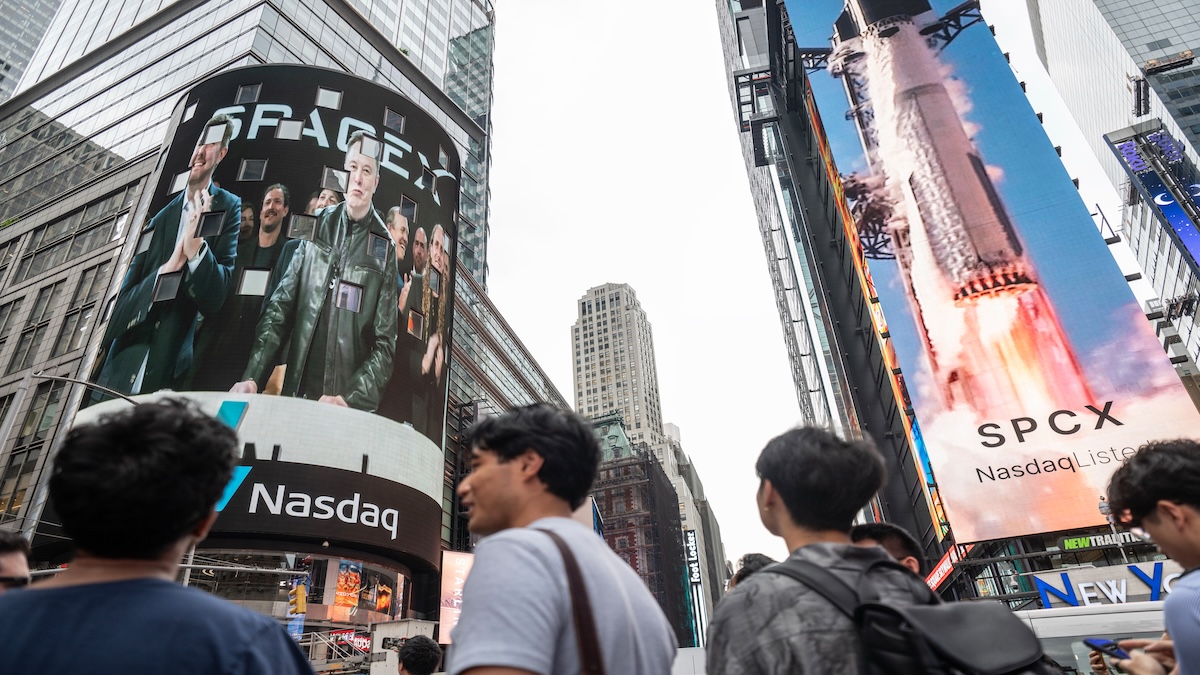
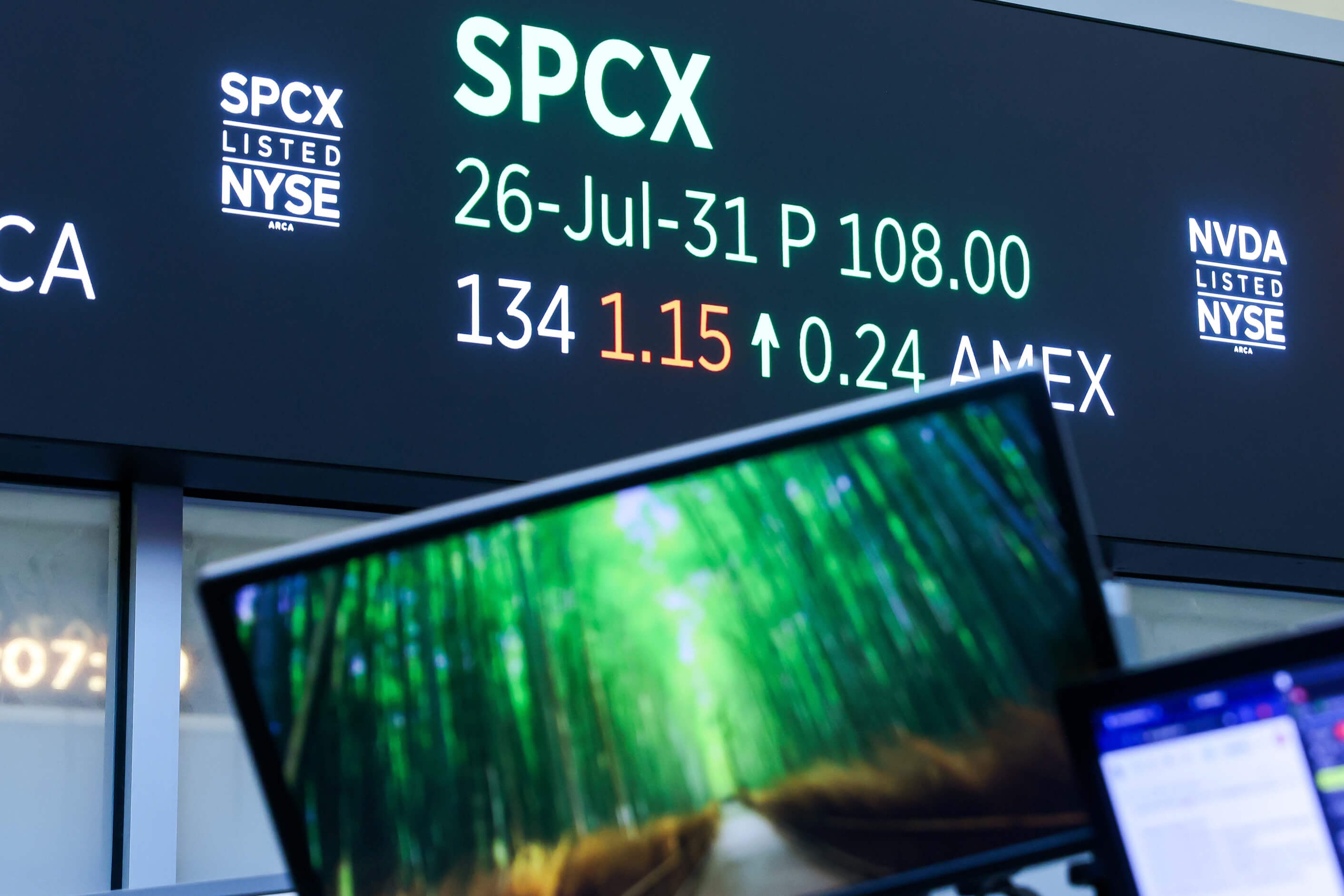
Investors hanging onto SpaceX shares after a plunge below their IPO price are bracing for the next potential hit, when $101 billion worth of stock becomes available for trading on Thursday.
Developing economies must move fast in adopting artificial intelligence for their governments and businesses, the World Bank said, urging countries to adapt existing tools to local needs.
A period of financial recovery for US hospitals is coming to an end as healthcare systems brace for the full force of federal policy changes and a wave of aging baby boomers.
Many ESG advisors can explain what’s driving their clients’ performance, but they stop short of detailing why. When an advisor fails to reveal the reasoning behind a strategy, that’s when a client loses trust — and how accounts are ultimately lost.
The concept of the 530A accounts is sound, and the initial $1,000 deposit is worth having. So claim the seed money if your child qualifies. But before you make additional contributions, compare these accounts to the other options and choose what is appropriate for your circumstances.
A good wine tasting can reveal preferences people didn’t know they had, and a good advisory process should do the same. Because the most important time to discover that a client’s portfolio exceeds their tolerance for risk is not after the market has fallen. It is before the bottle is opened.
Social Security’s short-term financing crisis is no longer a distant actuarial projection — it is a near-term event with direct implications for current retirees, individuals approaching retirement, and younger workers. Advisors must understand not only the potential fixes, but also the hard constraints that sharply limit what Congress can realistically do in the next several years.
Treasuries rose on Tuesday as signs of progress toward a diplomatic resolution of the Iran war sent oil prices lower, curbing expectations for more than one Federal Reserve interest-rate hike in the coming year.
Northwell Healthcare Inc., the largest healthcare provider in New York, is considering selling up to $800 million of municipal bonds, according to a Friday filing.
Investment firms for billionaires hailing from the US, Europe and Asia are driving a wave of deals for robotics AI businesses, defying fears about a bubble in the machine-learning sector.
SpaceX’s first earnings release following its record initial public offering is one of the most anticipated reports of the summer for traders on Wall Street and beyond. Whether it’ll give investors a reason to buy the sinking stock is another matter.
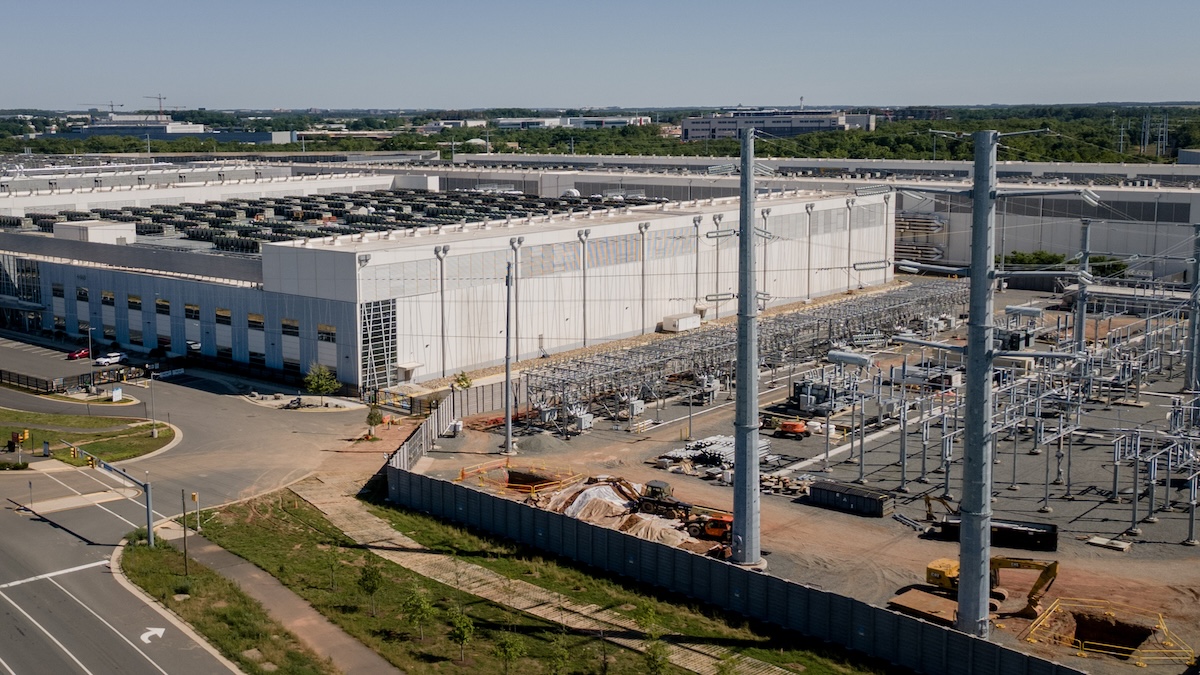
Power utilities across the US are already strained from AI data centers. But they’re increasingly facing an even bigger threat: that developers will be forced to walk away from projects, leaving households on the hook for massive infrastructure bills.
Every time China tightens its grip on rare earths, the rest of the world becomes a little better at finding them.
Growing demand for AI-savvy workers has led some companies, including software makers International Business Machines Corp., Shopify Inc. and Cloudflare Inc., to ramp up entry-level hiring, betting that recent Gen Z graduates will be able to do more with AI tools than existing employees.
Sequoia Capital led a $1 billion funding round for Valar Atomics Inc. that the nuclear startup says will help it shift from demonstrating small reactors to producing them in volume.
JPMorgan Chase & Co. is vowing to funnel $750 billion into housing over the next decade, nearly 40% more than it has over the past 10 years, as part of Chief Executive Officer Jamie Dimon’s push to invest more money in US communities.
US stocks rose into the first trading day of the month as attention turned to this week’s heavy slate of earnings reports.
The deeper promise may be in human-AI collaboration. AIs may prove most valuable not as autonomous traders but as a counterweight to our very human behavioral biases such as overconfidence, recency bias, and the tendency to bet too big on views that feel certain but aren’t.
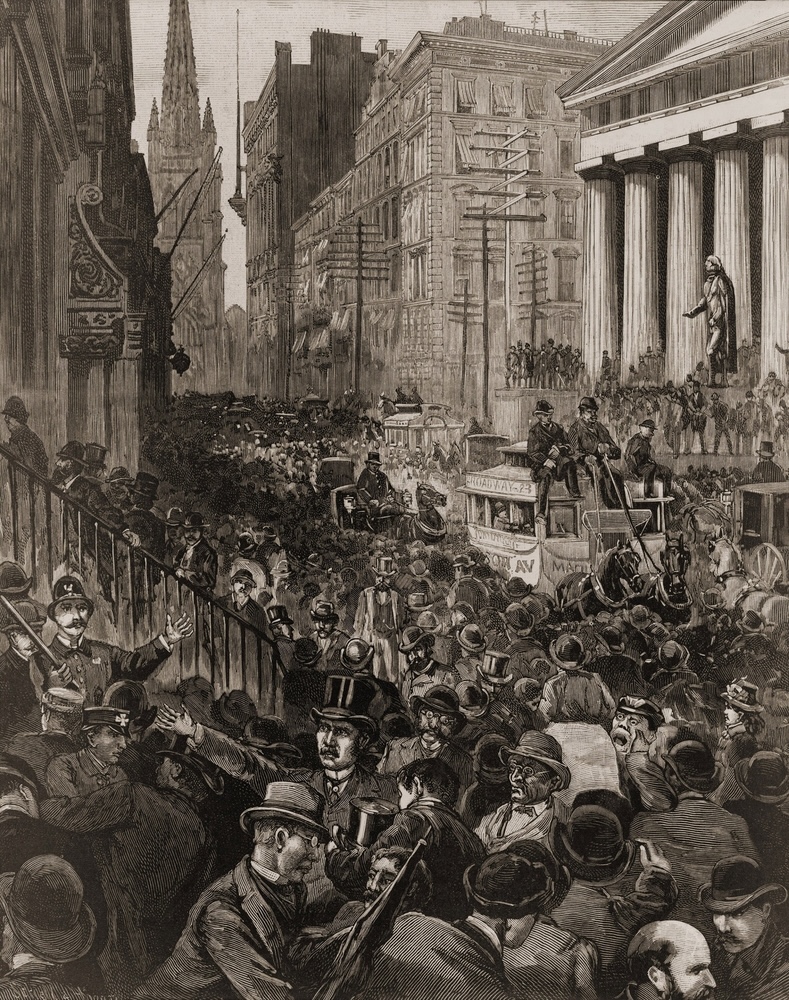
2008. 1929. 1907. 1893. These dates strike fear into the hearts of investors. Panics, crashes, and bear markets have been part of the investing ecosystem for as long as markets have existed. Some say they are the price of progress — others, a flaw in the system. Whatever you think of periodic market crashes, they’re here to stay.
In this article, I explain why baby boomers in target date funds (TDFs) should not feel lucky today or in the near future. There’s a 40% chance that the typical TDF will have at least one losing year during the next five years. These are bad odds, especially since retirement with dignity is at stake.
“Carnage” and “exploding” are very misleading descriptors of what is happening to hyperscaler credit spreads. Yes, the basket of CDS spreads is certainly moving upward, but it is not evenly distributed. Oracle's CDS spreads have moved by multiples, while the other four hyperscalers' CDS spreads have increased by a much more subdued amount, and from unusually tight initial levels.
In the race to win a coveted role on the next mega US IPO and manage the ensuing riches, Wall Street’s wealth advisers are ramping up lending to founders and entrepreneurs based on the soaring values of their private companies.
For anyone worried about the gargantuan costs of developing artificial-intelligence infrastructure, it was comforting to think that Big Tech firms could just turn off the spending taps if demand for chatbots and coding tools didn’t pan out. That’s starting to look like wishful thinking.
It’s true enough that history rhymes, even if it doesn’t necessarily repeat. But that creates danger when we pick up resonances from the wrong episode of history, particularly in the fraught task of identifying and avoiding speculative bubbles.
US stocks rose at the open on Thursday as Microsoft Corp. soared 16% after reporting the fastest cloud unit growth in four years. Top semiconductor companies, like Micron Technology Inc. and Nvidia Corp., gained as well.
Europe’s big banks have joined the global stock trading party. Danger lurks, however: When the market turns, it is often brutal.
The conventional wisdom in tech is that it’s better to overspend than miss out on a blockbuster hit. Of course, Big Tech’s investors hate when their companies overdo it.
The arithmetic of doom on America’s debt and budget shortfalls has been a favorite parlor game for fiscal conservatives since 1971, when Richard Nixon removed the last constraint on federal borrowing by ending the dollar’s convertibility to gold.
Clients do not need us to predict whether the next 10% move is up or down. They need help staying invested in a way that matches their goals, their time horizon, and their actual tolerance for risk. Staying invested is easier when clients understand what each part of the portfolio is designed to do.
Investors overwhelmingly recognize the value of financial planning, but a substantial planning gap remains. The desire for guidance is there. Access remains the challenge.
The combination of succession planning — where the lead advisor wants to have a successful and well-funded retirement and the successors want to get paid for taking over — along with the riches of the market over the last few years are all adding up to significant unrest within many teams.
At the party, hosted on a hot day last July at HPS business development head John Christmas’ New Jersey beach house, bandana-clad colleagues across his teams mingled poolside with the wind at their backs. With the addition of HPS, one of the biggest names in private credit, it seemed BlackRock was set to break through in the market in a way that had eluded the asset manager for years.
Wall Street is racing to roll out complex investment products tied to SpaceX shares that aim to shield buyers from future losses amid a sharp selloff following its market debut.
The US dollar will weaken if the Federal Reserve leaves interest rates unchanged this week, according to TD Securities.
One of this year’s hottest themes in the stock market has been the crowds of traders chasing the recipients of all the planned spending on new artificial-intelligence data centers.
Politicians all over the world are showing renewed enthusiasm for public ownership of private companies. The methods range from modest government stakes to outright nationalization, but the trend is apparent.
As equity compensation becomes a larger component of employee wealth, financial advisors are helping clients navigate the complexities of stock options, RSUs (restricted stock units), and ESPPs (employee stock purchase plans). Here, three financial advisors discuss how to balance the upside potential of equity awards with tax planning, concentration risk, diversification, and strategic exercise decisions.
In the coming years, more investors will expect financial planning to be a key part of the services they receive from advisors. To be prepared, advisors will need technology to help streamline added workflows, as well as the expertise of certified financial planners to support their clients long term.
BlackRock Inc.’s $12.55 billion bond sale tied to a Meta Platforms Inc. data center rallied in early trading on Monday in a sign that relatively high yields on the debt ultimately attracted investors.
CME Group Inc. said the debut weekend of 24/7 trading for its one-ounce gold futures saw stronger-than-expected demand with deep liquidity despite subdued volatility.
Registered investment advisors (RIAs) are increasingly adopting artificial intelligence (AI) tools that automatically transcribe and summarize client calls. While these technologies may offer efficiency gains, they introduce significant legal and compliance risks. This article discusses the intersection of AI transcription tools with state wiretapping laws, privacy considerations, Securities and Exchange Commission (SEC) requirements, and the evolving litigation landscape.
Pimco has been one of the loudest voices warning of risks in private debt markets, and Ivascyn, 56, has cautioned on the trillions of dollars pouring into the infrastructure underpinning the artificial intelligence boom.
US state and local government debt hit its cheapest level since the spring, after inflation fears caused municipal bonds to see their worst week of returns since April 2025.
Microsoft Corp., Meta Platforms Inc. and Amazon.com Inc. face renewed investor anxiety over their debt-fueled capital expenditure plans after Alphabet Inc. raised the upper end of its spending forecast this year by as much as $15 billion.
The narrative presented in this article is uniquely suited only to the retirement scenario. (And it neglects such complications as tax-deferred accounts, etc.) Other investing narratives will be different — for example, those of pension funds or endowment funds.
To evaluate SpaceX from a fundamental perspective, investors need to quantify the implied growth in its valuation and compare it with both their own and market forecasts. In this article, we attempt to help by providing context for growth expectations, using Amazon’s history as a proxy. The question we pose is: What does the Amazon playbook require of SpaceX?
Whenever faced with tradeoffs between risk and return, we recommend turning to expected utility. The method of maximizing expected utility is the most sensible technique for making these tradeoffs, taking into account both your personal preferences and the specifics of the situation.
Your client needs income. Investment-grade corporate bonds are offering it in the form of yields above 5%. That's a compelling number, and you're thinking about how to position this client's portfolio. Here's the problem: That 5% shouldn't be possible right now. And that's what should worry you.
Kioxia Holdings Corp. faces more wild price swings with leveraged exchange-traded funds tracking the Japanese memory chipmaker’s shares set to be listed in the US.
Jefferies Financial Group Inc. is hiring several muni sales and trading veterans, according to a person familiar with the matter.