October Fed Meeting Preview: A Pause Is Still a Recalibration
Membership required
Membership is now required to use this feature. To learn more:
View Membership Benefits
Key takeaways
- We expect a hold in October. The Fed is likely to pause while maintaining a tightening bias and signaling that further hikes are possible.
- Financial conditions will likely inform the Fed’s next move. Higher long-term Treasury yields are partly offsetting the growth boost from strong equity markets.
- AI complicates the policy calculations. It is supporting demand and wealth while potentially reshaping investment, employment, productivity, and saving.
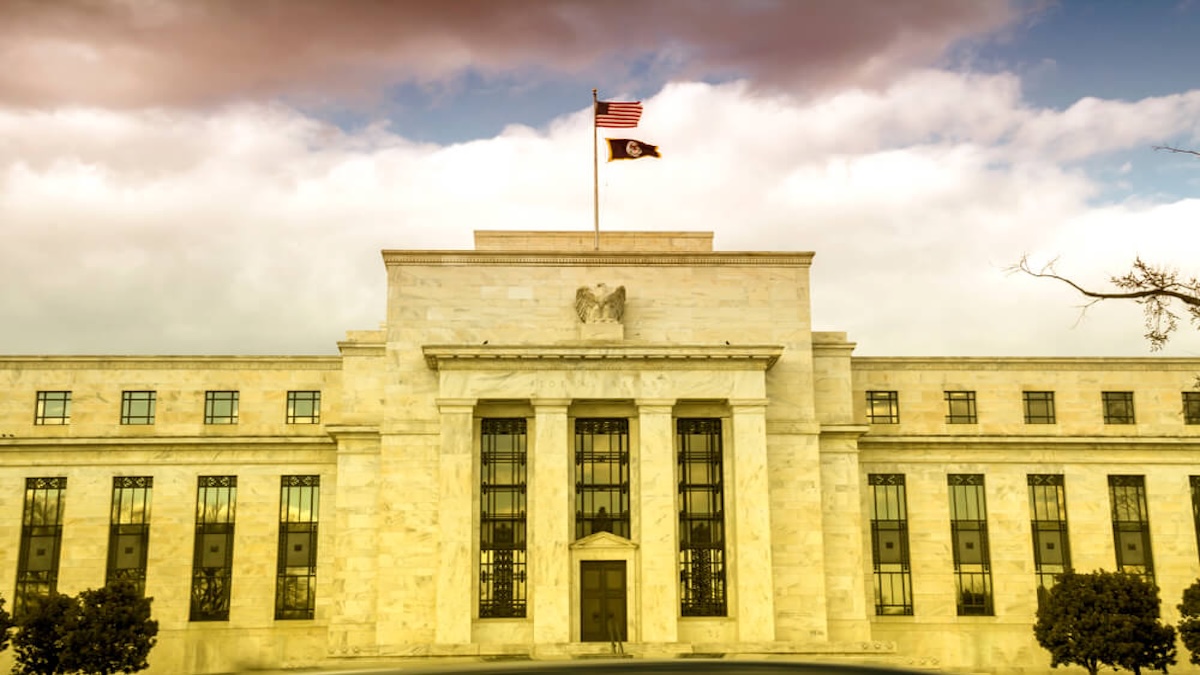
The Federal Open Market Committee (FOMC), the policy-setting group within the U.S. Federal Reserve, meets on 27–28 October to discuss the economic outlook and appropriate monetary policy. We expect the FOMC to hold the policy rate at 3.75%–4.0% while keeping a clear tightening bias. The most likely next move is a 25-basis-point (bp) rate hike in December.
See more: The AI Investment Boom Goes Beyond America
Since the September hike, the Fed’s leadership has steered markets away from expecting back-to-back moves; even the hotter-than-expected September inflation data did not change that. As of this writing, the week before the October meeting, markets are pricing roughly an 80% chance of a hold.
Three questions about the October Fed meeting
With no new economic projections at this meeting, the decision itself likely matters less than three other questions: How does Chair Kevin Warsh frame the hold? Does the majority of the FOMC still characterize the September move as a risk management adjustment? How many officials dissent in favor of a hike?
We see both the September hike and the overall rate path outlook as a recalibration, with one or two more hikes still to come that would effectively reverse last year’s cuts. We also think Warsh and the FOMC will want to frame it that way, while avoiding sending overly dovish signals to markets that could ease financial conditions.
Warsh seems well aware of the power of financial conditions. We interpreted his description of the September hike, “removing a dose of accommodation,” as a reference to the growth impulse from easier conditions. According to the Federal Reserve Board staff measure, the Financial Conditions Index, strong equity performance has been an important support to growth (and to easier financial conditions) over the last several years through the “wealth effect,” where households enjoying the boost from their equity holdings feel more empowered to consume and spend across the economy. (Learn more in our 30 September 2026 Macro Signposts.)
Since Warsh took the helm in June, however, longer-dated interest rates have risen. By our calculations using the financial conditions impulse from the Fed’s model, that rise in longer-dated rates has offset some of the wealth effect. For example, as of this writing, the 5-year, 5-year-forward real interest rate is now roughly 3%, a level last seen in the early 2000s; it’s up about 50 bps just since June. Higher rates should be an increasing headwind to growth over the next several quarters and beyond, and should reduce the risk that inflation stays persistent.
In the September Summary of Economic Projections, nearly all FOMC participants expected one or two more hikes after the September adjustment. That baseline is consistent with a modest recalibration. We think the Fed will want to see how higher rates are affecting the economy before revising that outlook, and economic data since the September meeting have been mixed.
It’s possible a few FOMC participants dissent from the majority “hold steady” vote. At the September meeting, Beth Hammack, Lorie Logan, and Neel Kashkari were likely the participants who submitted rate-path projections implying hikes at every remaining meeting this year. They dissented at the July meeting, favoring a rate hike instead of the hold that was delivered. However, despite their possible disagreement with other participants on rate hike timing, the projections signal that they too are looking for only a modest adjustment – not a rate hike cycle.
Taking a step back: why AI makes this so complicated
The combination of supply and demand shocks from energy, tariffs, and AI creates a complicated environment for the central bank. The textbook policy response to supply shocks is to look through them. These shocks, however, are coinciding with – and potentially accelerating – investment in and implementation of AI, which has also supported demand.
AI is raising domestic demand both through a faster pace of investment and through the wealth effect (see last week’s Macro Signposts). That has contributed to the Fed’s pivot toward rate hikes, as policymakers look to lean against the domestic demand impulse through higher rates and tighter financial conditions.
Markets may have adjusted up their neutral rate expectation this year in response to the evolving macro fundamentals, and similarly we expect rates to remain elevated for longer (learn more in our latest Cyclical Outlook). Nevertheless, several factors still argue for a measured Fed trajectory, despite an ongoing AI-related investment boom.
- High import content curtails the domestic demand impulse. A large share of AI investment, particularly chips and computer equipment, is imported into the U.S., which limits its impact on domestic production. The more the buildout relies on foreign chips and equipment, the smaller the required rise in U.S. rates to balance demand and domestic supply. That said, prices of imported chips and some other imported tech components have risen sharply this year and are showing up in U.S. inflation.
- The U.S. labor market is looser than the unemployment rate suggests – rising labor costs aren’t a source of inflationary pressures. AI implementation is colliding with demographic factors, specifically an aging population; this is structurally shifting the composition of the labor market in ways that are depressing firms’ unit labor cost growth. Specifically, an elevated pace of retirements and falling participation have kept the unemployment rate low even as the employment-to-population ratio has declined. Because of these retirements, and the way the AI-related labor adjustment disproportionately affects higher-skilled white-collar workers, the composition of employment is shifting toward lower-paid jobs, which is weighing on measures of average wage growth. (Learn more in the 13 August 2026 Macro Signposts.)
- The cost of Fed tightening falls on the parts of the economy that aren’t driving inflation – AI-related investment is less interest rate sensitive, but other parts of the economy are more sensitive. If the Fed pushes harder to tame inflation, it risks overtightening the sectors that aren’t the source of inflation pressure. Higher interest rates work to restrain the economy in large part by raising what economists call the user cost of capital for businesses and households. User cost depends on the required real return on capital (i.e., the return on investment one could make from the next best investment option), depreciation, and taxes. AI capital, which is dominated by computer equipment, depreciates much faster than longer-lived investment, so depreciation costs dominate AI firms’ user cost of capital. A given rise in interest rates therefore raises AI firms’ cost of capital proportionately much less than it does for firms investing in other forms of capital. One could argue this means rates must rise further to slow investment spending. Outside of AI, however, investment in the U.S. is already contracting, evidence that the rest of the economy remains rate-sensitive.
- AI could change saving behavior as well as investment. The wealth effect is likely lowering saving rates for some households. Higher energy prices have squeezed real incomes, and households have smoothed consumption by drawing down savings, which further clouds the picture of whether and how saving habits are shifting. Over time, however, uncertainty about job prospects amid economic reallocation could push households toward more precautionary saving, which in turn would weaken demand.
- The payoff from AI is uncertain, and the risks are asymmetric. It is unclear how quickly AI investment will generate productivity gains and returns. History suggests transformative technologies can deliver disappointing short-run returns on capital, even if their innovations transform the economy over the medium to long term. A disappointment (or even just a meaningful deceleration) in AI returns could quickly reverse the wealth effect and tighten financial conditions, which is yet another reason not to front-load hikes.
Bottom line
The Fed has been clear that it’s aware AI is boosting U.S. demand. With inflation still above target across a range of measures, leaning against that impulse through modest rate adjustments and tighter financial conditions is sensible policy, in our view.
However, the economic adjustments now underway could evolve in several ways, and inflation is elevated but not accelerating. This likely gives the Fed room to take a measured approach, pausing to see how the tightening already priced into the yield curve is affecting the economy before deciding how much further to go. This was their preferred strategy at the September meeting, and we believe the incremental data revealed since that meeting will likely reinforce that strategy.
A message from Advisor Perspectives and VettaFi: Discover something new! Click here to register for our upcoming webcasts.
Disclosures
A word about risk: All investments contain risk and may lose value.
Statements concerning financial market trends or portfolio strategies are based on current market conditions, which will fluctuate. There is no guarantee that these investment strategies will work under all market conditions or are appropriate for all investors and each investor should evaluate their ability to invest for the long term, especially during periods of downturn in the market. Outlook and strategies are subject to change without notice.
PIMCO as a general matter provides services to qualified institutions, financial intermediaries and institutional investors. Individual investors should contact their own financial professional to determine the most appropriate investment options for their financial situation. This material contains the opinions of the manager and such opinions are subject to change without notice. This material has been distributed for informational purposes only and should not be considered as investment advice or a recommendation of any particular security, strategy or investment product. Information contained herein has been obtained from sources believed to be reliable, but not guaranteed. No part of this material may be reproduced in any form, or referred to in any other publication, without express written permission. PIMCO is a trademark of Allianz Asset Management of America LLC in the United States and throughout the world.
Pacific Investment Management Company LLC (“PIMCO”) is an investment adviser registered with the U.S. Securities and Exchange Commission (“SEC”). PIMCO Investments LLC (“PIMCO Investments”) is a broker-dealer registered with the SEC and member of the Financial Industry Regulatory Authority, Inc. (“FINRA”). PIMCO and PIMCO Investments is solely responsible for its content. PIMCO Investments is the distributor of PIMCO investment products, and any PIMCO Content relating to those investment products is the sole responsibility of PIMCO Investments.
The information provided herein is not directed at any investor or category of investors and is provided solely as general information about our products and services and to otherwise provide general investment education. No information contained herein should be regarded as a suggestion to engage in or refrain from any investment-related course of action as none of PIMCO nor any of its affiliates is undertaking to provide investment advice, act as an adviser to any plan or entity subject to the Employee Retirement Income Security Act of 1974, as amended, individual retirement account or individual retirement annuity, or give advice in a fiduciary capacity with respect to the materials presented herein. If you are an individual retirement investor, contact your financial advisor or other fiduciary unrelated to PIMCO about whether any given investment idea, strategy, product or service described herein may be appropriate for your circumstances.
Check the background of this firm on FINRA's BrokerCheck.
PIMCO is a trademark of Allianz Asset Management of America LLC in the United States and throughout the world. ©2026 PIMCO. All Rights Reserved. Investment Products: NOT FDIC INSURED | MAY LOSE VALUE | NOT BANK GUARANTEED.
© PIMCO
Membership required
Membership is now required to use this feature. To learn more:
View Membership Benefits