Key takeaways
-
A broader funding mix offers a cleaner test of supply technicals in the U.S. dollar (USD) market. As hyperscalers increasingly finance AI capex across multiple currencies, the relative performance of their USD and euro-denominated (EUR) bonds provides a useful lens through which to isolate the technical effects of the much larger wave of dollar issuance.
-
Relative performance points to a USD supply overhang. Issuer-matched comparisons show hyperscaler bonds have been less volatile in EUR relative to USD. Given largely identical underlying credit fundamentals, the divergence suggests that supply pressure and investor fatigue have been more pronounced in the dollar market.
-
The implications extend beyond a simple currency relative-value trade. In USD investment grade, hyperscalers are now large enough to influence both index-level returns and bond-level dispersion. AI-related issuance is increasingly emerging as a distinct risk factor within the asset class, one that investors should monitor across issuers, yield curves, and benchmark indices.
The AI capital expenditure cycle remains solidly on track to eclipse the telecom boom of the late 1990s and become the largest investment cycle since the railway buildout of the 19th century in inflation-adjusted terms. This year alone, AI-related issuers accounted for six of the eight non-financial U.S. investment grade (IG) companies that raised more than $20 billion in the USD corporate bond market. Yet the ultimate scale of the buildout remains deeply uncertain. Bloomberg consensus forecasts imply that hyperscaler capital spending alone will surpass $1 trillion per year from 2027 onward, with no clear signs of moderation.
In fact, capital needs have been so large for the hyperscalers that they started to diversify their debt issuance into a range of foreign currencies. While the most non-USD issuance has still taken place in the EUR market, as a group, these firms have also tapped primary markets in Canada, the UK, Japan, and Switzerland, albeit to varying degrees.
Beyond just the balance sheet re-leveraging impulse that is already widely acknowledged, large issuance figures have led to technical factors becoming an increasingly important driver of relative performance within the AI ecosystem on both sides of the Atlantic.
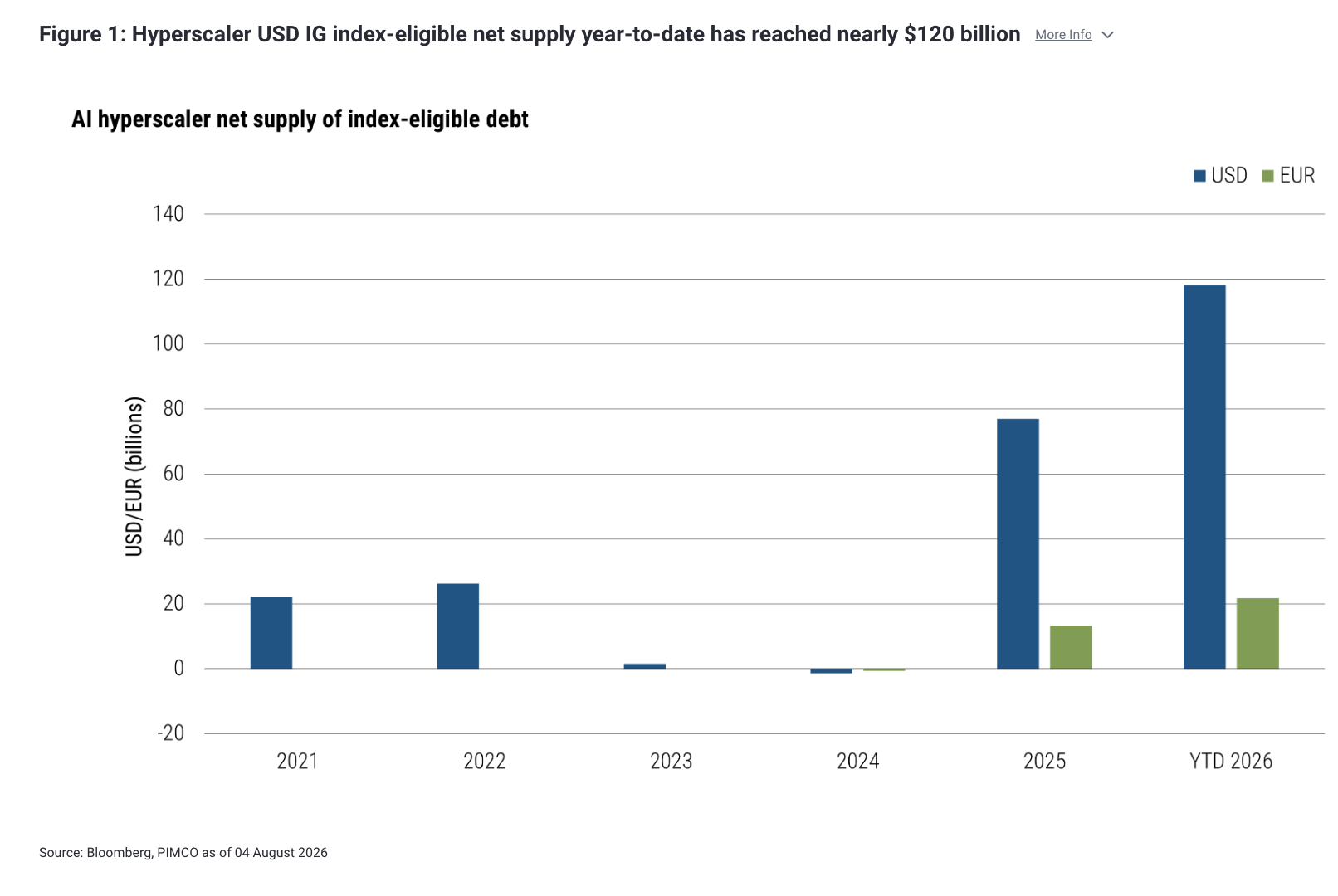
Figure 1 shows that 2026 year-to-date net supply of index eligible AI hyperscaler debt stands at $120 billion and €22 billion, in the USD and EUR corporate IG indices, respectively.
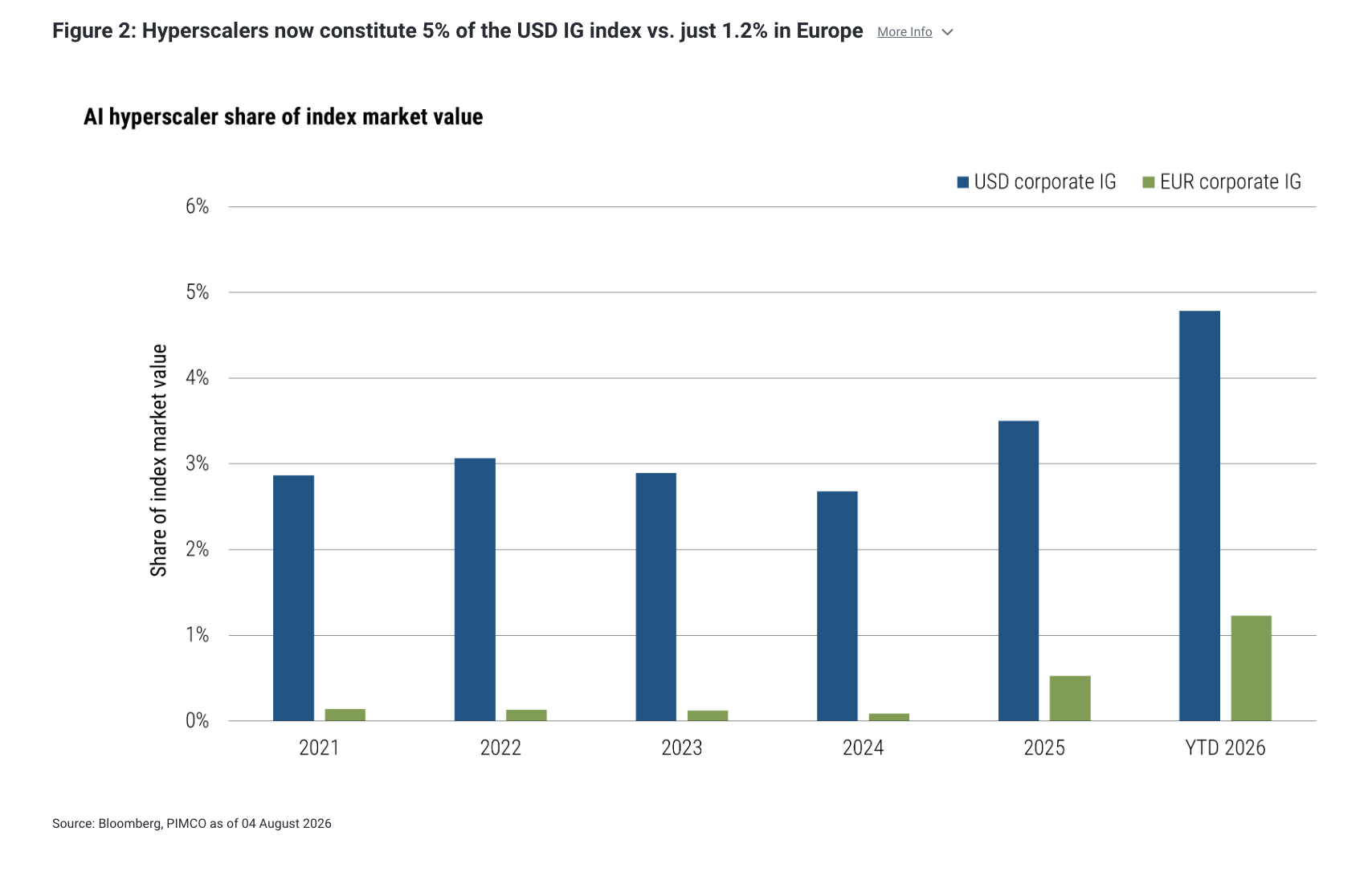
That said, while 2026 has been a record net supply year in both markets for these firms, it has been far more pronounced for USD denominated bonds. Collectively, hyperscalers now account for nearly 5% of the USD IG index vs. just 1.2% for the EUR IG market (see Figure 2).
See more: AI’s New Frontier: The Transformation of Investment-Grade Credit
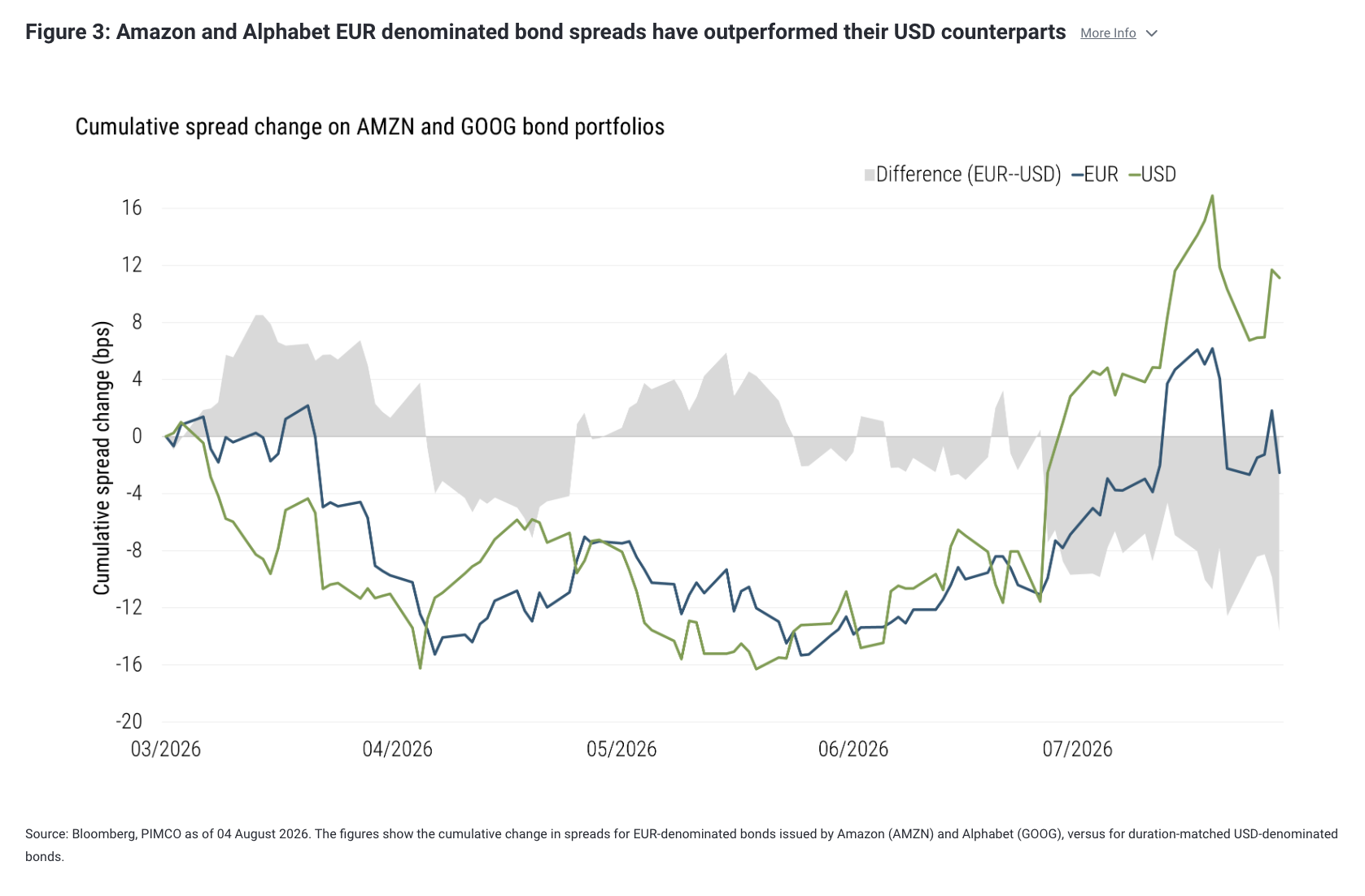
One side effect of the rapid growth in the share of hyperscalers is that it has started to drive relative performance across both sides of the pond. For example, consider bonds issued by Amazon and Alphabet (Google’s parent company) in both the EUR and USD market.
In theory, the underlying company fundamentals that drive credit spreads should be largely identical regardless of currency. However, Figure 3 shows that a gap in spread performance has started to emerge, and even though it has slightly closed over recent sessions, it remains near the widest levels of the past few months.
This performance differential is difficult to attribute solely to firm-related risks. Instead, it points to indications of demand fatigue in the USD IG market on a relative basis vs. its EUR IG peer.
Index performance and spread dispersion
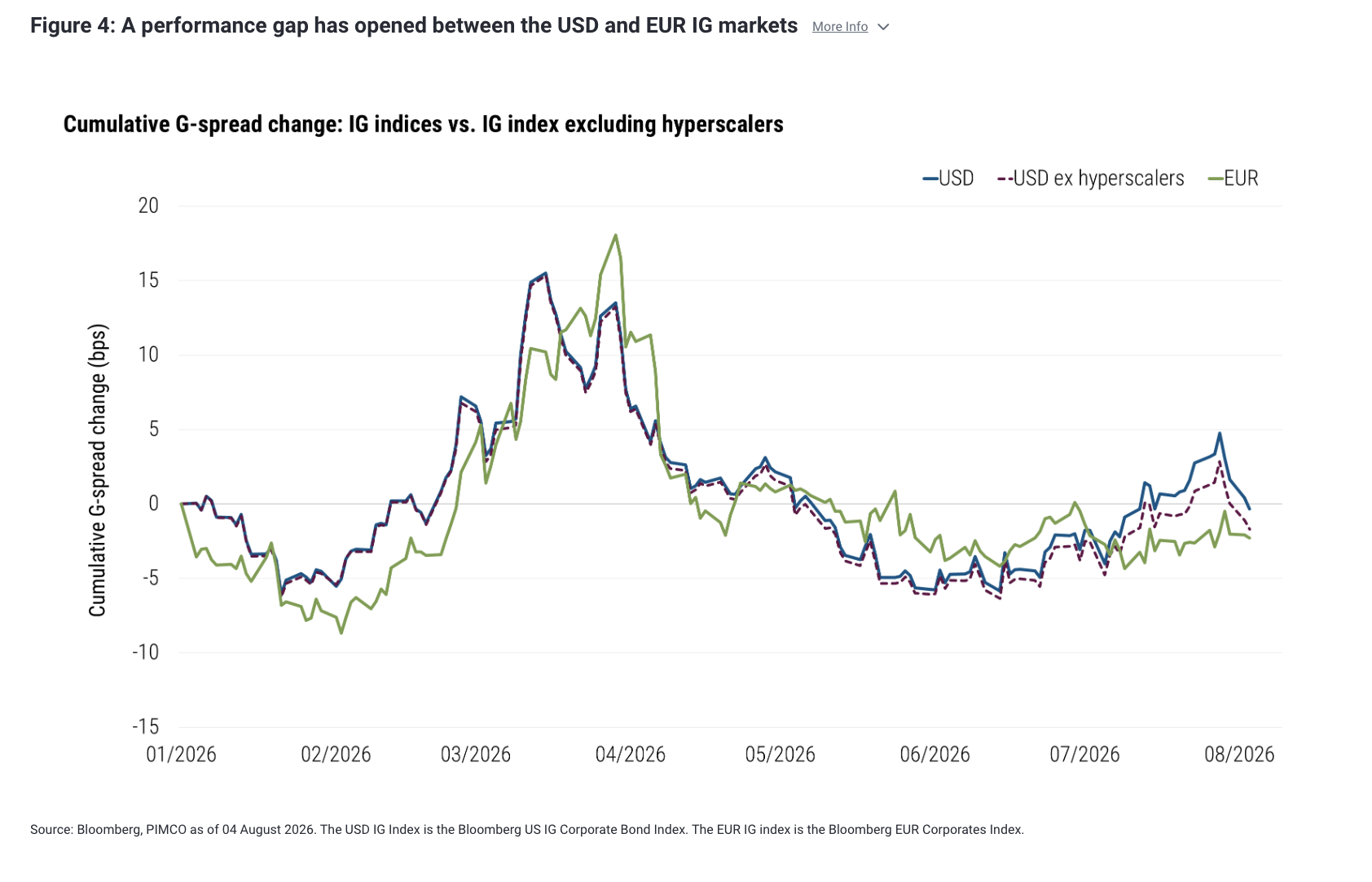
In addition to the relative value between issuer-matched USD and EUR bonds, there are two other effects that the wave of AI issuance is having. The first is overall index performance. The outsized index share of hyperscaler capital structures has effectively introduced a new risk factor into the USD IG market, whereby index level spreads can drift higher due to the underperformance of just a handful of large issuers exposed to the AI theme.
Figure 4 shows this visually. Since the start of the year, a gap has opened between the USD IG index, both inclusive and exclusive of the five hyperscalers. The EUR IG index doesn’t yet have a large enough concentration for a similar effect. Of course, for the USD IG index this is symmetric, and if the hyperscalers’ spreads started to outperform, they could tighten overall index spreads.
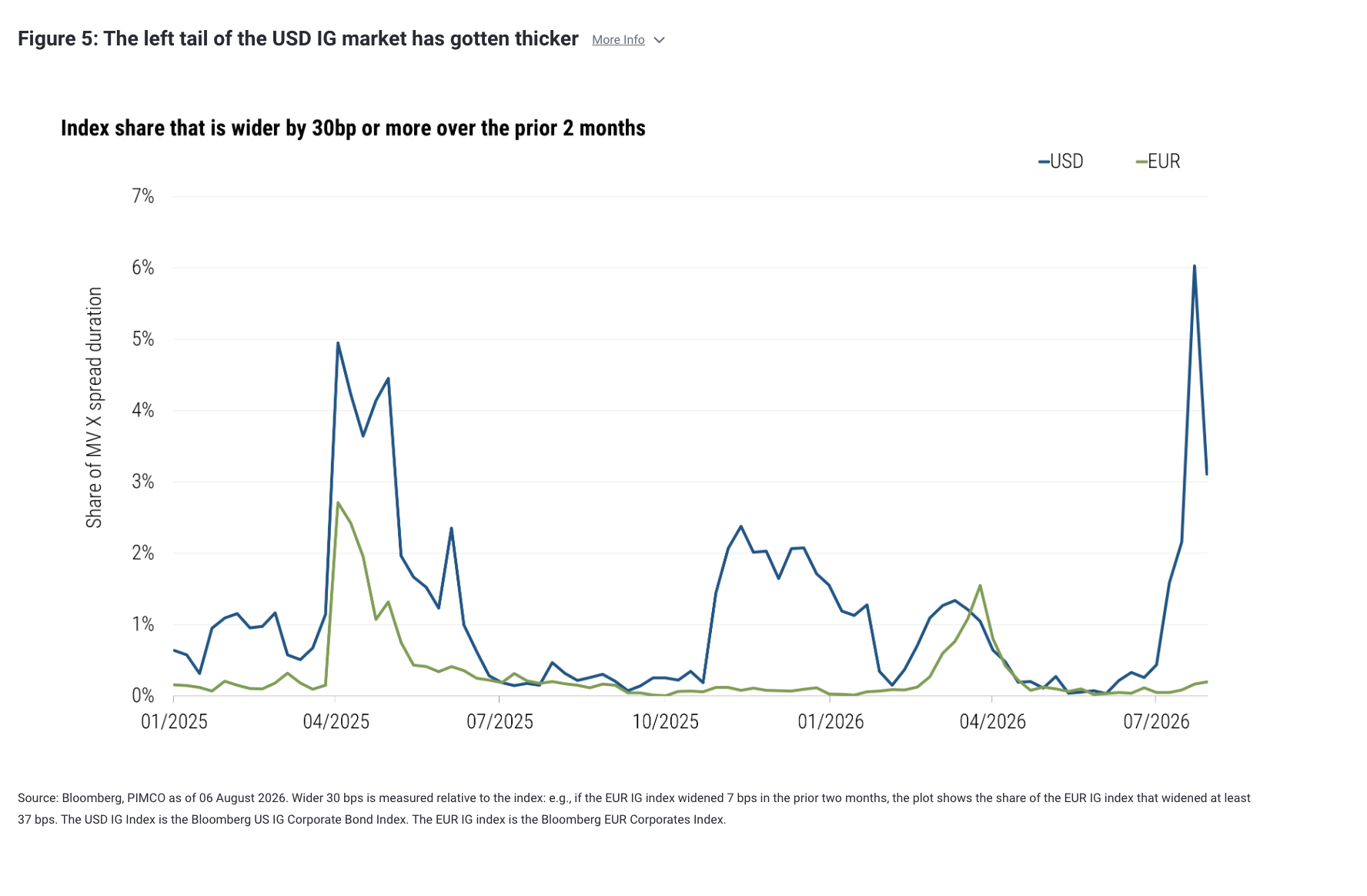
The second effect is spread dispersion. While headline USD IG spreads continue to trade near their recent tightest levels, under the surface there has been significant dispersion at the individual bond level. Figure 5 shows a time series of the duration-weighted share of the USD and EUR IG markets that have widened by more than 30 basis points (bps) relative to the index over the prior two months.
What is striking about this figure is not that the share of the USD IG market that has widened relative to the index over recent weeks is higher than in its EUR IG peer – it typically is – but rather that the share has recently reached levels not seen since April 2025, the immediate aftermath of the “Liberation Day” tariff announcements.
At the same time, the under-the-surface dispersion in the EUR IG market, at least as viewed through the lens of this metric, has barely moved at all and remains well-behaved. To be clear, since this measure uses a rolling two-month window, it tends to retrace over time as we have seen over the past few weeks, but it nevertheless remains elevated relative to the past 20 months.
Michael Puempel and Gabriel Cazaubieilh contributed to this report.
Disclosures
Statements concerning financial market trends or portfolio strategies are based on current market conditions, which will fluctuate. Outlook and strategies are subject to change without notice.
Past performance is not a guarantee or a reliable indicator of future results. Forecasts, estimates and certain information contained herein are based upon proprietary research and should not be considered as investment advice. There is no guarantee that stated results will be achieved.
All Investments contain risk and may lose value. Bond investments are subject to market, interest rate, issuer, credit, inflation, and liquidity risks. Bond prices generally fall when interest rates rise, with longer-duration bonds typically more sensitive to rate changes. Reduced market liquidity may increase price volatility. Investors may receive more or less than their original investment upon redemption. Investing in foreign-denominated and/or -domiciled securities may involve heightened risk due to currency fluctuations, and economic and political risks, which may be enhanced in emerging markets. Corporate debt securities are subject to the risk of the issuer’s inability to meet principal and interest payments on the obligation and may also be subject to price volatility due to factors such as interest rate sensitivity, market perception of the creditworthiness of the issuer and general market liquidity. Concentration of assets in one or a few sectors may entail greater risk than a fully diversified portfolio. The current regulatory climate regarding AI is uncertain and rapidly evolving, and future developments could adversely affect a portfolio and/or its investments.
References to specific securities and their issuers are not intended and should not be interpreted as recommendations to purchase, sell or hold such securities. It is not possible to invest directly in an unmanaged index.
PIMCO as a general matter provides services to qualified institutions, financial intermediaries and institutional investors. Individual investors should contact their own financial professional to determine the most appropriate investment options for their financial situation. This material contains the opinions of the author and such opinions are subject to change without notice. This material has been distributed for informational purposes only and should not be considered as investment advice or a recommendation of any particular security, strategy or investment product. Information contained herein has been obtained from sources believed to be reliable, but not guaranteed. No part of this material may be reproduced in any form, or referred to in any other publication, without express written permission. PIMCO is a trademark of Allianz Asset Management of America LLC in the United States and throughout the world.
CMR2026-0807-5823545
A message from Advisor Perspectives and VettaFi: Discover something new! Click here to register for our upcoming webcasts.
© PIMCO
Read more commentaries by PIMCO