The US midterm elections are turning into a key source of concern for a stock market that is riding high on the artificial intelligence trade.
Polls and prediction markets over the past couple of weeks have skewed sharply in favor of the Democratic Party, which now looks increasingly likely to gain control of at least one chamber of Congress. Such an outcome can weigh on stocks that have gained from the AI euphoria, often with steep equity valuations that leave little room for error, Wall Street strategists say, citing the possibility of investigations, hearings and even tighter regulations down the line.
“There would be, on a volume level, more and louder hearings” on AI safety if Democrats have a strong showing in November, said Brian Mulberry, chief market strategist at Zacks Investment Management. That sets the AI trade up for volatility as headlines from Washington get traders worried about Congressional action, Mulberry said.
Democratic leaders have been laying the groundwork to investigate companies with ties to the Trump administration and the president’s family. Moreover, on Wednesday, a group of Democratic senators urged the president to strike an agreement with China to mutually slow or pause AI development.

The recent outpouring of concern about potential risks of AI systems has made safety “a more live subject for Congress in 2027,” Wolfe Research’s Tobin Marcus wrote to clients last week. The policy-focused strategist expects Democrats to create a “Select Committee on AI,” which will question industry executives and potentially issue subpoenas.
Market watchers have been urging caution for a while. Last month, Bank of America’s Michael Hartnett warned that a Democratic sweep of the House and Senate — along with a win in Texas — could trigger a 10% decline in US stocks, given the risk to the AI complex. And Barclays strategists led by Jenny Yang and Alex Altmann said the potential for increased scrutiny of AI infrastructure and data center buildout was a risk that markets “partly overlooked.”
See more: A Recalibration, Not a Rate-Hike Cycle
As the possibility of Congressional probes rises, “the broadest market risk comes from investigations and hearings on industry-related issues, most notably in big tech/AI,” Evercore ISI strategists led by Sarah Bianchi wrote in a note published Tuesday. In particular, the strategists are watching whether investigations turn up new information about AI agents breaking containment or internal communications “acknowledging AI safety challenges.”
Still, AI makes up just one part of the deluge of investigations that Wall Street expects. Evercore ISI said there could be so many that it will be hard for investors to follow all of them.
The firm also expects probes into sectors related to affordability challenges that loom large for voters, including energy, healthcare, food and agriculture. And strategists have previously warned that there’s a risk to companies, such as Intel Corp., that have received equity investments from the US government.
To be sure, even if Democrats win both houses, President Donald Trump can still wield a veto that will make it nearly impossible to pass legislation without his support. The president has turned into a booster for the AI industry, spurning calls for restrictions on the data center buildout or slowing down development of advanced models.
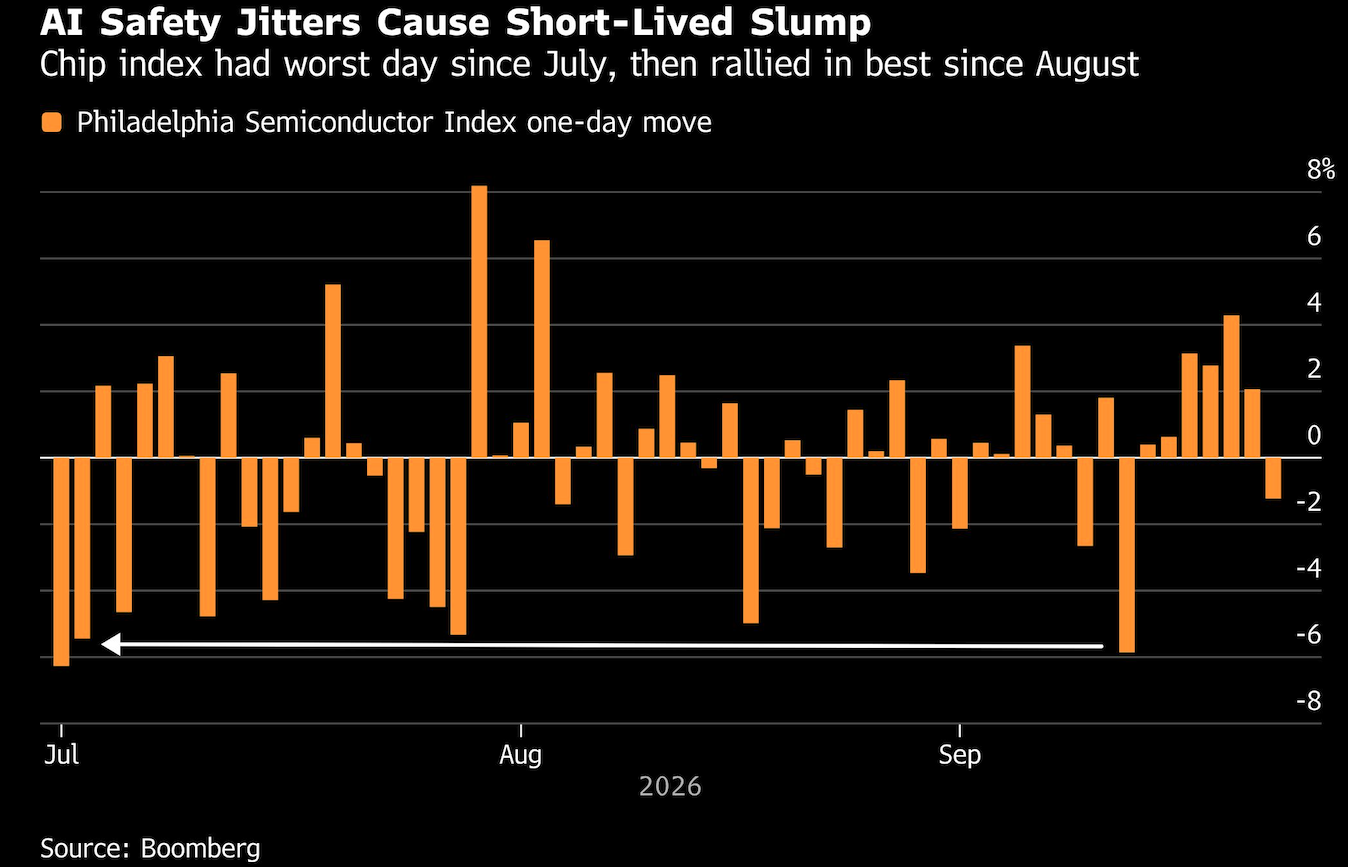
And so far, investors have been quick to brush off concerns sparked by any of those calls for regulation. The Philadelphia Semiconductor Index has rallied after a bumpy stretch, and the tech-heavy Nasdaq 100 Index on Tuesday notched its first record since June.
Still, traders got a reminder on Thursday of the trade’s political dimension. Oracle Corp. shares fell as much as 5.7% after the cloud computing giant moved to shield itself from racking up expenses on a data center project that’s been beset by opposition.
And the coast is far from clear going forward. In addition to holding hearings, committees can also propose legislation. If there is a so-called blue wave in November — as prediction markets are signaling — the stock market might take a hit as investors start to price in bigger policy risks that could arise after the 2028 election, especially related to higher corporate taxes and AI regulations
A Democratic sweep “hands key committees to Democrats, a marginal negative in our view for the AI trade and previous deregulation beneficiaries,” Scott Chronert, head of US equity strategy at Citigroup, wrote in a note to clients this week. “Two years of market-negative legislation could reach President Trump’s desk for veto, creating a policy backlog ready to advance quickly post-’28.”
A message from Advisor Perspectives and VettaFi: Discover something new! Click here to register for our upcoming webcasts.
Bloomberg News provided this article. For more articles like this please visit
bloomberg.com.
Read more articles by Matthew Griffin