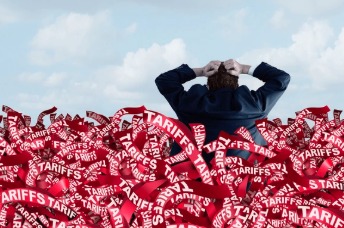
Today we’re going to explore this “affordability” issue, looking at economic facts, survey data and simple intuition. As you’ll see, it’s not as simple as some people think. I also make a quick comment about the appointment of Kevin Warsh as Fed chair at the end.
Today we continue anticipating 2026, this time shifting for the first part of the letter from economic issues to geopolitics before making some of my personal general forecasts.
Today, we continue my 2026 economic and market forecast. Last week, I described our current environment as The Bipolar Economy, and noted that the real goal here isn’t to tell you what will happen. It’s to help you know what could happen so you can be prepared.
One of Liz Ann’s key messages for investors is to have a good plan for your portfolio. A good plan isn’t driven by FOMO. It’s not driven by getting too concentrated in what’s working, because what worked last year might not work moving forward. I’ll let you read the transcript or watch our conversation to hear, firsthand, what makes a good investment strategy.
Living in a bipolar economy is hard. Last year saw wild swings in attitudes about the economy and financial markets. Not a bad year overall, but it was a rough ride at times. Today and next week, we’ll look ahead to 2026, drawing on my expert network and my own ideas as well.
This week, my friend Lyric Hughes Hale and special guest Eric Huang of Taiwan share with us the details of what could be another massive fallacy of composition. Oddly, this time the risk lies with one of the US’s largest creditors.
Having visited scores of companies around the world, conducted interviews with our team, and especially with Matt Ridley, we want to highlight what we think are the best of the best. These are our choices. But remember, ROS is a community. You will disagree with at least a few of my picks.
Energy can be either an enabler or a constraint. The latter happens when our creativity gets out of sync with the energy we can apply to it. This is happening right now and will get worse as artificial intelligence data centers demand more power than we have available.
Dividends offer a powerful dual benefit: they provide an immediate, consistent stream of passive income, while also being an incredible tool for long-term wealth building through the magic of compounding when reinvested. The yield is the essential metric that measures this horsepower, allowing investors to effectively compare and manage their income-generating investments.
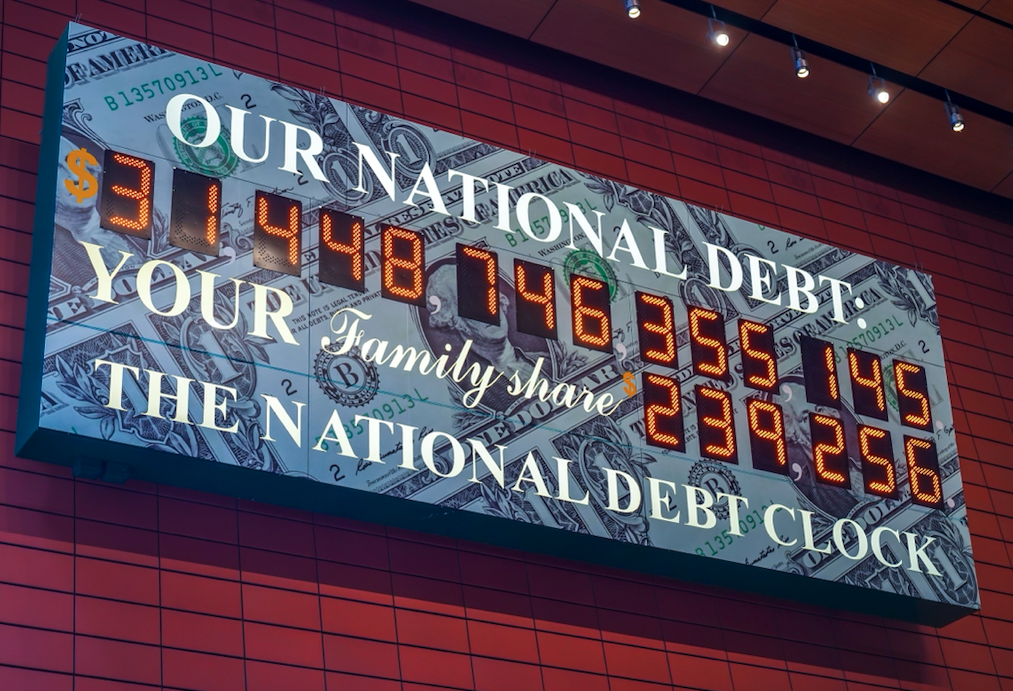
Today we’ll look at government debt as a global problem because that’s what it is. Some governments are somewhat less profligate, but very few have clean hands on this. All of us are in the mud.
I suspect almost 100% of my readers live well above the “poverty line.” I also suspect that probably 99% of you don’t know exactly where that line is. I didn’t really know the number either until I read the article we’ll discuss today.
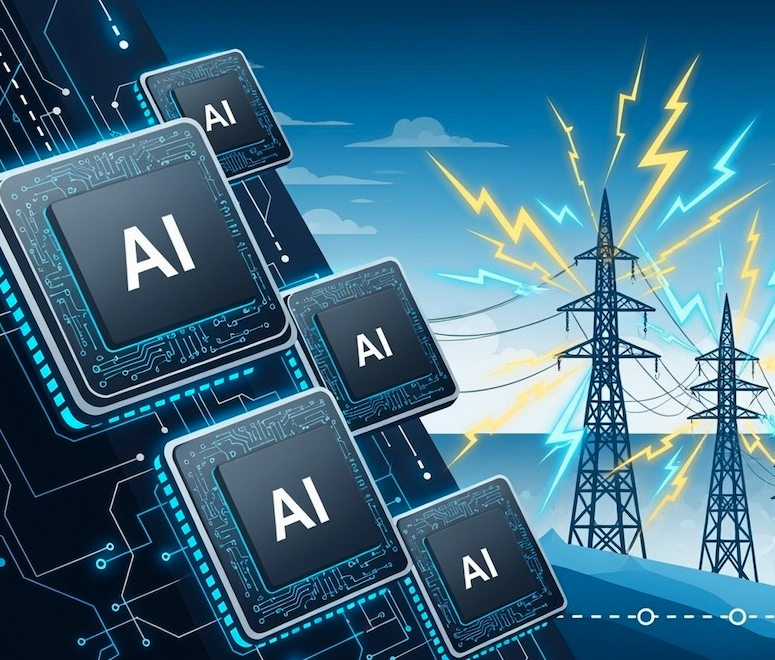
While AI adoption is becoming ubiquitous across all segments of society, a significant bottleneck is emerging that could slow its expansion: a critical power problem. AI data centers consume massive amounts of electricity—up to the equivalent of 100,000 households—with projections showing they will account for nearly half of US electricity demand growth through 2030.
Despite a choppy November, the big three market indexes are all just a few percentage points off their record highs. The Dow Jones Industrial Average (DJIA) and the Nasdaq are up 12.5% and 21.2%, respectively, year to date.
My friend David Bahnsen wrote a brilliant analysis in his weekly Dividend Café of the private credit market a few weeks ago and it really took off. I got his permission to share it with you today. This is a basic primer on the risks in the private market and something as an investor you should be familiar with.
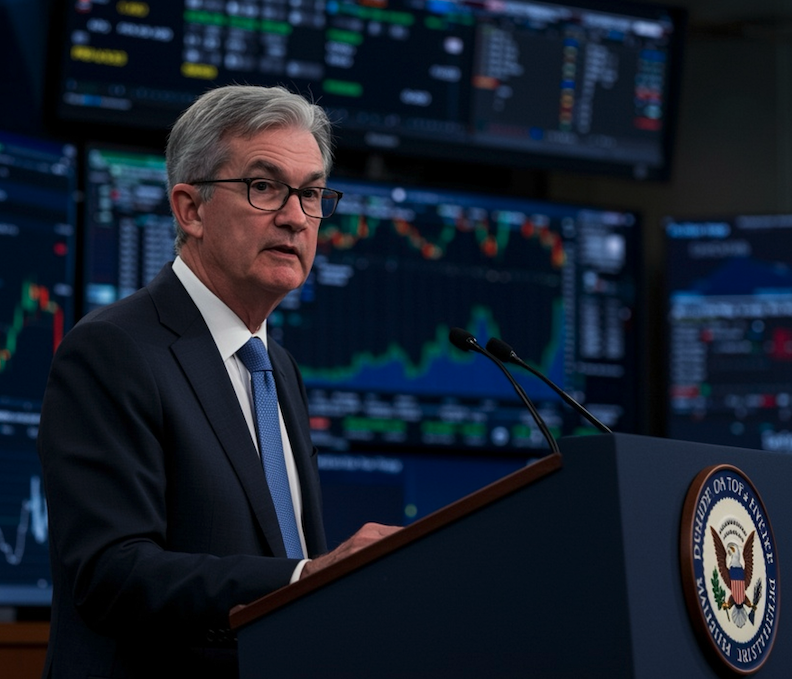
This article explores the growing changes and challenges facing the Federal Reserve. It argues that due to political pressure and fiscal irresponsibility from Congress, the Fed is losing its policy effectiveness and its long-held tradition of consensus voting is breaking down, leading to an era of unpredictable decisions.
Okay, this is for more than just millennials. It’s for anyone who feels stuck and can’t get started with their investing strategy. If you poke around on the internet, it sounds like my generation might be in the most trouble.
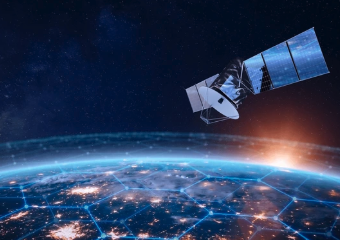
If you’d told me twenty years ago that we’d soon see rockets launching into orbit every day-and-a-half, I’d have smiled politely and changed the subject. Yet here we are: in the first half of 2025, a new launch hit the sky every 28 hours—six hours ahead of last year’s record pace.
As happened in the previous era, several forces are combining to keep inflation alive. Today I want to review what’s happening. This won’t be a fun letter to read, but it’s important. You need to prepare for what could be coming.
The real issue comes when these investments are held in tax-advantaged accounts like a 401(k) or traditional IRA. Since the income is generated by a partnership, it will be considered Unrelated Business Taxable Income (UBTI) in these types of accounts.
We are living through what Torsten Slok of Apollo Global Management calls a K-shaped economy, with the two arms of that K moving in radically different directions.
Everywhere I go, people ask me what’s next for the economy. My answer depends on what they mean by “next.” Today I’ll review some of the alternate employment and inflation data to see where we stand. There’s a lot we know and a lot we don’t know… but for the big decisions, we probably know enough.
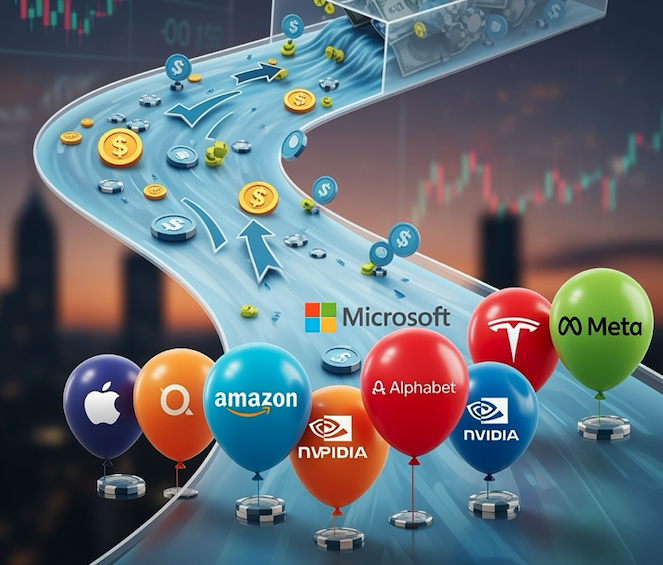
Everyone is wondering if we’re in another tech bubble. Tech companies are breaking valuation records, with Nvidia Corp. leading the charge. On Wednesday, it became the first company ever to reach a $5 trillion market cap.
My series on Ray Dalio’s book raised a bunch of questions, one of which stood out above the others. To paraphrase, readers asked, 'How do we get ready for this?' It is certainly fair for you all to ask what I am personally doing to prepare for the big picture I anticipate. It’s tough to answer because the coming debt crisis could unfold in many different ways.
It’s not just the US, China, and Japan that have debt issues. It’s a large portion of the developing countries, and especially Europe. The developed world now has as much debt in terms of GDP as it did during the Napoleonic Wars. And as much or more debt (and growing!) than it did following World War II.
The Fed’s balance sheet has two sides: On the asset side are Treasury bonds and mortgage-backed securities—the financial instruments the Fed buys to inject money into the economy. On the liability side are the reserves that banks hold at the Fed, along with physical currency in circulation.
Debt-driven growth definitely feels good. We all enjoy it immensely as long as it lasts. Then the lights go out and the party’s over. Yes, it starts again, but not until we all stumble around in the dark for a while.
Today we’ll go through the steps central banks typically follow through the debt cycle. Then we’ll contrast them with what central banks could do that might actually work.
There’s a concerning undercurrent running through the US labor market. The unemployment rate has been steadily climbing. That’s unusual. Typically, when unemployment goes up, it spikes.
Debt is a curse that can also be a blessing, depending on how the borrower uses it. Sadly, human nature seemingly ensures we often use debt unproductively—and not just as individuals. Governments have their own special way of using debt to buy benefits (and votes?) today that future generations will pay for.
The newest member of the Federal Reserve Board, Stephen Miran, recently outlined his reasons for wanting interest rates to come down by roughly 2 percentage points—far more than any other Fed member.
There’s small change and big change. The small ones are notable: recessions, market crashes, etc. You’ll see several in your lifetime. The greater changes tend to be technology-driven: the Industrial Revolution, the internet, and now maybe artificial intelligence, robotics, and what I’ve called the Age of Transformation.
When I first wrote to you about quantum computing in October 2024, I called it the “next big thing.” Many readers agreed that the potential of quantum computing was exciting but felt it could be a decade or more away from commercial viability.
I am growing more and more convinced that we simply can’t rely on historical precedents anymore. Economics is about human decisions, and humans, at least in a broad sense, seem to be making decisions differently than they did before the pandemic. I think we don’t fully understand how much has changed—for employment, inflation, consumer behavior, and more.
No one wants to be a party pooper. It drives away friends and makes you generally unpopular. But if you are a monetary policymaker, ending the party before it gets too wild is quite literally your job.
The average household feels inflation as rising living costs, of which shelter is usually the largest. This will be today’s primary topic. What is going on with housing costs, and is there any hope for relief?
Much of the data we see today indicates the economy is fine. Stocks continue making new highs. Consumer spending is shattering records. Unemployment rates remain low. Yet a single anecdote can dispel the illusion that everything is truly fine for the average American.
Curiosity gave birth to philosophy. Ongoing intellectual curiosity is still driving investment success thousands of years later.
Today is the day that analysts and investors have been waiting for the entire earnings season—earnings and updated Q3 guidance from NVIDIA Corp. (NVDA).
Our economic-number friends are behaving badly, leaving us unsure where to turn. Maybe in time we will see who was right and wrong. This week we’ll look at some of the data and then at the wide array of diverse opinions from my favorite sources.
Since the global financial crisis, value investing has been a lonely grind. Yet I know several managers who never gave up on value, and others who are uncomfortable with tech valuations and have been reallocating to lower P/E stocks.
With economic data, the challenge is that our instruments are more error prone. The monthly jobs reports rely on employers responding to surveys correctly and quickly.
Almost everything we think we know about the economy comes from initially flawed data. Jobs data, inflation data, spending data, production data, all of it is imperfect. There is no certainty in this business. But that doesn’t make the data useless.
Today, let’s take a look at a company sitting at the center of all these technologies. It’s a great example of the outsized potential and the volatility that often come with investing in companies on the edge of big breakthroughs.
Cutting to the chase… prepare to muddle through. I should point out that I felt that 2025 would be a Muddle Through year at the beginning of the year. We will talk about that below plus look at a lot of charts and yesterday’s rather poor employment data…
Today I’ll continue talking about uncertainty. I want to highlight the complexity we face and also describe the jarring surprise some of us feel when our most trusted sources say things we didn’t expect… and the importance of listening to them anyway.
This week, the White House released America’s AI Action Plan. This plan is the clearest signal yet that Washington now views AI as launching the next industrial super-cycle.
Last week, we covered my concerns about AI’s impact on jobs. This week, we’ll take a look at its impact on energy demand and who pays for that energy.
Unfortunately, the lush financial terrain we enjoyed from 2008 to 2022 was more like artificial turf. It wears out, gets ugly holes, and eventually needs replacement. But how to replace it without causing other problems? That turns out to be a real problem.
If owning a specific stock is keeping you up at night, then it’s time to sell.
There’s a connection between our willingness to let the debt problem fester and investors throwing their money into a wildly overvalued stock market. In both cases, we’ve grown way too comfortable with uncertainty.