Today, we’re going to look at a lot of various data points and analysis, that when taken together give us a much clearer picture of the total world.
This week gave us another glimpse of our AI-powered future. AI personal agents are becoming a thing you need to understand, if not use.
I’m talking about the cash I have sitting here that I desperately want to get into the market. Earlier this year, I got a chunk of money from selling a house. I have no desire to own another home (that’s a story for another time.) Instead, I used some of the money to pay off some debt. The rest is just sitting in my savings account earning absolutely nothing.
This week, there are a few things that we need to pay attention to: the large move in interest rates and what it means (and more importantly, what it doesn’t mean!); and the constant barrage of doom and gloom on energy and AI. Let’s jump in.
Last week we looked at the Federal Reserve’s inflation problem. This week, let’s look at the other half of its mandate: maximum employment.
We are never going to get rid of the FOMC for political and practical reasons. For those of us who would like to see the market set rates without an FOMC intervening, this is as good as it’s going to get.
The Federal Reserve raised interest rates this week, in part to reset consumer expectations on inflation. Their work is likely not done, as there is a negative surprise coming for many consumers, especially in rural America. Winter is coming, and that means the return of home heating bills. Depending on how you heat your home, your bills could be much higher this winter.
There is so much going on, it is hard to know where to begin. The data is all over the place. I had a long and epic dinner in New York with David Bahnsen, Rene Aninao, and Brian Syztel which has my mind buzzing with ideas and new concepts.
My goal with this letter will be to not interrupt your long weekend too much. But there are some things that are happening that are important. My basic thesis for quite some time has been that we are in a Muddle Through Economy, which I’ve always meant that to me the GDP will grow slightly south of 2% over time.
For the past six weeks, we’ve walked through the forces creating America’s K-shaped economy, housing, healthcare, education, wages, incentives, and the political consequences when enough people decide the system is not working for them. This week let’s look at the situation from a more optimistic angle.
This week, we take on the objection that scares people most: that AI and the data centers that run it are coming for their jobs. Let's separate what people currently believe from what the data currently shows, and then talk about why the jobs argument, even where it has merit, points toward building more data centers rather than fewer.
Artificial intelligence is the topic of the day. It seems everyone has an opinion but not much actual factual knowledge. I’ve been dragging emails and research into my AI folder for a very long time. Today (and next week) I review those emails, as we are going to look at the reasons there is so much opposition to AI data centers.
The truth about the runaway costs of healthcare turns out to be a little more complex than any single source we've named. Hospitals, insurers, private equity, administrators, pharmaceutical companies… pull the thread on any one and we land in the same overextended, bloated, extractive system.
We are in a debt trap. Our political process can’t reduce spending and/or raise taxes enough to balance the budget, so the debt grows and grows. This has to end, and I think it will do so in the event I’ve called The Great Reset.
Many things in healthcare really have gotten dramatically better and cheaper. Sequencing a human genome, for instance, cost close to a billion dollars in 2003. Today, under $1,500, making CRISPR therapy available to treat a plethora of diseases that once had no cure.
There is no one-size-fits-all individual investment strategy. We all have different needs. Once I decided I needed a portfolio that would work for today, I became convinced that a dividend growth portfolio should be the core of my long-term investment strategy. Not an addition, but the core.
Two things are worth considering that will dramatically impact the stats moving forward, and neither of them existed as a factor a generation ago. Alternatives to a four-year degree are getting more government support too. Workforce Pell Grants, once reserved for traditional colleges, now extend to short-term job-training programs.
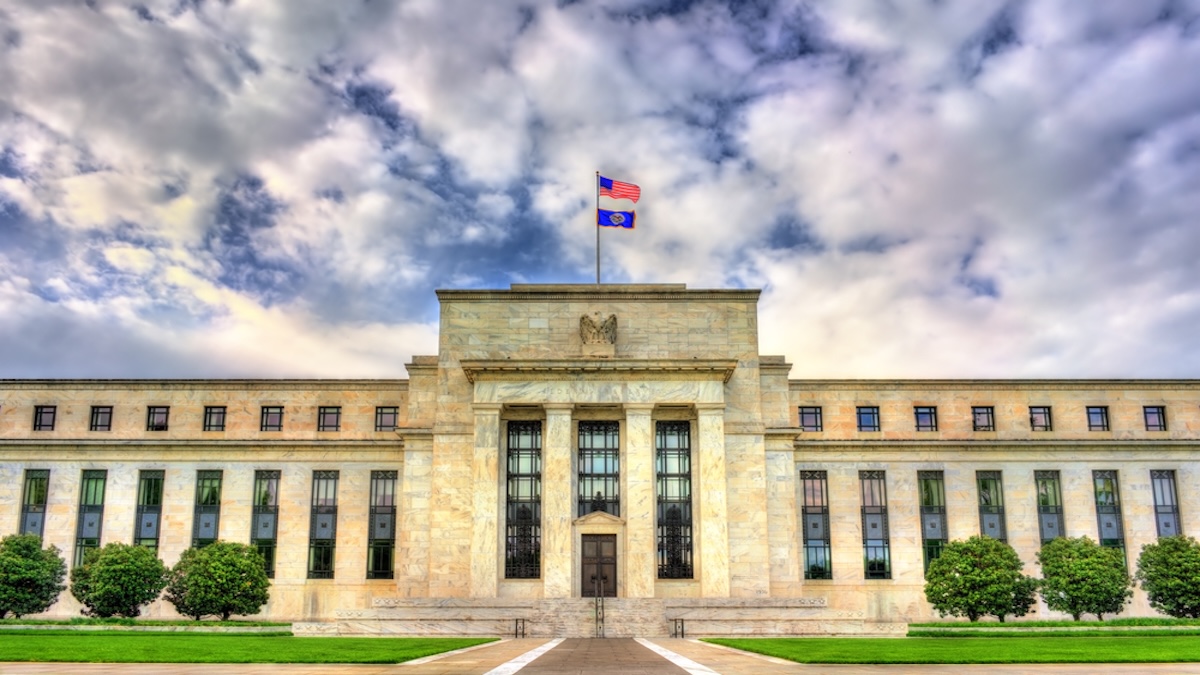
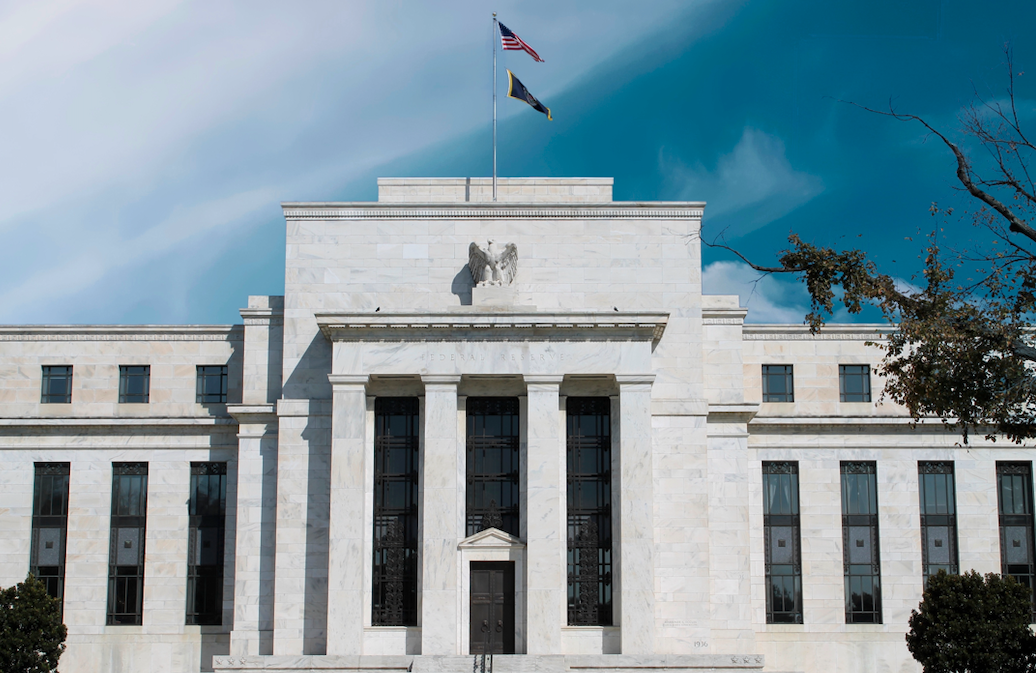
This week’s vote from the Federal Reserve FOMC committee is going to have implications for quite some time. I think most of the pundits who are writing about this have their analysis wrong. This was not just a vote to not raise rates. I think there was a lot more going on behind the scenes.
Today we’ll consider the interaction between long-term interest rates, the Fed’s limited ability to influence them, inflation and the housing market. And because home prices are the biggest concern for many households, we’ll start with a look at the latest changes there. And then look at the Federal Reserve’s likely reaction.
Google searches for "can I afford a home" are at their highest level in nearly two decades. While a Google search on its own isn't proof of anything, millions of queries might be a proxy for the national vibe.
I’ve been writing about inflation more in recent months and quarters because inflation has become the major driver of the US macroeconomic landscape. This week, we take a deep dive into inflation and interest rates, and at the end, I talk about why I am buying gold for my grandkids.
A country drowning in energy shouldn't also feel like it's running out of electricity. In other words: before we ask whether America can make more things again, we should probably ask whether America can power the production.
This week a number of articles caught my attention. The only thing that ties them together is their impact on the US and global economy. Economic anomalies: things we were not looking for but show up and force us to pay attention. Today in the summer heat, let’s take a look at a few of them.
If there's one thing you should take away from it, it's this: these six measures rarely move together. When they have, twice in 250 years, the country entered a period of real upheaval. Right now, they're moving together again.
This week, the Fourth of July, the 250th birthday of the greatest experiment in self-governance the world has ever seen, I want to do something different. I want to celebrate. And I want to use a lens I genuinely did not expect to be reaching for: the reactions of soccer fans from around the world who came to the United States for the 2026 FIFA World Cup and discovered, to their own astonishment, that they loved it.
I’m hopeful new chair Kevin Warsh will help change the Fed’s inflation-tolerating institutional culture. Early signs look positive. Today we’ll talk about how insidious inflation is and why those who think a little inflation is fine should have their heads examined. It is not fine… for anyone.
We all know that Congress is never going to allow Social Security not to be paid. This begs a number of questions. Will the shortfall be addressed by tax increases, benefit reductions, increasing the retirement age, changing the inflation measures, means testing or some combination of these and other solutions?
Despite everything we have seen in the economic data, which can be confusing, the US consumer has refused to crack. My friend Dr. Ed Yardeni, whom I have known since '98, has the most compelling explanation I have heard for why.
The world is not ending. It is restructuring. But restructuring, as I noted at the outset, comes with an asterisk. What is really happening is a replacement, of assumptions, of guarantees, of the architecture that held everything together for eighty years.
What is unusual about today, and I mean genuinely unusual, historically unusual, is that the people building the equivalent of Newcomen's engine today know exactly (or think they do) what they are building. They are not just pumping water. They “know” the vast potential.
I have often written about one of the few indicators in economics that has earned its reputation over the years, and for good reason. It has preceded virtually every US recession since World War II. I’m talking about the inverted yield curve.
I think inflation is heading higher. That is going to take a rate cut off the table. Warsh is going to start reducing the balance sheet quickly. And will use the balance sheet contraction as a way to deal with inflation rather than actually raising rates.
Ironically, the story I want to discuss today involves two companies we do not own and never have owned. Though they are household names, and this transaction is one of the most significant acquisitions in business history.
We’re going to explore what happened at the Fed, and what changes we can expect. Let’s just say it’s not what some are predicting, at least in my humble opinion. Inflation is sadly a growing problem. And that complicates Kevin Warsh’s coming tenure as Fed chair.
Like many of you, I am inundated with information. Most of it is not useful or repetitive. Today, were going to do something different. Rather than one theme, let’s look at various bits of data that I found interesting this week.
Today we're going to look at the underlying data and find that while the world is not ending anytime soon, there are actually good reasons for the disparity in forecasts. So, it’s okay if you’re confused. The stock market just hit an all-time high, energy is volatile and will be a negative on global growth, to say the least.
Today, I freely confess that I don’t have that 2007 certitude. I can certainly see a crisis coming in our future, but the timing, severity, and circumstances around it are cloudy at best. I can make an argument for numerous outcomes.
I have written for years that oil prices act like a tax on the economy, both in the US and globally. It is actually simply the price paid, but the effect on the economy is similar to a tax. If the price goes up, it takes more money from individual consumers that would otherwise be saved or spent somewhere else. Just like taxes.
I have just spent the last two days with members of our Inner Circle. We visited four technology companies and listened to six other CEOs make presentations here in El Segundo, California. What I want to write about today is a summary of what I’ve seen, which made every single one of our participants extraordinarily optimistic about our future.
Let me lay out the case for what should be the answer. Today we will explore how long this condition could last and what we can do about. I think it will make for interesting letter.
There has been so much data released in the past week it’s hard to know where to begin. Much of the data is inconclusive or not helpful, but it is not as bad as many click-bait pundits suggest as they take each data point and extrapolate it into the future.
We covered a lot of ground, but one image stuck with me: He called the Strait of Hormuz the sword of Damocles hanging over the global economy. For decades, the world’s most critical energy chokepoint has dangled there.
Today’s letter will look at something even more important: recent developments in artificial intelligence. The models are advancing at an accelerating pace, with major new capabilities revealed just in the last 2-3 months.
This week I sat down with Eric Fine, who manages emerging market bond portfolios at VanEck. I had a tidy interview all mapped out… and then escalating events in the Middle East reshuffled the deck. That’s okay because it ultimately led us somewhere more interesting than where I’d intended to go.
I am indeed working on my book about what I believe is a coming crisis by reviewing five different cycle theories. They all suggest a crisis occurring sometime around the end of this decade or perhaps shortly thereafter. And all for different reasons. One background element ties them together, which is the subject of today’s letter.
Is inflation rising or falling? Is unemployment solid or are there significant issues? Given the massive revisions of labor data, how can we base decisions on employment numbers? And what happens when the various collected data conflicts with themselves?
Today we’re going to look at the recent employment data, and begin our exploration of what it will be like to be in the midst of a paradigm shift, on top of all of the other changes in society and finance. Without trying to be cliché, it is part and parcel of The Fourth Turning.
Gavekal CEO Louis Gave is one of my favorite people to speak with on anything related to portfolio construction and the non-US perspective, and I knew our latest conversation about emerging markets (EM) would be anything but conventional.
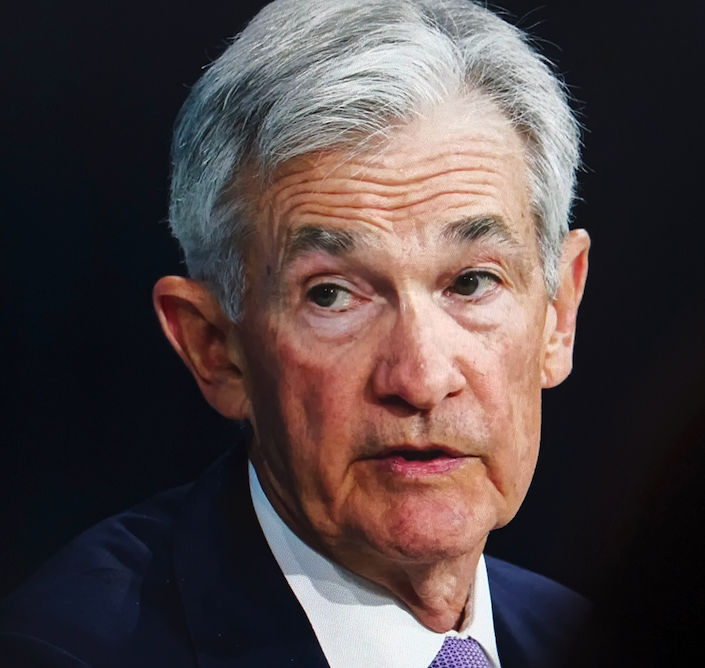
The Federal Reserve System has a critically important role in the economy, but it is designed to act slowly. The modern economy isn’t slow at all. Things change before Fed officials even notice them, much less understand them. That’s why Kevin Warsh’s nomination as Federal Reserve chair is so important.
If you’re still attempting to make investment decisions without fully integrating geopolitics into your analysis, you’re operating at a significant disadvantage in today’s markets.