Rising U.S. Treasury yields have added fresh strain to the U.S. housing market. The average 30-year mortgage rate, which generally tracks the 10-year U.S. Treasury yield plus a mortgage spread, rose to 7.5% in October 2026, according to Mortgage Bankers Association data, worsening an affordability crunch that remains a top concern among U.S. households.
Ever since the pandemic – when surging housing demand collided with a decade of underbuilding – housing affordability has become an increasingly important political issue and a larger focus for policymakers.
The U.S. Supreme Court on Friday invalidated tariffs that President Donald Trump had imposed under the 1977 International Emergency Economic Powers Act (IEEPA). Most of the administration’s 2025 tariffs will therefore be rolled back, and importers should eventually receive refunds.
Macro Signposts highlights takeaways from the data analysis conducted by our team of economists and other experts.
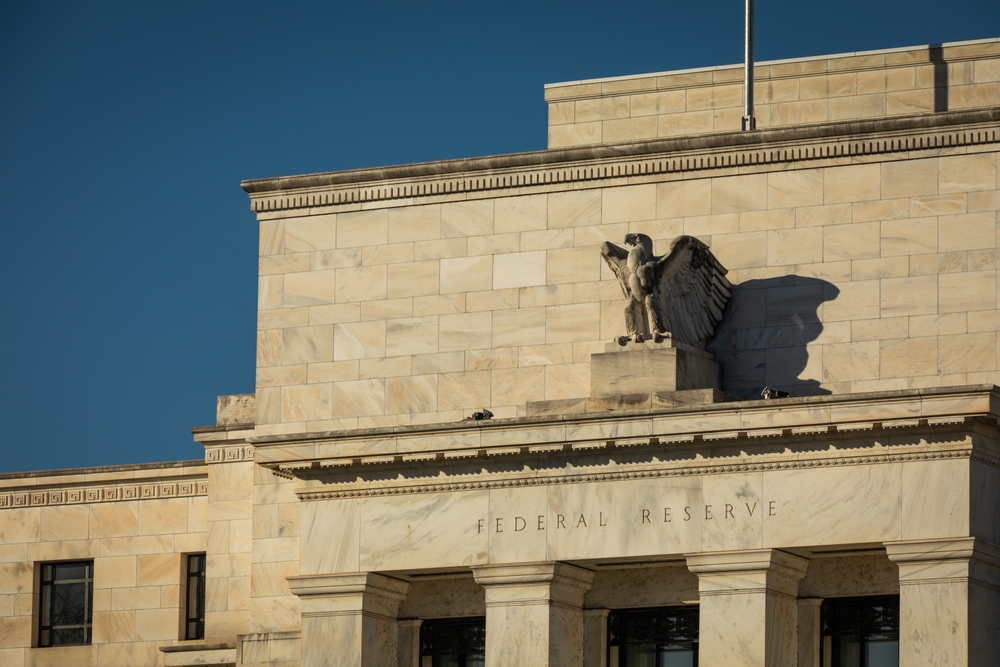
Although President Trump has said he has no intention of firing Fed Chair Powell, the Trump administration may be testing the laws underpinning Fed independence.
With Congress out for the next two weeks for Easter recess and a short trading week in New York, it should be a quieter week – though tariff-related news continues to capture headlines.
On 9 April, President Donald Trump announced a 90-day pause on the higher “add-on” reciprocal tariffs on 50-plus countries that had been announced the previous week, precipitating a historic equity market rally and showing that there was seemingly a limit to how far he would go to move forward with his trade agenda.
While the path may have twists and turns, the destination seems clear; higher U.S. tariffs.
Even with Republicans poised to control the White House, the Senate, and the House of Representatives, slim congressional majorities could hinder the president’s efforts to enact his agenda.
Debt levels will likely continue to rise absent policy changes, and the yield curve is likely to steepen.
A split U.S. Congress in 2023 will likely limit fiscal policy, but could be positive for equity markets.
Widening participation in the Fed’s standing repo facility and bond buying programs could mitigate another liquidity crisis in the Treasury market.
A busy summer on the fiscal front in Washington that’s seen progress on budget and infrastructure legislation could soon give way to another showdown over the U.S. statutory debt ceiling, potentially signaling volatility for investors in the months ahead.
A bipartisan deal on infrastructure spending would likely be followed by a separate partisan deal funded by tax increases.
Leveraged loan issuers have lagged other fixed income market issuers in moving to SOFR as a reference rate, posing potential risks to investors as the year-end deadline approaches.
Democrats could begin working on a tax bill later this year, but resulting tax hikes may be weaker and less of a headwind to growth than some fear.
A large fiscal package geared toward pandemic relief will likely boost U.S. growth even further in 2021, but long-term inflationary risks are still balanced.
With a narrowly Democratic Congress, U.S. fiscal spending is likely to increase on economic relief from the pandemic, infrastructure, and healthcare, boosting the economic rebound.
Washington will likely focus on fiscal stimulus immediately – but given the realities of governing and the pandemic, economic recovery will take time.
The U.S. political focus has shifted to the reopening of the economy.
The $2.2 trillion stimulus is the biggest ever, but Congress will likely be forced to do even more.
A bolder fiscal response to the rapidly spreading coronavirus has become an economic and political imperative.
Senator Joe Biden is the current front-runner in a two-person race for the Democratic nomination, but upcoming state contests are crucial.
We think investors should not extrapolate too much from who wins the early contests, including Iowa.
The U.S.-China trade deal is one of three diminishing policy risks, but investors shouldn’t assume that all policy uncertainty has been eliminated.
Without pouring water on the “love fest,” we contend that the deal struck between China and the U.S. leaves much to be desired.
We believe the impeachment inquiry could have an adverse impact on the ongoing U.S.–China trade conflict, but there may be a silver lining for NAFTA 2.0.
We think investors should take President Donald Trump at his word that he will move forward with the next round of tariffs on China come September.
New U.S. tariffs on Mexico would add to the direct economic costs of the string of tariff hikes enacted during this administration.
With the U.S. and China raising tariffs on each other’s goods, we may be entering a prolonged period of trade tension.
While we believe the shutdown on its own would have only a modest impact on growth, the...
In our outlook for 2019, we believe politics and policy out of Washington will continue to drive – and in some cases, weigh on – markets, much like they did in 2018. Investigations and manufactured crisis are likely to contribute to uncertainty. Trade tensions persist, though on a more positive note, relations between the U.S. and China seem to be improving.
The U.S. midterm elections played out much as expected, with Democrats picking up the 23 seats (and more) needed to retake the majority in the House of Representatives and Republicans easily defending their majority in the Senate.
If you live in the United States, it is hard to escape news of the upcoming midterm elections on 6 November. But for investors, are these midterms really significant?
Even before President Trump’s inauguration, we at PIMCO had identified trade policy as a potential spoiler to the otherwise pro-growth nature of the president’s economic agenda. And the unfolding of this “summer of discontent” has only affirmed our view heading into 2018 that trade policy remains one of the biggest policy risks for markets and the economy this year.
Consistent with our thinking back in January 2018, trade has dominated the policy agenda in Washington and cast a pall over certain segments of the market. We continue to maintain that President Trump should be taken at his word regarding trade policy...
Consistent with our view last month that the Trump administration’s more significant (and market-moving) trade actions had yet to come, the recent announcement of tariffs on Chinese products related to the Section 301 intellectual property investigation has roiled markets and increased uncertainty over the possibility of a trade war.
Many of us who grew up as children of children of the Great Depression may recall our parents imploring us to “Stop throwing good money after bad!” in any number of situations, even if we didn’t always heed their wisdom.
We believe the trade actions with the most significant potential economic and market impact have yet to unfold.
The topic of housing finance reform has come in and out of focus on Capitol Hill since Fannie Mae and Freddie Mac (the government-sponsored enterprises, or GSEs) were taken into conservatorship back in 2008.
Although much of 2017 represented a series of fits and starts in Washington, the Trump administration and the Republican-led Congress ultimately – and against long odds – delivered on one of their biggest campaign promises: a relatively sweeping rewrite of the tax code, representing a likely boost to 2018 U.S. real GDP of 0.2%–0.3%.
Congressional Republicans’ efforts to reduce taxes and reform certain elements of the U.S. tax code have been impressive thus far. In a matter of weeks, the House has passed its version of a bill, and the Senate is hoping to take up its own bill later this week.
Policymakers in Washington have recently expressed growing concerns about the (planned) dwindling of capital levels at Fannie Mae and Freddie Mac – the two government-sponsored enterprises (GSEs) that help finance the vast majority of U.S. mortgages.
With great fanfare, the White House and Republican congressional leadership released their long-awaited framework for tax reform, but many politically thorny issues need to be resolved – and quickly – before investors can feel confident that tax reform will materialize in the coming months.
After an uncharacteristically eventful August in Washington, Congress returns to D.C. for an even busier fall: In September, it has a mere 12 legislative days to fund the government for fiscal 2018 (and thus avoid a shutdown), raise the debt ceiling and address a smattering of other must-pass bills...
Why is the U.S. housing sector diminishing when demand for housing remains robust?
The effort to repeal and replace “Obamacare” hit yet another stumbling block this week when U.S. Senate Majority Leader Mitch McConnell decided to pull the bill from consideration after realizing he did not have sufficient votes for it to pass.
The Federal Housing Finance Agency’s proposal to increase liquidity and reduce costs to taxpayers could actually lead to reduced liquidity and higher mortgage rates.
Looking at several metrics – legislative achievements, staffing in key areas and executive orders – President Trump’s first-100-day track record has been mixed.
After the healthcare bill stalled in the House of Representatives, the most salient question is what’s next?