A global tech rout continues to remind investors that volatility can strike at any time. That’s especially true in today’s market environment, where stretched megacap technology valuations and broader equity indices have elevated concentration risk. As such, investors increasingly face drawdowns when momentum stumbles. Intangible assets and software-driven multiples offer rapid growth in bull markets centered on the artificial intelligence (AI) theme, but they provide little downside buffer when valuation compression hits. To shelter portfolios from volatile tech swings, investors can seek shelter in real assets. These are investments anchored in physical, tangible infrastructure with durable replacement costs and essential cash flows.
Key Takeaways:
- Real assets provide an essential buffer against tech-driven multiple contraction and market concentration by anchoring portfolios to essential, physical infrastructure with high replacement costs.
- Specific ETFs can deliver targeted, equal-weighted exposure to companies with high tangible productive assets and low obsolescence risk across energy, utilities, and industrials.
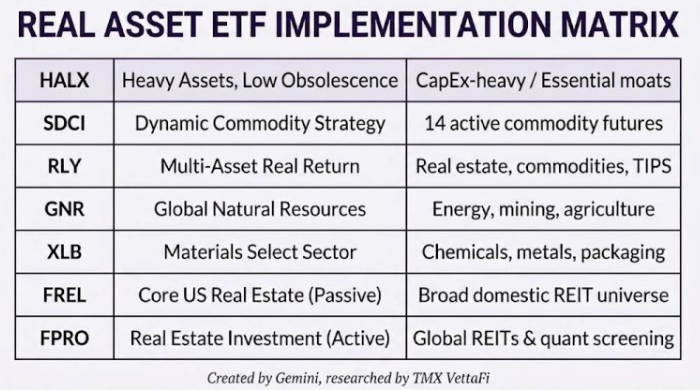
- Investors can customize real asset exposure across dynamic multi-asset solutions, global natural resources, materials, or passive and active real estate strategies to generate durable, inflation-hedged cash flows.
See More: 3 Real Asset ETFs to Know as Demand for Infrastructure Grows
Tangible Sectors: The Real Economy Backbone
Real assets derive their value from the physical world. Rather than relying on digital code or intellectual property, companies in tangible sectors own plants, equipment, property, pipelines, and raw commodities. In other words, while AI captures the market’s imagination, real assets anchor capital to the physical backbone of the economy.
When considering real assets for actionable investment strategies, it is essential to highlight the core sectors through which investors access tangible infrastructure and physical commodities. Key sectors underpinning real asset strategies include:
-
Energy & Natural Resources: Oil, natural gas, refining facilities, and agricultural distribution networks that supply society’s daily fuel and food requirements.
-
Materials: Chemical plants, mining operations, paper and forest packaging, and construction materials vital to industrial production and infrastructure development.
-
Commodities & Raw Materials: Direct or futures-based exposure to agriculture, industrial metals, precious metals, and energy resources, capturing pure spot price dynamics independent of corporate balance sheets.
-
Real Estate: Physical land, residential communities, logistics warehouses, and commercial properties that generate rental cash flows and hold residual land value.
-
Utilities & Industrials: Regulated power grids, pipelines, waste management networks, and rail transport systems characterized by high replacement costs and regulatory moats.
In addition to tech volatility, real assets address two other concerns that are relevant today: inflation and market concentration. Because these sectors produce non-discretionary goods and services, they often act as natural inflation hedges and ballast against tech-driven multiple contraction.