As year-end approaches, charitable giving presents an opportunity to align philanthropic goals with broader wealth and tax planning strategies. Beginning this year, several new tax law changes may affect the tax benefits of charitable contributions. Understanding these changes may help evaluate giving strategies and identify opportunities to optimize tax planning before year-end.
A Charitable Giving Benefit for More Taxpayers
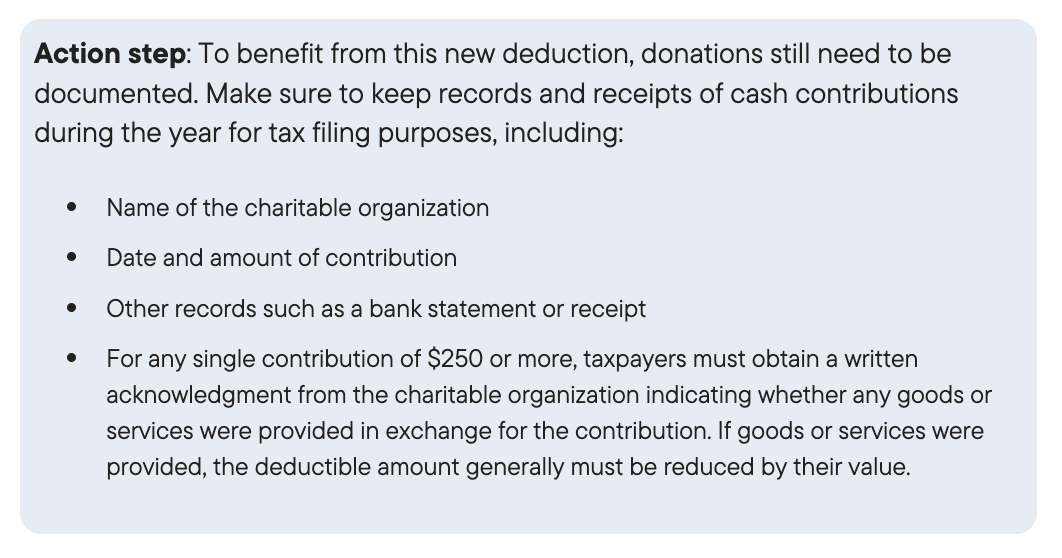
Starting this year, taxpayers who claim the standard deduction can also take advantage of a new deduction for charitable contributions. The annual limit is $1,000 for single taxpayers and $2,000 for married couples filing a joint return. Because most taxpayers do not itemize deductions on their return, this provision creates an opportunity for many households to realize modest tax savings from their charitable giving. Note that only cash contributions to eligible charitable organizations qualify for this deduction. Contributions to supporting organizations, private foundations or donor-advised funds are excluded. Donations of non-cash assets, such as stocks or real property, also do not qualify.
See more: Key Catalysts for Markets in the Weeks Ahead

A New Hurdle for Charitable Giving Tax Benefits
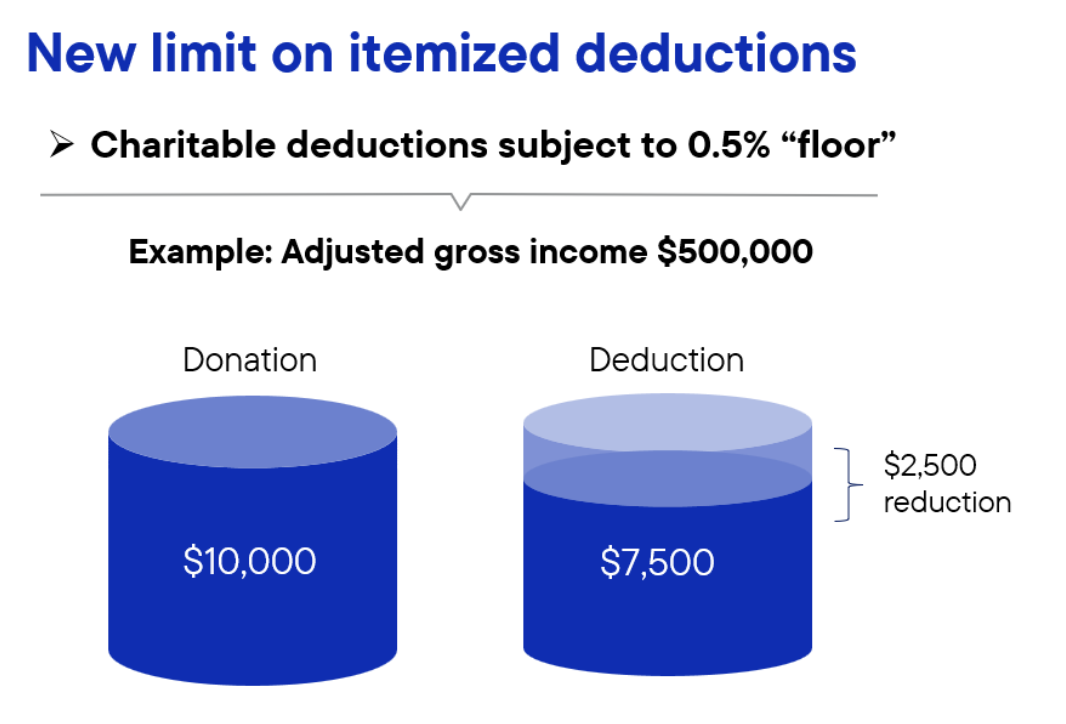
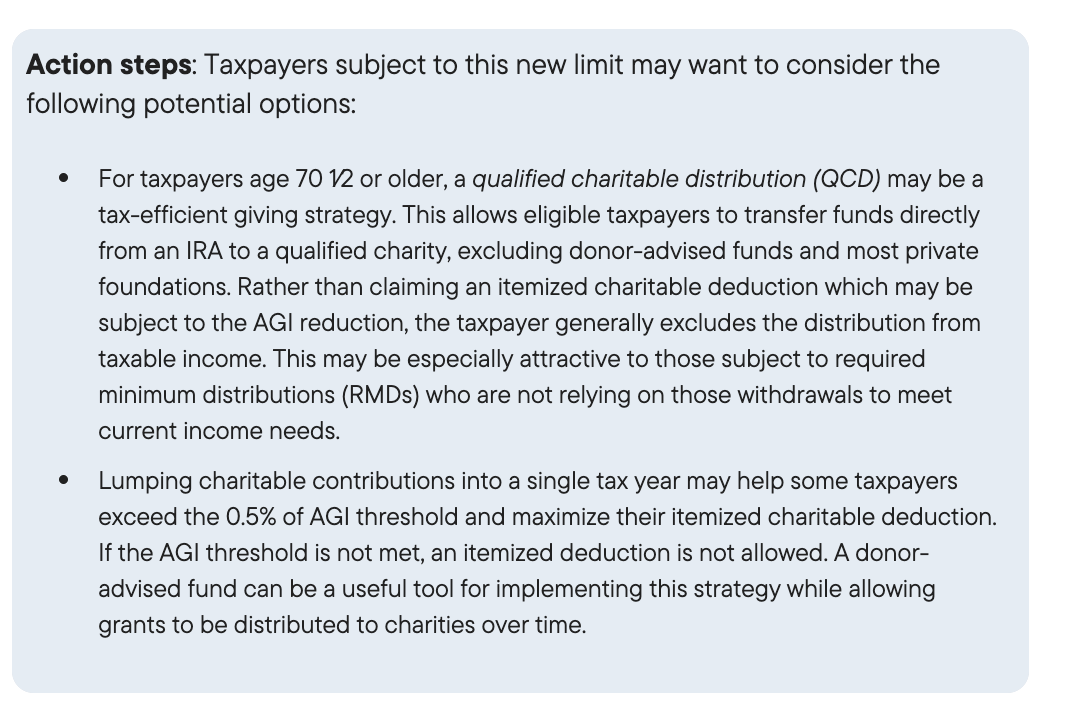
While the new tax law creates a charitable deduction opportunity for non-itemizers, it also introduces a limitation that may reduce the tax benefits of charitable giving for taxpayers who itemize deductions. Beginning in 2026, taxpayers who itemize charitable contributions can claim a deduction only to the extent their total donations exceed 0.5% of their adjusted gross income (AGI). Consider this example:
For more information, see our piece “Understanding Charitable Giving Strategies”.
A message from Advisor Perspectives and VettaFi: Discover something new! Click here to register for our upcoming webcasts.
WHAT ARE THE RISKS?
All investments involve risks, including possible loss of principal.
Any information, statement or opinion set forth herein is general in nature, is not directed to or based on the financial situation or needs of any particular investor, and does not constitute, and should not be construed as, investment advice, forecast of future events, a guarantee of future results, or a recommendation with respect to any particular security or investment strategy or type of retirement account. Investors seeking financial advice regarding the appropriateness of investing in any securities or investment strategies should consult their financial professional.
Franklin Templeton, its affiliated companies, and its employees are not in the business of providing tax or legal advice to taxpayers. These materials and any tax-related statements are not intended or written to be used, and cannot be used or relied upon, by any such taxpayer for the purpose of avoiding tax penalties or complying with any applicable tax laws or regulations. Tax-related statements, if any, may have been written in connection with the “promotion or marketing” of the transaction(s) or matter(s) addressed by these materials, to the extent allowed by applicable law. Any such taxpayer should seek advice based on the taxpayer’s particular circumstances from an independent tax advisor.
© Franklin Templeton
More Portfolio Building Topics >