Growth Holds, Pressure Builds
Membership required
Membership is now required to use this feature. To learn more:
View Membership Benefits
Key takeaways
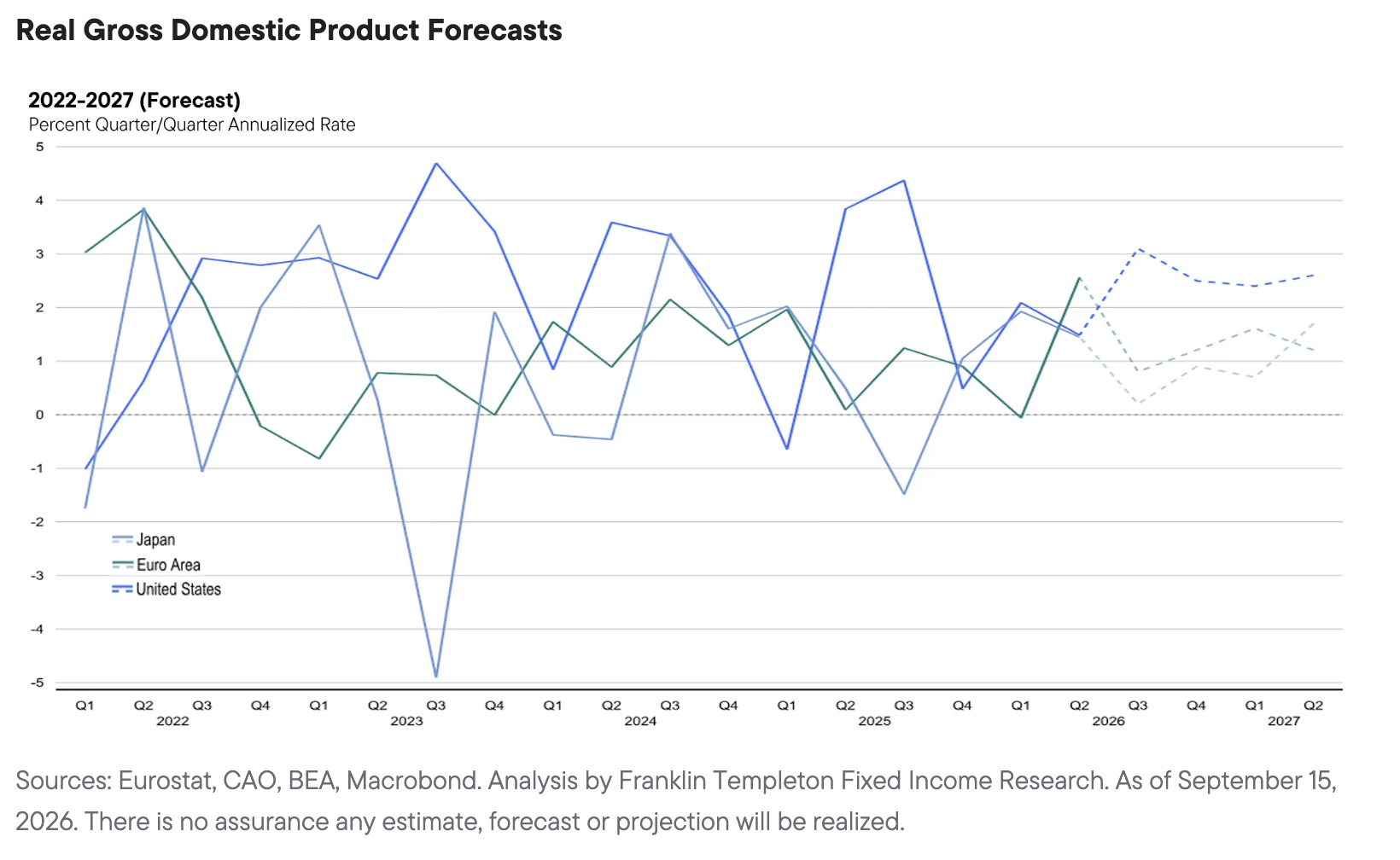
The US economy remains resilient, but the key issue is whether narrow, capital-intensive growth can coexist with persistent inflation pressure. Three months after concerns that higher energy prices and supply-chain disruption could push the economy into a stagflationary drift, the macro backdrop is better described as an inflationary expansion supported by private demand, a stable labor market, corporate profitability and artificial intelligence (AI) investment. Yet growth remains concentrated in AI-linked sectors, while the consumer continues to slow rather than break. Inflation is still too broad for comfort, with supply/input-cost pressure, tariffs, energy and AI bottlenecks complicating disinflation. A still-stable labor market allows the Federal Reserve (Fed) to keep its focus firmly on inflation, while rates remain sensitive to incoming data, policy credibility, deficits and Treasury financing needs.
Euro-area growth keeps surprising to the upside despite rising energy prices and uncertainty, with second-quarter (Q2) gross domestic product (GDP) well above expectations and the ex-Ireland aggregate growing a solid, trend-like 0.3% quarter-over-quarter (q/q). Momentum is still good, though the third quarter (Q3) started on a weaker foot, with Purchasing Managers’ Indexes (PMIs) pointing to an industrial pickup while real-income pressure and weak retail sales keep the consumer pulse in focus. Headline inflation will likely rise further, driven largely by fuel prices, but there are still no signs of second-round effects, and a full broadening of the inflation shock is not our base case. Politics and fiscal policy will return to the spotlight as budget season and elections approach, especially in France, Italy and Spain. Meanwhile, European Central Bank (ECB) tightening risks remain energy-dependent, though current euro (EUR) front-end steepness looks hard to justify.
Japan remains in a long-term recovery phase, with Q2 2026 GDP below expectations but better than the preliminary reading. Public consumption drove growth, while private consumption stalled and intellectual property dragged on capital expenditure (capex). Q3 indicators still point to robust activity, though the Kumamoto earthquake, rising oil imports and fading durable-goods boosts may act as constraints. Inflationary momentum remains sticky despite energy subsidies, as petroleum-related costs are gradually passed to consumers, core goods prices rise and services show resilience. Policy expectations have shifted sharply, with markets bracing for further hikes through 2027 post the Bank of Japan (BoJ) delivering a 25-basis point hike in September. Japanese Government Bond (JGB) yields have touched multi-decade highs, driven by inflation, fiscal concerns and faster BoJ normalization, with global spillover and repatriation risks keeping pressure on yields.
US Economic Outlook

US Economy: An Uneven Inflationary Expansion
Growth: In June, our view was that higher energy prices and supply-chain disruption would erode household purchasing power, lift firms’ costs and potentially push the economy into a stagflationary drift. Three months later, the US inflation risk has not disappeared, but the economy has proven more resilient than expected. With inflation still above the Fed’s target, the current macro backdrop is best described as a narrow, capital-intensive inflationary expansion, supported by strong underlying private demand, a stable labor market, corporate profitability and asset-rich households. AI investment remains the clearest source of US growth exceptionalism, but also the main pocket of overheating. Outside AI-linked manufacturing (computers/electronics, aerospace, electrical equipment), most industries remain well below capacity, and the industrial rebound has not produced a comparable hiring response, pointing to a capital- rather than labor-intensive cycle. The consumer is a key fault line. Real income is stagnant, the savings rate sits near cycle lows, and spending is increasingly concentrated in essential services (health care, housing) and asset-price-sensitive financial services rather than broad discretionary demand. Tariff-refund-funded price cuts and strong corporate earnings offer a near-term cushion, but the support will likely fade. Overall, the consumer has continued to slow rather than break, leaving the outlook vulnerable to a softer labor market, equity-market correction or loss of refund-driven support.
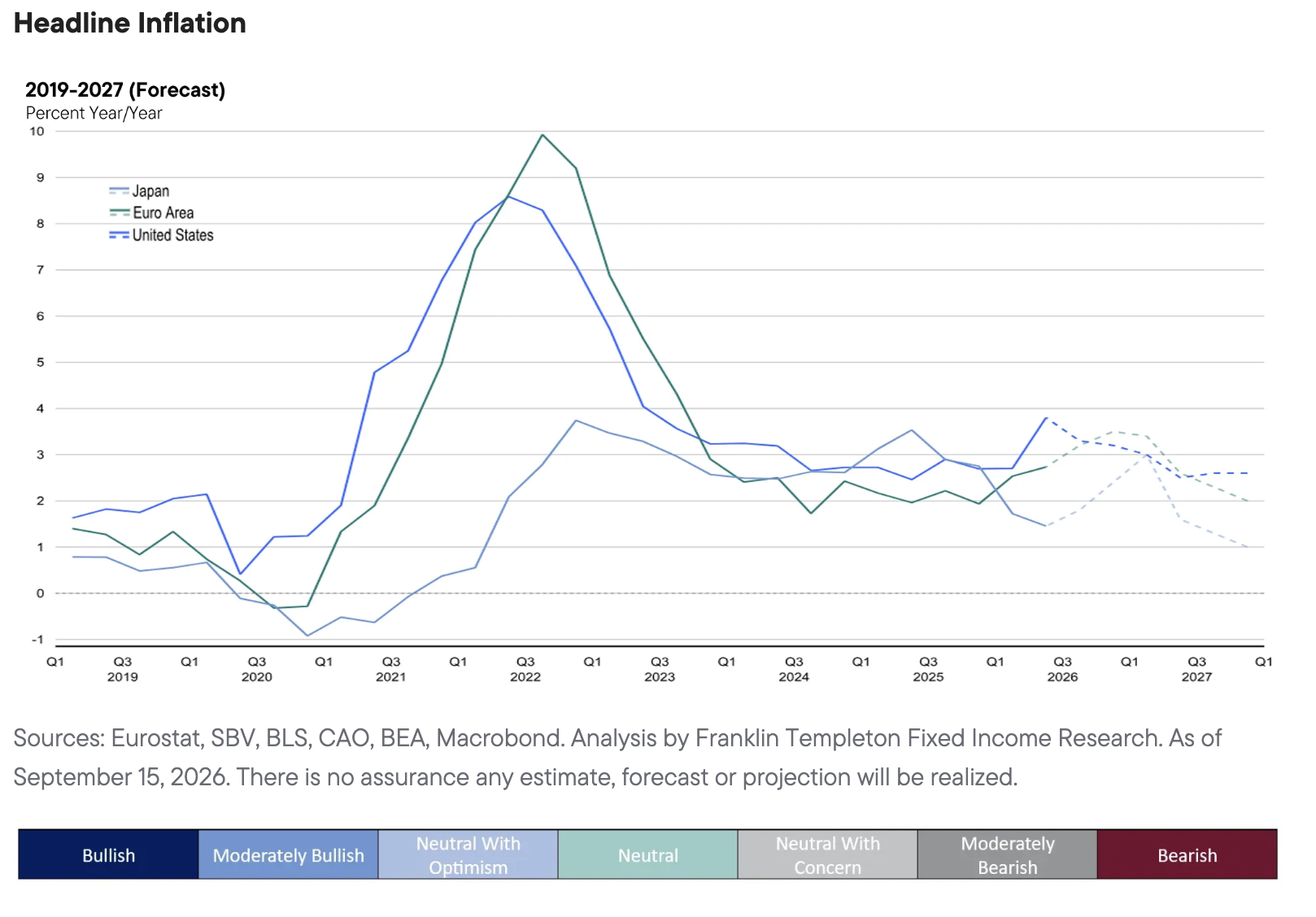
Inflation: Inflation remains above target and broader than the Fed would like, even without economy-wide overheating. Trend-inflation measures point to a structural rate closer to 3%. The August Consumer Price Index (CPI) heading reading accelerated, but a large part of it was directly energy-driven, and not a broad-based reacceleration. The Fed was looking for evidence that the softer summer inflation numbers were becoming a trend. Instead, it got a stronger core monthly print, higher shelter inflation, stronger transportation-service inflation and an increasingly severe energy shock. At the same time, consumer inflation expectations have moved higher. Meanwhile, with Institute for Supply Management prices indices for both manufacturing and services well above 70, upstream pressure is more acute. August Producer Price Index (PPI) details reinforce that risk. More than three-quarters of the jump in final-demand goods prices came from energy, but freight costs have also been rising. The risk is second-round pass-through into freight-intensive goods and services. The Fed’s “Beige Book” report summarizing economic conditions across its districts points to persistent supply/input-cost pressure with firms increasingly absorbing costs in margins given consumer price sensitivity. Going forward, the inflation mix is more complicated than a simple overheating story. Renewed oil strength, the persistence of geopolitical shocks, tariff-related costs and AI bottlenecks will likely delay the next stage of disinflation.
Labor market: The August employment report materially improved the labor-market picture, with nonfarm payrolls rising by 162,000 and June and July revised up by a combined 55,000. Initial claims and Beige Book evidence both strengthen the case that the US labor market may be healthier than the payroll prints alone suggested. Claims data remain extraordinarily favorable—a signal that has held for much of the year—pointing toward unemployment moving to 4.0% or lower, with virtually no evidence of a broad layoffs cycle. That said, unusually low jobless claims may partly reflect reduced participation in formal systems, particularly among immigrants who may be less likely to file claims or report labor-market status accurately. The Beige Book characterized the labor market as neither deteriorating materially nor showing broad overheating; hiring remains restrained and turnover low, but employment is still edging higher. Labor shortages appear concentrated in skilled and technical occupations (manufacturing, construction, AI specialists) rather than economy-wide, keeping wage growth moderate. Overall, the still-stable labor market allows the Fed to keep its focus firmly on inflation, though subdued payrolls remain harder to interpret if capital and productivity substitution are playing a larger role.
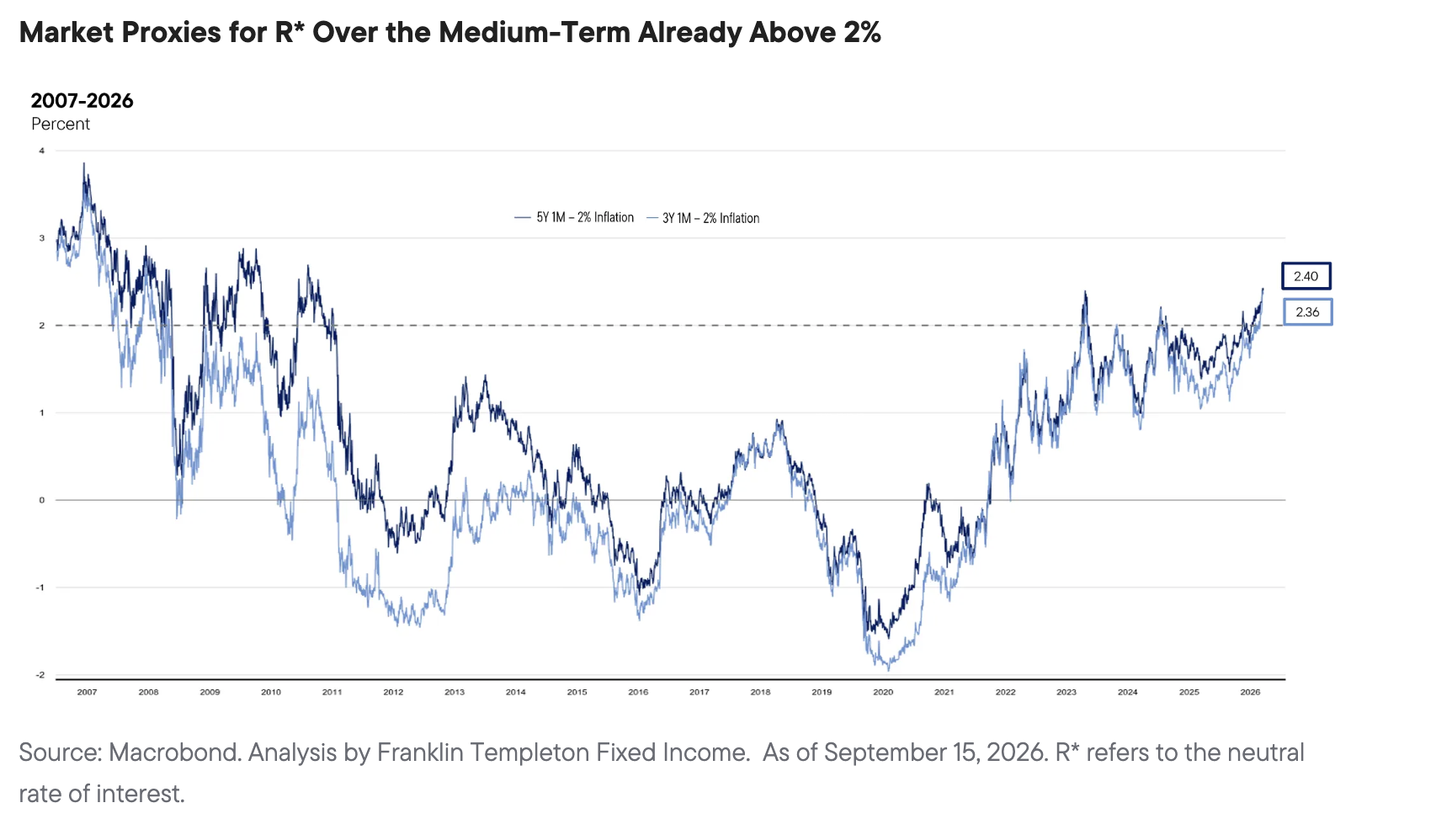
Interest rates: Fed Chair Kevin Warsh’s Jackson Hole speech materially repaired July’s communication problem, while the September Federal Open Market Committee saw Warsh backing his rhetoric with action, as the Fed hiked by 25 basis points (bp). Moreover, this was more than a one-off adjustment. The Fed does not expect September’s hike to be quickly reversed. The projected policy path is not merely higher in the near-term, it is higher for longer because the Fed sees a stronger economy, tighter labor market and more persistent inflation than it did in June. Our base case is for a second 25-bp increase by year-end. A third increase in 2027 remains a possibility should inflation prove sticky/accelerate. However, this is not a return to 2022-style sequential hikes. With the September hike now in the rearview mirror, further upside to front-end yields depends mainly on whether incoming data validate the additional hike indicated in the dots. The long end is less bearish near-term—part of July's communication premium has reversed, and Treasury's larger buyback operations signalled an activist debt-management stance, though the direct duration impact is modest (approximately 15%-20% of annual long-bond issuance) and does not address fiscal pressure. The long end is now driven more by fundamentals: large deficits, AI/defense capital expenditure (capex) and a smaller Fed footprint are pushing up the real neutral rate (proxies near 2%). Moreover, we view current yields as normalization rather than crisis, and do not see long-end Treasuries as misvalued—a durable move lower needs disinflation, weaker nominal growth or fiscal consolidation.
European economic outlook

EU Economy: Resilient Growth, Supported by German Fiscal Stimulus
Growth: Euro-area growth keeps surprising to the upside despite rising energy prices and uncertainty. Q2 GDP came in well above expectations, and although Irish multinational activity accounted for a large share of the headline, the ex-Ireland aggregate still grew a solid, trend-like 0.3% q/q. Germany and Spain outperformed, while France stagnated and Italy slowed. Momentum is still good, though Q3 started on a weaker foot for hard data: PMIs and confidence indicators point to an ongoing industrial pickup, but real-income pressure, weak retail sales and evidence of dissaving mean the consumer pulse deserves attention. The key swing factor is Germany, where the fiscal impulse is picking up as defense and infrastructure spending lift the deficit toward 3.5% of GDP. The splurge is beginning to show in hard data, with manufacturing orders trending higher and public investment growing. With fiscal spending accelerating into year-end and implementation lags still ahead, growth is set to get firmer in Germany and the euro-area over coming quarters.
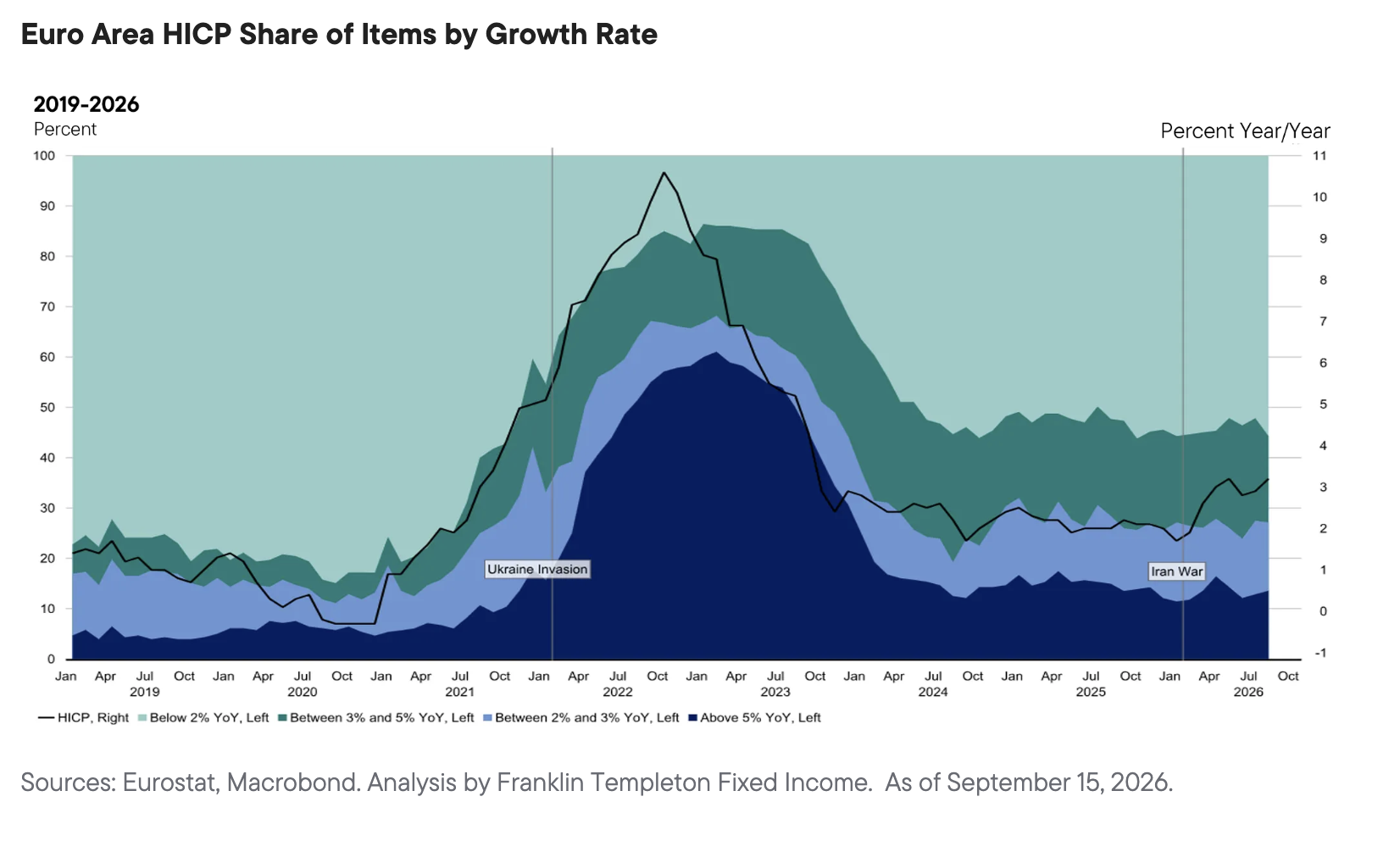
Inflation: Headline inflation will likely rise further, but there are still no signs of second-round effects. The August Harmonized Index of Consumer Prices (HICP) climbed back above 3%, driven almost fully by fuel prices, while core inflation remains stuck near its pre-Iran war levels, with some services weakness likely to reverse in coming months. Food inflation is not going anywhere for now—despite higher input costs, gas prices and heatwave-related crop pressure, producer and farm-gate prices have barely moved, suggesting compressed wage and profit growth may be limiting pass-through. El Niño adds upside risks to global food prices, especially if it becomes exceptionally strong. But evidence for its euro-area impact is mixed and the consumer-price impulse should be much lower. Energy prices remain a concern, particularly gas, yet Europe’s current position looks far more manageable than in 2022, supported by lower consumption and demonstrated resilience. Overall, indirect effects seem limited, labor bargaining power has weakened and a full broadening of the inflation shock does not seem likely.
European Union (EU) election: Politics and fiscal policy will be back in the spotlight this autumn and in the first half of 2027, as budget season approaches ahead of elections in eight EU member states. Market attention is rising as the political factors behind recent government stability could be shaken, especially in Italy and Spain, while France’s political saga will culminate with presidential and likely parliamentary elections. In France, spreads may again come under pressure as the fiscal trajectory remains unsustainable, the deficit likely rises toward 5.5%, interest payments surge and debt-to-GDP is expected to exceed 120%. The 2027 budget will again be a political intricacy of compromises, with little incentive to consolidate. What follows the presidential election remains highly uncertain; polls point to Marine Le Pen’s lead, policy programs remain vague and a hung parliament could limit consolidation efforts. Italy faces less binary outcomes but renewed instability may hinder reforms, while Spain’s fiscal slippage risk looks lower thanks to robust growth. Further twists and volatility should be expected.
Interest Rates: Back in May, a data-dependent quarterly pace of ECB adjustments until September seemed likely, with risks for further tightening dependent on energy prices. The latest runup in oil and gas has put the December meeting back into play, but a fourth hike fully priced by June looks stretched. It would require energy prices to remain elevated, pass through decisively into broader HICP and for wage growth to threaten to the upside. While the ECB remains focused on inflation risks, the macro backdrop appears less inflationary than in 2022. Markets have repriced the front end higher, raising questions about r* drifting higher, but evidence for a new structural regime is limited. With productivity issues unresolved and AI unlikely to boost growth meaningfully, current EUR front-end steepness looks hard to justify.
Japan economic outlook

Japan’s Economy: A Swifter Rate-Hike Trajectory
Growth: Japan’s advanced Q2 2026 GDP figures came in at 1.4% q/q seasonally adjusted annual rate, below expectations but better than the preliminary reading, with public consumption the primary driver of growth as private consumption showed no growth and intellectual property dragged on capex. For Q3, activity and sentiment indicators continue to point to robust numbers, with industrial production, PMIs, wages and consumer confidence holding up, although the Kumamoto earthquake, rising oil imports and fading durable-goods boosts should weigh on growth. The economy remains in a long-term recovery phase, and moderate recovery is expected from the fourth quarter onwards, around or above potential GDP. Capex should be the main driver thanks to labor saving and digitization goals, while exports remain sound on AI demand. Fiscal year 2027 budget requests reached a record high, raising financing concerns, and the approved consumption tax cut should support spending. GDP forecasts are now 0.9% for 2026 and 1.0% for 2027, with upside bias.
Inflation: Inflation continued to be soft in August, with all measures remaining sub 2%. However, month-on-month increase in inflation excluding energy has been gathering momentum since May. In fact, the contribution of energy prices to overall inflation would be positive in August if we were to exclude policy measures like electricity and gas subsidies. While food inflation continued to slow with core foods (excluding fresh food and alcoholic beverages) slowing to 2.8% year/year from 3.1% in July, driven largely by lower rice prices from a year ago, a weaker yen and high dependency on imported food items will keep prices elevated. Meanwhile, inflation for all items excluding food and energy continued to accelerate. Items like mobile phones, computers and chips continue to remain elevated on strong AI demand. Services prices continue to remain sticky at upwards of 2%. We expect inflation to harden throughout the rest of the year, as firms continue to pass on higher input costs more aggressively. We do have a softer profile for inflation starting Q2 2027 as the cut in food consumption tax kicks in from April 2027.
Policy: Market pricing has significantly shifted since the joint foreign exchange (FX) intervention by the United States and Japan in late July/early August, exacerbated by greater possibilities of expansionary fiscal policy and a weaker yen. The overnight indexed swap market is now pricing a 20% probability for a hike in October and more than 66% for one in December, following the September hike. The implied policy rate is at 1.88% at the time of writing till July 2027, significantly up from a month ago. Governor Ueda was more hawkish in his post policy press conference than the meeting itself implied (the hike came with a 7-2 split) saying the Bank will try to move preemptively to avoid the need for rapid rate hikes at a later stage. For the first time, he said that rate hikes need not always be slow and that proper speed is needed to make sure price targets don’t systematically overshoot. We expect the BoJ to hike one more time this year, likely in December with at least three more hikes in 2027.
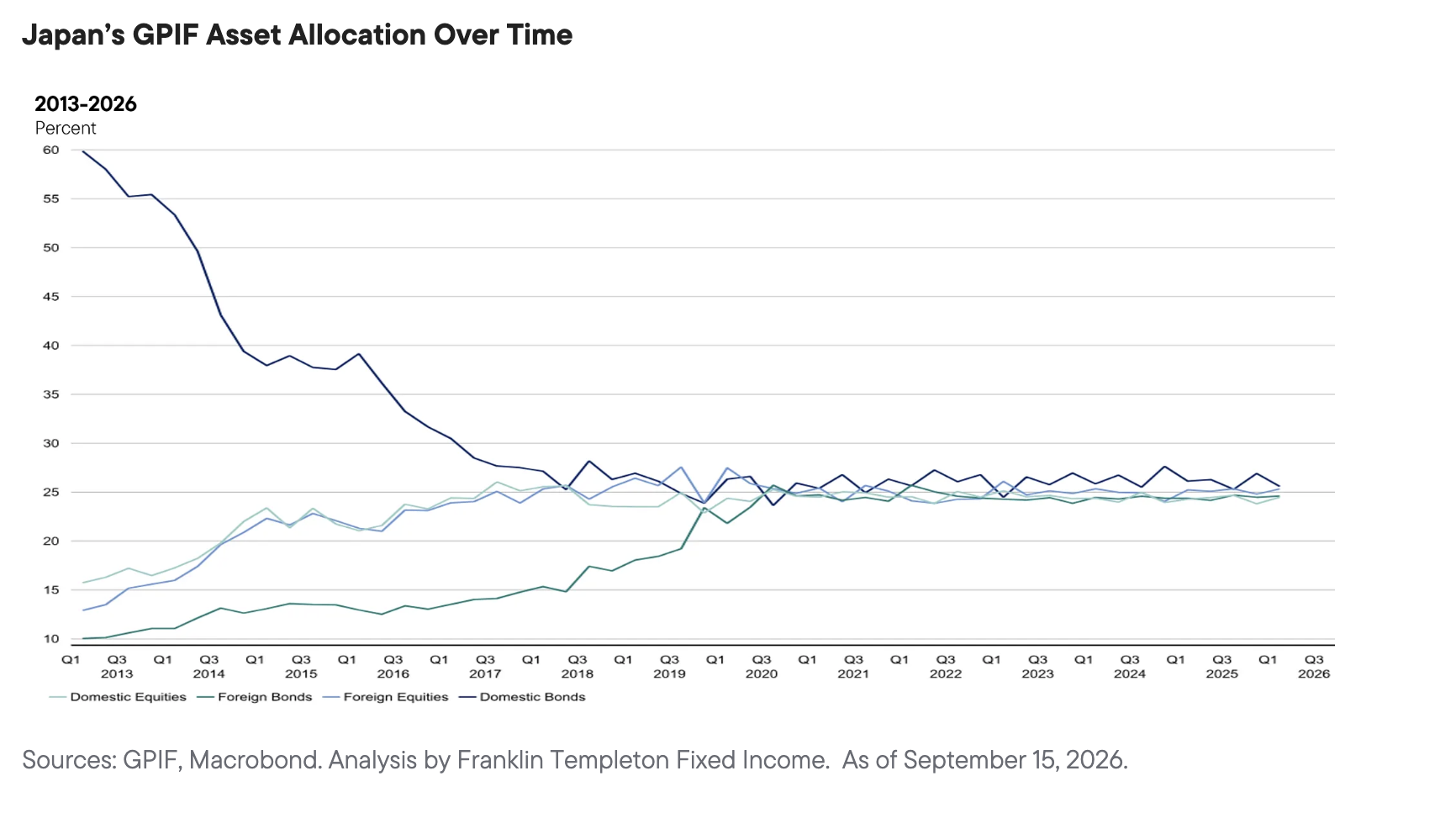
Yields: JGB yields have touched multi-decade highs, with the 10-year surpassing 3% for the first time since 1996. Inflation and fiscal concerns remain the main catalysts, while expectations that the BoJ may need to raise rates more swiftly are also driving yields higher. The repercussions could be felt across global bond markets, given Japanese investors’ large overseas holdings, including US Treasuries. Possible Government Pension Investment Fund (GPIF) allocation changes add another source of risk—any signs of reallocation, including from other investors and funds, could reverse capital inflows and further strengthen the yen. Still, actual flow data suggest longer-term repatriation is not fully underway, with life insurers not selling foreign bonds and pension funds still buying global bonds. Instead, investors are reducing currency hedges, making foreign-bond decisions increasingly dependent on the yen. Sustained repatriation could help settle JGB yields lower, but many may wait for stable yield levels. Overall, yields have mild upside in the short term, with possible correction or stability near 3% once fiscal and BoJ paths become clearer.
Currency Outlook
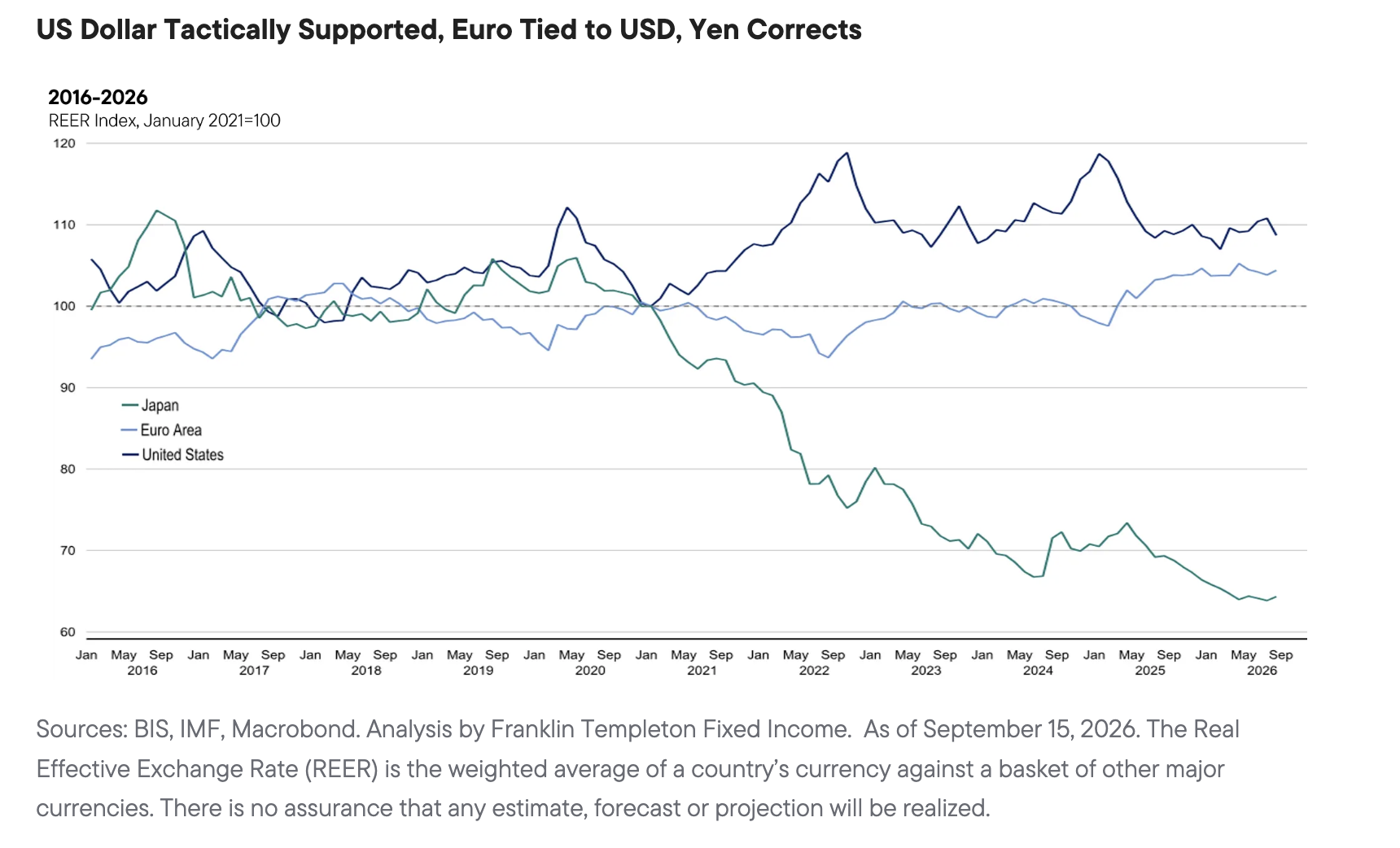
US dollar (USD): The USD outlook is best characterized as tactically supported but structurally fragile. Fed Chair Kevin Warsh’s Jackson Hole speech in August lifted front-end rate expectations and the dollar, but the recovery was incomplete, suggesting higher yields alone are no longer sufficient to generate a sustained rally. Near-term cyclical support remains credible, with still-strong activity data and a recovering labor market keeping the Fed focused on inflation. The USD is still responding positively to two-year yield spreads, but the rates channel could prevent a sharp decline rather than support a broad bull market. At the same time, an emerging US risk premium tied to fiscal sustainability, Treasury-market policy and Fed credibility is competing with fundamentals. Strong equity demand and weaker appetite for US Treasuries add to the tension. Our expectation is for a range-bound to mildly weaker USD, with tactical rallies around inflation data or Fed tightening.
Euro (EUR): The EUR’s destiny remains mostly a function of the USD and Middle East developments on energy prices, with a few important caveats. Although EUR/USD swung significantly over summer, prominent USD-relevant factors drove much of the move, including shifting Fed expectations, coordinated US-Japan FX intervention and the revived “debasement trade” favoring the EUR. On the EUR side, resilient growth to the energy shock story matters mainly through a higher terminal ECB rate and rates differential, but front-end repricing looks stretched, with a 3% ECB rate a risk scenario rather than the baseline. Sentiment is pulled between fluid geopolitics, where any credible pause in conflicts could support EUR appreciation, and the approaching European budget season, which may weigh on spreads. Overall, with limited evidence of higher potential growth, the EUR is unlikely to break beyond its two-year range.
Japanese yen (JPY): USD/JPY sharply corrected in early September, breaking key support, as several factors lined up behind the yen’s sharp gains. The BoJ’s hawkish comments and a repricing in rate hikes fanned speculation over more nimble action, but these moves alone cannot explain the correction. Possible FX intervention has not yet been officially announced, though recent episodes have occurred on thinner liquidity days. Rekindled speculation that the GPIF may revisit its strategic allocation also supported the yen, as even a 1% shift could mean a ¥2.5 trillion increase in JGB demand, with higher inflows positive for the currency. Meanwhile, many hedge funds are building bets for a stronger yen by year-end, potentially well below 150, while still-high net JPY short positions could lead to further squaring ahead of key policy meetings. Near term, a break below 152-150 depends on a more hawkish BoJ and unchanged Fed policy, but if the BoJ cannot deliver quickly, USD/JPY could move back toward 160.
WHAT ARE THE RISKS?
All investments involve risks, including possible loss of principal.
Fixed income securities involve interest rate, credit, inflation and reinvestment risks, and possible loss of principal. As interest rates rise, the value of fixed income securities falls. Low-rated, high-yield bonds are subject to greater price volatility, illiquidity and possibility of default.
Commodity-related investments are subject to additional risks such as commodity index volatility, investor speculation, interest rates, weather, tax and regulatory developments.
Currency management strategies could result in losses if currencies do not perform as expected.
Equity securities are subject to price fluctuation and possible loss of principal.
International investments are subject to special risks, including currency fluctuations and social, economic and political uncertainties, which could increase volatility. These risks are magnified in emerging markets.
Investments in companies in a specific country or region may experience greater volatility than those that are more broadly diversified geographically.
Important Information
This material is intended to be of general interest only and should not be construed as individual investment advice or a recommendation or solicitation to buy, sell or hold any security or to adopt any investment strategy. It does not constitute legal or tax advice. This material may not be reproduced, distributed or published without prior written permission from Franklin Templeton.
The views expressed are those of the investment manager and the comments, opinions and analyses are rendered as at publication date and may change without notice. The underlying assumptions and these views are subject to change based on market and other conditions and may differ from other portfolio managers or of the firm as a whole. The information provided in this material is not intended as a complete analysis of every material fact regarding any country, region or market. There is no assurance that any prediction, projection or forecast on the economy, stock market, bond market or the economic trends of the markets will be realized. The value of investments and the income from them can go down as well as up and you may not get back the full amount that you invested. Past performance is not necessarily indicative nor a guarantee of future performance. All investments involve risks, including possible loss of principal.
Any research and analysis contained in this material has been procured by Franklin Templeton for its own purposes and may be acted upon in that connection and, as such, is provided to you incidentally. Data from third party sources may have been used in the preparation of this material and Franklin Templeton ("FT") has not independently verified, validated or audited such data. Although information has been obtained from sources that Franklin Templeton believes to be reliable, no guarantee can be given as to its accuracy and such information may be incomplete or condensed and may be subject to change at any time without notice. The mention of any individual securities should neither constitute nor be construed as a recommendation to purchase, hold or sell any securities, and the information provided regarding such individual securities (if any) is not a sufficient basis upon which to make an investment decision. FT accepts no liability whatsoever for any loss arising from use of this information and reliance upon the comments, opinions and analyses in the material is at the sole discretion of the user.
Franklin Templeton has environmental, social and governance (ESG) capabilities; however, not all strategies or products for a strategy consider “ESG” as part of their investment process.
Products, services and information may not be available in all jurisdictions and are offered outside the U.S. by other FT affiliates and/or their distributors as local laws and regulation permits. Please consult your own financial professional or Franklin Templeton institutional contact for further information on availability of products and services in your jurisdiction.
Issued in the U.S. by Franklin Templeton, One Franklin Parkway, San Mateo, California 94403-1906, (800) DIAL BEN/342-5236, franklintempleton.com. Investments are not FDIC insured; may lose value; and are not bank guaranteed.
You need Adobe Acrobat Reader to view and print PDF documents. Download a free version from Adobe's website.
CFA® and Chartered Financial Analyst® are trademarks owned by CFA Institute.
A message from Advisor Perspectives and VettaFi: Discover something new! Click here to register for our upcoming webcasts.
Membership required
Membership is now required to use this feature. To learn more:
View Membership Benefits