Sentiment in the oil market can at best be described as depressed. Implied demand at the end of 2018 through mid-2019 suffered as the effects of trade tensions and the manufacturing slowdown sapped demand for refined petroleum products. Most macro forecasts are calling for oil surpluses in 2020 due to growing U.S. production, and prospects for a global energy transition are raising concerns about long-term demand. But we believe a market transition into surplus balances may not be inevitable.
Backwardation continues and supply is tight
Despite the negative sentiment, the oil market remains solidly backwardated, meaning spot and nearer-term futures prices exceed those for contracts further out – a situation that typically occurs only when supply is in deficit and inventories are being drawn to meet demand. Backwardation may also support returns by creating “roll yield” as investors long higher-priced short-term contracts roll out their exposure to lower-priced longer-term contracts.
We think the primary drivers are twofold:
- Despite all the focus on expected growth in U.S. production as new pipelines come online in the second half of 2019, U.S. production has been flat to date this year and has lagged expectations.
- OPEC production has declined sharply, both voluntarily and involuntarily.
Just how tight is the crude market? Current Organisation for Economic Co-operation and Development (OECD) crude inventories are nearly 60 million barrels below the five-year trailing average, adjusting for infrastructure fill associated with new pipelines and terminals that is effectively not commercially available – one of the tightest levels in the past decade (see Figure 1).
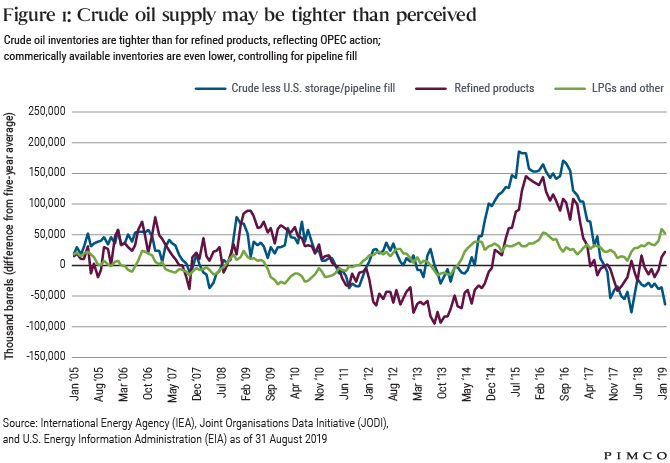
It is also worth noting disparities in the oil supply data between crude oil, refined petroleum products, and liquefied petroleum gas (LPG), the latter of which is suffering from slowing petrochemical activity globally and growing natural gas production. Simply put, when excluding LPG, which is only partially sourced from refining crude oil, the oil market is actually quite tight. This is something the bearish narrative is missing.
