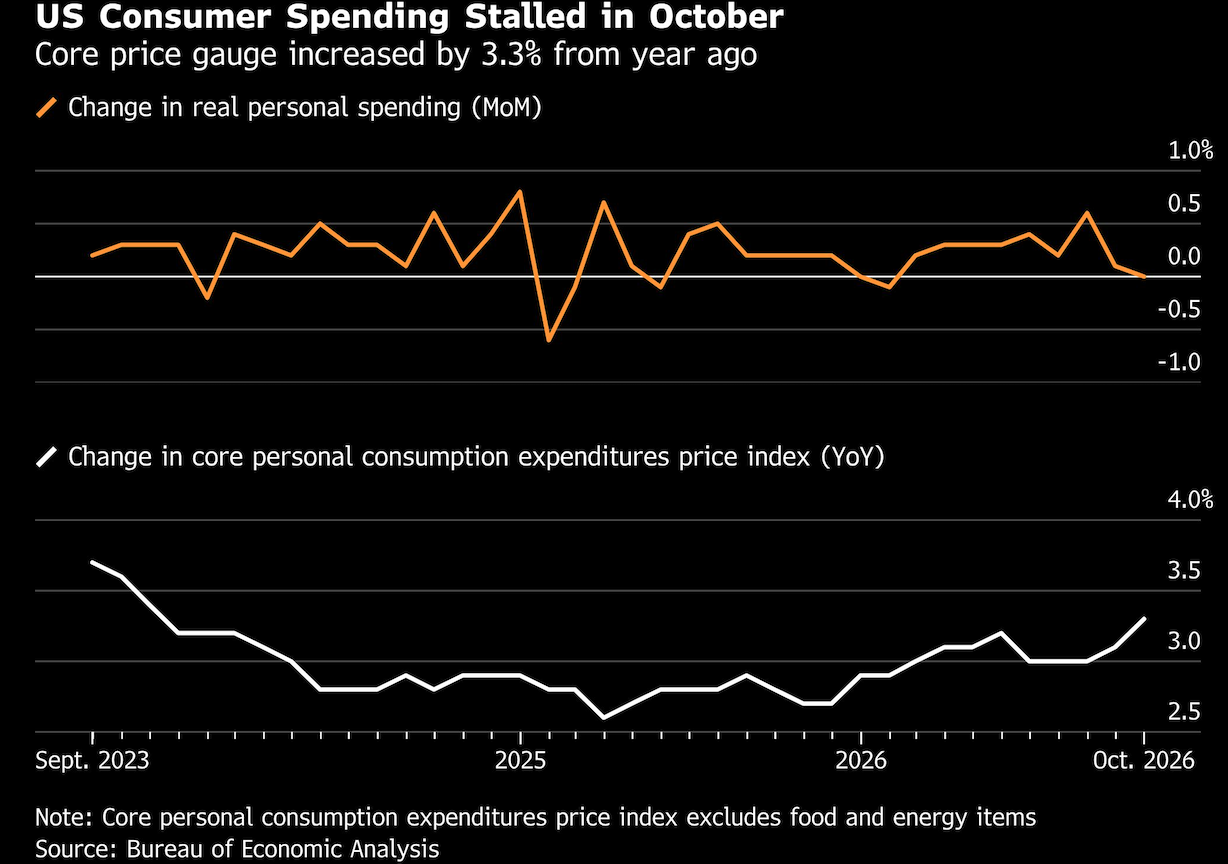
US consumer spending stalled in October after surging earlier in the year, suggesting households took a breather heading into the holiday season.
Inflation-adjusted personal spending was little changed from a month earlier, according to Bureau of Economic Analysis data released Wednesday. That followed the strongest economic growth in three years in the third quarter, propelled by robust personal consumption and business investment.

The Federal Reserve’s preferred measure of underlying inflation, the personal consumption expenditures price index excluding food and energy, rose 0.3%. From a year earlier, core PCE was up 3.3%, the most since 2023 — keeping Fed policymakers on track for an interest-rate hike next month.
The economy has been growing at a solid clip this year, powered by a resilient consumer and investment in artificial intelligence. But many households are straining to absorb rising costs.
Overall inflation was up 3.8% from a year earlier in October and has been above the Fed’s 2% target for five-and-a-half years. Fed officials have signaled that higher interest rates are needed, but they have offered different views on how far and fast to increase borrowing costs. Investors expect policymakers to raise interest rates at their December meeting and again in the first quarter of 2027.
“The US October economic data illustrated two key undeniable facts: aggregate demand remains hot, and inflation is accelerating,” said Joe Brusuelas, the chief economist at RSM US. “That demands a policy response.”
A separate report Wednesday showed the economy grew at a faster than previously reported pace in the third quarter. Gross domestic product rose 4.3% annualized, the most in three years, as business investment rose by the most since 2020. Consumer spending was also revised higher.
At the start of the fourth quarter, households pulled back on spending on items including motor vehicles and furnishings, as well as restaurant meals and hotel stays.
Still, the personal saving rate rose to a three-month high as real disposable income jumped by the most since January, suggesting they remain well positioned to spend over the upcoming holidays.
See more: First the Hikes, Then the Highs
‘Quite Solid’
The BEA said the rise in incomes partly reflected one-time payments associated with the Medicare Improvement Fund premium rebate, though underlying wages and salaries also continued to advance.
“Consumer spending has generally been quite good in 2026, and even with a wobble in October, I think the trend is quite solid,” said Bill Adams, the chief US economist at Fifth Third Commercial Bank.
Affordability and inflation were key themes during the midterm elections that saw Democrats win majorities in the House and Senate. The sweeping victory in part reflected voter frustrations with high costs for food, gasoline, healthcare and housing.
Wednesday’s report showed robust price increases across goods and services in October. A closely watched metric of services inflation that excludes energy and housing rose 0.3%.
Retailers have been responding to cost-conscious consumers by trying to hold the line on prices and win over shoppers looking for deals.
“Busy families are watching their budgets and being thoughtful about where they spend,” Cara Sylvester, chief merchandising officer at Target Corp., said in a Nov. 18 earnings call. Target said it lowered prices on nearly 2,000 items in the third quarter.
More recently, US consumers have gotten some relief on at least one front: gasoline prices. The national average price of a gallon of gasoline dropped below $4 in November for the first time since July, according to data from AAA. Consumer sentiment has improved as well.
What Bloomberg Economics Says...
“The PCE inflation reading shows why the Fed has become so hawkish. The rolling sequence of supply shocks has kept inflation hot, with high diesel costs currently passing through to core goods even as AI hardware and airfares show signs of easing. The combination of inflation and income surprises dashes hopes of a dovish pivot from the Fed in response to the faltering AI trade.”
— Anna Wong, Troy Durie and Andrew Sacher
The GDP report also showed corporate profits rose 21.3% in the third quarter from a year earlier, marking the fastest increase since 2021.
Separate data Wednesday showed growth in core capital goods orders accelerated in October, while weekly initial filings for unemployment insurance fell to 189,000, matching the lowest reading since the 1960s.
A message from Advisor Perspectives and VettaFi: Discover something new! Click here to register for our upcoming webcasts.
Bloomberg News provided this article. For more articles like this please visit
bloomberg.com.
Read more articles by Jeffrey Sparshott