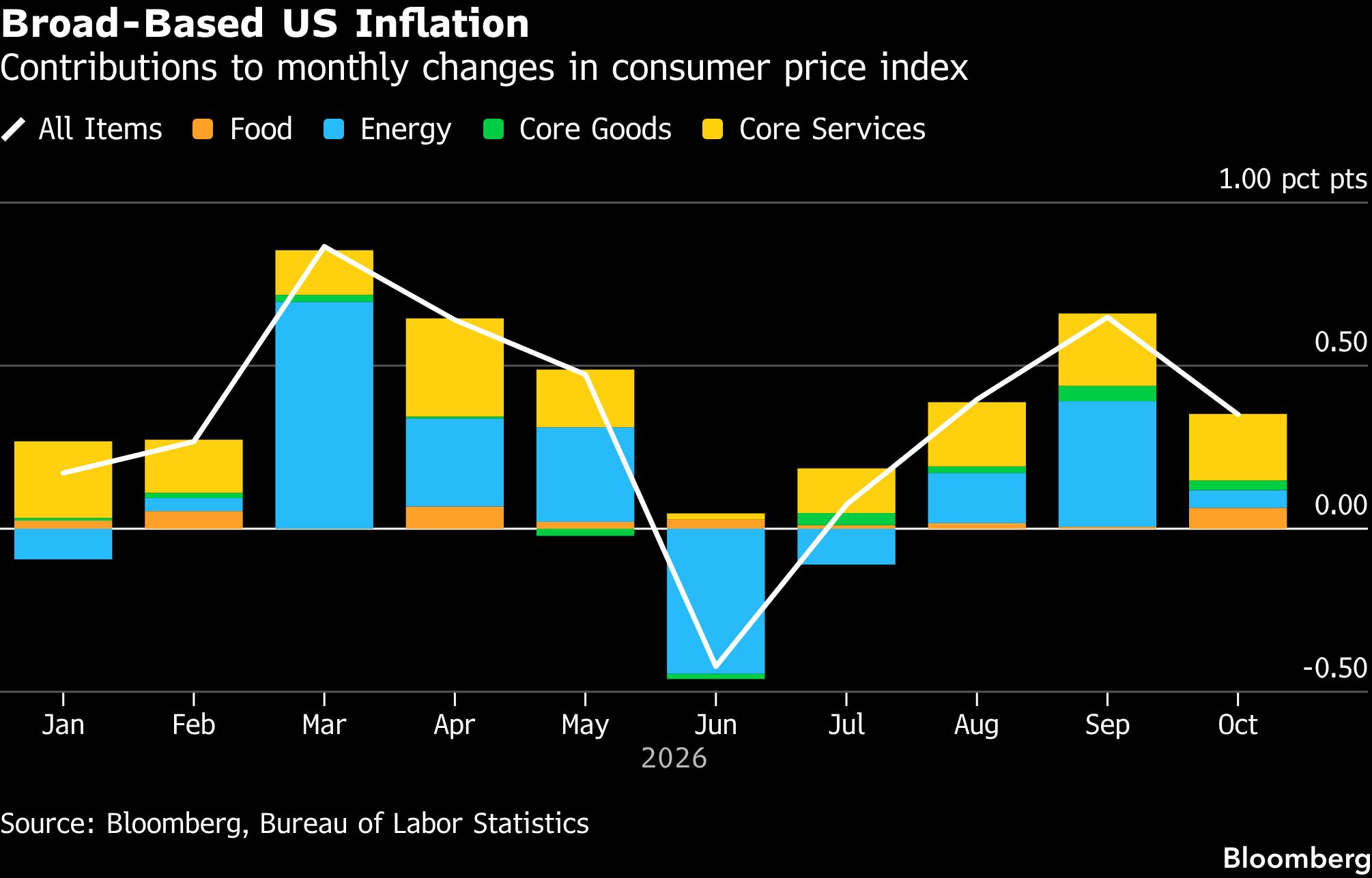
The hotter-than-expected October inflation report showed price pressures for US consumers remain broad and unremitting, raising worries among some Federal Reserve officials that they may need to act more aggressively to tame inflation.
Policymakers had been hopeful that some important factors pushing prices higher, including the oil supply shock and services costs, would be easing by now. Instead, the consumer price index excluding the volatile food and energy categories rose 0.3% and topped forecasts for a third straight month.
See more: Strength in Employment Settles December Rate Debate
Chicago Fed President Austan Goolsbee called the October data “borderline disturbing,” and Governor Christopher Waller warned prior to the CPI figures that officials may need to raise rates by a half percentage point at their December meeting.

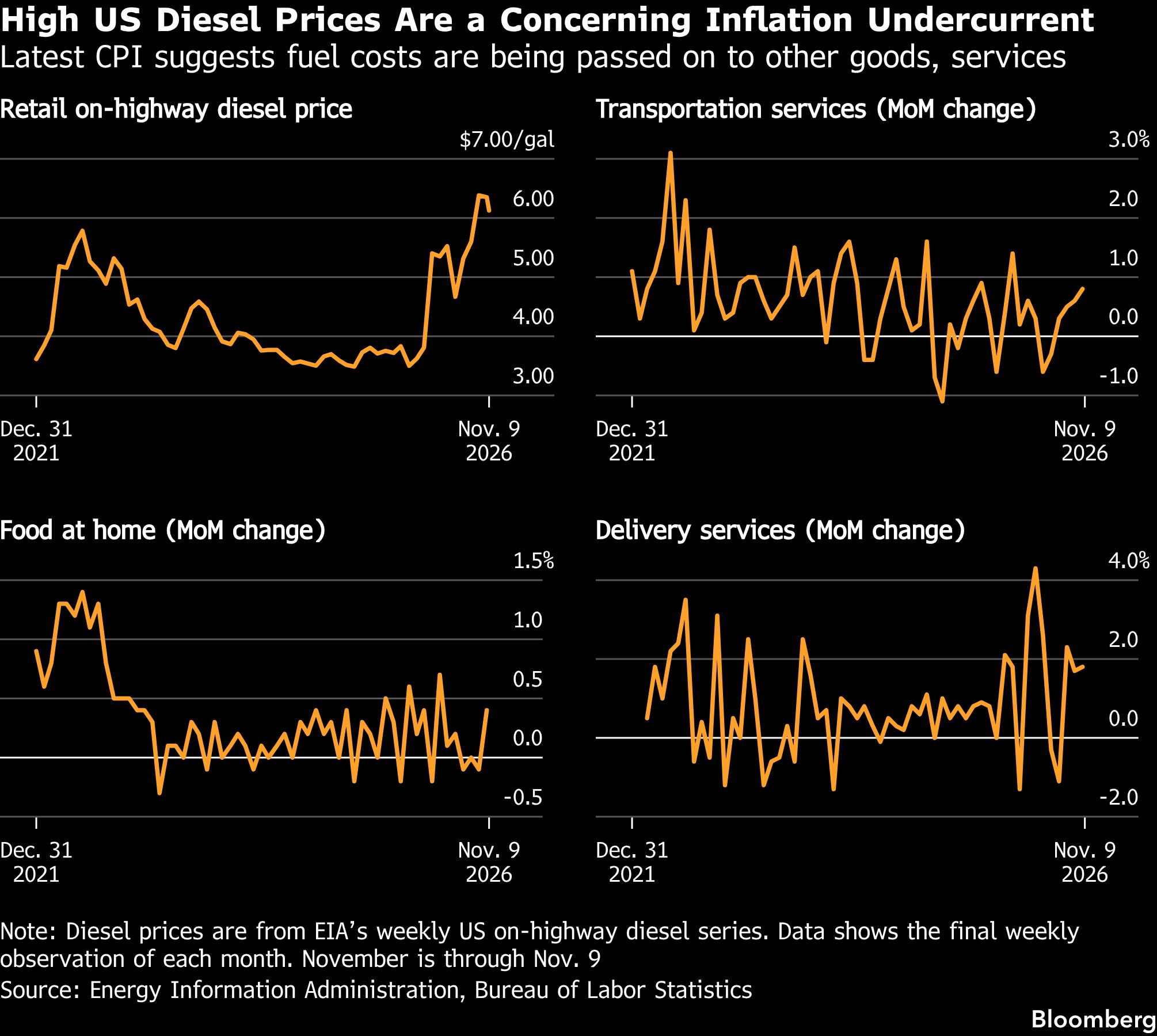
The report showed signs the surge in fuel prices due to conflict in the Middle East is spreading to other parts of household budgets. Near-record diesel prices have made shipping more expensive, and inflation in services remains firm. Meantime, prices of some goods most exposed to tariffs continue to rise.
Energy Shock
The surge in the cost of petroleum products following the war in Iran extends beyond the gas pump for American consumers.
Food is one example, with grocery prices rising last month by the most since April. Farm equipment runs on diesel, and research suggests transportation alone accounts for roughly 9% of retail food costs.
The cost of intracity transportation — or fares for local transit, taxis and ride-hailing services — posted the biggest monthly increase since 2020, while airfares and the costs of delivery services rose as well. High shipping costs risk pushing up prices for consumer goods, too.
The CPI report “really underlined the pass-through from higher energy prices,” said Michael Pearce, chief US economist at Oxford Economics. “We knew it was going to be relatively ugly just because of the lag involved.”
Households may put off spending on furniture, electronics and other discretionary items, but there is little flexibility when it comes to groceries, utilities and transportation.
Services Inflation
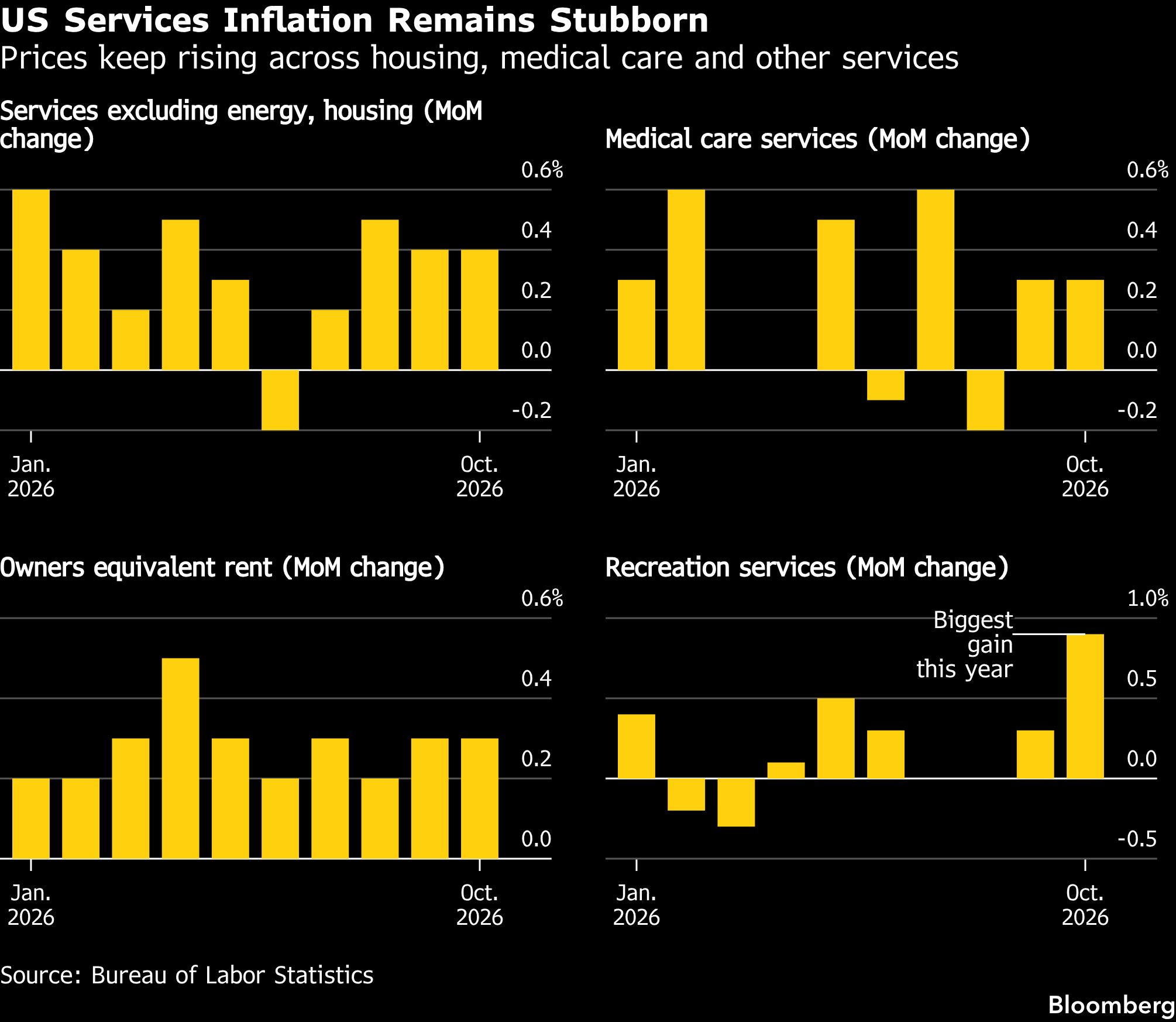
The strength in services inflation also extended beyond categories directly exposed to higher energy costs, such as airfares and delivery services.
Services prices excluding energy and rents rose 0.4% in October after similarly robust advances in the prior two months. Costs of recreation services, motor vehicle insurance and a range of medical services all increased. Owners’ equivalent rent, the CPI’s largest individual component, advanced another 0.3%.
Services prices are often tied to wages, rents, insurance and other operating costs, so they can take longer to cool than goods prices. Without a sustained easing, overall inflation is likely to remain elevated.
AI & Electronics
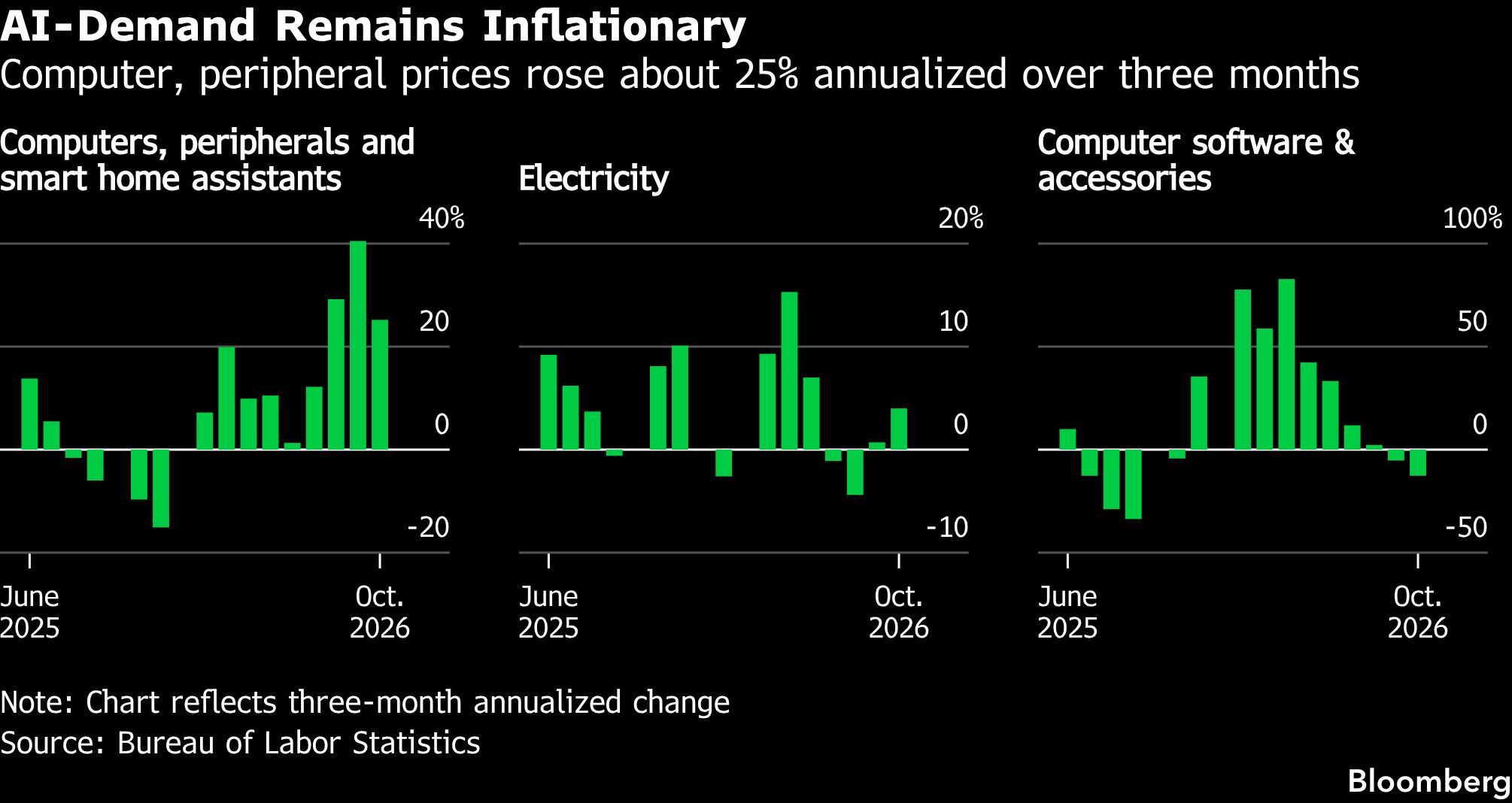
The investment boom in artificial intelligence is also playing a role in inflation, both through technology prices and demand more generally.
Prices consumers pay for computers and peripherals have climbed an annualized 25% over the past three months. Smartphone prices jumped last month by the most on record, though that coincided with the release of Apple Inc.’s new iPhone Duo model. And electricity prices jumped 0.9% in October, the most in six months, as data centers amplified demand.
Analysts at TD Securities and Morgan Stanley said the increases were consistent with AI-related demand for chips and other electronics.
That rush to build data centers and related infrastructure is also boosting the overall economy at a time when policymakers are trying to ensure robust demand doesn’t contribute to more inflation.
Recent data raise “the possibility the economy is heating up again, driven by the mammoth demand-side boost from the AI boom,” Preston Caldwell, chief US economist at Morningstar, said in a note to clients. “Insofar as this persists into 2027, it would likely drive multiple Fed rate hikes.”
Still, Morgan Stanley estimates AI has added only about 6 basis points to core CPI so far this year, although the effect is larger in the core personal consumption expenditures price index because software and electronics carry greater weight in that index. The risk is that what has so far been a modest and concentrated source of pressure becomes more important as the investment boom continues.
A message from Advisor Perspectives and VettaFi: Discover something new! Click here to register for our upcoming webcasts.
Bloomberg News provided this article. For more articles like this please visit
bloomberg.com.
More Innovative ETFs Topics >