If Federal Reserve Chair Kevin Warsh didn’t get the message from voters last week, the latest consumer price index report should make it abundantly clear: Inflation is too high. For Warsh, nothing less than another increase in interest rates will do when central bankers meet in four weeks to set monetary policy. And even that may not be enough to tame inflation.
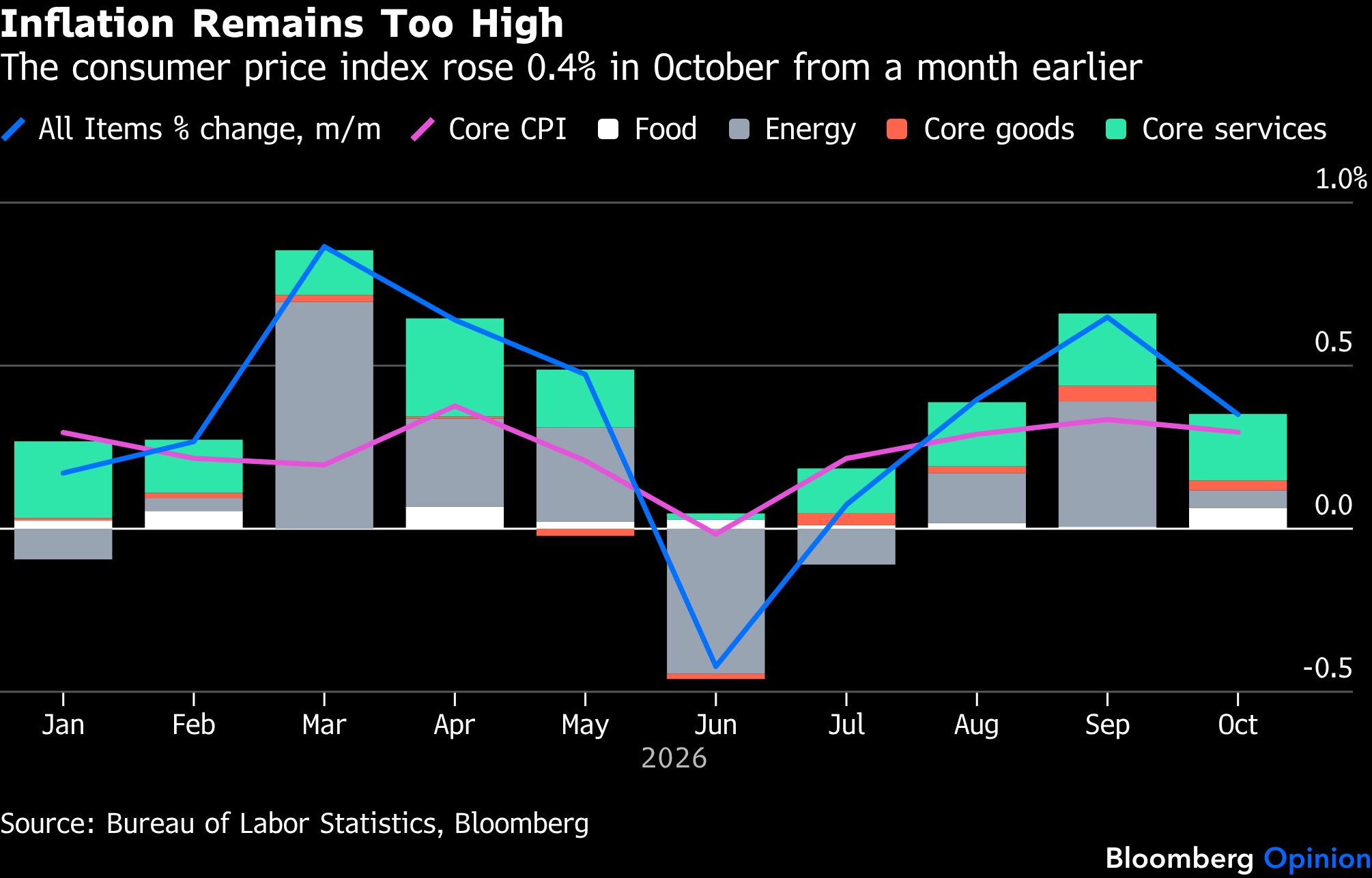
The Bureau of Labor Statistics said Tuesday that consumer prices rose 0.4% in October from September, more than the 0.3% gain that economists had forecast. By the calculations of Bloomberg Economics, that works out to be a 3.9% increase from a year earlier (when a government shutdown prevented the BLS from gathering data for the report). As a reminder, the Fed has a goal of keeping inflation at 2%.
See more: Consumer Price Index: Inflation Rose 0.4% MoM in October
The latest data validated the “ blue tsunami” of voters in the midterm elections, which flipped control of the House and Senate to Democrats, in part because they were frustrated with the persistently elevated cost of living. The details of the CPI report underscored why Americans are so frustrated, because price increases are both widespread and most acute in the areas that hit low-income households hardest:
- Food at home rose 0.4%, the most since April
- Electricity jumped by 0.9%, also the most in six months
- Motor fuel rose 0.7%, up for a third straight month
- And toys jumped for a second month, leaving them up more than 9% from last Christmas with the holiday gift-buying season underway.
Warsh’s instincts should guide him in the right direction. He demonstrated hawkish inclinations throughout his earlier tenure as a Fed governor from 2006 to 2011, and during his time in the private sector afterwards. In November 2010, Fed transcripts show that he strongly disagreed with then-Chair Ben S. Bernanke about the Fed’s second round of bond buying to stimulate the economy, known as quantitative easing. He also criticized the Fed’s easy-money policies during the pandemic and the central bank’s modest rate reductions in 2024. As I wrote when he was selected to become Fed chair, his hawkish tendencies always made him a curious pick for President Donald Trump, who had lobbied not just for lower rates, but irresponsibly easy money. Warsh’s challenge is to find the backbone to defy Trump with a second rate increase in four months.
Even if the numbers had been more muted, the big picture is that Americans have been living with high inflation for around six years. This is a problem because inflation tends to become a self-fulfilling prophecy that sticks around once consumers have become conditioned to expect continual price gains. Although consumer inflation expectations can be hard to measure, the midterm elections provided a robust sample of more than 120 million voters who told lawmakers that they’re at their breaking point.
For central bankers, it’s important to stay focused on the forest and not the trees. “Core” inflation rose a somewhat tamer 0.3% and was probably up around 2.5% from a year earlier, according to Bloomberg Economics. The problem is that core — which excludes food and energy — is a statistical fiction experienced by no actual human beings who rely on food and energy in their daily lives. It’s supposed to be a truer guesstimate of the underlying trend in prices, after stripping out volatile elements, but its existence is premised on the idea that shocks tend to come and go. It’s been rendered mostly useless in the era of Trump, who has made shocks a recurring phenomenon (tariffs, the Iran war, etc.).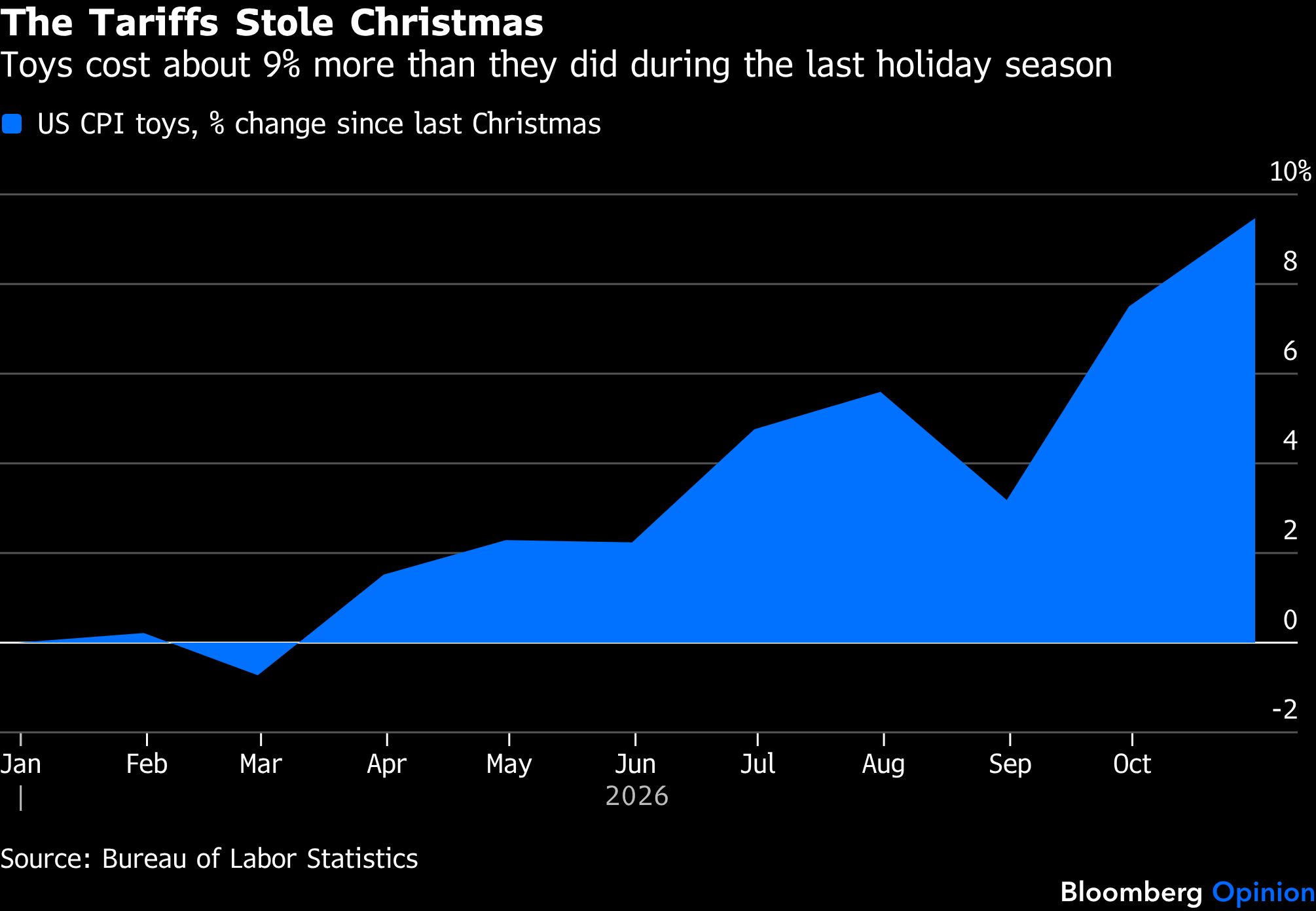
Not only does Trump always seem to have another unwelcome economic surprise in store, but we’re still dealing with the fallout of the original ones. The jump in toy prices was probably the result of the long shadow of tariffs, while the increase in food prices may be the lagged impact of diesel rising as a result of the US-Israel war with Iran and hitting shipping costs. Other types of companies seem to be preparing to bump up prices again in the coming months as the new year arrives, according to commentary by firms in the Fed’s so-called Beige Book and data from the National Federation of Independent Business.
There’s still about a month to go until the next Fed decision, and it’s worth watching developments in places like the credit markets, where incipient signs of stress are appearing. Cracks in credit markets can spread quickly. As I wrote last month, that’s a reason for the Fed to move cautiously — and that’s still true. And as always, it’s important to resist the temptation to overinterpret any single month of data.
But this is a third consecutive unwelcome CPI report. The near-term inflation trend is poor, and the longer term trend is worse. Warsh just received a very alarming message from a robust sample of more than 120 million voters in the US midterms, and that message are demanding the Fed finally get inflation under control after six years.
A message from Advisor Perspectives and VettaFi: Discover something new! Click here to register for our upcoming webcasts.
Bloomberg News provided this article. For more articles like this please visit bloomberg.com.
