Once prone to external shocks, Latin America has weathered this year’s geopolitical upheavals largely unscathed.
Growth will be in line with expectations at the beginning of 2026, exports are hitting records in several countries and the streets of the region’s main capitals have seen little unrest despite the oil shock triggered by the shutdown of the Strait of Hormuz.
In fact, this increasingly unpredictable world, where trade flows are being reshaped and great powers are racing to secure strategic natural resources, plays to the region’s strengths. Latin America is rich in commodities, free of interstate conflicts and increasingly turning toward more business-friendly policies. The experts at Citigroup Inc. rightly laid out the rationale for this opportunity in a noteworthy report in September: Latin America, they write, is “poised for take-off.”
See more: Big Numbers, Big Expectations: Three Keys to Earnings Season
And yet, despite an environment that is working in the region’s favor, including warmer ties with Washington, the expected boom remains just a promise. Latin America has everything it needs to experience another supercycle. But it isn’t happening anytime soon. At most, the region is seen growing about 2.5% next year and in 2028.
Call it the no-show miracle.
The reason for the mismatch between expectations and reality lies on the other side of the economics textbook: microeconomics. In macroeconomics — the branch of the discipline concerned with big-picture variables such as GDP, inflation, interest rates and fiscal balances — Latin America has made enormous progress. Inflation targeting, flexible exchange rates and prudential measures have served the region well, enabling its main governments to finance themselves mostly through local markets. In many respects, their macroeconomic framework increasingly resembles that of richer economies.
But when it comes to the rules and incentives that shape how consumers, workers and companies behave, the region still lags painfully behind. What is really holding back Latin America’s long-term prospects is the anti-competitive, anti-production policy mix that still dominates much of the region: from protected industries and state-created monopolies to excessive regulation, cascading taxes and bureaucratic barriers that make it harder for companies to invest, innovate and compete. Firms and entrepreneurs pay an extra toll in the form of weak legal frameworks, corruption, extortion and insecurity. The interest for Latin America in international markets has all but dried up, with stock funds disappearing and minimal company listings.
Examples abound. Notary-office holders lead the ranking for the highest average declared net worth among Brazilian professionals, a testament to the nation’s legendary bureaucracy. In Mexico, AT&T Inc.’s announced exit is a reminder of the country’s difficulties in creating a truly competitive business environment. And in Argentina, there are still around 150 different taxes at all levels of government, a guaranteed recipe for business dysfunction, even after the anarcho-libertarian President Javier Milei managed to eliminate five national levies. Perhaps we should rename the country Taxgentina…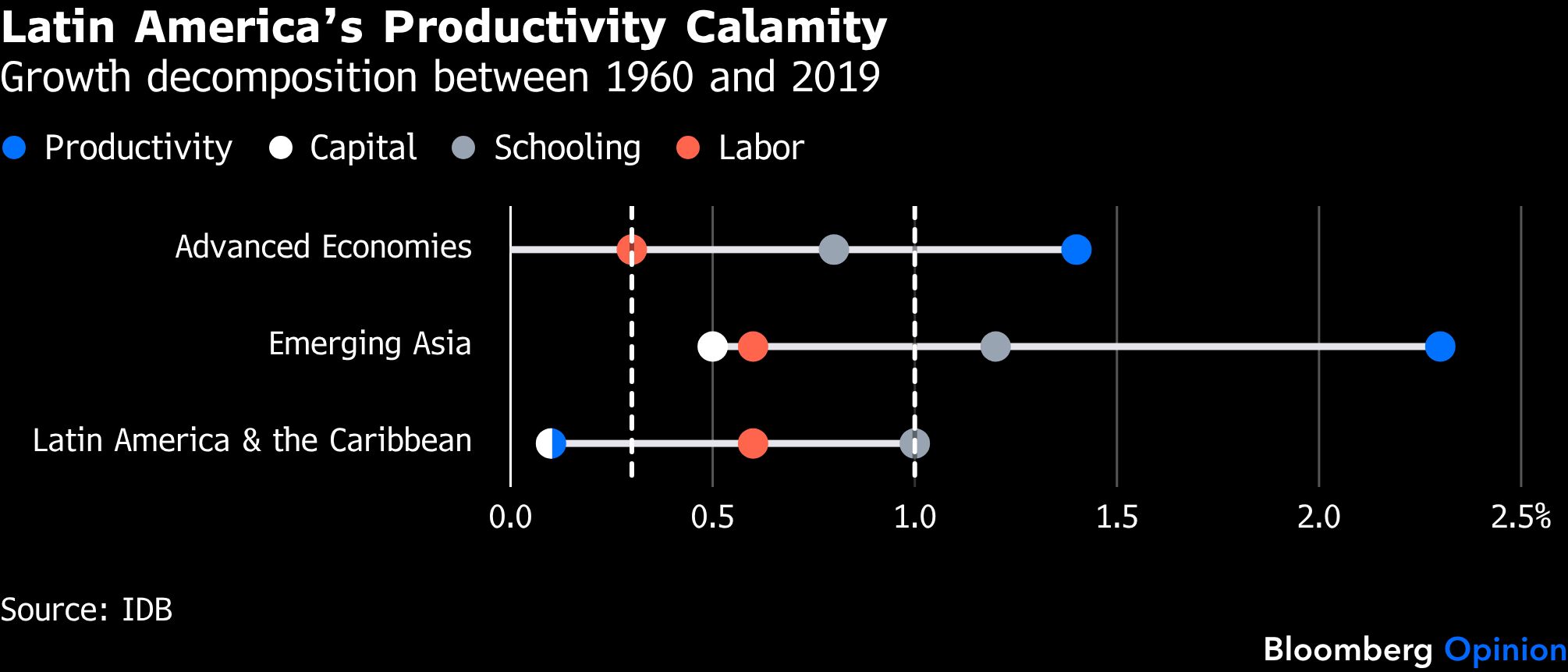
The consequence of these distortions can be summed up in one revealing figure: 0.1%.
