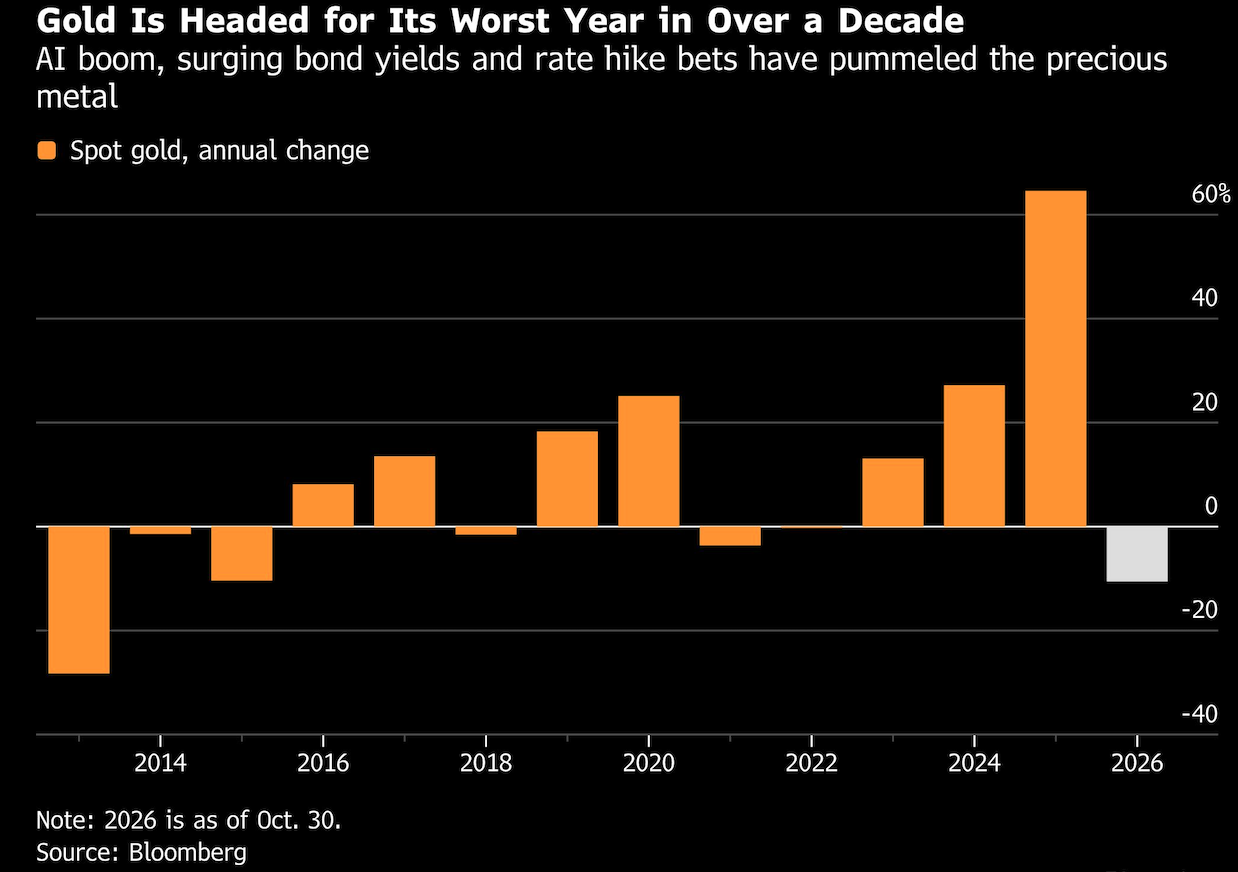
As gold heads toward its worst annual loss in more than a decade, investors are gauging the odds a political shift in the US will restore the precious metal’s haven allure.
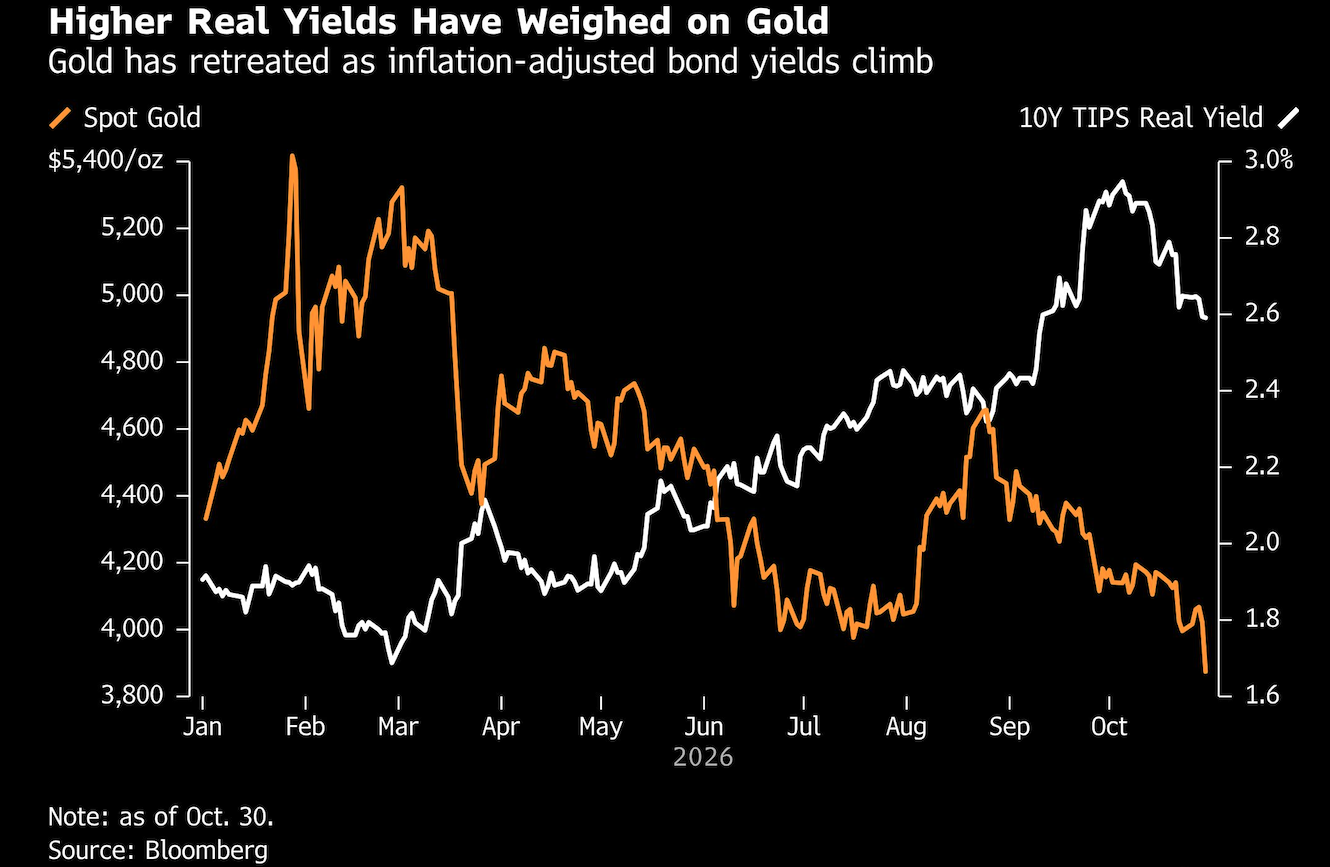
Usually, bullion is a safe place to hide during periods of persistent global friction, but after starting the year with a momentum-fueled ride to a record of over $5,500 an ounce, gold now trades below $4,000. The artificial intelligence investment boom, soaring bond yields and interest rate-hike expectations have pummeled the yellow metal, sending it down more than 8% so far in 2026.
Tuesday’s US midterm elections raise the prospect of a broader narrative swing back to inflation and deficit woes, a setup that could revive gold’s status as a safe bet when all else looks hazardous.

If President Donald Trump’s first term — when midterm elections resulted in a split Congress — is any guide, legislative action will slow to a trickle and little will be done to tackle a roughly $2 trillion US fiscal deficit, raising concerns about monetary policy.
See more: Bonds, AI, and a Bull Market That Has Kept Going
“History doesn’t repeat, but it often rhymes,” said Matt Miskin, co-chief investment strategist at Manulife John Hancock Investments, pointing to a gold rally in 2019. “If 2027 looks anything like 2019, this weakness in gold could actually reverse.”
Higher real yields and renewed dollar strength have weighed on the non-interest-bearing metal, while the AI boom and a resilient economy have helped pull investor attention, and capital, toward riskier assets. A post-election transition in which those forces start to fade while unresolved concerns over US debt and deficits, inflation and slowing growth move back to the fore, could make a case for investors to return to gold.
Polling shows Democrats are favored to win the House, while a majority in the Senate is more uncertain. Even with Democrats controlling Congress, the president still wields veto power, meaning spending will be restrained, putting downward pressure on Treasury yields and removing one of the metal’s biggest challenges.
“Gridlock would likely reduce the risk of further fiscal policy driving further backup in real yields,” said Miskin, who expects a modest Democratic shift with limited policy changes. That would be “a really good development for gold.”
The case for gold also rests in part on the idea that as the nation’s debt burden grows, investors will turn to the precious metal as a hedge against a weaker US dollar.
The next Congress inherits a difficult fiscal backdrop, regardless of its makeup, said Anthony Saglimbene, chief market strategist at Ameriprise. Gridlock risks hampering not just spending, but also the politically difficult budget cuts or revenue increases needed to materially improve a government’s finances.
It’s an unusual tension for gold investors: As fiscal concerns send yields higher, bullion is hurt as interest-bearing assets look more attractive. But rising yields also add to the evidence of mounting fiscal stress, making gold once again appealing as an alternative store of value.
Saglimbene expects investors concerned about the US’s fiscal situation to seek havens outside government bonds and turn to gold. Sharply higher yields on deficit and debt concerns could be a potential tailwind for the metal, he said.
Currently, higher oil has fed inflation concerns and expectations for tighter monetary policy, weighing on gold even as geopolitical risks have risen. That’s driven investors to own higher-yielding government debt.
It’s been a key feature of markets this year: even amid geopolitical turmoil and concerns over US finances, bullion hasn’t consistently behaved like the haven investors might expect.
Still, gold’s retreat is beginning to tempt some buyers. Doug Daly, a portfolio manager at CoreCommodity Management, said that while his portfolios’ election-related positioning is focused more heavily on energy and the war in the Middle East, he’s been getting more bullish after its drop below $4,000.
Manulife’s Miskin said his strategies have also made incremental additions around $4,000, leaving them around neutral to slightly overweight.
The AI Debate
Gold’s direction is tied to the sustainability of the AI boom.
The enormous demand for capital to fund the AI infrastructure buildout has companies tapping debt markets just as the US government needs to finance large deficits, adding upward pressure on yields — and weighing on bullion.
Roger Aliaga-Díaz, Vanguard Group’s global head of portfolio construction, said the AI capital-spending boom is one of the strongest investment cycles in decades and is unlikely to stop abruptly. Vanguard expects above-consensus economic growth next year.
In Vanguard’s view, large deficits aren’t automatically positive for bullion: if policymakers retain credibility and remain willing to raise rates to contain inflation, fiscal expansion can translate into higher yields — bad news for gold — rather than a loss of confidence in the dollar.
“If the Fed does their job,” fiscal concerns shouldn’t yet be a major driver of gold, Aliaga-Díaz said. He expects AI investment to keep the economy expanding even as the Federal Reserve battles supply-driven inflation. However, if investors begin questioning the Fed’s independence or its willingness to contain inflation, gold becomes much more compelling, he said.
Near-Term Volatility
The midterms risk generating short-lived volatility. Election challenges would spur haven demand for bullion before, or immediately after, the vote, Kristina Hooper at Man Group said. And a divided government will eventually produce confrontations over spending, shutdowns or the debt ceiling.
For investors trying to decide whether gold’s disappointing 2026 performance is the beginning of a longer retreat or an opportunity to buy, the bigger question is what happens when the election is over.
Hooper is watching for stagflation. Persistent inflation accompanied by weakening economic growth creates an environment that has historically been favorable for gold.
“The bigger story is going to be whether or not we actually move into that stagflationary environment,” Hooper said, pointing to weak job growth alongside persistent pricing pressures.
With weaker growth, real yields in retreat or increasing unease about Washington’s inability to rein in its finances, the metal’s old attractions could quickly return. But if AI investment continues supporting growth, the Fed stays hawkish and Treasuries keep offering attractive yields, gold will remain overshadowed.
“Right now things that are really disliked for much of the year are high-quality bonds, defensive equities, and even gold,” Manulife’s Miskin said. “We’re picking through that stuff.”
A message from Advisor Perspectives and VettaFi: Discover something new! Click here to register for our upcoming webcasts.
Bloomberg News provided this article. For more articles like this please visit
bloomberg.com.
More Energy Topics >