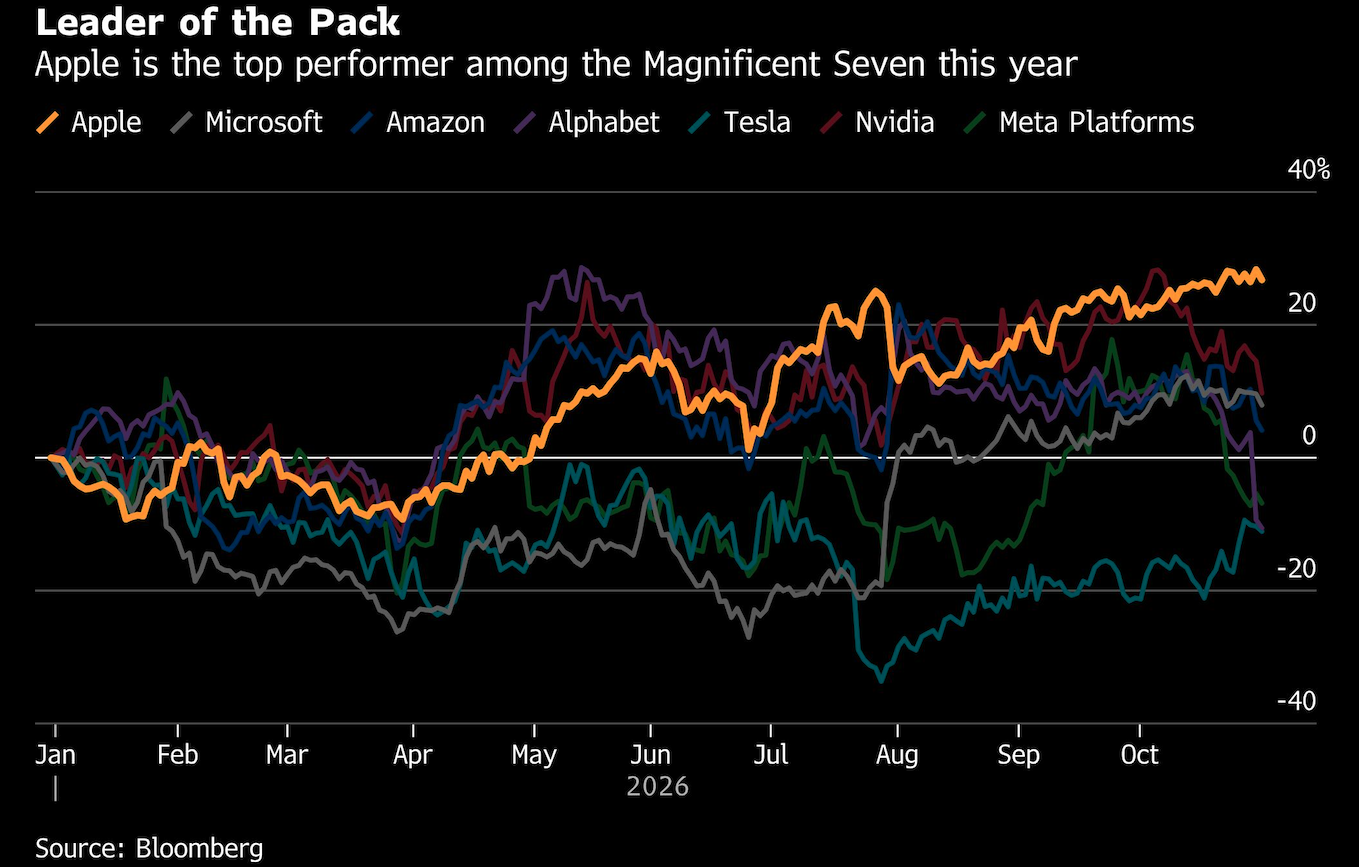
The runup in Apple Inc. shares in recent months has left the iPhone maker little room for disappointment when it reports earnings after the bell on Monday.
The stock has climbed 24% from a low in late June, adding roughly $1 trillion in market value, as the company’s steady revenue growth and rising free cash flow have offered a haven for investors concerned about heavy spending on AI infrastructure by megacap peers like Alphabet Inc. and Amazon.com Inc.
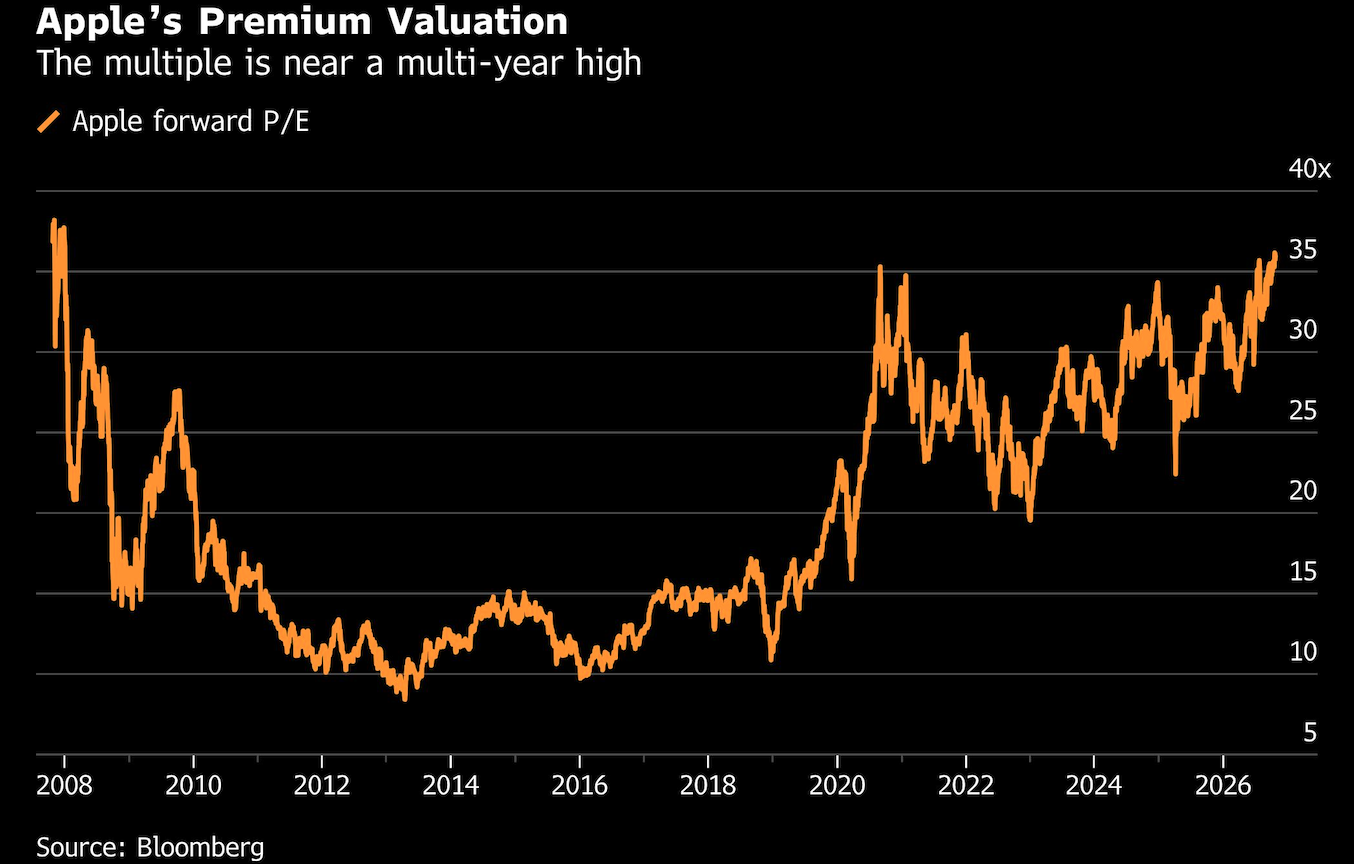
The gains have left the stock trading at the priciest levels since 2008, making it particularly vulnerable if the company’s results fall short of expectations. At roughly 36 times earnings expected over the next 12 months, the shares are almost twice as expensive as the S&P 500 Index, according to data compiled by Bloomberg.
Apple shares fell 1.2% at 9:40 a.m. in New York trading on Monday.

“Apple is in the 99% percentile of its historical valuation, and when something is priced so fully, there’s risk if something unexpected comes along,” said Ben Carew, co-chief investment officer at Tandem Investment Advisors, which holds the stock. “Right now it acts as a flight to safety, but if its growth is weaker than the market anticipates, that would make people feel it isn’t as safe, and we could see the multiple get re-rated.”
It’s a risk that should be familiar to Apple watchers. Three months ago, the stock suffered its worst one-day decline in 16 months after component shortages weighed on its quarterly revenue forecast.
Wall Street is expecting fiscal fourth-quarter revenue to rise 11% to $113.5 billion and net income to increase 6% to $29.2 billion. While that would cap Apple’s best year for sales growth since 2021 at 15%, the expansion is expected to slow in the next two years, according to the average of analyst estimates compiled by Bloomberg.
Apple’s report will offer the first real insight into the popularity of its new foldable iPhone. The device went on sale last month and the company said demand has been “nothing short of extraordinary,” with delivery times being pushed out to next year. However, analysts believe that could reflect limited supply availability, while reports of Duo screens cracking after limited use could diminish the product’s appeal among those who aren’t early adopters.
See more: Beating Rising Rates With Equity ETFs Designed for the Task
The Duo is critical for Apple. Not only does it represent the biggest design change to the company’s flagship product in years, but it starts at $1,999, and investors are hoping that premium price tag will boost growth. The phone could generate $28 billion to $32 billion in fiscal 2027 sales and lift average selling prices as consumers migrate from less expensive Pro and Pro Max models, according to Bloomberg Intelligence estimates.
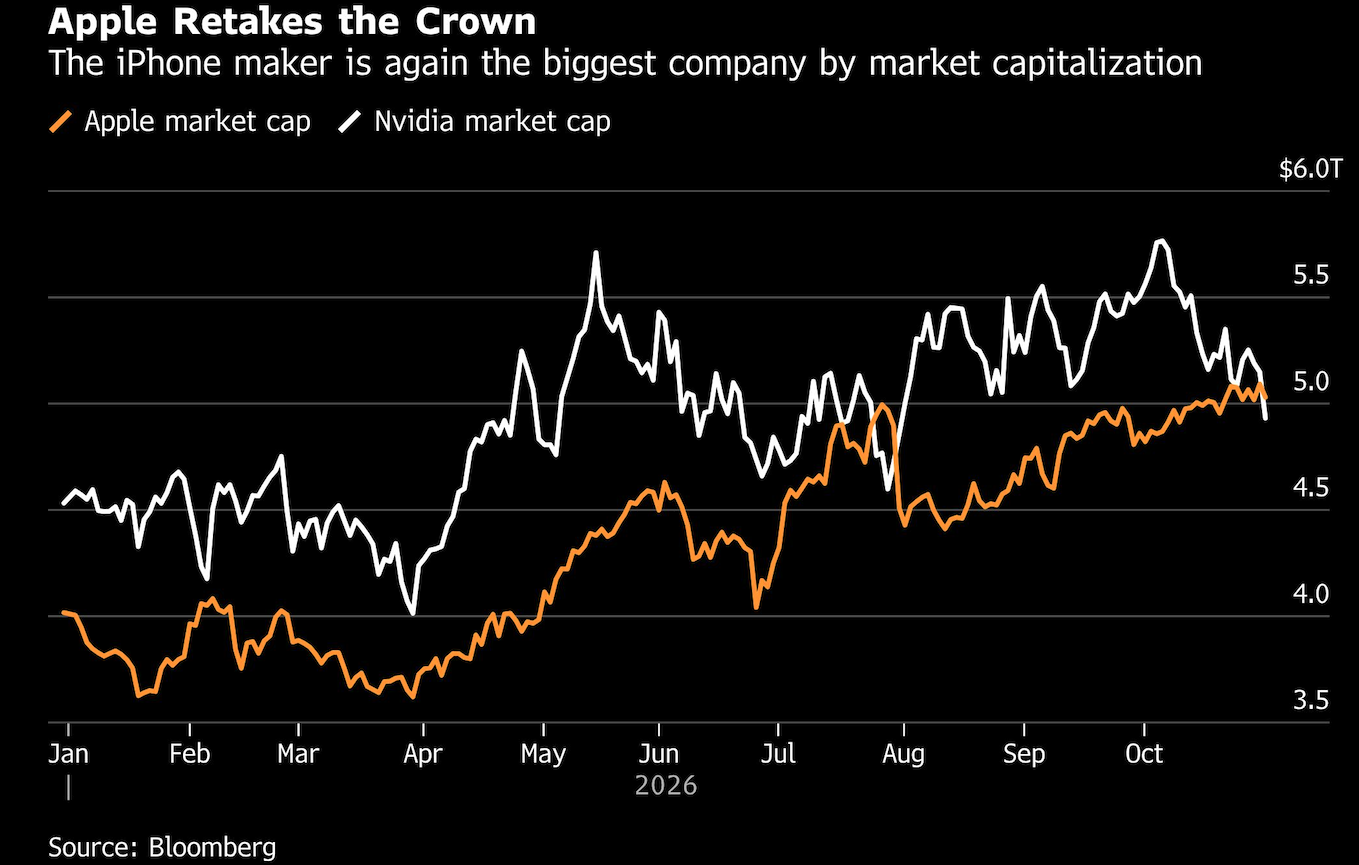
The tech haven trade benefiting Apple was on display last week when disappointing earnings reports from Alphabet and Amazon sent investors fleeing AI-exposed stocks. The Philadelphia Stock Exchange Semiconductor Index tumbled 7.2% on Friday, its worst session since June, while Apple shares outperformed the S&P 500 with a decline of 1.2%. With Nvidia Corp. shares swept up in the selloff, Apple overtook the chipmaker on Friday to become the world’s most valuable company for the first time since July with a market capitalization of $5.03 trillion.
While Apple’s revenue growth lags behind most Big Tech peers, the company stands out in free cash flow, which has become a critical metric as investors turn skeptical of the AI spending spree. For its 2026 fiscal year, free cash flow is expected to expand more than 40% to $141.5 billion, with further growth expected in the next three fiscal years. In contrast, Alphabet, Meta and Amazon have free cash flow deficits that are expected to continue.
“The market appreciates Apple’s strength on free cash flow, and if it can continue with that, I think the stock can generate additional value from current levels,” said Daniel Flax, a senior research analyst at Neuberger Berman. “Its ability to execute on the product cycle and translate that to strong free cash flow growth is what’s going to matter most for the stock, and the initial signs, at least, are that there’s a lot of interest for the Duo.”
Still, the combination of a high multiple and low growth has tempered Wall Street’s enthusiasm for the stock. Since Apple’s last report in late July, at least six analysts have downgraded their ratings. Loop Capital cut the stock to hold from buy in October, citing iPhone shipment trends, and Bank of America removed it from its US 1 list of best investment ideas on Friday, writing that it is “cautious on near-term setup given potential headwinds relative to consensus.”
Fewer than 60% of the analysts tracked by Bloomberg recommend buying, compared with a rate of more than 90% for Microsoft, Amazon and Meta. Furthermore, the stock is trading above the average analyst price target, making it the only Magnificent Seven stock with a negative implied return over the coming 12 months.
“Valuation is the key risk facing Apple, but it does deserve some kind of premium since there is a lot more certainty around its business model,” Tandem’s Carew said. “The volatility we’re seeing elsewhere in tech reflects how uncertain things seem for them. Absent a report that really calls things into question at Apple, which I can’t foresee happening, it should at least remain immune from some of that volatility.”
Tech Chart of the Day
A message from Advisor Perspectives and VettaFi: Discover something new! Click here to register for our upcoming webcasts.
Bloomberg News provided this article. For more articles like this please visit
bloomberg.com.
More Smart Beta Topics >