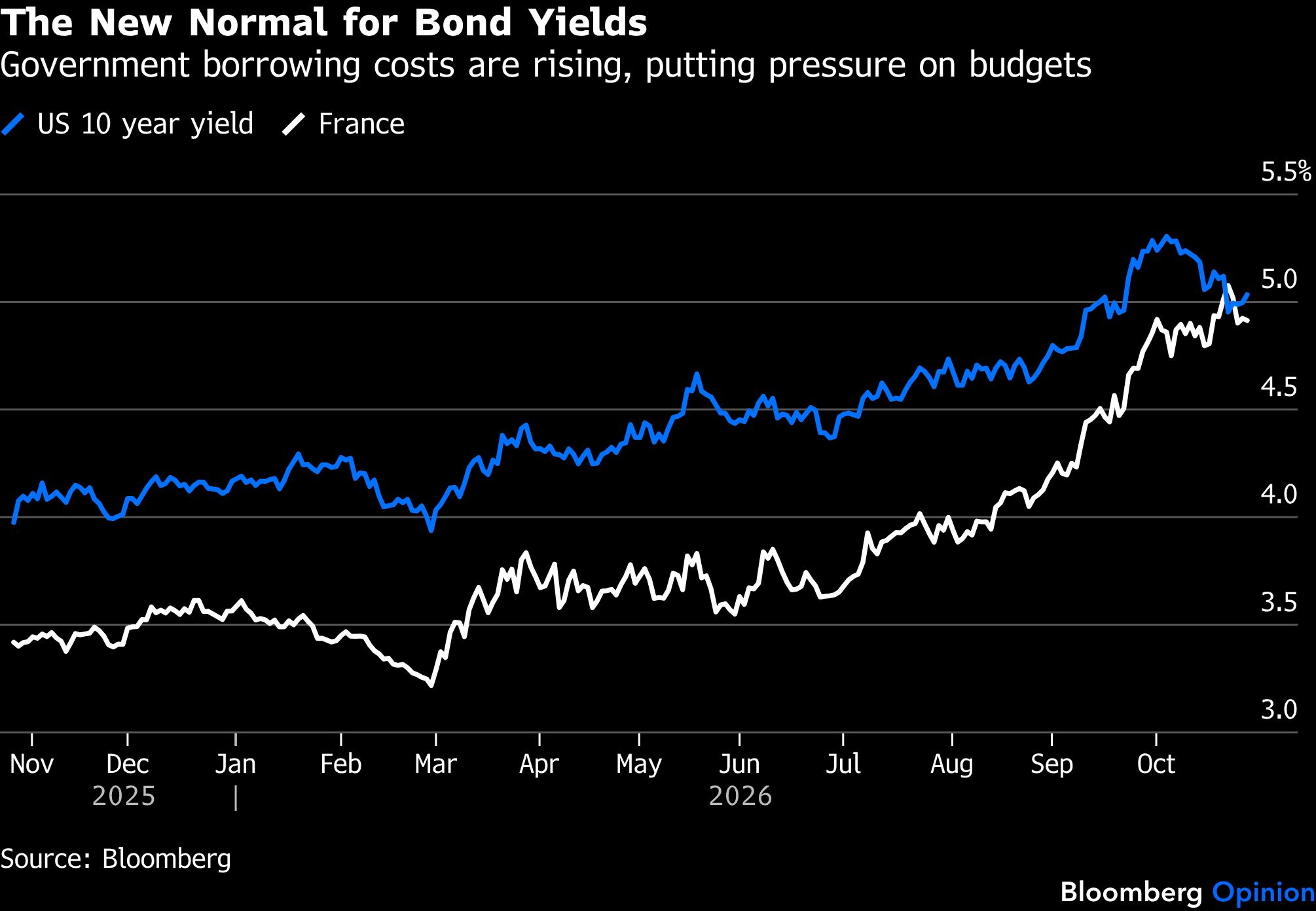
Many long simmering tensions boiled over in France’s protests and riots. Rising borrowing costs for the government proved a crucial pressure point — a message from bondholders grown impatient with a lack of pension reform and the country’s enormous welfare state. Americans would do well to pay attention.
When interest rates were near zero, debt felt free. A bigger government that promised safety and security for everyone seemed possible. France has added €1 trillion ($1.1 trillion) in borrowing since 2019. The flip side of safety is less growth, both from a bigger state that crowds out the private sector and more regulation that slows the economy. This didn’t matter so much when borrowing was cheap. Higher rates and an aging population now threaten the entire apparatus of safety in France and other parts of Europe.
See more: Margin Debt Increases 1.8% in September
America isn’t insulated from Europe’s great risk reckoning. Long-term rates appear to be settling around 5% in the US, like in France. There are many reasons why rates are higher here: competition from borrowing by technology companies, higher inflation and a growing debt burden. But 5% is also traditionally what long-term bond yields have broadly averaged. Rates may go higher yet, or fall, but it is reasonable to assume that the US is dancing around a new normal or returning to what was normal all along.

Higher rates need not be a problem. The US economy has thrived at 5% and even higher rates before. But the transition might be difficult. America, like France, has taken on a bigger state that we can’t pay for with higher rates. The budget gap is about 6% of the economy, and annual interest costs have already leapt past the defense budget and will keep rising. There is little appetite to cut benefits or increase taxes to pay for them, other than taxing the wealthiest Americans, and even they can’t finance everything.
Neither party got the memo on our new rate reality. Both continue to promise an even bigger state, universal and generous health care, child tax credits and more state ownership of the economy. The saving grace in America has been higher economic growth. The US is dependent on artificial intelligence creating a productivity revolution that will boost growth and improve its deficit metrics. But there is also a desire to regulate AI and cut back on data center building. This may be prudent, but it will slow growth.
A bigger state with so-so growth and higher interest rates is unsustainable. The math just does not add up. Hopefully, the US doesn’t end up with riots and looting, but people will be angry and rightly so.
If you are promised security, you count on it and plan around it. Thinking you have a safe asset and losing it, or finding out it was not so safe after all, can be far more costly then never having it in the first place — as any financial crisis shows. Investors thought highly rated mortgage-backed securities would surely pay off and that their homes would only increase in value. The realization in 2008 that neither were guaranteed proved disastrous. Retirees today trust that their Social Security benefits won’t be cut, and families count on health insurance subsidies.
American politicians must stop promising a bigger, European-style welfare state. Medicare for all is not realistic, unless the American middle class is willing to accept higher taxes and the government (instead of insurers) rationing care. Universal childcare and tax credits for the well off aren’t defensible either. The higher rate reality requires strengthening benefits for low earners and the most vulnerable. For everyone else, it should mean no further benefit expansions or outright cuts.
Social Security and Medicare are the foundation of income safety for retirees, even those with substantial assets. Both programs have grown over time and are expected to keep growing. Federal spending on social security (which is nearing insolvency) and Medicare is projected by the Congressional Budget Office to rise from 8.7% of gross domestic product in 2027 to 10.1% percent in 2036, driven by an aging population, greater longevity and benefits that have become more generous over time. Americans need to accept that reform must involve shrinking rather than growing these benefits and tax increases on everyone, not just the wealthy.
The US can, for example, change the formula used to calculate Social Security benefits when people retire, so they grow with inflation rather than wages. There will also need to be bigger cuts for higher earners and an increase in the retirement age.
These changes will ideally apply to people who are at least a decade from retirement, so they have time to adjust their saving. Cutting benefits on future retirees can have a big impact, not only in terms of future spending, but also by sending a signal to bond markets that spending will one day slow, and there is scope for reform. That could lower rates today.
The only way out in our higher rate world is growth. But growth means more risk and a smaller welfare state. It’s a bitter pill to swallow, but we have no choice. We thought rock-bottom rates would last forever. Now that borrowing costs are back to historically “normal” levels, our holiday from history is at an end.
A message from Advisor Perspectives and VettaFi: Discover something new! Click here to register for our upcoming webcasts.
Bloomberg News provided this article. For more articles like this please visit
bloomberg.com.
Read more articles by Allison Schrager