No one wants to pay more to fly, but travel-hungry US passengers are giving airlines little reason to halt price increases. Air travel demand is holding up and encouraging carriers to raise fares faster and further to make up for soaring jet fuel costs. Once up, prices will likely stay there even after the energy crunch subsides.
It sounds counterintuitive, but this would be a beneficial outcome for consumers and taxpayers as well as the airlines. The industry has been financially constrained since the pandemic. More carriers going the way of Spirit Airlines would hurt competition and set the stage for even higher prices in the long term. JetBlue Airways Corp. is already in bondholders’ crosshairs due to mounting losses. American Airlines Group Inc., the largest domestic carrier by revenue passenger miles, and Frontier Group Holdings Inc., the US’ biggest low-cost airline, are both forecast to keep losing money into next year.
Healthier financials would equip carriers to better manage shocks such as the 9/11 terrorist attacks or Covid-19, which forced the government to intervene with cash assistance and loans to keep airlines afloat, or the fuel spike from the Iran war. The low-cost model was predicated on creating more demand by enticing people who would have driven or taken a bus to fly at bargain prices. Airfare wars, instead, undercut profits and weakened the industry. The pivot to providing more services and charging for them is what the industry needs.
There’s room for prices to rise. Americans have clearly acquired a greater appetite for travel and a taste for being pampered since being shut in during the pandemic.
See more: Inflation, Interest Rates, the Fed, & Your Family Budget
Flying demand — measured by how many miles airlines fly per paying customer — has held up relatively well this year amid oil prices that began spiking at the end of February. The measure climbed 0.6% in the first seven months of the year. Passengers have also embraced premium products — fancy lounges, larger seats, faster internet, loyalty-club freebees — in a distinct shift from the era of no-frills flying that thrived a decade ago.

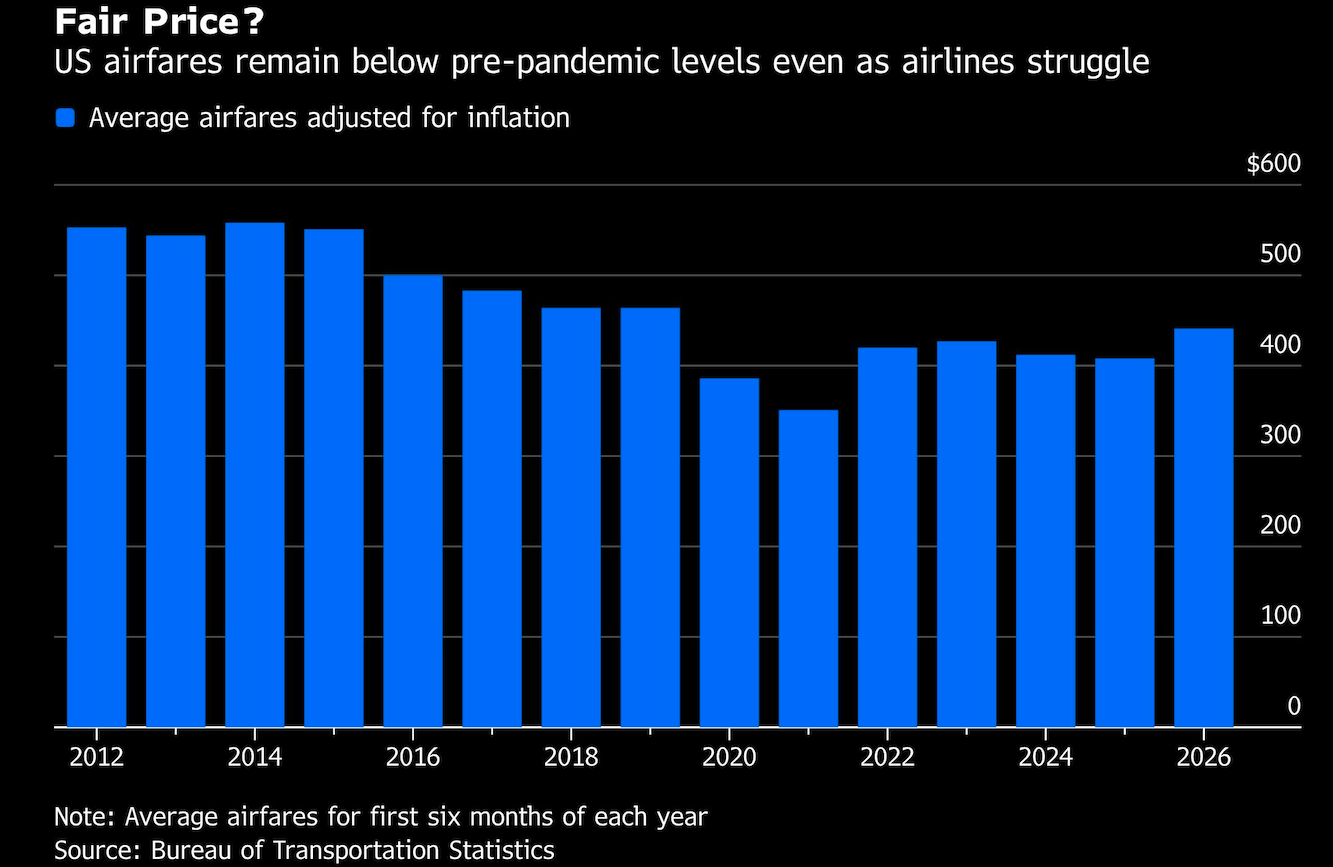
And while average airfares climbed 8% in the first six months of this year to $441, they are still below pre-pandemic levels on an inflation-adjusted basis. Average airfares adjusted for inflation were $483 in 2019 and even higher in prior years. Fuel prices provide an immediate justification to remedy the situation. Jet Fuel in New York averaged $4.62 a gallon in September, more than double the average for the same month last year. US airlines are entirely exposed because they don’t hedge fuel prices, having previously concluded that these typically cost more than just riding out the spikes.
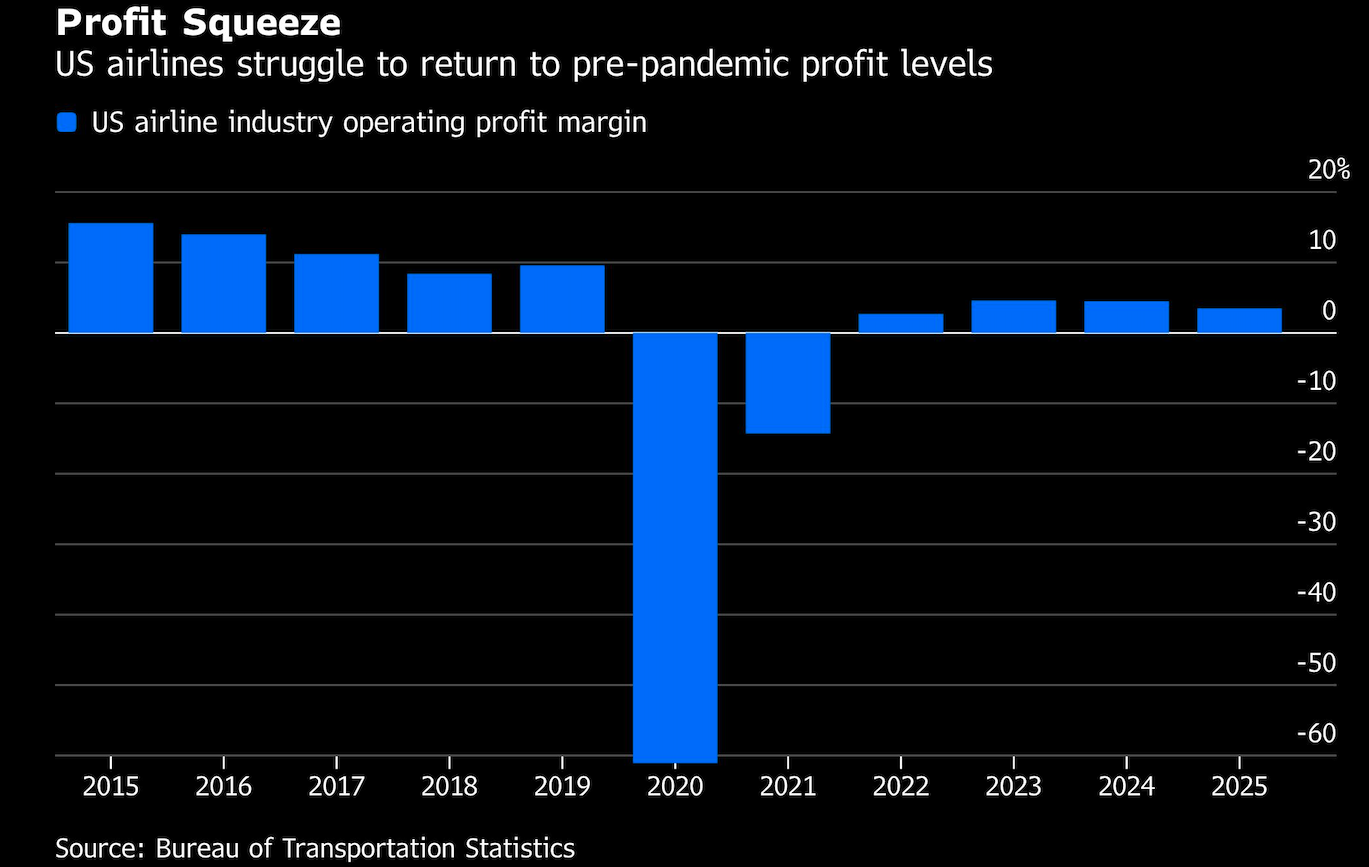
This is not the time for airlines to compete on low fares. Industry-wide operating profit margins had been trending down since 2015 but held at just below 10% in 2019. The pandemic caused losses in both 2020 and 2021, and margins haven’t recovered. Industry operating margins were 3.5% in 2025.
We’re already beginning to see the wreckage this year from high fuel bills that can’t be covered by airfares, which account for roughly three quarters of industry revenue. Spirit Airlines buckled first and stopped operations in May. Creditors of JetBlue are organizing after the airline’s shares and bonds plummeted last week. The carrier, which posted a third-quarter operating loss of $144 million on Monday, had $8.8 billion of long-term debt and lease liabilities and about $1.3 billion of cash.
American Airlines’ increase in fuel costs smothered third-quarter revenue gains as the carrier plays catchup on adopting premium offerings. Frontier Group Holdings Inc., too, is attempting to add premium services such as seats with extra leg room and early boarding to break from its no-frills model. These are the industry’s weak links that could become desperate enough to turn to fare promotions to fill empty seats.
Airline executives have, so far, touted their discipline around adding seat capacity to avoid fare wars during this — hopefully temporary — period of high energy costs. The airlines with solid finances are the ones spearheading the prudence on capacity. Instead of going for the knockout punch against weakened competitors, they are raising prices to shore up profit margins. Delta Air Lines Inc., United Airlines Holdings Inc. and Southwest Airlines Co. all hinted that they will keep capacity in check next year. It only takes one airline seeking to grab market share to puncture the self-restraint.
Southwest showed that premium customers are much more resilient to higher fares. It’s the only US airline so far to post a margin increase on operating profit in the third quarter as it rolls out new amenities such as larger seats, seat selection, high-speed internet, seat power outlets and a revamped loyalty program. The once budget airline is even building airport lounges.
The trend among airlines is to move away from offering the cheapest seats and to enticing flyers to pay more for added services. This premium model is being tested now as fares rise to counter higher fuel prices. If the model holds up, the industry may have finally found a post-deregulation formula that balances profits with demand. That would be a win for everyone.
A message from Advisor Perspectives and VettaFi: Discover something new! Click here to register for our upcoming webcasts.
Bloomberg News provided this article. For more articles like this please visit
bloomberg.com.
Read more articles by Thomas Black