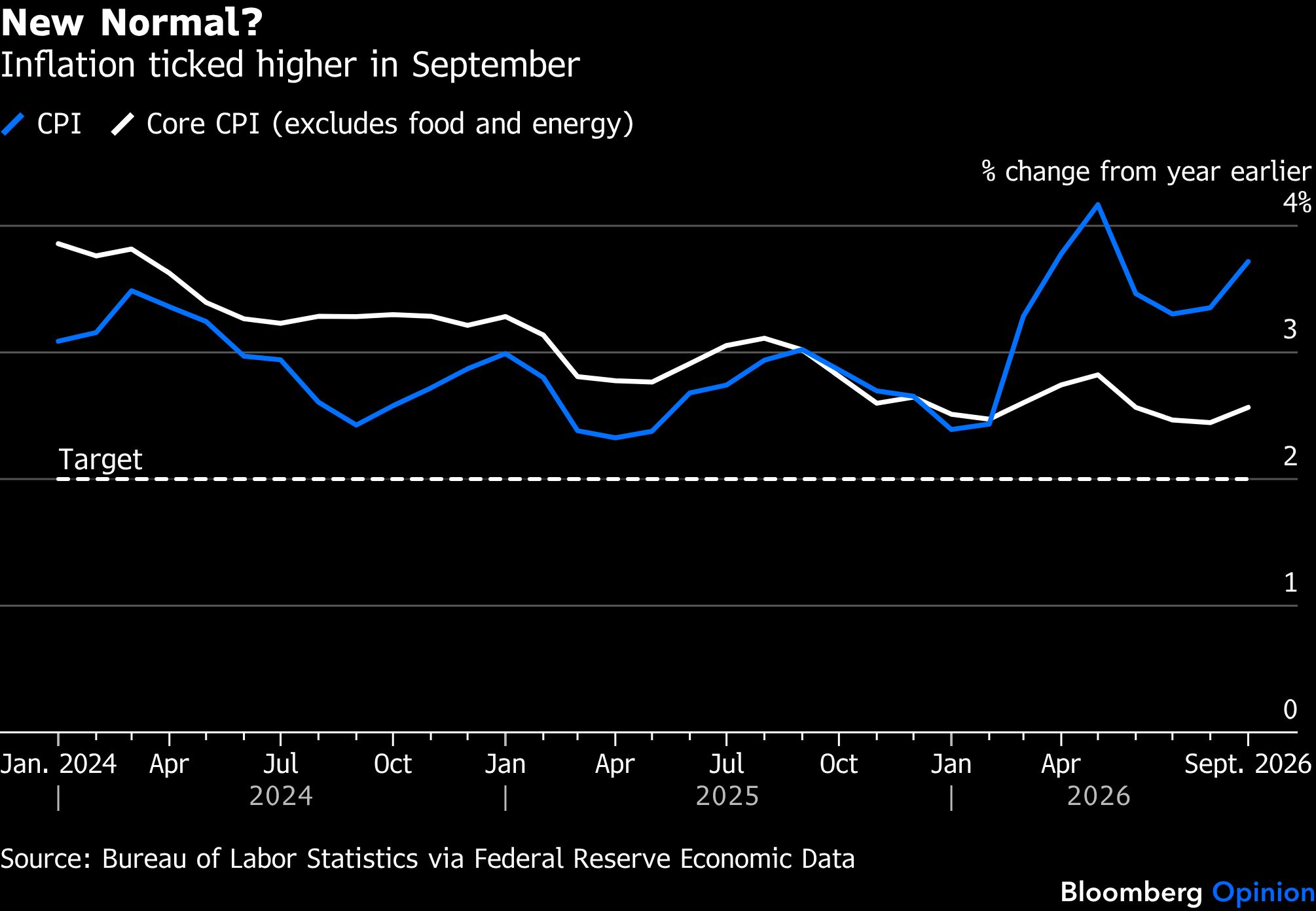
Last week’s surprisingly bad inflation figures pose a dilemma for the Federal Reserve. In recent speeches and interviews, Fed officials suggested they were in no hurry to raise interest rates again and that a pause might be appropriate. But holding the rate now looks harder to justify.
Consumer prices rose in September by 0.6%, the fastest pace in five months, lifting year-over-year inflation to 3.7%, up from 3.4% in August. Excluding volatile food and energy prices, core CPI inflation rose to 2.6% from 2.4%. The Fed gives greater weight to the price index for personal consumption expenditures, a number that won’t be out until Oct. 29, but new figures for wholesale prices suggest that PCE inflation will also come in higher than expected.
See more: Consumer Price Index: Inflation at 3.7% in September

The data show that elevated energy costs, due mainly to the conflict with Iran, are feeding through to transportation prices. Wholesalers are evidently restoring their profit margins, squeezed by tariffs as well as fuel prices, by passing along more of their increased costs. And inflation in services, running at 3.2% in the year to September, suggests the problem isn’t confined to the sectors most affected by tariffs or the war.
Granted, it’s unwise to read too much into a single month’s data, but these are indications that excess inflation — still well above the Fed’s 2% target — might persist without further monetary tightening. Underlining that concern, market-based measures of long-term expected inflation are inching higher.
No doubt, Chairman Kevin Warsh and his colleagues would prefer not to provoke the White House with another hike at their next meeting on Oct. 27-28, just days before the midterm elections. In comments last week, Warsh conspicuously failed to say that the balance of risks had tilted in favor of an increase this month. Investors remain confident of another hike before the end of the year but promptly dialed down their expectations of an immediate quarter-point increase.
To be sure, political prudence isn’t the only reason to wait until the following meeting in December before raising the policy rate. Warsh is known to pay close attention to the breadth of price increases across the full range of goods and services, regarding this as a good measure of likely persistence. In September, it declined — a good sign. There’s still reason to think that the tariff and energy-price shocks will fade over the coming months. And, for the moment, the recent rise in bond yields serves to tighten financial conditions and restrain demand even if the federal funds rate stays put until December.
With all that said, the balance of risks has indeed shifted — and Warsh and his colleagues need to be frank about that. As things stand, the policy rate is failing to restrict demand enough to bring inflation back to target. If the next few weeks of data don’t change that assessment, higher interest rates will be necessary — and one more quarter-point hike might not be enough.
A message from Advisor Perspectives and VettaFi: Discover something new! Click here to register for our upcoming webcasts.
Bloomberg News provided this article. For more articles like this please visit
bloomberg.com.
More ETF Topics >