JPMorgan Asset Management has included Bitcoin in its long-term capital market assumptions for the first time, forecasting returns that could beat stocks, bonds and gold in a milestone for its Wall Street acceptance.
But there’s a catch: Bitcoin’s extreme volatility threatens to undermine its appeal on a risk-adjusted basis.
JPMorgan’s base case projects annualized returns of 10% over the next decade, but also assumes annual volatility of 55%, more than three times that of US large-cap stocks. The firm stops short of incorporating Bitcoin into its main portfolio models, it said in a report this week, citing its unstable correlations with other assets.
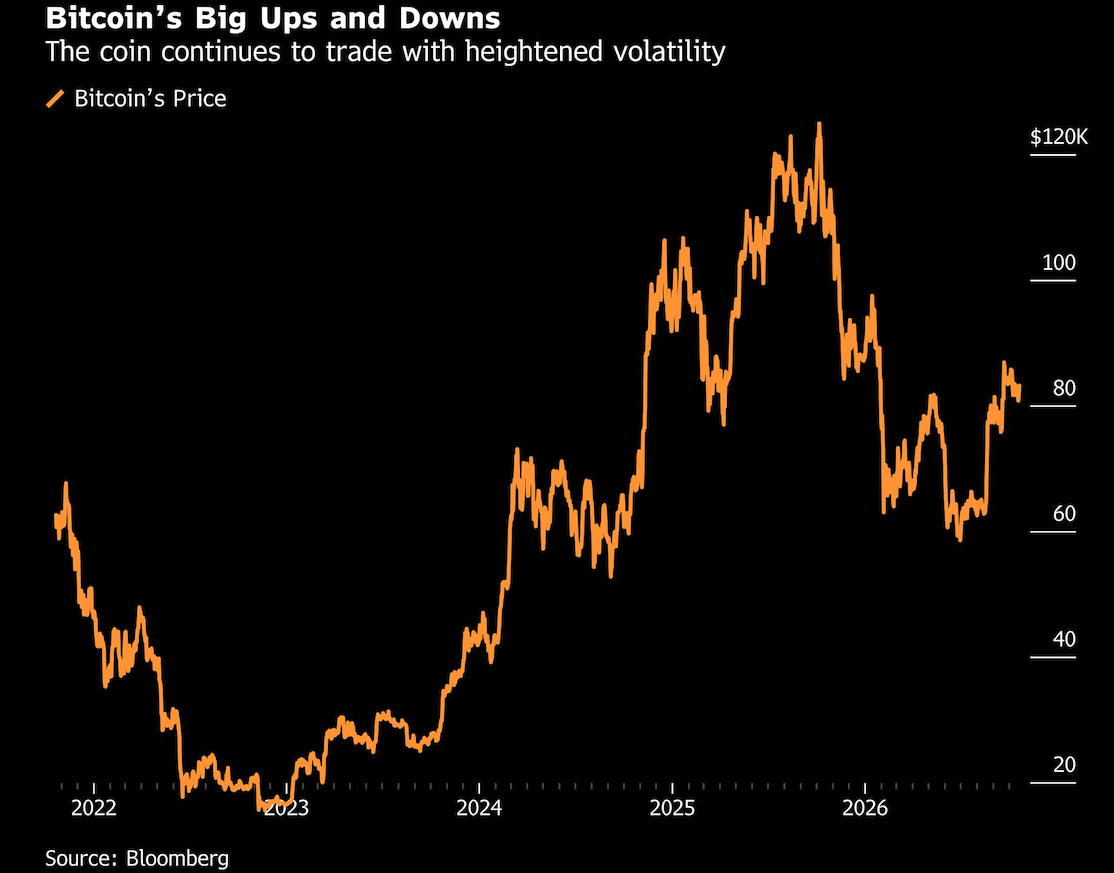
Such volatility can eat into compounded returns as steep losses require even larger gains to recover. That’s a risk familiar to Bitcoin ETF investors who bought near the cryptocurrency’s peak of just over $126,000 in 2025, only to see their holdings lose as much as 50% as prices retreated.

See more: Wealth Taxes Are Driving Money Out of China and California
“We believe it is premature to consider BTC as a diversifier in a balanced portfolio,” the JPMorgan team including Tim Lintern, Thushka Maharaj and Sean Daly wrote. “But should volatility continue to decline and correlations to other asset stabilize, this may evolve in the future, particularly as regulation becomes clearer and liquidity and price discovery continue to improve.”
Since the pandemic, various Wall Street firms have been making more earnest inroads into the world of cryptocurrencies, shifting from cautious inquiry to more meaningful experimentation that’s included making the trading of certain coins available for clients, putting out crypto-focused funds and dabbling with tokenization, among other things.
The JPMorgan analysts say that even as many investors see Bitcoin as a speculative asset, they’re still exploring cryptocurrencies — a tenth of clients recently surveyed said their portfolios held crypto, and roughly 17% said they planned to “prioritize crypto.” That’s thanks, in part, to a regulatory framework that has become more developed and better defined.
Still, Bitcoin right now doesn’t cut it as a diversifier in balance portfolios due to its “unstable correlations” to other assets, the bank’s researchers said. “If correlations stabilize and volatility declines, BTC’s portfolio utility may improve in the future,” they wrote.
More broadly, the researchers in their note explored how “economic nationalism, technology adoption and capital rewiring” could drive asset returns over the next decade or so, coming to the conclusion that governments will invest in “national resiliency,” firms will race to deploy new innovations and those factors will impact how capital gets deployed. A $15 trillion “global capex supernova” will fuel growth and strong asset returns over the period, they said.
“Technology adoption today is synonymous with artificial intelligence, but breakthroughs in other areas, from medicine to robotics to space, will likely advance in the next decade, further supporting trend growth via investment and productivity,” the report stated.
A message from Advisor Perspectives and VettaFi: Discover something new! Click here to register for our upcoming webcasts.
Bloomberg News provided this article. For more articles like this please visit
bloomberg.com.
More Innovative ETFs Topics >