The rush for the exits by wealthy investors in private credit funds is far from done. But even as the rich run away from direct lending, they aren’t abandoning alternative assets. Instead, they look to be chasing the next hot thing: infrastructure finance.
The temptation is understandable. Hard assets hold appeal when inflation is rising, and not even the threat of human extinction is slowing demand for data centers. But investors don’t seem to be learning the lesson that they might have taken from their recent experience with private credit: You can’t get out of illiquid assets easily. With infrastructure, investors could be setting themselves up to fall into the same trap again.

The demands to pull cash from direct lending funds started late last year and gathered pace in the first months of 2026. They were driven by fears about how artificial intelligence tools would undermine software businesses and other highly indebted companies owned by private equity. On top of that, expectations that US interest rates would fall made investing in loans that pay floating-rate interest look like a poor bet.
A string of managers saw redemption requests jump sharply when clients got the chance to ask for their money back, which is usually once each quarter. That’s when the managers started capping withdrawals to avoid selling assets or borrowing money to make payouts. On Tuesday, Apollo Global Management Inc. became the latest firm to limit third-quarter payouts from its specialist fund that allows withdrawals, following similar actions this month by BlackRock Inc., Blackstone Inc. and Cliffwater LLC.
See more: Investing After a Liquidity Event
Fund managers had turned to the world’s rich as a new source of money to keep their funds (and fees) growing in recent years. Much of the money was raised in a special unlisted type of vehicle known as a Business Development Company, which will typically promise to meet withdrawal requests for up to 5% of their assets. However, clients have demanded much more several times this year.
Investors in Apollo Debt Solutions BDC asked for nearly 15% of their cash back in the most recent period, the third successive quarter where demands have exceeded the 5% quota. At BlackRock’s HPS Corporate Lending Fund, investors requested nearly 12% back, while the Blackstone Private Credit Fund got demands for 10% of clients’ assets. The most troubled funds from closely watched manager Blue Owl Capital Inc. aren’t due to report their withdrawals until next month. They previously saw demands for about 20% to almost 40% of assets in the past two quarters.
The silver lining for those that have reported lately is that total redemption requests are trending down from earlier periods, but not by as much as was paid out in the previous quarter. That shows investors are not changing their minds and getting out of the queue for cash, and also that others are still joining it.
Across the biggest BDCs, withdrawal demands amounted to 8.8% of investors’ assets among those that have reported for the third quarter, which is down slightly from 9.7% in the second quarter, according to Robert A Stanger & Co. Just over half the existing requests have been met so far, the investment bank calculates.
It’s similar to the lines of frustrated investors that previously formed at real estate funds, according to Michael Covello, executive managing director at Stanger. He reckons private credit redemption requests have peaked, but they will take some time to clear. “In three to four quarters from now, the queue will fall away,” he told me.
In some ways, it is surprising that at least some investors aren’t reversing course on direct lending. The panic that almost all business software will be made obsolete by AI has abated as investors have reassessed both the defenses inherent in some of those companies and the speed with which users are adopting AI at all. There are still plenty of overvalued and overindebted companies that look likely to hit trouble, and BDCs have had to mark down the value of some of their loans, but defaults aren’t rising more sharply than in a normal credit cycle.
At the same time, the expectation that falling interest rates would reduce returns for private credit lending have also evaporated as the US war against Iran has stoked energy inflation and the data center investment boom is lifting economic growth and yields on government bonds.
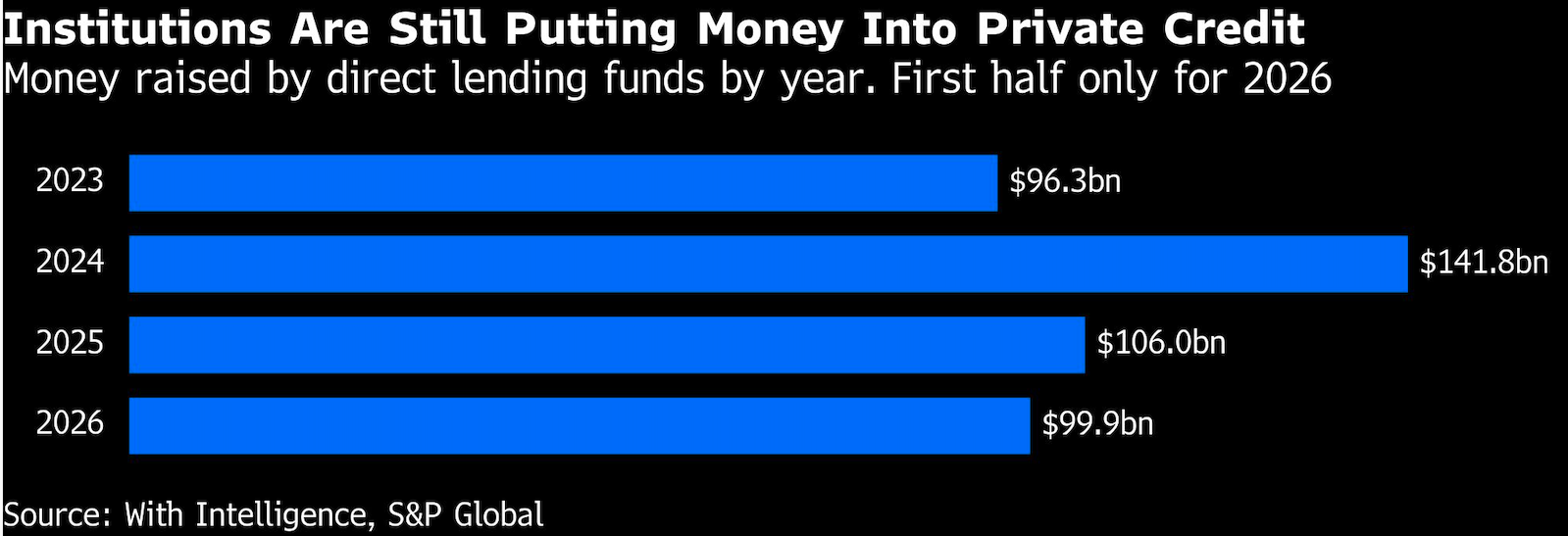
The fears driving demands by individuals to cash out and the growing competition for financing have increased the yields available on private credit and encouraged pensions, insurers and other big investors to put more money into direct lending funds — run by many of the same managers who are losing assets from BDCs. The $90 billion of new money raised in the first half of this year nearly matches the $106 billion raised in all of 2025, according to data from S&P Global’s With Intelligence, a research firm.
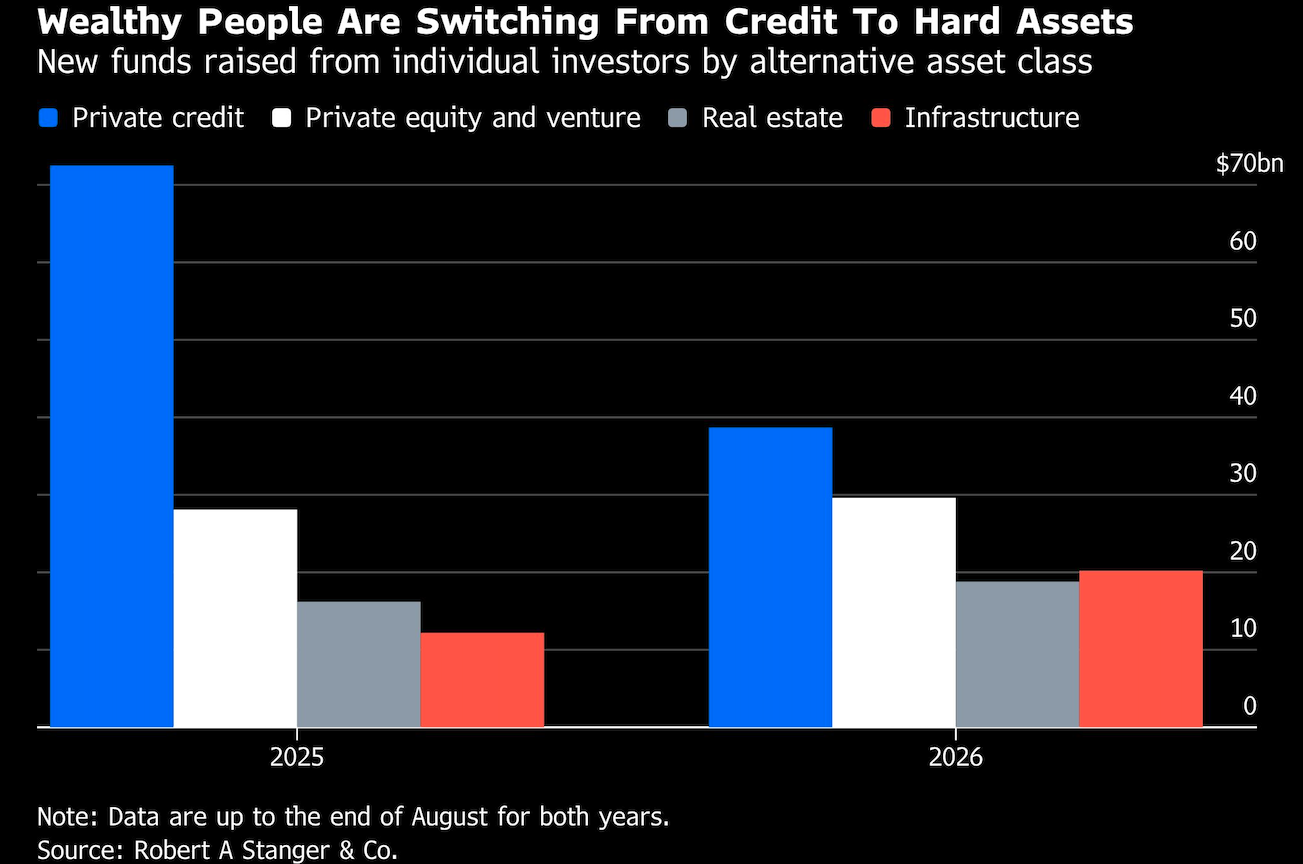
While rich people are still putting some money into private credit, the $39 billion invested by the end of August is down nearly 50% on the same period last year, according to Stanger. But alternative asset managers are still raising plenty of money from the wealthy, Covello told me. It is instead just going into hard assets like property and especially infrastructure, where this year’s inflows are up 65% on last year.
Some managers are promoting funds focused on the booming demand for AI-related server farms. Blue Owl is planning a real estate fund for data centers, which would be publicly listed like the Blackstone Digital Infrastructure Trust. Having traded shares will make it easier to get out, but the assets themselves will still be very illiquid — so if there is another rush for the exits, the cost to leave will come as a hefty discount to the fund’s reported value. But any unlisted funds would throw up the same kind of gates that have frustrated investors in credit.
Once bitten in alternative assets turns out not to mean twice shy.
A message from Advisor Perspectives and VettaFi: Discover something new! Click here to register for our upcoming webcasts.
Bloomberg News provided this article. For more articles like this please visit
bloomberg.com.
Read more articles by Paul J. Davies