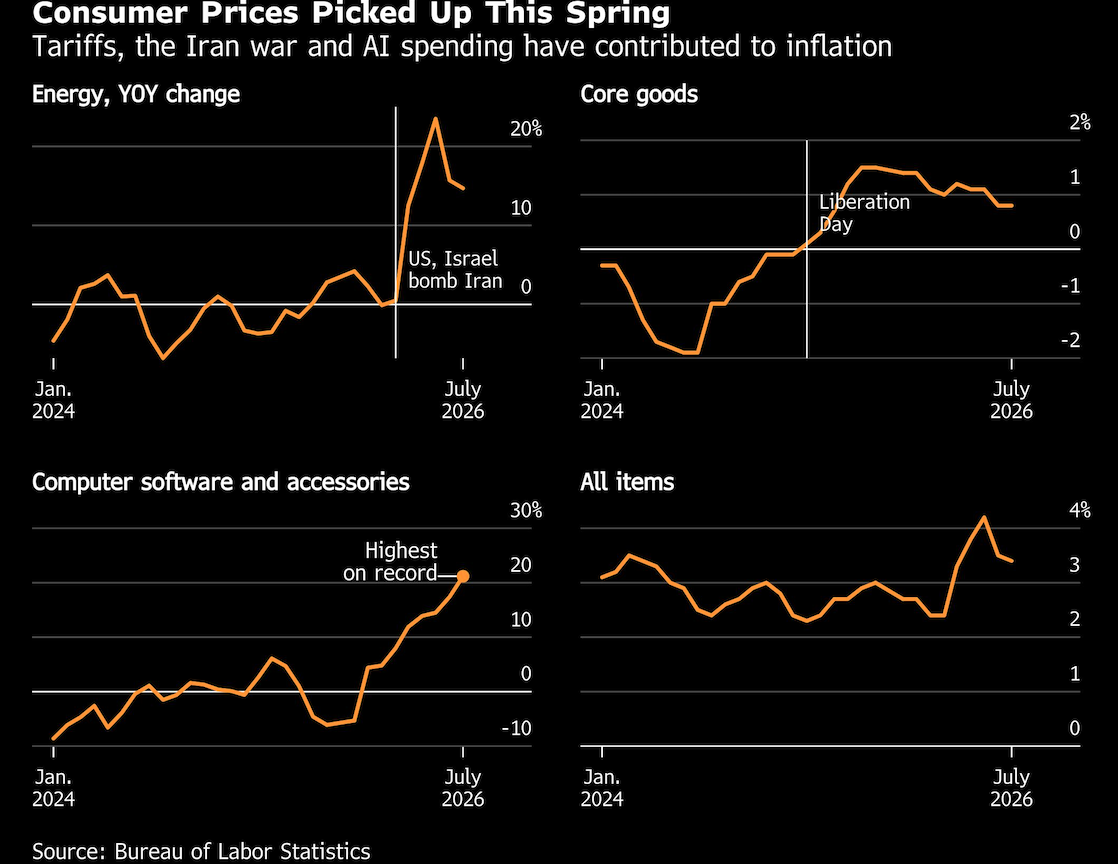
Federal Reserve officials have signaled they’re prepared to raise interest rates if inflation doesn’t improve soon, but they may find their main policy tool will do little to restrain some of the forces pushing up prices now.
The consumer price index report due Friday is poised to determine whether policymakers will lift rates next week, with officials emphasizing they need reassurance underlying inflation is on track to reach the Fed’s 2% goal. Investors are pricing in about 60% odds of a rate hike at the Sept. 15-16 gathering, according to futures contracts.
“The key drivers of above-trend inflation are the Iran war, tariffs, and the chip shortage. If the Fed hikes one to two times, that is unlikely to change the backdrop one way or the other,” said Stephanie Roth, chief economist at Wolfe Research.

Two big drivers of inflation this year — tariffs and energy prices — tend not to be especially rate sensitive. A third, the AI buildout, doesn’t appear to be either given the billions of dollars in investment flowing into the space. Meantime, worries about persistent inflation and ballooning government debt have already pushed borrowing costs higher for American households.
The CPI report for August is expected to show that headline inflation rose 0.4% and core inflation rose 0.2% from the prior month, according to the median forecast in a Bloomberg survey of economists.
Fed officials have been sending mixed signals ahead of the data, with some saying it is time to raise rates while others are hopeful price pressures are abating.
Here’s a look at the sources of inflation and what a rate hike would mean for the broader economy.
See more: If Inflation Is the Problem, Why Aren't Wages?
Supply Shocks
Central banks typically raise interest rates to increase borrowing costs, reduce overall demand and restrain inflation. But higher rates aren’t well equipped to address the series of recent supply shocks that have raised prices and reignited inflationary pressures.
The start of the Iran war in February sent global oil prices above $100 a barrel, raising fuel costs and sending headline inflation higher. Elevated energy prices are one reason the overall August CPI is expected to pickup from a month earlier.
Trade policy created another shock by raising the cost of overseas goods and curtailing their supply. President Donald Trump in April 2025 announced sweeping tariffs, one of several moves to set up trade barriers that have evolved amid a series of court challenges and ongoing negotiations with other nations.
Many Fed officials think the brunt of that impact has already passed, though they are watchful for evidence the price pressures are becoming more broad based — a development that could increase the need for rate hikes.
“The evidence is that the price effects of tariffs have largely passed through inflation, and my earlier worry that higher energy prices would bleed into many goods and services prices hasn’t come to pass, at least so far,” Fed Governor Christopher Waller said.
Artificial Intelligence and Construction
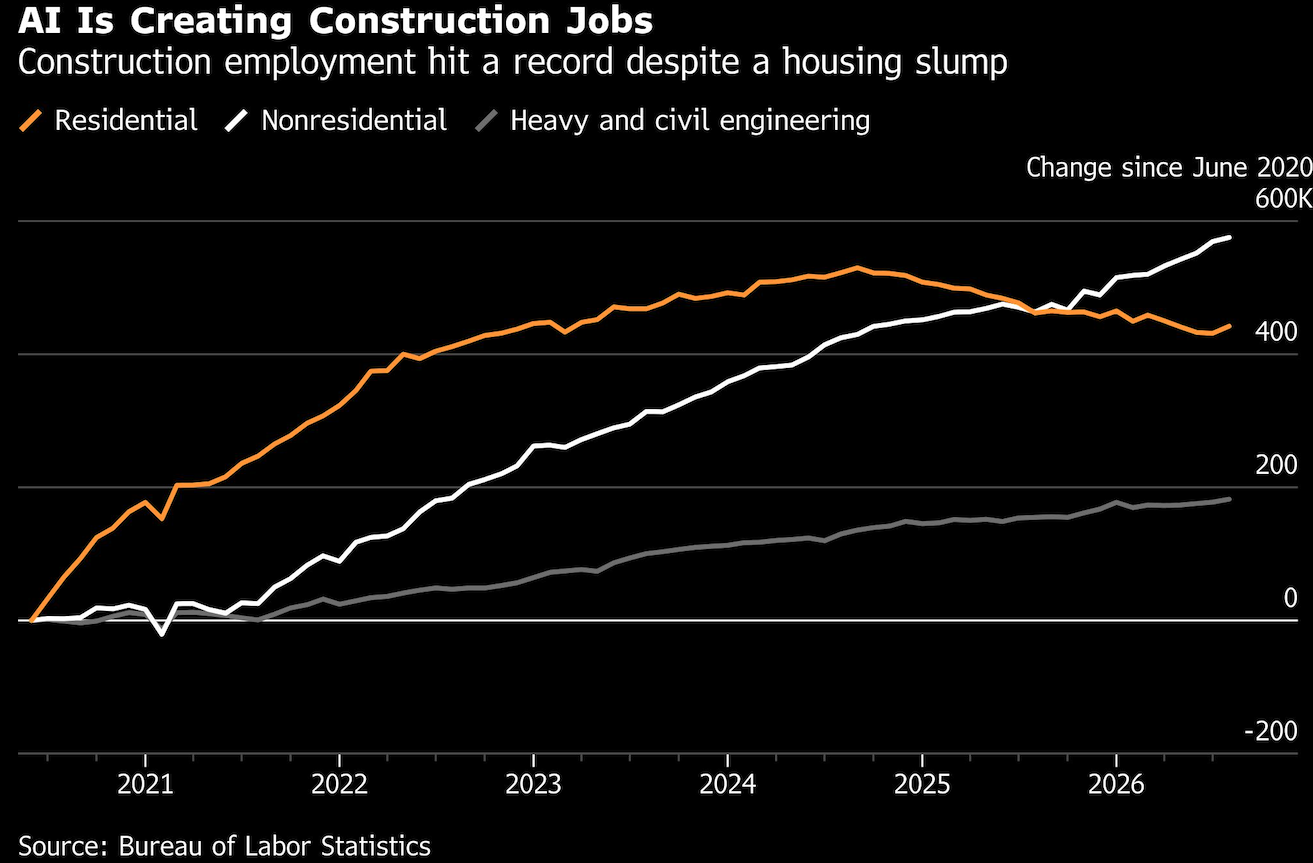
Elevated interest rates are weighing on the housing market, but they’re doing little to curb the boom in demand for data centers and key components.
Residential construction employment has been trending lower since September 2024 as high rates and lofty home prices hit sales. But overall construction employment hit a record in August as nonresidential specialty hiring and engineering construction picked up — likely reflecting AI.
Announcements of capital investment, or capex, into data centers continues to soar, potentially totaling $5.5 trillion by 2030, according to JPMorgan Chase & Co.
That AI shock absorber is complicating the Fed’s job, economists at Barclays Plc said, by blocking one traditional mechanism for monetary policy: a housing slowdown that triggers construction industry layoffs and ripples through the economy. Back in 2022, home sales nosedived as the Fed raised interest rates. They’ve been hovering at subdued levels since.
“The economy is much less sensitive to rates than it has been in past cycles,” said Ajay Rajadhyaksha, global chairman of research at Barclays.
Analysis by Barclays found that hyperscalers are spending over 90% of their cash flow from operations on AI infrastructure. “They are unlikely to reconsider their spending plans because the cost of financing a data center has risen by 50-75 basis points,” Rajadhyaksha and chief US economist Marc Giannoni wrote in a note.
Consumer Spending and Borrowing
With many of the recent inflationary drivers showing potentially limited effects from higher rates, Fed officials may have to put more pressure on a component of the economy that is more immediately affected by higher borrowing costs: the consumer.
Households are already feeling the strain as markets push borrowing costs higher even without the Fed raising rates. Yields on 10-year Treasuries climbed on Wednesday to their highest level since 2023. At the same time, mortgage rates last week hit a more than one-year high.
At a time when real incomes are flat, a rate increase could “put downward pressure on discretionary purchases, which will marginally slow growth,” said Christopher Hodge, chief US economist at Natixis.
To be clear, the Fed has a mandate to support jobs and control inflation. With unemployment remaining low, there’s pressure on officials to act on the inflation front, said Hodge, but getting that judgment right is a close call.
“The onus is on the inflation data to impress,” he said. “Anything short of another clear signal of progress being made will prompt a hike next week.”
A message from Advisor Perspectives and VettaFi: Discover something new! Click here to register for our upcoming webcasts.
Bloomberg News provided this article. For more articles like this please visit
bloomberg.com.
Read more articles by Jeffrey Sparshott, Enda Curran