Wall Street dealers were already bracing for a potential record in September for high-grade US corporate bond sales, and recent surging yields may give the blue-chip companies even more reason to borrow now before funding costs rise further.
Average yields for US high-grade notes are above 5.5%, hitting levels not seen in more than two years. Higher yields and future heavy tech-sector issuance may spur companies to lock in current borrowing costs now, according to Tom Murphy, head of investment-grade credit at Columbia Threadneedle Investments.
“Boy, if I was a CFO or treasurer and had something to do in 2027, I’d probably pull it forward into 2026,” Murphy said.
See more: Rethinking High Yield: Why Old Anchors May Be Holding Investors Back
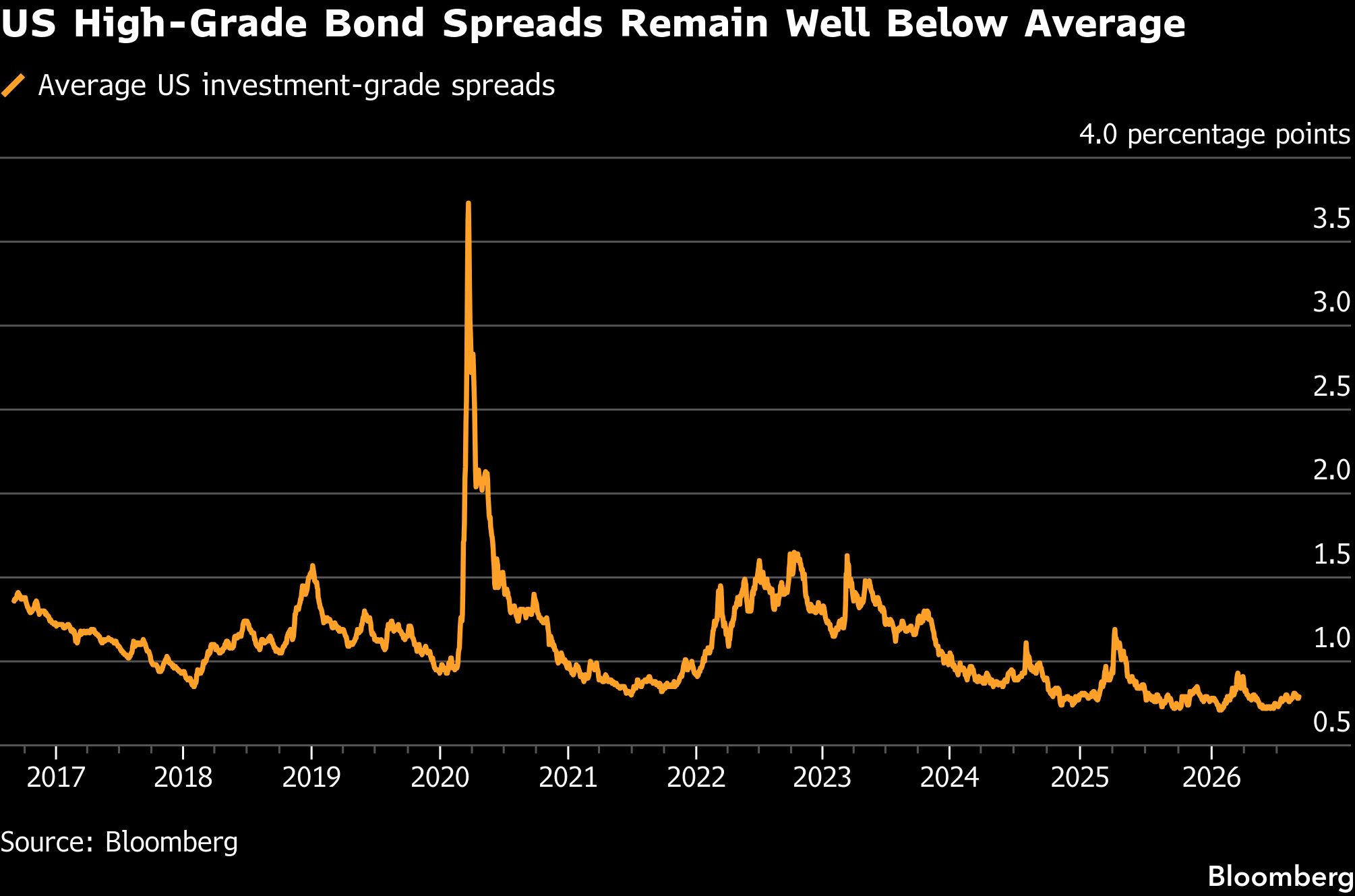
The risk of waiting is that government bond yields will keep rising, and corporate debt will weaken relative to Treasuries, pushing borrowing costs for companies even higher. Spreads for corporate bonds are still at relatively low levels, hovering below 0.8 percentage point for much of this week on average, according to a Bloomberg index.
“Despite higher interest rates, it’s almost like a ‘the devil you know’ type of situation where you’d rather issue now with credit spreads still relatively tight than wait, risking that more supply later in the year could impact valuations,” said Moshe Tomkiewicz, head of investment-grade debt capital markets at Mizuho Americas.

Dealers had forecasted about $215 billion of US high-grade bond sales for September, according to an informal poll by Bloomberg News. The month’s record was set last year at $207.5 billion. There are some Wall Street predictions, though, for issuance to potentially reach $250 billion.
Investment-grade supply has set records in half of 2026’s eight months, including the past three, and volume is tracking 7.6% above 2020 levels. Then, pandemic-fueled issuance reached about $1.75 billion for the year, an annual record.
Global sales of publicly syndicated bonds have been at a record pace throughout. Helping fuel US primary markets has been technology companies raising funds for investments in artificial intelligence. Such volume is liable to just keep rising given the tens of trillions of dollars in AI-related spending that is projected.
Meanwhile, what’s often a seasonally quiet period for debt markets has been uncharacteristically active the past few weeks as global bond yields reached levels not seen since 2008.
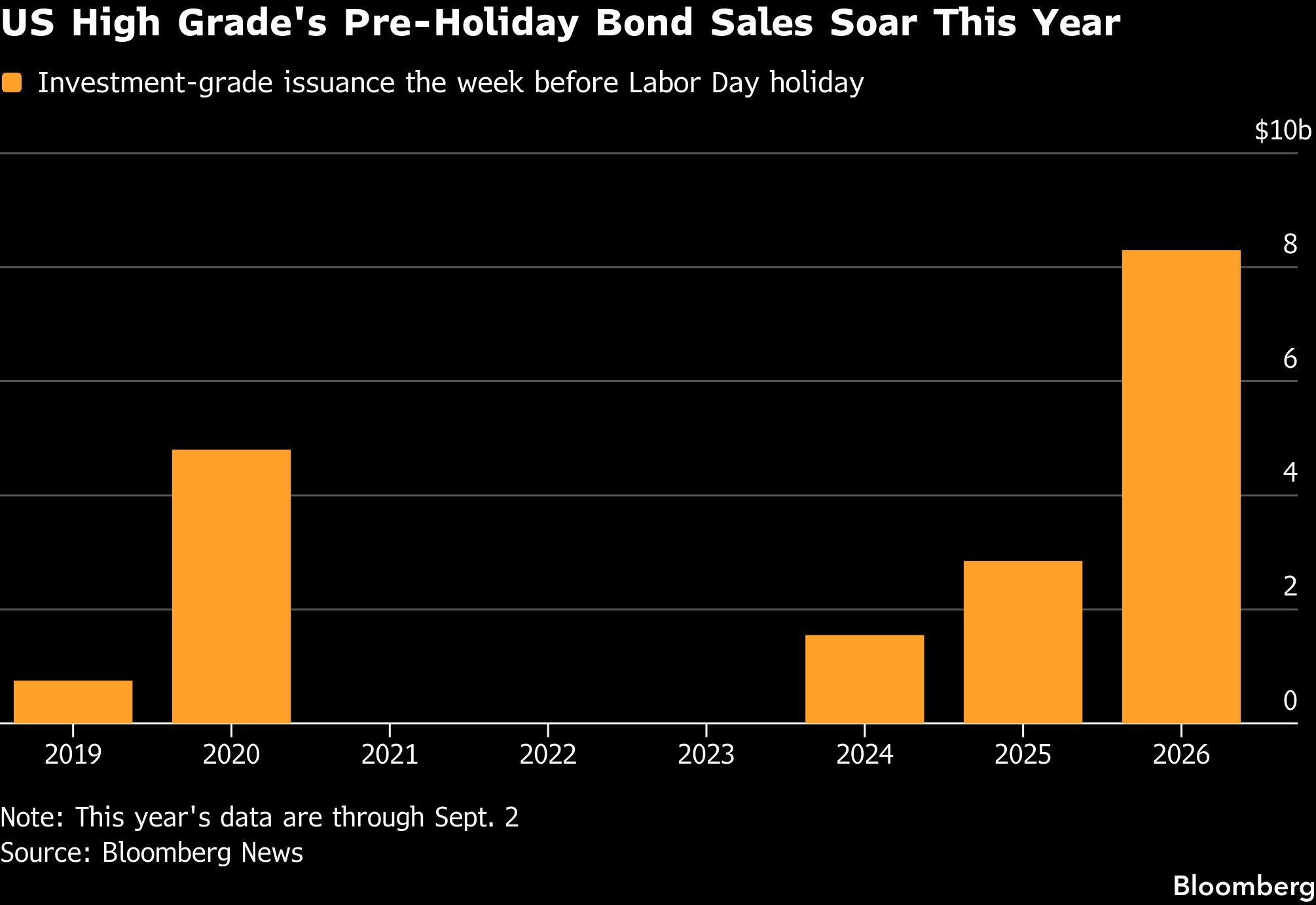
This is the third consecutive week that sales in Europe have topped €40 billion ($46 billion), after mid-August kicked off with the busiest-ever restart following the summer lull there. Meanwhile, US high-grade sales at $8.3 billion through Wednesday are the highest for the week before the Labor Day holiday since at least 2019.
The flip side of heavy supply, however, is that investor appetites showed signs of fading last month.
“We think caution and discipline in terms of being selective and demanding proper compensation are warranted, especially in the near term, as we manage and navigate through this historic wave of debt issuance,” said Lesya Paisley, a portfolio manager on the global fixed income team at MacKay Shields.
Not everyone on Wall Street is convinced that this month will see heavy bond sales. Bank of America Corp. strategists Yuri Seliger and Sohyun Marie Lee wrote this week that many big tech companies may sit out September after jumbo-sized deals in recent months.
They forecast about $190 billion of high-grade issuance overall, but even at that level sales would be the month’s second-most ever.
Research firm CreditSights said in a recent note that some buyers could eventually run up against concentration limits in their portfolios. Investment-grade investors typically allow their money managers to keep as much as 3% to 5% of assets in a single company’s bonds.
Hyperscalers including Alphabet Inc. and Amazon.com Inc. individually consist of much less than 3% of the Bloomberg US high-grade corporate bond index despite their issuance this year.
A message from Advisor Perspectives and VettaFi: Discover something new! Click here to register for our upcoming webcasts.
Bloomberg News provided this article. For more articles like this please visit
bloomberg.com.
Read more articles by Davide Barbuscia