Americans like to spend money, and they’re good at it. But they also feel kind of bad about it.
According to a survey from Ally Bank, three-quarters of Americans feel guilty when they spend money on something that brings them joy rather than putting it toward a long-term financial goal. I can confirm this feeling, especially after seeing my credit card statement after my last vacation. At the same time, the survey also notes that almost 70% say they spend “the right amount on joy.” Clearly guilt is part of the joy, which says something about the religious nature of American society that is beyond the scope of economics.
Still, as an economist who specializes in retirement saving, I try never to lose sight of what the purpose of saving is — and it’s not necessarily delayed gratification. The goal is to spread joy evenly across your life. Since earnings increase over time, in theory you should spend wildly and go into debt when you are young, save lots when you are in middle age and earnings peak, and then spend down your savings when you retire. Through it all, you should spend roughly the same amount on what brings you joy. Sure, maybe you skip a few nights out in anticipation of future joy — a trip to Tahiti, say, or a kitchen renovation.
See more: How Might Declining Population Affect Your Social Security?
But the rub here is risk. What if you stop working for a few years in middle age? Or the stock market crashes just before you retire? That is where economics comes in. It says that you should spread the joy around, and it assumes that experiencing a big drop in your living standards is worse than never having any joy at all. So economists like me tend to advise people to have precautionary savings — enough to smooth out the uncertainties in life — or to spend less when you’re young and more as you get older, so you never have to experience a drop in living standards.
Whether your spending is truly excessive and worthy of guilt depends on your financial circumstances, and your preferences for joy today vs. joy tomorrow. Ally Bank, based on its survey and what it is calling the “Joy Index,” argues that Americans can afford to spend more on joyful things. But the data suggest they already are.
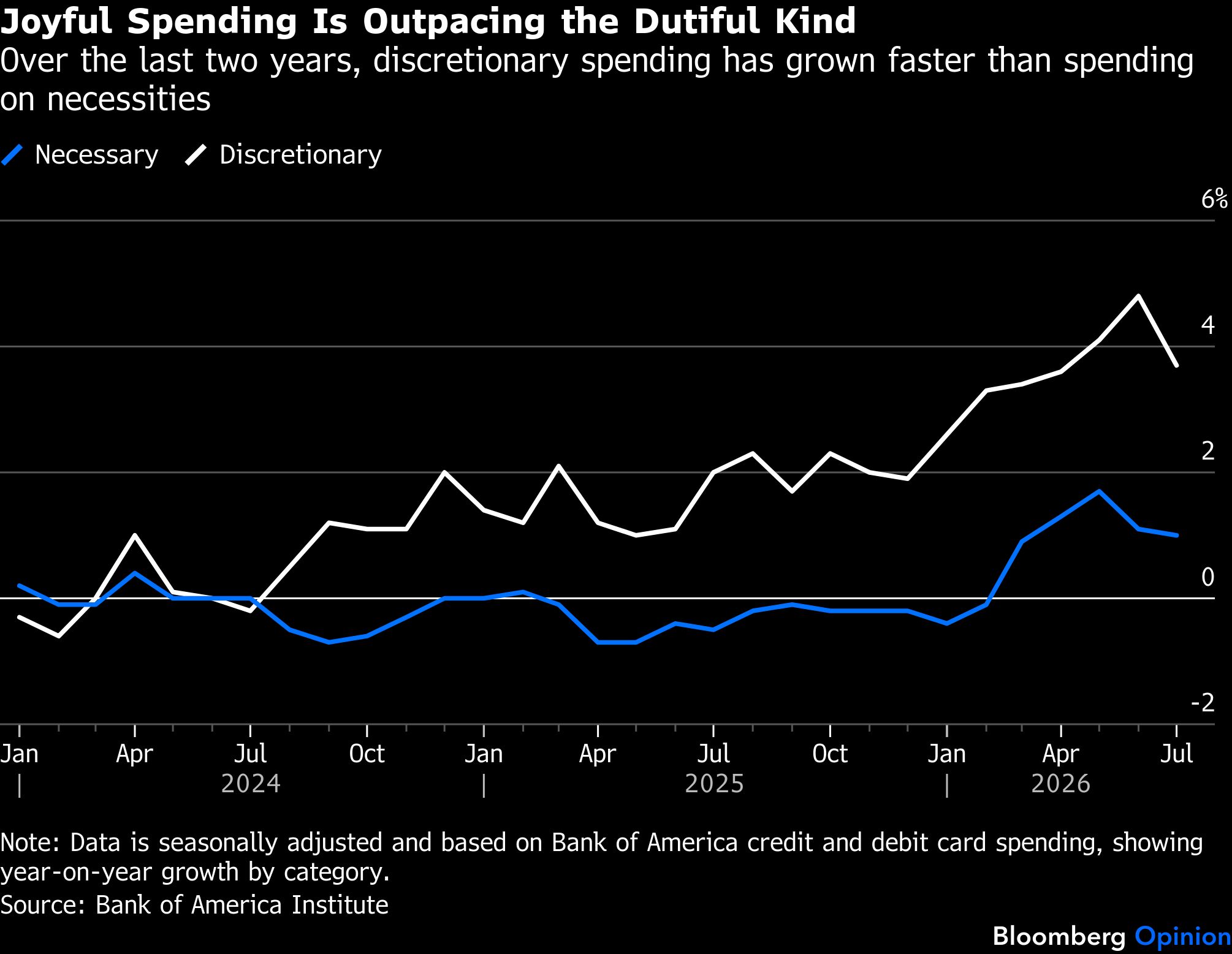
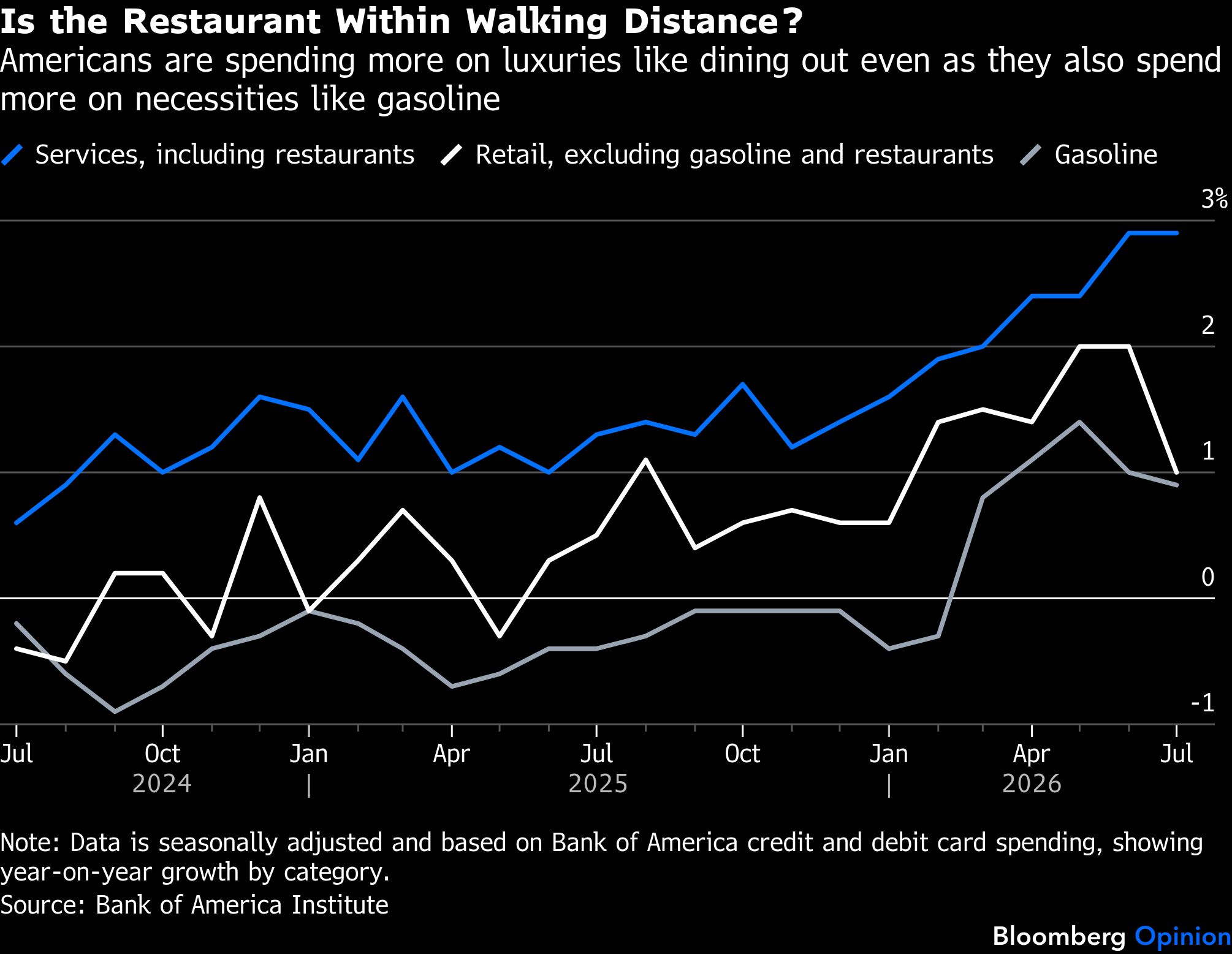
The Bank of America Institute tracks spending on the bank’s credit cards. It estimates a 6% increase in spending in June. Some of it was on necessary things such as gas, but more than 4% was driven by more discretionary purchases, such as leisure travel, clothes and electronics.

Some of the largest increases came from spending on leisure travel and restaurants. The institute also estimates that discretionary spending has increased in the last year across all income groups — but especially for the top 5% of high earners.
The good news is that the number of people who pay off their credit card balances each month has increased across all income groups. (Though there was also a slight increase in the number that pay only their minimum balance, especially among lower-income groups.) The New York Federal Reserve also finds an increase in delinquencies and rising credit card debt. The bottom line is that there are some people at all income levels risking financial trouble.
As the US becomes more prosperous, it’s natural to expect more discretionary spending, especially among the growing upper-middle class. Eating in a restaurant was once a rare luxury, now it is a standard component of household consumption. The next time you feel tempted to shame someone for spending $20 on a restaurant burrito, remember that it’s better than spreading a can of beans on a tortilla at home.
I am not one to judge (so says that credit card statement), but to me the question raised by the so-called Joy Index is this: Are Americans spending too much on joy today at the expense of joy tomorrow?
In my expert opinion, the amount of guilt you should feel about any given purchase is correlated to your financial capacity to manage risk if circumstances change. To some extent, Americans are better protected than they used to be; a lot of wealth may be in the stock market or real estate, but net worth has increased in the last five years, especially for the middle class. This may be driving more joyful, guilt-tinged spending.
Personal finance is not just about spending vs. saving. It is about risk management. And this is where there is some cause for concern: Much of the increase in wealth comes from increased retirement savings, which is a good long-term goal, and much of those savings are invested in the stock market. Some evidence suggests that this investment comes at the expense of more liquid assets. All of which means that, if the stock market falls and people need cash, they may experience that dreaded drop in living standards — and a lot more guilt, and a lot less joy.
A message from Advisor Perspectives and VettaFi: Discover something new! Click here to register for our upcoming webcasts.
Bloomberg News provided this article. For more articles like this please visit
bloomberg.com.
Read more articles by Allison Schrager