Politicians all over the world are showing renewed enthusiasm for public ownership of private companies. The methods range from modest government stakes to outright nationalization, but the trend is apparent. Whether driven by concerns about supply-chain resilience, national security, deindustrialization or “profiteering” — often all of the above — the state is taking on a bigger economic role. It’s unlikely to end well.
History shows that public ownership — the most heavy-handed intervention — is almost always a mistake. The stated goals of such takeovers might sometimes be legitimate, but market-friendly, arms-length regulation is a much more reliable way of achieving them. Successive waves of public ownership have typically been followed by disappointment and, in due course, reversal. Evidently this lesson will have to be learned yet again.
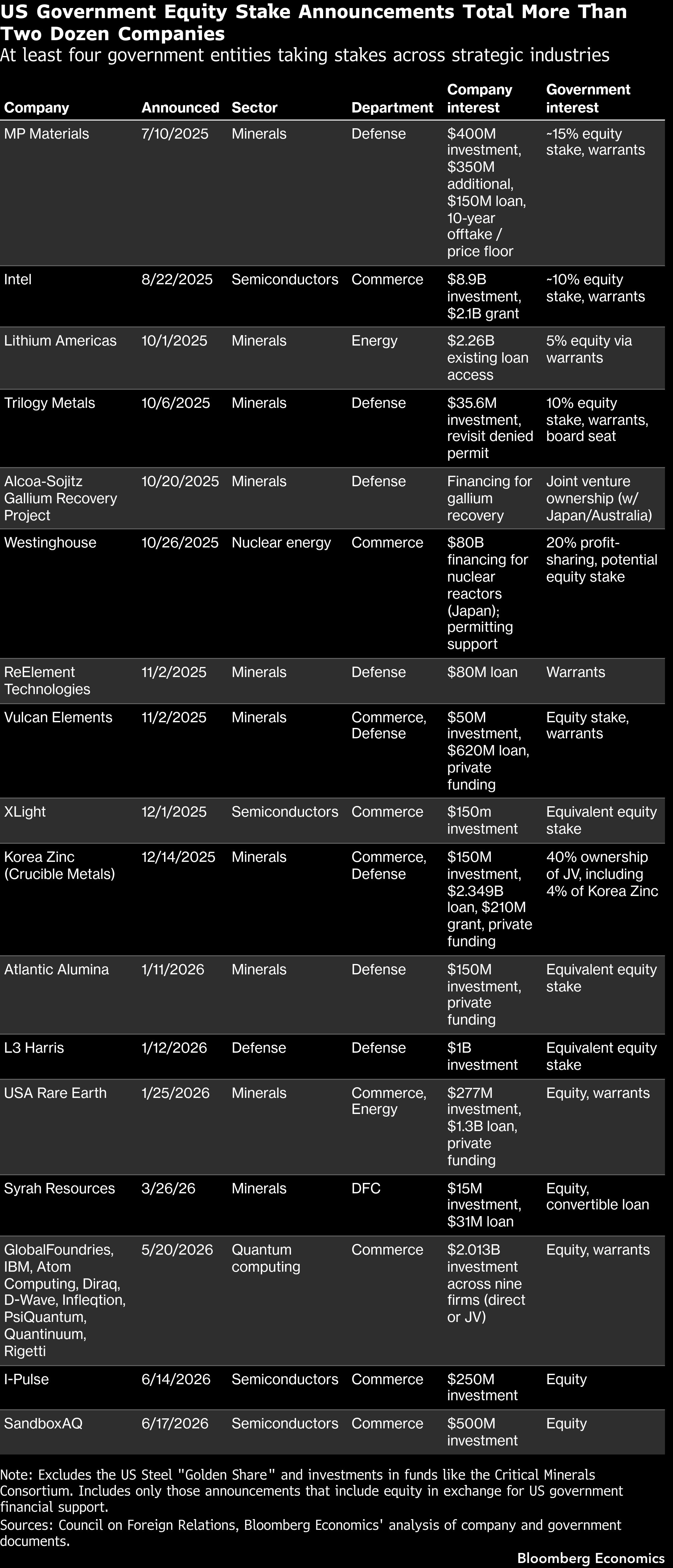
The US government has lately taken equity stakes in dozens of companies, in sectors ranging from critical minerals to semiconductors. New UK Prime Minister Andy Burnham wants to bring previously privatized utilities (water, electricity, transportation) back under public control. Unfortunately, the trend is global: Assets worth as much as half a trillion dollars have been nationalized in the past decade.

Officials offer numerous justifications for these intrusions. The Covid-19 pandemic exposed the risks of relying on foreign supplies of essential goods and materials. In the US and Europe, populists blame trade-induced deindustrialization for pressure on living standards. Complaints about supposedly monopolistic suppliers “gouging” consumers fit the pattern, adding to anti-market sentiment. And the conflicts in Ukraine and Iran have strengthened the national-security case for more deliberate management of strategic investment.
For all these reasons, various forms of industrial policy — including tariffs, subsidies, and economic direction up to and including public ownership — are back in vogue. Yet essential as it is to promote innovation, support production vital for national security, build economic resilience, and regulate monopolies to keep pricing in check, public ownership isn’t the way. It’s more likely to militate against those goals than advance them.
The reason is simple. The abiding challenge for industrial policy is to avoid capture, which gives producers’ interests priority over those of their customers and the wider public. Far from solving this problem, public ownership entrenches it: The decision-makers, in effect, are now regulating themselves. Officials will often offer subsidies they don’t have to report or defend, with proceeds distributed to political allies, or they’ll impose taxation by stealth to cover an industry’s losses. This gives finance ministries a fiscal interest in diminished competition, and a reason to tilt the playing field against rivals. As decades of experience attest, it means burgeoning inefficiency and chronic underperformance.
To be sure, regulators often fail too. Some of the UK’s bungled privatizations underline the point. But arms-length supervision at least allows for greater transparency and accountability, which makes success more likely.
The view that government support for certain suppliers requires an equity stake to compensate taxpayers for the outlay is equally misguided. If subsidized firms deliver a public good that would otherwise be under-supplied, that’s one form of recompense; if the supplier turns a profit, it will pay taxes, which is another. And if vital innovations are blocked by lack of capital, the government can provide grants or loans. There’s no need for outright ownership, with all the drawbacks it entails.
Competition and private enterprise are the keys to economic success. From time to time, that truth has to be rediscovered.
A message from Advisor Perspectives and VettaFi: Discover something new! Click here to register for our upcoming webcasts.
Bloomberg News provided this article. For more articles like this please visit
bloomberg.com.
Read more articles by The Editorial Board