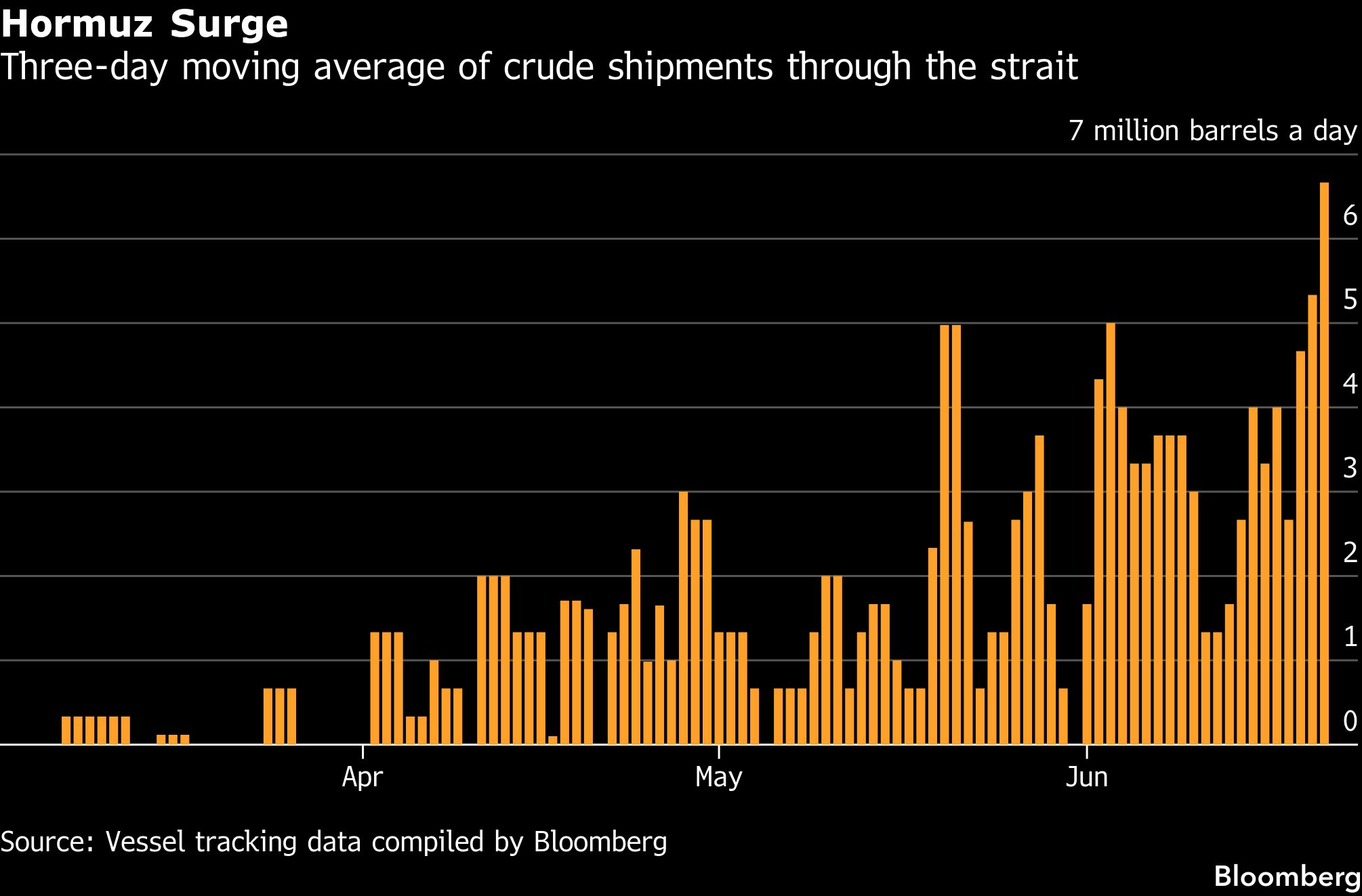
The flow of oil through the Strait of Hormuz is running at the fastest pace since the Iran war began — despite Tehran stating that the world’s key shipping chokepoint is shut and a report that the Islamic Republic continues to harass passing vessels.
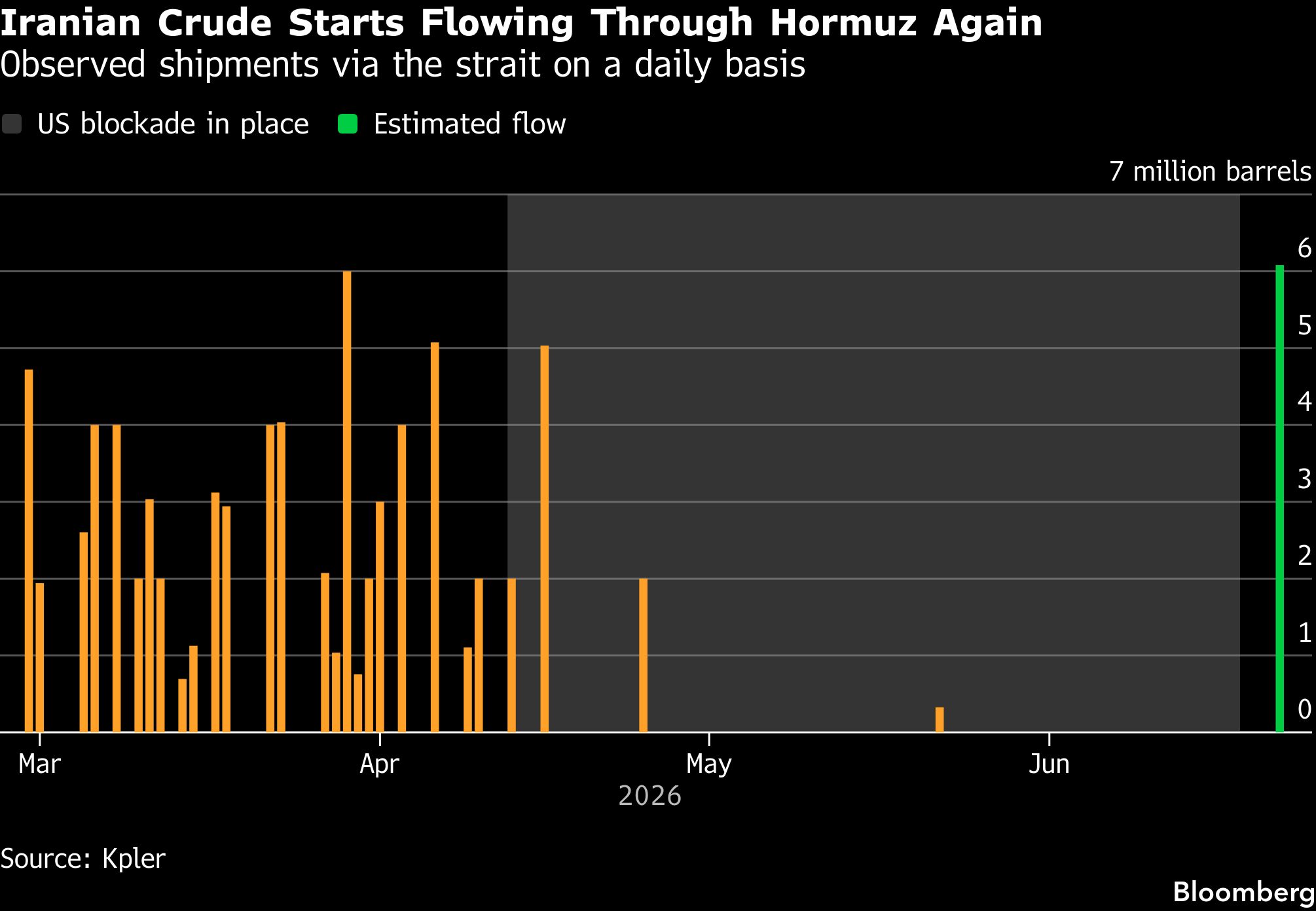
On Friday, Saturday and Sunday, tankers hauling about 20 million barrels crude were observed passing through the waterway, tanker-tracking data compiled by Bloomberg show. That’s the highest transparent flow since before the war began at the end of February. Tehran itself is also pushed 6 million barrels through this morning.
The cargoes are just what can be seen from tankers’ signals that they often switch off during transit for security reasons, meaning the true figure may be higher. US Central Command reported that there were 17 million barrels of oil that went through Hormuz on Saturday alone.

The oil market is fixated on how much is coming out — and how many empty tankers are going in — because it will go a long way to determining the pace and scale of a revival in Middle East production. Flows of 6.66 million barrels a day amount to almost two-fifths of prewar levels. The American estimate for Saturday would be higher than average rates before the conflict began.
The Joint Maritime Information Center, a bridge between the military and merchant shipping, said in a notice to the industry on Monday that Hormuz traffic is rising. However, it also cautioned that Iran is continuing to harass vessels by hailing and surveilling them.
‘Major Progress’
While Tehran on Saturday accused Israel of violating a truce in Lebanon and said the Hormuz would be shut again there were nevertheless positive signs from talks between Iran and the US in Switzerland. Iran said Monday there had been “major progress” in discussions that went through the night.
US Vice President JD Vance told reporters a “mechanism” has been created to ensure Hormuz flows could continue. It wasn’t immediately clear if he was referring to a new pact with Iran, or the US military’s ongoing efforts to coordinate transits along the Omani side of the strait.
Either way, transparent oil flows are picking up.
Tehran itself has ramped up its shipments to the global market too, pushing millions of barrels toward the global market and offering another bearish force for oil prices that are now almost 40% below their April peak.
Over the past week, Iran moved 23 million barrels — mostly cargoes that had been held under a US blockade at the port of Chabahar, near Pakistan — and an additional 8 million barrels from inside the Persian Gulf that cleared the apex of the strait since Friday, tracking shows.
As well as the Iranian cargoes, observed shipments include barrels from Iraq, Saudi Arabia, the United Arab Emirates and Kuwait with shipments bound for buyers including Japan, South Korea and elsewhere.
A message from Advisor Perspectives and VettaFi: Discover something new! Click here to register for our upcoming webcasts.
Bloomberg News provided this article. For more articles like this please visit
bloomberg.com.
Read more articles by Julian Lee, Alaric Nightingale, Weilun Soon