Despite some signs of slowdown in the economy, the biggest stories in the market still revolve around big tech earnings and artificial intelligence.
The communications sector has been one of the best-performing sectors of the year, benefiting from both the tech boost and in certain areas, from consumer spending on services versus goods.
While investors await a spot bitcoin ETF, the SEC accelerated its rollout of ether futures ETFs. So far, issuers have launched five ether futures ETFs and four combined ether + bitcoin strategies.
Some investment trends seem obvious — people are watching more streaming movies, consumers like shopping online, and more people are buying electric cars. So why don’t these ETFs always work?
On Tuesday, Grayscale finally won its lawsuit against the SEC (see initial coverage here). For the past few years, Grayscale has been in an ongoing legal battle with the SEC over converting its Grayscale Bitcoin Trust (GBTC) product into a spot Bitcoin ETF.
After a rush among issuers to file for spot bitcoin ETFs, followed shortly by a rush to file for ether futures ETFs, the environment for crypto-related ETFs looks significantly different from early 2023 when several crypto ETFs announced closures.
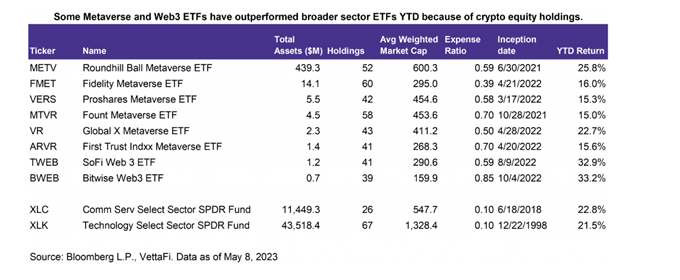
The distinction between futures-based ETFs and crypto equity ETFs is clear when you look closely at the two. But even when examining them closely, it may be difficult to distinguish between the different types of blockchain/crypto equity ETFs because of similarities with fintech, metaverse, and Web3 concepts.
Many investors are choosing to access bitcoin and broader crypto themes through traditional ETF wrappers due to their relative simplicity and familiarity.