Gold slipped as fresh data continued to paint a mixed picture of the US economy, clouding the outlook for the Federal Reserve’s interest-rate path.
Bank of Russia expanded its gold reserves almost sixfold since the mid-2000s, creating the world’s fifth-biggest stockpile that’s valued at about $140 billion. It’s the type of asset it could sell to shore up the ruble, which has plunged as global economies isolate Russia following its invasion of Ukraine.
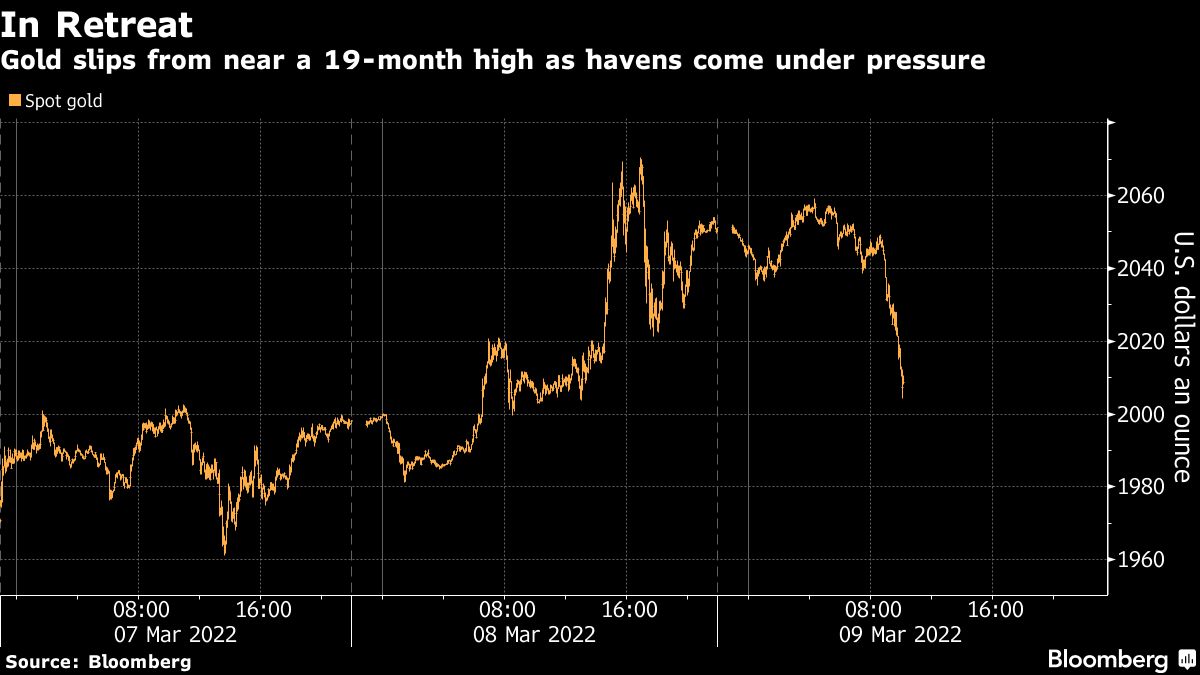
Gold fell from near a 19-month high as risk sentiment improved, despite ongoing concerns that the fallout from Russia’s invasion of Ukraine will further fuel inflation and hurt economies.
Gold climbed as Western nations escalated sanctions on Russia for the invasion of Ukraine, heightening fears of a hit to global economic growth.
Gold surged to the highest since 2020 after Russian forces attacked targets across Ukraine, triggering the worst security crisis in Europe since World War II and crushing risk sentiment.
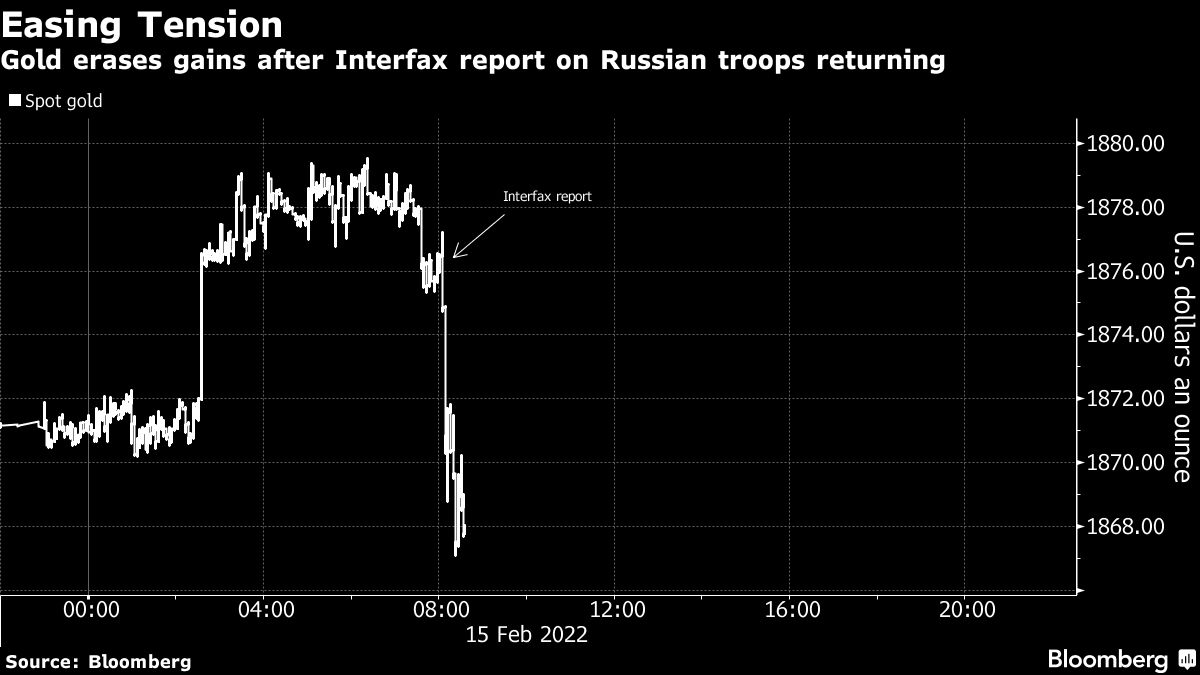
Gold dropped from an eight-month high and wheat slid after Russia said some of its troops would return to their bases. Industrial metals including nickel held steady.
European shares and U.S. equity futures declined on Thursday amid the souring mood in the stock market. The greenback snapped three days of declines as investors sought a haven, putting pressure on gold and metals priced in the currency.
Gold advanced and the dollar pushed lower after economic data showed the U.S. unexpectedly shedding jobs last month.
Gold edged lower as investors assessed new economic data from China and the outlook for global inflation.
For much of this year, rising inflation has been bad news for gold. Now it’s giving the metal a shot in the arm.
Gold could extend gains as governments and central banks respond to slowing growth with vast amounts of stimulus.