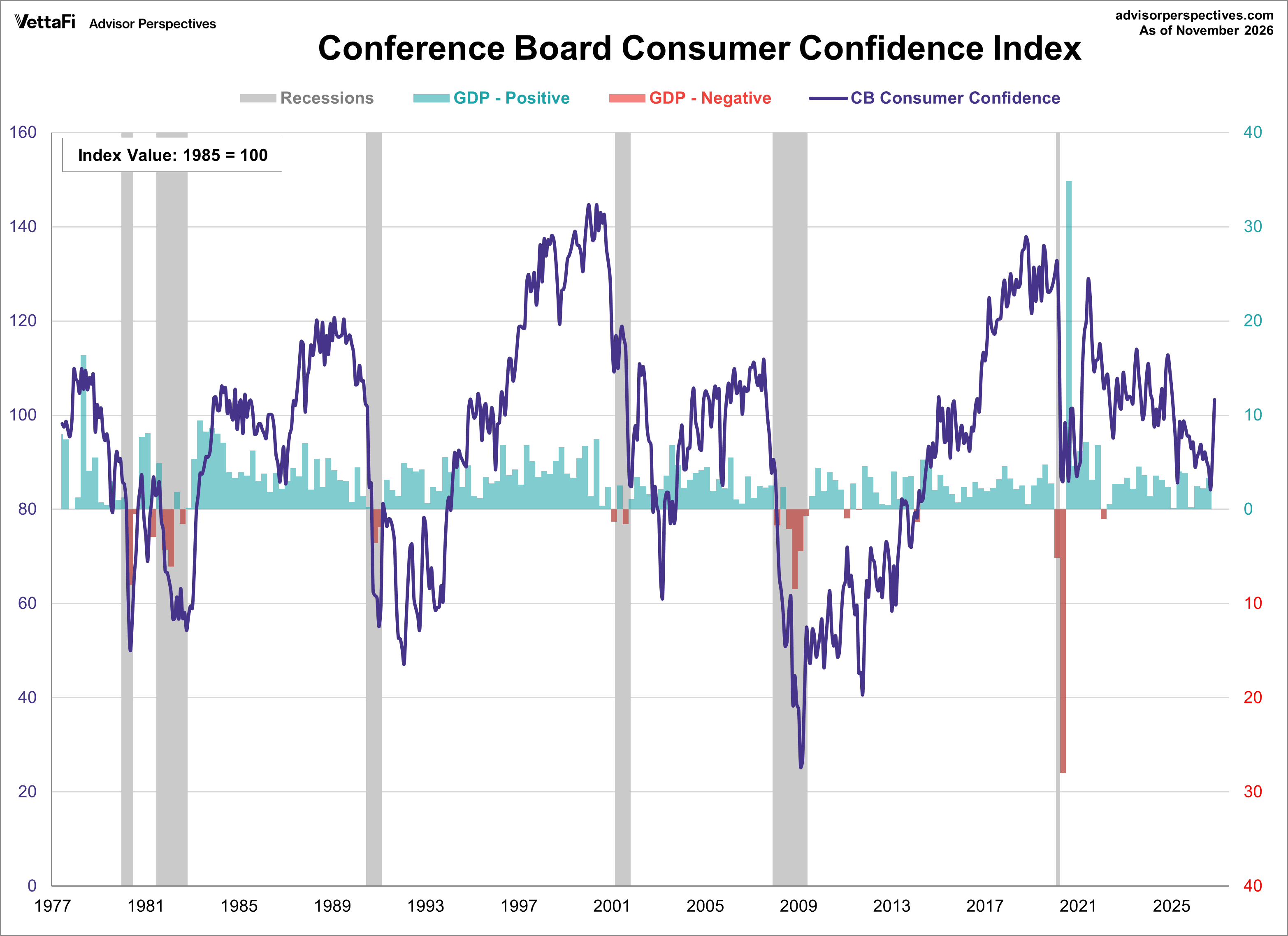
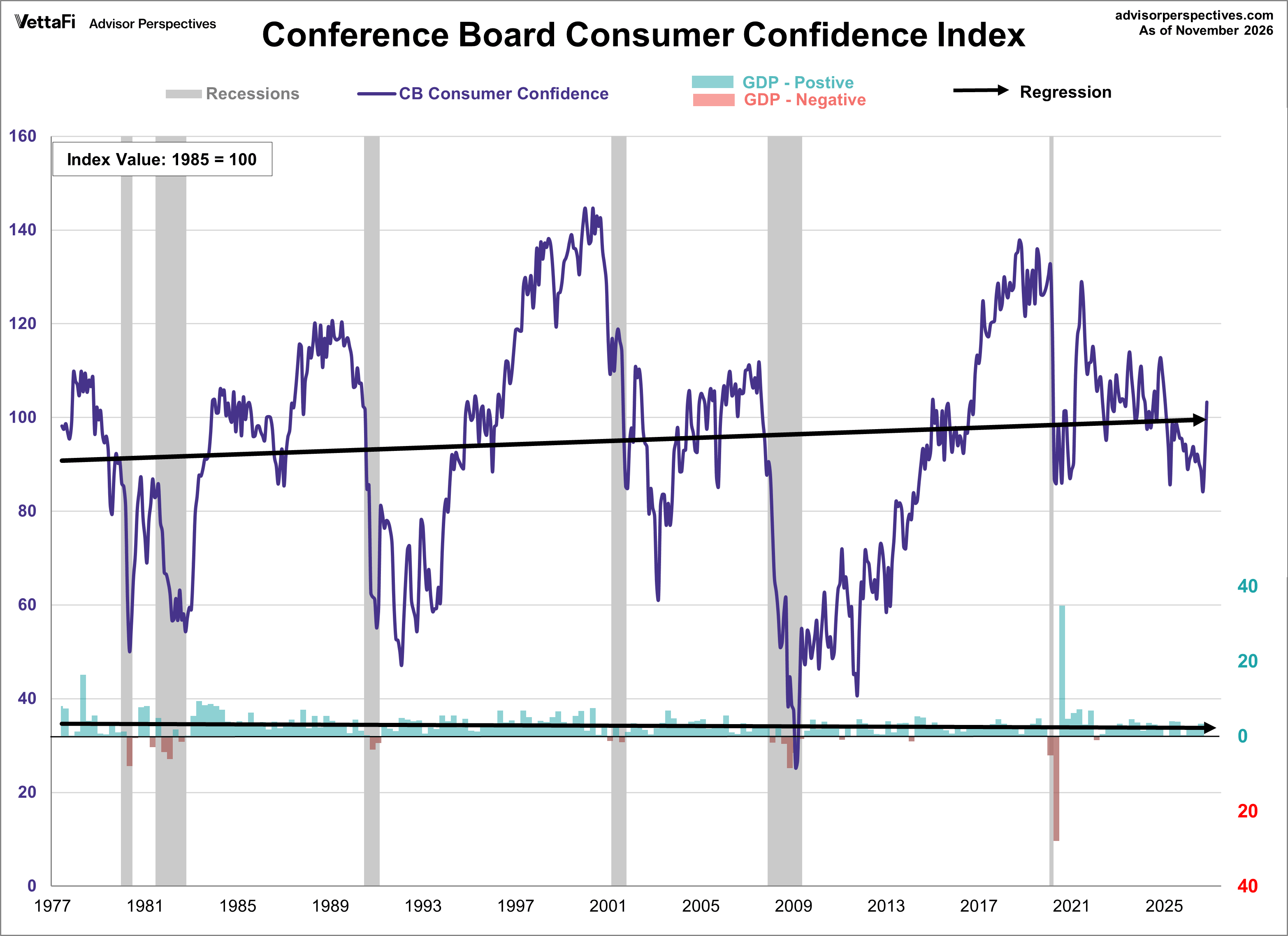
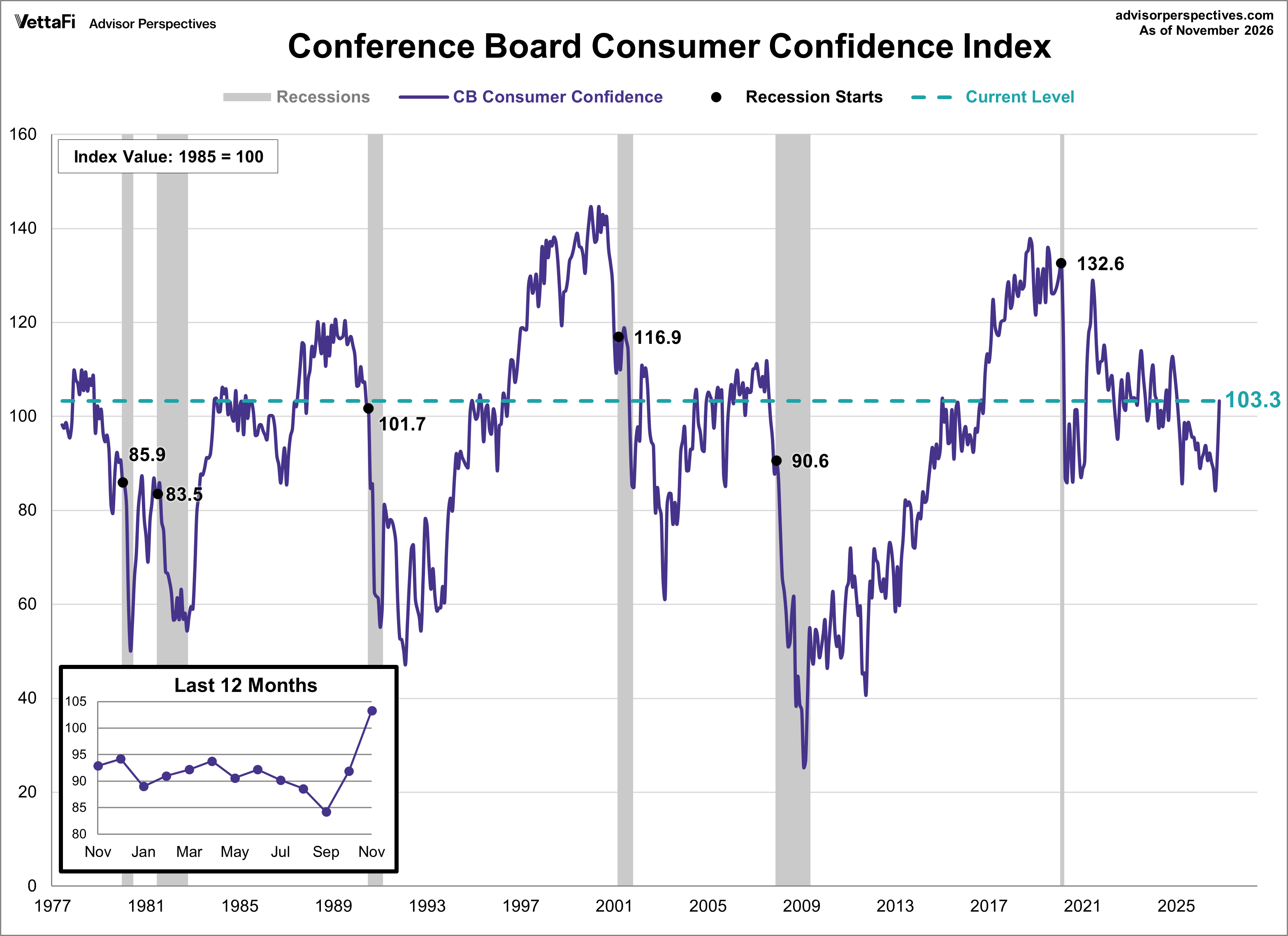
The Conference Board's Consumer Confidence Index® jumped to its highest level in almost two years in November, rising 11.4 points to 103.3. The index was far above the forecast of 92.4.
Key Takeaways
-
The Conference Board's Consumer Confidence Index® increased 11.4 points to 103.3 in November, exceeding the 92.4 forecast.
-
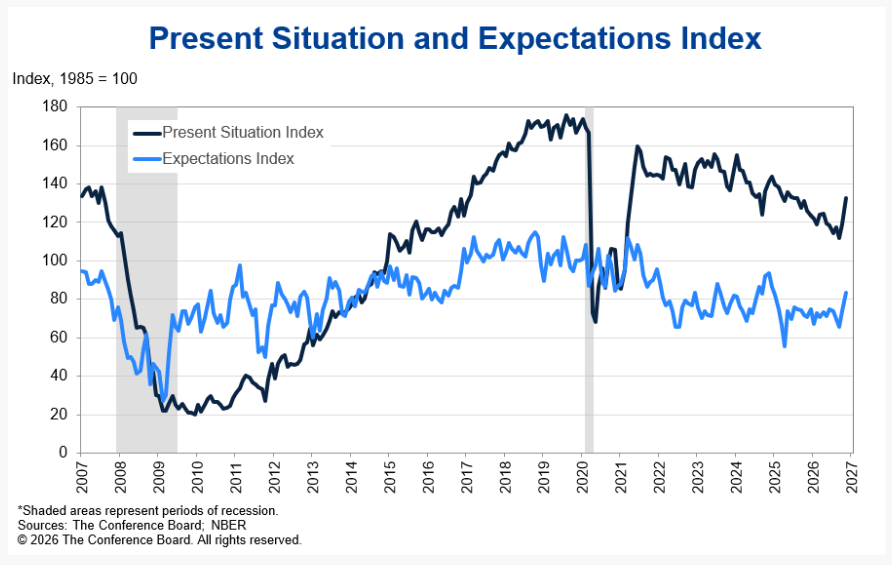
The Present Situation Index rose 13.7 points to 132.8, while the Expectations Index increased 9.9 points to 83.6.
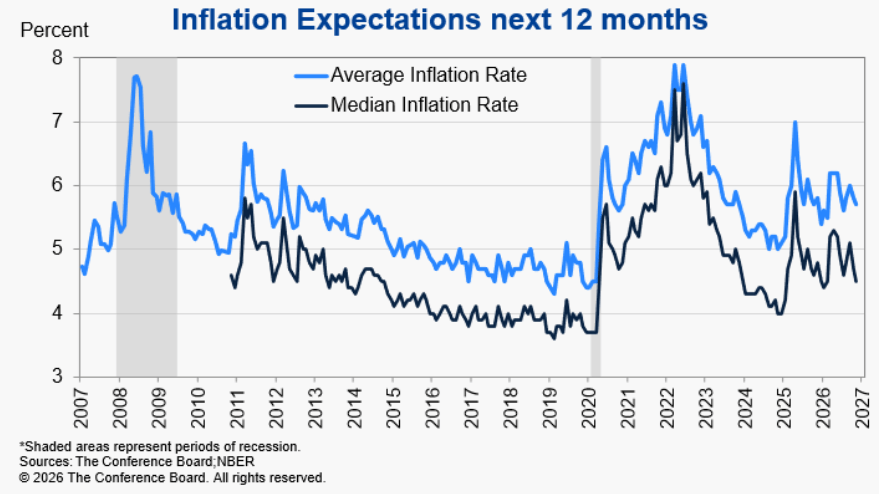
- Consumers' average 12-month inflation expectations declined for a second consecutive month in November to 5.7%.
The Present Situation Index, which is based on consumers' assessment of current business and labor market conditions, increased for a second straight month, rising 13.7 points to 132.8. Meanwhile, the Expectations Index, which is based on consumers' short-term outlook for income, business, and labor market conditions, increased by 9.9 points to 83.6.
“Consumer confidence rallied again in November, potentially due to lower uncertainty following the midterm elections,” said Fergus McCormick, Senior Economist, Global Indicators, The Conference Board. “After two months of consecutive increases, the headline index is back to levels of confidence last seen in January 2025. The gain in confidence was led by stronger perceptions of present and future labor market conditions. Perceptions of current and future business conditions also improved sharply. Along with the gain in headline confidence, consumers planned slightly higher spending on goods and vacations.”
McCormick continued: “Write-in responses in November were slightly less negative than previous months. While consumers continued to express frustration with high prices and rising costs, some comments cited hope for the general economy. Comments about war and conflict ticked up slightly, along with mixed feelings about elections, politics, and the direction of the labor market.”
Consumers’ average 12-month inflation expectations declined for a second consecutive month in November, but remained elevated at 5.7%. Consumers still expected higher interest rates over the next 12 months. Market volatility in the first half of November notwithstanding, more consumers expected stock prices to increase rather than decrease in the next 12 months.
Background on the Consumer Confidence Index
The Conference Board Consumer Confidence Index measures the consumers attitudes and confidence in the economy, business conditions, and labor market, with higher readings indicating higher optimism. The general assumption is that when consumers are more optimistic they will spend more and stimulate economic growth. However, if consumers are pessimistic then spending will decline and the economy may slow down. The index is based on a 5 question survey, with 2 questions related to present conditions and 3 questions related to future expectations. The survey began in 1967 and was conducted every two months but changed to monthly reporting in 1977.