For U.S. consumers, Thanksgiving marks the start of the holiday season. After a meal among family, we make our plans to go shopping—sometimes descending on stores at midnight for limited-time deals. Most shopping lists will include toys for the young ones in our lives. Expect toys to be more expensive this year, reflecting the leading economic themes of 2026.
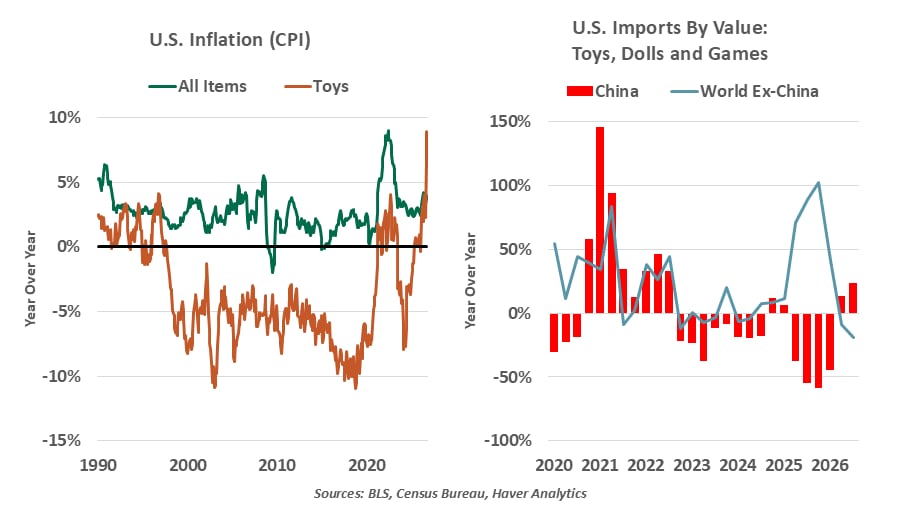
Toys are an individual component in the U.S. consumer price index (CPI). As of October (interpolating to fill the gap in last year’s data), toy prices climbed 8.9% over the past year, far outpacing the general inflation rate of about 4%.
Toys encapsulate many of the complications of modern trade. The $40 billion U.S. toy industry is comprised of approximately 90% imported goods, the majority of which are produced in China. Prior to current trade tensions, toys benefitted from the global supply chain: the CPI for toys steadily declined by 78% from its peak in 1997 to its lowest point in December 2024. Price increases in this sector are not familiar.
Terms of trade changed dramatically in 2025. While some strategically important sectors like semiconductors have been carved out of U.S. tariffs, and various “truce” deals have lowered rates on some categories, toys have received no special treatment. Toys from China are subject to the standard tariff rate on Chinese goods, currently about 30%.
China has responded to U.S. trade tensions by making greater use of global supply networks. Volumes of U.S. imports have grown in total, but volumes from China have fallen. More shipments are coming by way of other countries, primarily in Asia. These nations are still subject to the baseline Section 301 tariffs on forced labor practices, which are 12.5% for most Asian nations.
A toy importer was the plaintiff in the legal case that led to the Supreme Court overturning the Trump administration’s use of emergency powers to levy tariffs. The prospect of tariff relief and refunds may have helped to keep toy prices in check in the early stages of the trade war. The new tariffs appear more legally durable, and they are being passed along.
Toys are bulky. Shoppers in toy aisles encounter rows of plastic, both in the toys themselves and in their containers. Plastics are petroleum products; the global spike in oil prices during the Iran conflict has raised the price of the raw materials flowing into toy plants.
After production, toys must be shipped. They take up a fair amount of space on container ships and in ground transit. Every stage of the supply chain is encountering higher fuel prices in the wake of the war, another cost to be passed along. Shippers are also factoring security into their routes, adding time to some shipments by avoiding areas of potential conflict. Their insurance premia are also on the rise.
Parents of older children can further attest: The gifts don’t stop as the kids grow up! As they age, children seek more sophisticated entertainment from higher-tech devices like video game consoles, tablets and personal computers. Prices of these devices have been pushed up by the overall boom in the technology sector, with costs of memory chips under particular pressure this year. Long a source of deflation, the producer price index for computer equipment peaked at an annual gain of 24% this past July, and has stayed elevated.
But we are doubtful that higher prices will change the behavior of doting parents and grandparents. The toy category carries a weight of only 0.31% of the consumer price basket. Most buyers will approach toys as one-time purchases, with no frame of reference for price increases. Gains in consumption have been a continual positive surprise of this cycle. We do not anticipate toys will be the segment where demand elasticity reappears.
In the three months through October, toy prices gained 15% at an annualized rate. I have never joined the throngs of eager shoppers lining up to grab Black Friday “doorbuster” specials. But I may set out to finish my shopping in November, before prices step up further in December.
Information is not intended to be and should not be construed as an offer, solicitation or recommendation with respect to any transaction and should not be treated as legal advice, investment advice or tax advice. Under no circumstances should you rely upon this information as a substitute for obtaining specific legal or tax advice from your own professional legal or tax advisors. Information is subject to change based on market or other conditions and is not intended to influence your investment decisions.