What Do Higher Yields Mean for Retirement Income?
Membership required
Membership is now required to use this feature. To learn more:
View Membership Benefits
Key takeaways

- Bond yields have risen sharply, improving the income available from many fixed income investments but creating near-term price pressure—particularly for bonds with longer durations.
- Retirees may benefit from matching duration to spending needs, diversifying across maturities and sectors, and keeping the core of a bond allocation focused on higher-quality holdings.
- Higher income can help support retirement spending, but investors should avoid building a portfolio around yield alone. A total-return approach may provide greater flexibility and diversification.
- Cash can play an important role in meeting near-term expenses, but holding too much may create reinvestment risk and a long-term return drag.
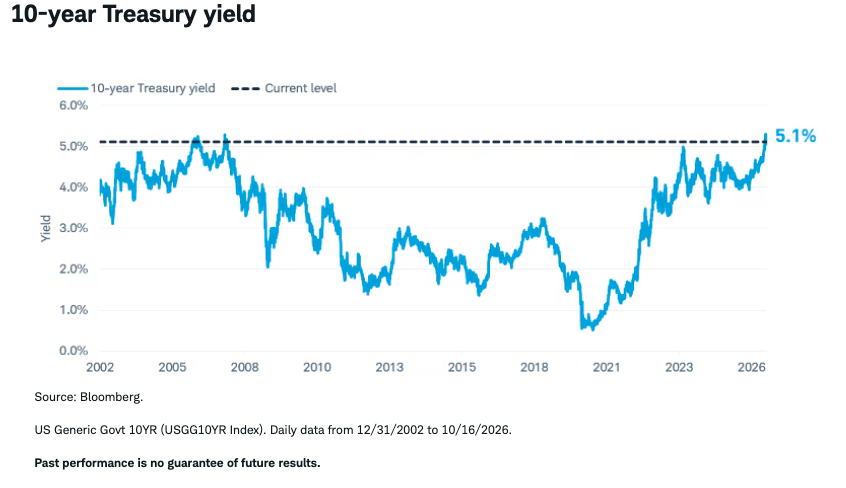
For much of the past decade, investors looking for portfolio income faced an uncomfortable choice: accept very low yields from higher-quality bonds or take more credit, interest-rate, or equity risk to generate additional income. That trade-off has changed. The 10-year Treasury yield recently moved above 5%, near its highest level in more than two decades, while yields across many other fixed income categories also moved higher.
See more: 2 Fixed Income Solutions for Navigating Bond Instability
Higher yields have pressured near-term returns
The increase in yields has not been painless. Bond prices generally fall when yields rise, and the recent increase in rates has created losses in parts of the fixed-income market. Longer-term bonds have generally been hit harder because their prices are more sensitive to changes in interest rates. For retirees who viewed bonds mainly as a stable source of income, the speed of the move may have been unsettling.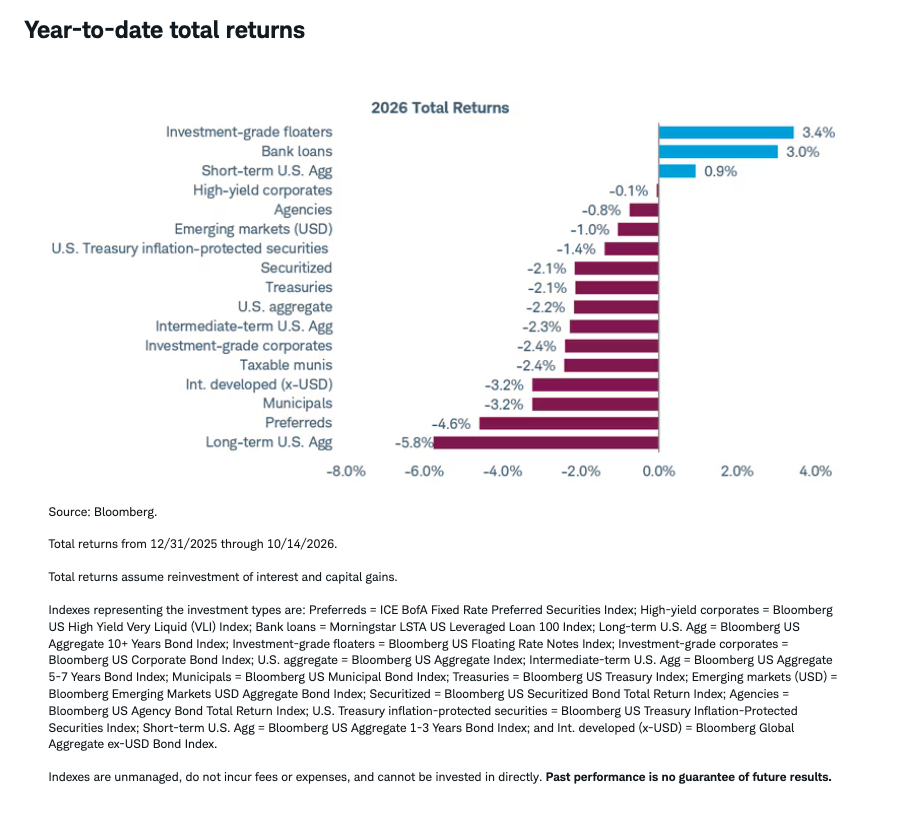
We suggest matching your duration to when you need the money
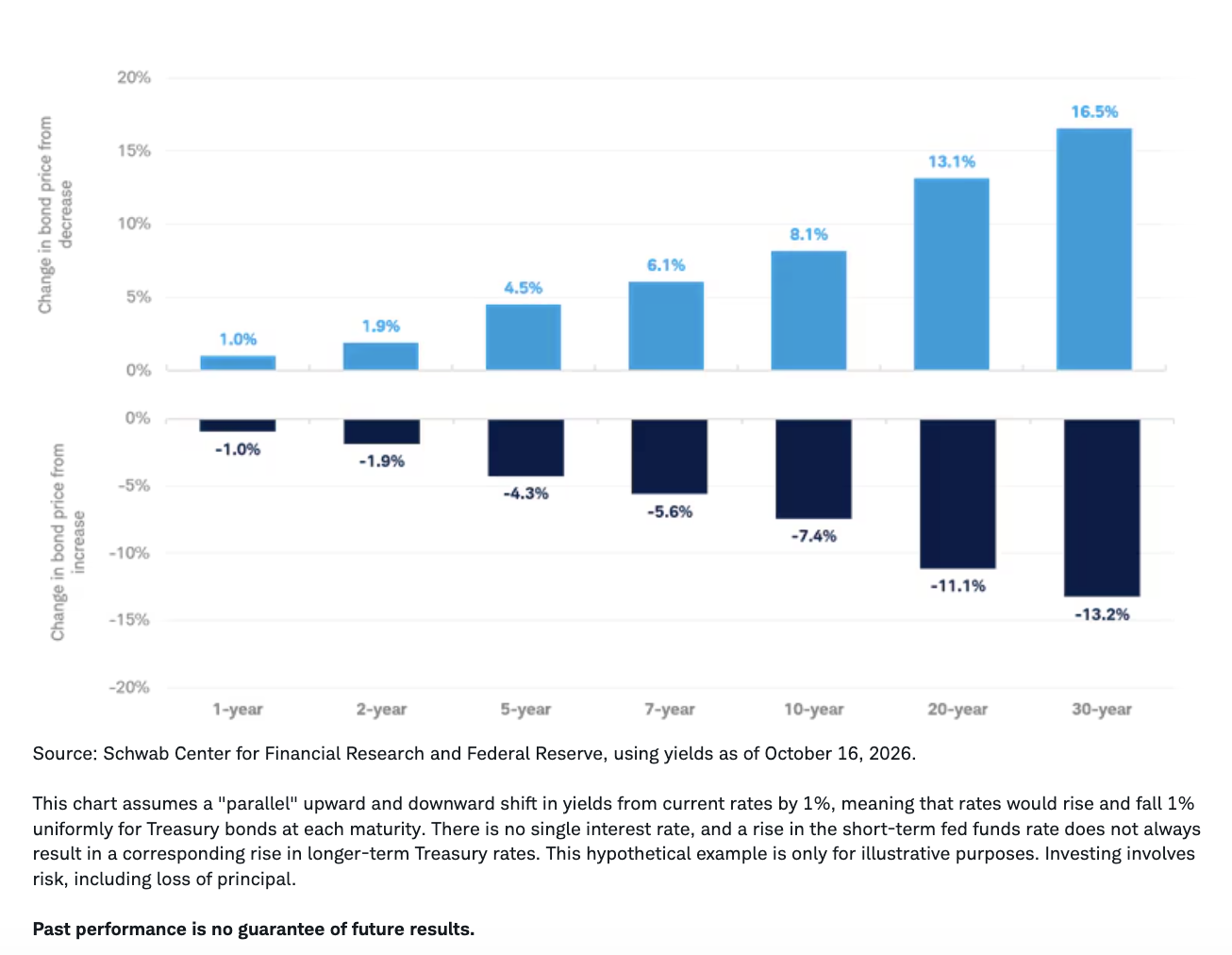
One way to manage this risk is to align duration with the timing of when you need the money. Money needed in the next year or two generally should not be exposed to the same degree of interest-rate risk as money earmarked for spending a decade from now. As illustrated in the chart below, bonds with longer maturities are more sensitive to changes in interest rates compared to bonds with shorter maturities. A bond ladder, which is an allocation of individual bonds with staggered maturity dates, can help create that alignment. As each rung matures, the proceeds can be spent or reinvested at yields at that time.
Interest rates can impact the prices of bonds (change in Treasury price based on 1% change in rates)
Although the move in yields might be painful in the short term, it has tended to increase the attractiveness of fixed income for investors. Higher yields can increase the income that newly purchased bonds may generate and can improve the longer-term return outlook, but it also depends on other factors. For investors who are reinvesting interest or gradually building a bond allocation, today's higher starting yields may create opportunities that were difficult to find when rates were lower.
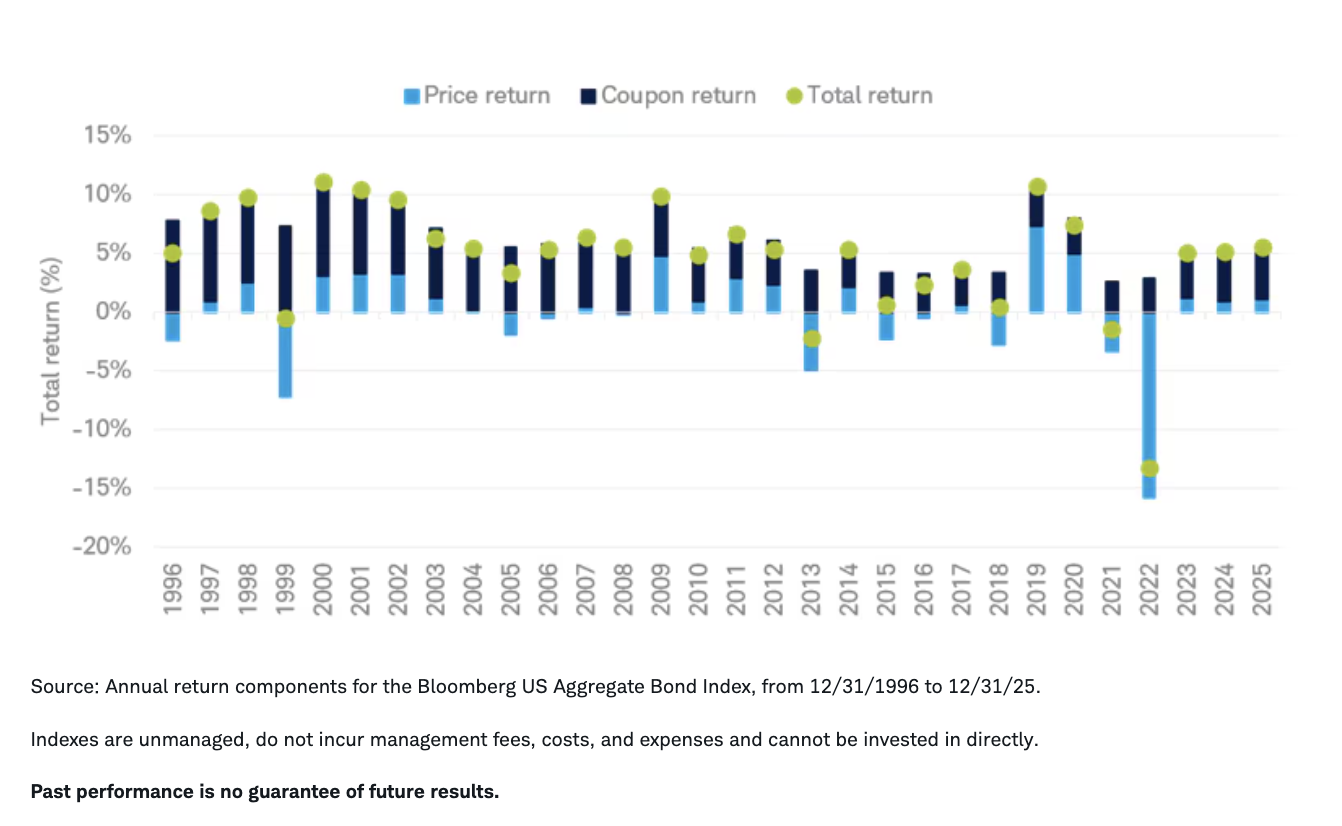
Investors should distinguish between short-term price performance and the longer-term role of income. Coupon income has historically been a major driver of bond total returns. When starting yields are higher, there tends to be more income available to absorb future price volatility. That does not guarantee a positive return over a shorter-term time horizon, but it generally can provide a larger buffer than investors had when yields were much lower.
Historically, coupon returns have made up the bulk of a bond's total return
Income opportunities look more attractive today
We generally divide fixed income into two broad groups: core holdings and more aggressive holdings. Core fixed income typically includes Treasuries, Treasury Inflation-Protected Securities (TIPS), mortgage-backed securities, investment-grade corporate bonds, developed-market international bonds, and investment-grade municipal bonds. These investments can play different roles, but they are generally intended to provide income, diversification, and some degree of capital preservation.
More aggressive fixed income includes high-yield corporate bonds, emerging-market bonds, preferred securities, and bank loans. These categories may offer higher yields, but the additional income is compensation for additional risks. Depending on the investment, those risks can include lower credit quality, greater sensitivity to the economy or stock market, less liquidity, currency exposure, potential default, and more downside during periods of market stress.
Yields for a variety of fixed income indices
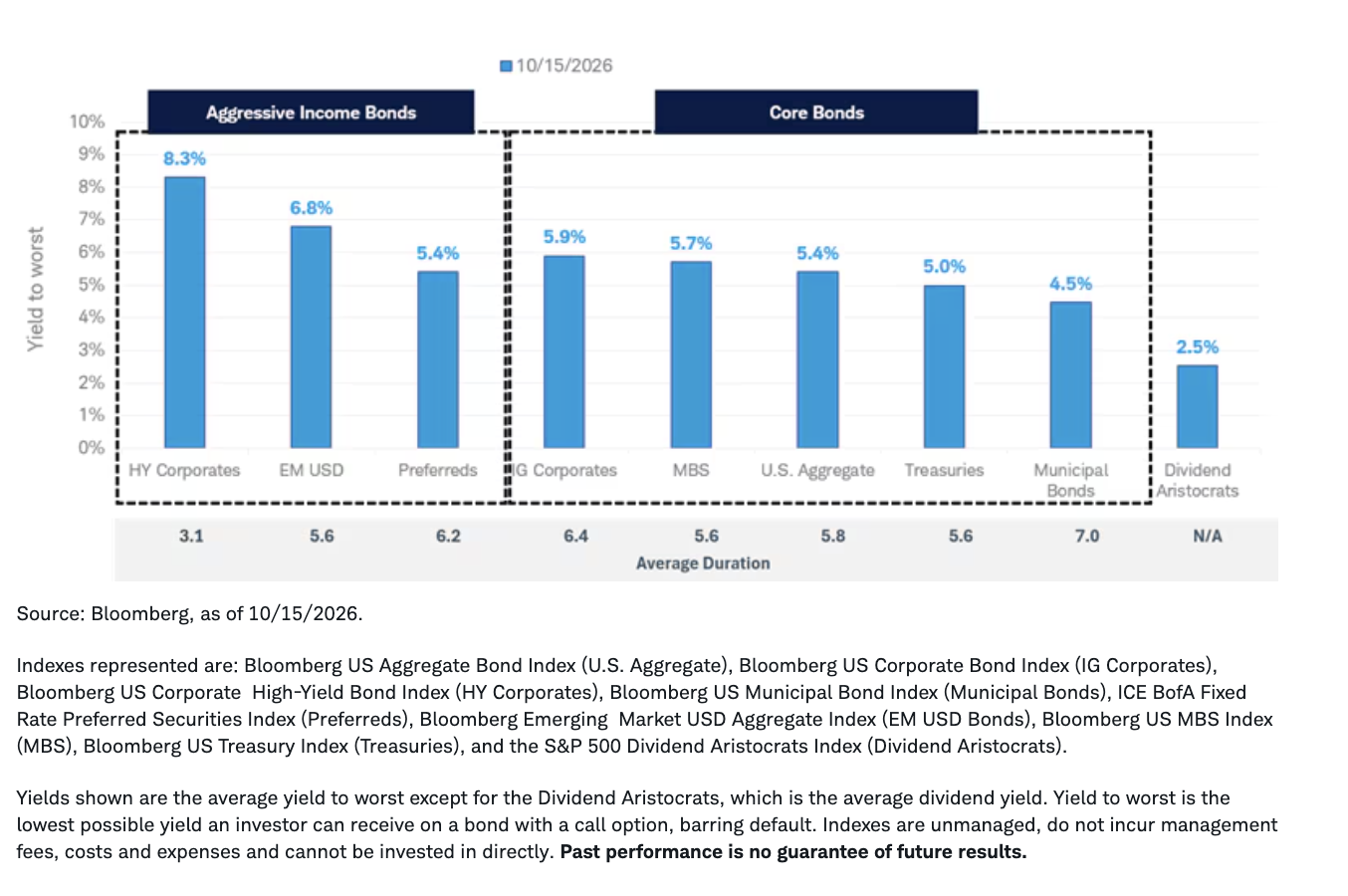
In the current environment, we're more favorable on investment-grade corporate bonds and municipals as part of the core allocation. For more aggressive income-oriented investors, we're more favorable toward preferred securities and high-yield corporate bonds.
Municipal bonds may be particularly compelling for investors in higher tax brackets because their interest is generally exempt from federal income taxes and may also be exempt from state income taxes when investors own bonds issued in their home states. The muni market has been especially hard hit by the rise in yields. Since June 30, 2026, the prices of existing munis have generally fallen more than those of other major fixed income investments, all else equal. The selloff has caused muni yields, relative to other highly rated alternatives, like Treasury bonds, to increase to levels we view as attractive.
For many retirees, the core of the fixed income allocation should remain in core holdings, with more aggressive sectors used sparingly. As a general framework, investors might consider limiting aggressive fixed income to roughly no more than 20% of the bond allocation, depending on their risk tolerance, time horizon, and need for liquidity. The appropriate amount can be lower, and in some instances, zero.
Don't build a retirement plan around yield alone
Higher bond yields can make an income-focused portfolio look more attractive, but retirement income is broader than interest and dividends. We see two general ways to turn a portfolio into spending: a total-return approach and an income-focused approach.
1. A total-return approach
A total-return strategy uses the portfolio's full return—interest, dividends, and price appreciation—to support withdrawals. Instead of requiring every holding to distribute cash, the investor maintains a diversified allocation and periodically sells investments or rebalances to fund spending.
The main advantage tends to be flexibility. Investors can choose from a broader set of investments rather than concentrating only in dividend- or interest-bearing securities. That can produce a more diversified and potentially more tax-efficient portfolio. It can also help the portfolio retain exposure to growth assets, which may be important during a retirement that lasts 20 or 30 years.
As an example of how this might work in practice, consider a $1,000,000 portfolio invested in 60% stocks, 35% bonds, and 5% cash. We would generally suggest a more diversified portfolio when investing, but this hypothetical allocation is useful for illustrating how a total-return strategy can deliver retirement income.
In this example, the portfolio needs to distribute $50,000, which is taken from the cash allocation at the start of the year. The table below shows the portfolio's hypothetical growth and how it could be rebalanced to its original allocation while also providing $50,000 in income.
How a rebalancing strategy could work to deliver retirement income
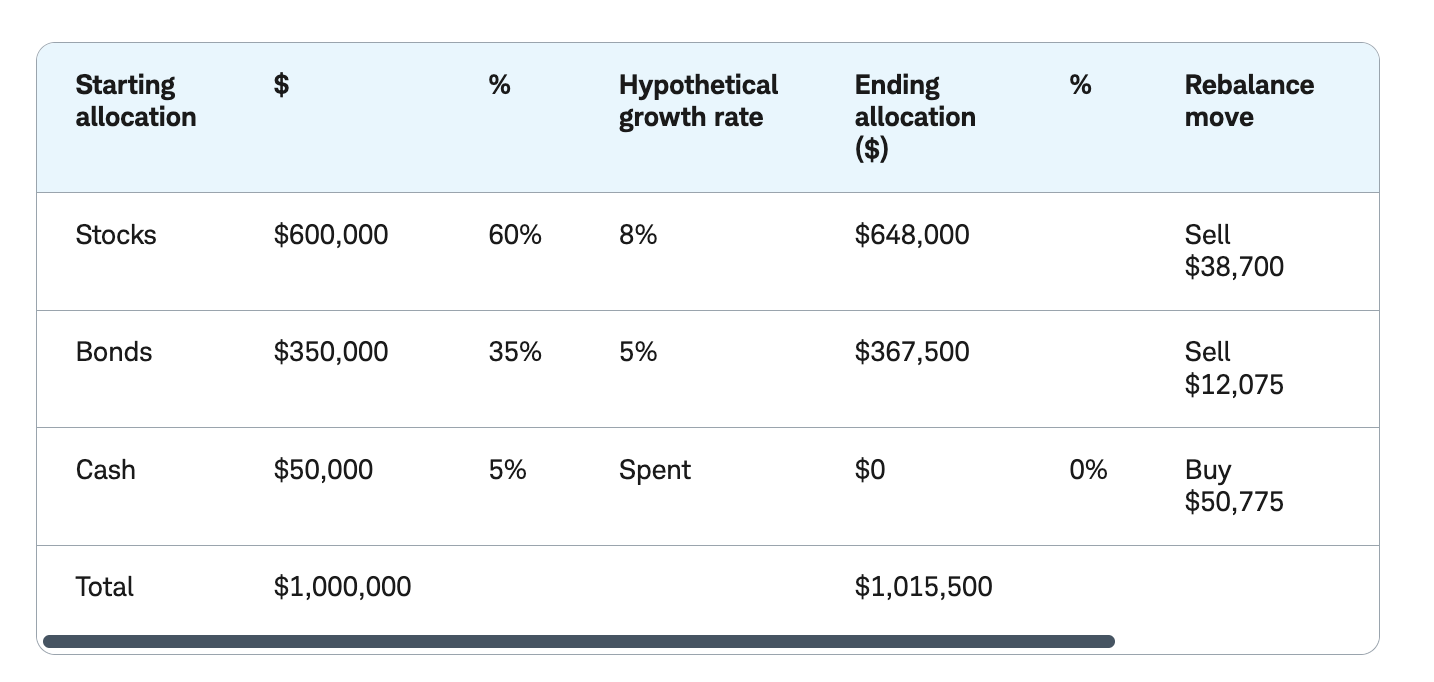

The trade-off is that a total-return strategy requires more maintenance, but we think this discipline and structure can be beneficial. However, a total return strategy doesn't insure against a loss. The investor needs a rebalancing process, a plan for which assets to sell, and enough near-term liquidity to avoid selling volatile assets at an unfavorable time.
2. An income-focused approach
An income-focused strategy attempts to meet spending needs primarily from bond interest, stock dividends, and other portfolio cash flows. It may feel more intuitive because the investor can spend the income without deliberately selling shares. For some retirees, that psychological comfort might make it easier to remain invested during volatility.
However, the distinction between "income" and "principal" can be misleading. A dividend or distribution reduces the value of the security or fund by a corresponding amount, all else equal.
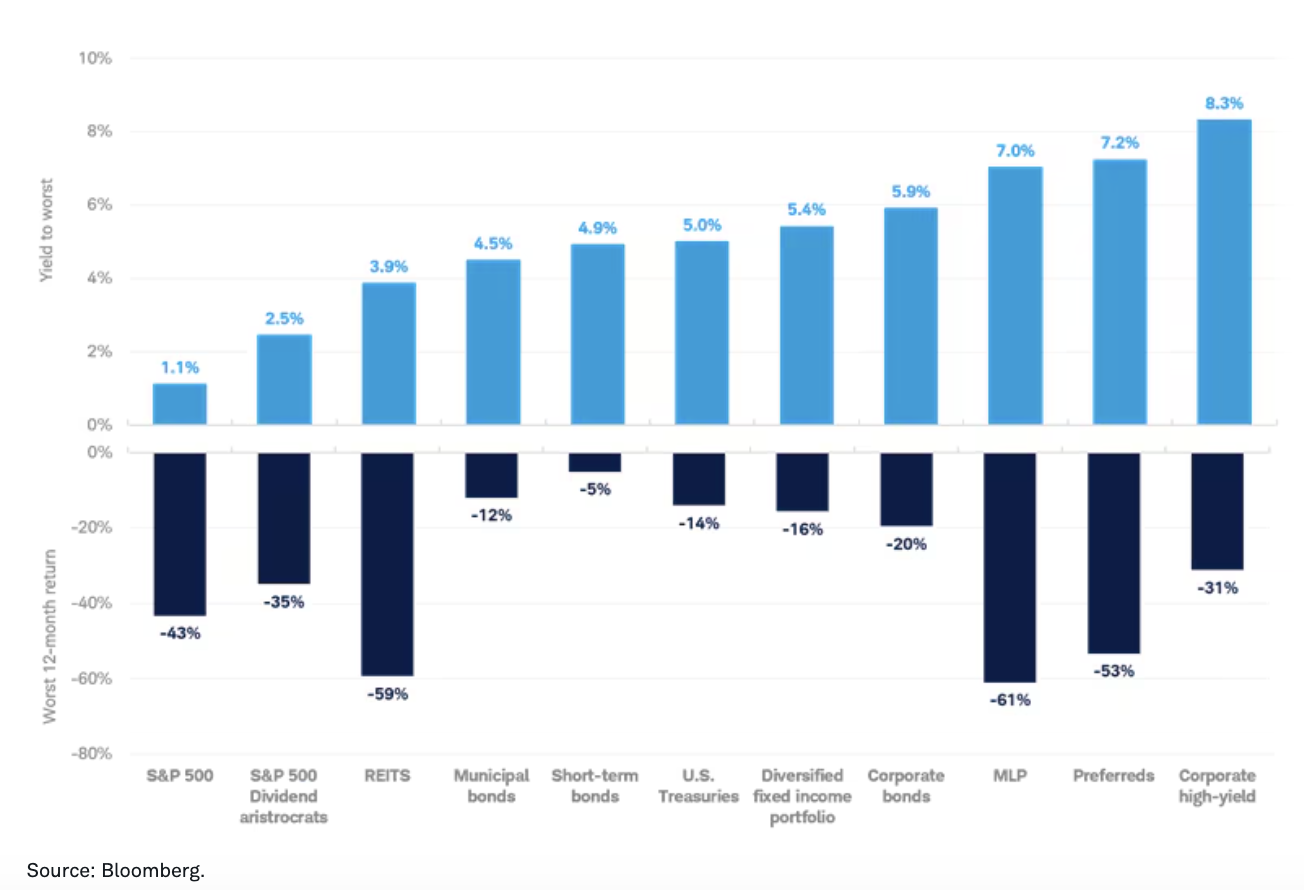
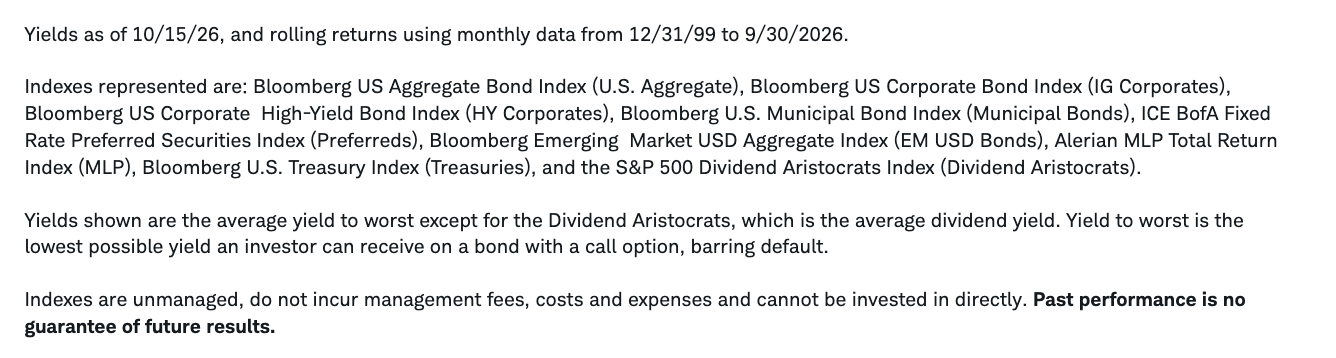
More importantly, a narrow focus on yield can encourage investors to reach for yield and take on extra risk unknowingly. The highest-yielding securities often carry greater credit, liquidity, concentration, or price risk. Dividends might also be reduced, and high-distribution funds may return capital. For example, as shown below, investments that offer higher yields, like preferreds or high-yield corporate bonds, can have greater price drawdowns compared to more conservative fixed income investments, like municipal bonds or U.S. Treasuries. This matters because if a retiree has to sell a position at a time when prices are down, it can have long-term consequences.
Higher yields come with higher risks
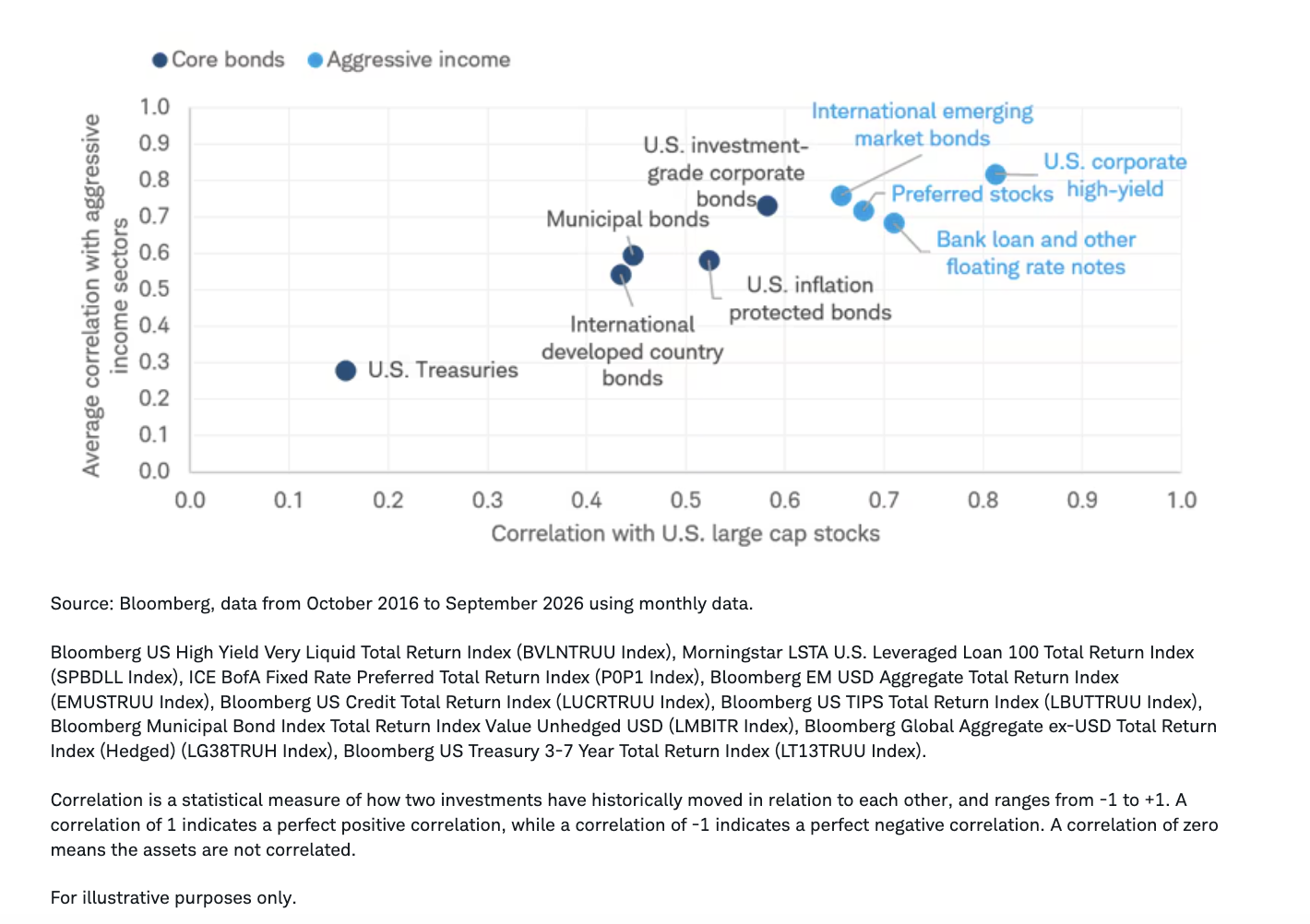
One risk of focusing too heavily on income only is that an income-only portfolio may become concentrated in sectors that behave similarly. Preferred securities, high-yield bonds, dividend-paying stocks, real estate securities, and bank loans can all be sensitive to economic weakness or tightening financial conditions. Owning several of them does not necessarily create meaningful diversification. Higher-yielding investments tend to have higher correlations with one another.
The scatter plot below helps to illustrate this point. The y-, or vertical, axis is the correlation with aggressive income sectors; and the x-, or horizonal, axis is the correlation with U.S. large-cap stocks. Correlation is a statistical measure of how two investments have historically moved in relation to each other, and ranges from -1 to +1. A correlation of 1 indicates a perfect positive correlation, while a correlation of -1 indicates a perfect negative correlation. A correlation of zero means the assets are not correlated.
We've color coded core bonds in dark blue and aggressive income sectors in a lighter blue. Most of the light blue, or aggressive income sectors, are clustered in the upper right quadrant, meaning that they are highly correlated with one another and more correlated with equities than core bonds are. This matters because during periods of market stress, such a portfolio that's weighted heavily to aggressive income sectors may therefore provide less diversification than expected.
Correlation with U.S. large cap stocks vs. with aggressive income sectors
For many retirees, a blended approach may be more practical. We believe it can make sense to use a combination of interest, dividends, and rebalancing proceeds to help deliver a retirement income paycheck. This approach can support a well-diversified portfolio without placing too much emphasis on an investment's yield.
Don't let attractive cash yields derail the long-term plan
Cash yields have risen along with short-term interest rates, making money market funds, Treasury bills, and other short-term investments more appealing. Cash can be useful for near-term spending, emergencies, and planned purchases. It may also help retirees avoid selling longer-term investments during a market decline.
But cash is not a complete retirement strategy. The yield on very short-term investments tends to move with Federal Reserve policy. If the Fed raises rates further, cash yields could rise. If inflation slows, growth could weaken, and if the Fed eventually cuts rates, those yields could fall quickly. Investors who wait in cash until the outlook feels certain may discover that bond yields have already declined and bond prices have risen before they reinvest. As can be seen in the chart below, the yield for very short-term investments, like three-month Treasury bills, closely tracks the fed funds rate. On the other hand, longer-term bonds, as represented by the 10-year Treasury yield, are influenced by the fed funds rate, but don't closely track it to the same degree as short-term investments do.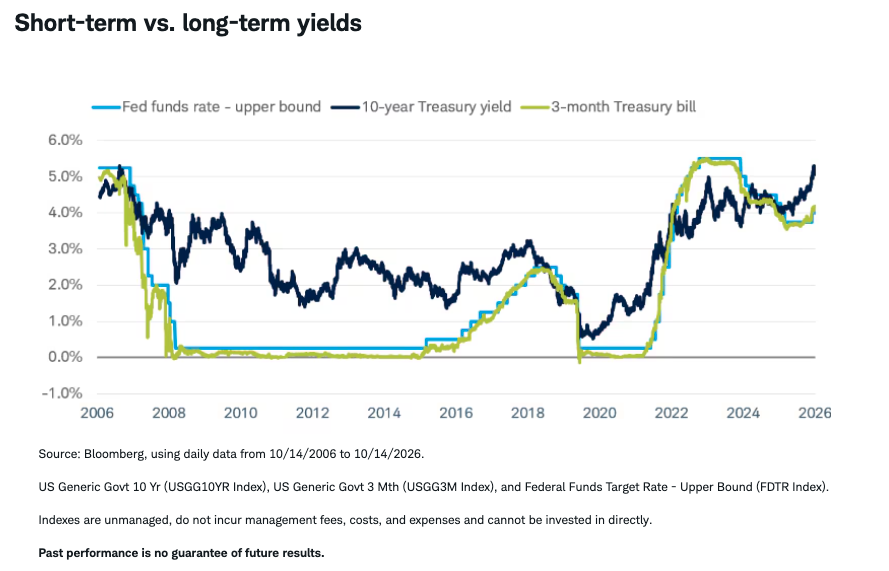
One risk of staying too short-term is that you could potentially miss out on higher yields. This is reinvestment risk: The attractive yield available today may not be available when a short-term security matures. Longer-term bonds lock in a yield for a longer period and may appreciate if market rates fall, although they can decline if rates rise. Holding a mix of short- and longer-term investments can help reduce the need to time or guess the Fed's next move.
One practical approach is to separate the portfolio by time horizon. Near-term spending can be held in cash and short-term bonds. Intermediate spending can be matched with a ladder or intermediate-term bond allocation. Assets intended for later retirement years can remain invested for growth. This structure can make market volatility easier to tolerate because each dollar has a purpose.
What to consider now
Higher yields have improved the potential income available from fixed income. However, we do not believe that yield alone is a retirement income strategy.
We believe a well-constructed retirement income strategy should start with a plan for how much you can spend from your portfolio, identify appropriate investments, select a distribution strategy, and be reviewed and updated regularly.
The sharp rise in yields has created challenges, but it has also restored an important feature of bonds: meaningful income. Investors who build around their spending needs, rather than the latest rate forecast, may be in a more comfortable position to use that income for the role fixed income is meant to play.
A message from Advisor Perspectives and VettaFi: Discover something new! Click here to register for our upcoming webcasts.
This material is intended for general informational and educational purposes only. This should not be considered an individualized recommendation or personalized investment advice. The investment strategies mentioned are not suitable for everyone. Each investor needs to review an investment strategy for his or her own particular situation before making any investment decisions.
All expressions of opinion are subject to change without notice in reaction to shifting market, economic or political conditions. Data contained herein from third party providers is obtained from what are considered reliable sources. However, its accuracy, completeness or reliability cannot be guaranteed.
For illustrative purposes only. Not intended to be nor should they be construed as, a recommendation to buy, sell, or continue to hold any investment. Illustration should not be used as a basis for any investment decision.
Past performance is no guarantee of future results.
Investing involves risk, including loss of principal.
Fixed income securities are subject to increased loss of principal during periods of rising interest rates. Fixed income investments are subject to various other risks including changes in credit quality, market valuations, liquidity, prepayments, early redemption, corporate events, tax ramifications, and other factors. Lower rated securities are subject to greater credit risk, default risk, and liquidity risk.
Diversification, asset allocation and rebalancing strategies do not ensure a profit and do not protect against losses in declining markets.
Rebalancing may cause investors to incur transaction costs and, when a non-retirement account is rebalanced, taxable events may be created that may affect your tax liability.
Tax-exempt bonds are not necessarily a suitable investment for all persons. Information related to a security's tax-exempt status (federal and in-state) is obtained from third parties, and Charles Schwab & Co., Inc. does not guarantee its accuracy. Tax-exempt income may be subject to the Alternative Minimum Tax (AMT). Capital appreciation from bond funds and discounted bonds may be subject to state or local taxes. Capital gains are not exempt from federal income tax.
International investments involve additional risks, which include differences in financial accounting standards, currency fluctuations, geopolitical risk, foreign taxes and regulations, and the potential for illiquid markets. Investing in emerging markets may accentuate this risk.
Emerging Markets Risk. Emerging market countries may be more likely to experience political turmoil or rapid changes in market or economic conditions than more developed countries. Such countries often have less uniformity in accounting and reporting requirements and greater risk associated with the custody of securities. In addition, the financial stability of issuers (including governments) in emerging market countries may be more precarious than in other countries. As a result, there will tend to be an increased risk of price volatility associated with the fund's investments in emerging market countries and, at times, it may be difficult to value such investments.
High-yield securities and unrated securities of similar credit quality (junk bonds) are subject to greater levels of credit and liquidity risks and may be more volatile than higher-rated securities. High-yield securities are considered predominately speculative with respect to the issuer's continuing ability to make principal and interest payments.
This information is not a specific recommendation, individualized tax, legal, or investment advice. Tax laws are subject to change, either prospectively or retroactively. Where specific advice is necessary or appropriate, individuals should contact their own professional tax and investment advisors or other professionals (CPA, Financial Planner, Investment Manager, Estate Attorney) to help answer questions about specific situations or needs prior to taking any action based upon this information.
Preferred stocks generally have lower credit ratings and a lower claim to assets than a firm's individual bonds. They often have higher yields than a firm's individual bonds due to these risk characteristics and are often callable, meaning the issuing company may redeem the stock at a certain price after a certain date.
Bank loans typically have below investment-grade credit ratings and may be subject to more credit risk, including the risk of nonpayment of principal or interest. Most bank loans have floating coupon rates that are tied to short-term reference rates like the Secured Overnight Financing Rate (SOFR), so substantial increases in interest rates may make it more difficult for issuers to service their debt and cause an increase in loan defaults. A rise in short-term references rates typically result in higher income payments for investors, however. Bank loans are typically secured by collateral posted by the issuer, or guarantees of its affiliates, the value of which may decline and be insufficient to cover repayment of the loan. Many loans are relatively illiquid or are subject to restrictions on resales, have delayed settlement periods, and may be difficult to value. Bank loans are also subject to maturity extension risk and prepayment risk.
Treasury Inflation Protected Securities (TIPS) are inflation-linked securities issued by the US Government whose principal value is adjusted periodically in accordance with the rise and fall in the inflation rate. Thus, the dividend amount payable is also impacted by variations in the inflation rate, as it is based upon the principal value of the bond. It may fluctuate up or down. Repayment at maturity is guaranteed by the US Government and may be adjusted for inflation to become the greater of the original face amount at issuance or that face amount plus an adjustment for inflation. Treasury Inflation-Protected Securities are guaranteed by the US Government, but inflation-protected bond funds do not provide such a guarantee.
There are risks associated with investing in dividend paying stocks, including but not limited to the risk that stocks may reduce or stop paying dividends.
Bond ladder strategies, depending on the types and amount of securities within, may not ensure adequate diversification of your investment portfolio. This potential lack of diversification may result in heightened volatility of the value of your portfolio. As compared to other fixed income products and strategies, engaging in a bond ladder strategy may potentially result in future reinvestment at lower interest rates and may necessitate higher minimum investments to maintain cost-effectiveness.
Money market funds are neither insured nor guaranteed by the Federal Deposit Insurance Corporation or any other government agency. Although the fund seeks to preserve the value of an investment at $1.00 per share, it is possible to lose money by investing in the fund.
Indexes are unmanaged, do not incur management fees, costs, and expenses and cannot be invested in directly. For more information on indexes, please see schwab.com/indexdefinitions.
The Schwab Center for Financial Research is a division of Charles Schwab & Co., Inc.
Source: Bloomberg Index Services Limited. BLOOMBERG® is a trademark and service mark of Bloomberg Finance L.P. and its affiliates (collectively "Bloomberg"). Bloomberg or Bloomberg's licensors own all proprietary rights in the Bloomberg Indices. Neither Bloomberg nor Bloomberg's licensors approves or endorses this material, or guarantees the accuracy or completeness of any information herein, or makes any warranty, express or implied, as to the results to be obtained therefrom and, to the maximum extent allowed by law, neither shall have any liability or responsibility for injury or damages arising in connection therewith.
The Alerian MLP Total Return Index is a capitalization weighted, float adjusted, capped index that measures the total return of a basket of energy infrastructure Master Limited Partnerships (MLPs).
The Bloomberg Municipal Bond Index Total Return Index Value Unhedged USD (LMBITR) is the total return version of the Bloomberg U.S. Municipal Index, which tracks the USD denominated, long term, tax exempt investment grade municipal bond market across sectors such as general obligation, revenue, insured, and prerefunded bonds.
The Bloomberg US Agency Bond Index (often tracked in terms of its Total Return variant) measures the performance of the agency sector of the U.S. government bond market.
The Bloomberg US Aggregate Bond Index is a broad-based flagship benchmark that measures the investment grade, US dollar denominated, fixed-rate taxable bond market. The index includes Treasuries, government-related and corporate securities, fixed rate agency MBS, ABS and CMBS (agency and non-agency).
Bloomberg US Aggregate 10+ Years Bond Index measures the performance of investment-grade, U.S. dollar-denominated, fixed-rate taxable bonds in the Bloomberg U.S. Aggregate Bond Index with maturities of 10 years or longer.
Bloomberg US Aggregate 5-7 Years Bond Index measures the performance of investment-grade, U.S. dollar-denominated, fixed-rate taxable bonds in the Bloomberg U.S. Aggregate Bond Index with maturities of five to seven years.
Bloomberg US Aggregate 1-3 Years Bond Index measures the performance of investment-grade, U.S. dollar-denominated, fixed-rate taxable bonds in the Bloomberg U.S. Aggregate Bond Index with maturities of one to three years.
The Bloomberg EM USD Aggregate Total Return Index is a flagship hard currency Emerging Markets debt benchmark that measures the performance of USD denominated debt issued by sovereign, quasi sovereign, and corporate Emerging Market (EM) issuers.
The Bloomberg US MBS Index is a market value weighted benchmark tracking fixed rate, agency mortgage backed pass through securities guaranteed by GNMA, FNMA, and FHLMC, constructed from TBA deliverable pools grouped by program, coupon, and vintage.
The Bloomberg Municipal Bond Index Total Return Index Value Unhedged USD (LMBITR) is Bloomberg's benchmark for the USD denominated U.S. municipal tax exempt bond market, tracking total return (price plus income) across a broad set of investment grade, fully tax exempt municipal bonds.
The Bloomberg US Corporate Index measures the investment grade, fixed-rate, taxable corporate bond market. It includes USD denominated securities publicly issued by US and non-US industrial, utility, and financial issuers.
The Bloomberg US Credit Index measures the investment grade, US dollar-denominated, fixed-rate, taxable corporate and government related bond markets.
The Bloomberg US High Yield Very Liquid Index (VLI) is a specialized subset of the broader Bloomberg US Corporate High Yield Index. It is designed to track the performance of U.S. dollar-denominated, high-yield, fixed-rate corporate bonds that feature an above-average liquidity profile.
The Bloomberg US Treasury Inflation-Linked Bond Index (Series L) Total Return, Unhedged USD (LBUTTRUU) is a market wide benchmark that measures the performance of the U.S. Treasury Inflation Protected Securities (TIPS) market.
The Bloomberg US Treasury Inflation Protected Securities (TIPS) Total Return Index measures the performance of the U.S. TIPS market by tracking the total return of a representative basket of 1 to 5 year U.S. Treasury Inflation Linked Bonds, including both coupon and principal changes, while excluding Federal Reserve holdings.
Federal Funds Target Rate - Upper Bound (FDTR Index) measures the upper bound of the Federal Reserve's target range for the federal funds rate, the benchmark overnight interest rate set by the Federal Open Market Committee.
The ICE BofA Fixed Rate Preferred Total Return Index is a market wide, rules based index published by ICE Data Indices, LLC that measures the performance of a specific subset of fixed rate, U.S. dollar denominated preferred securities.
The Morningstar LSTA US Leveraged Loan 100 Total Return Index measures the performance of the 100 largest U.S. leveraged loan facilities, using market value weighting and a 2% per facility cap, and is rebalanced weekly.
The S&P 500 Dividend Aristocrats Index tracks S&P 500 companies that have increased dividends for at least 25 consecutive years; as of 2026, sources report 67–69 constituents, with average yields around 2.4–2.8% and long-term outperformance with lower volatility.
US Generic Govt 10YR (USGG10YR Index) measures the yield of a generic 10-year U.S. Treasury security based on the current on-the-run Treasury benchmark.
US Generic Govt 3 Mth (USGG3M Index) measures the yield of a generic three-month U.S. Treasury bill based on the current Treasury benchmark.
Membership required
Membership is now required to use this feature. To learn more:
View Membership Benefits