Key takeaways
- Historically, the first Federal Reserve (Fed) rate hike has not ended economic expansions or bull markets; the greater risk typically emerges after cumulative tightening has moved policy firmly into restrictive territory.
- The economy enters today’s prospective hiking cycle from a position of strength: the Recession Dashboard remains green overall, with no indicator changes last month, while consumer and corporate balance sheets stay resilient, earnings growth is healthy and borrowing costs are still below recent peaks.
- A modest hiking cycle and broader earnings delivery could support market leadership beyond the Magnificent Seven, with opportunities across equal-weighted, smaller-cap and non-US equities.
Wall Street has a knack for compressing complicated truths into memorable phrases. Few have proven as durable as the observation “Bull markets don’t die of old age; they are killed by the Fed.” However, economic expansions and the bull markets riding on them do not expire on a set schedule. Rather, they end when something breaks, which often happens when monetary policy is tightened past what the economy can bear.
As a result, many investors are understandably fearful of Fed tightening cycles. History shows that recessions historically come on average over a year after the Fed has finished hiking, meaning that the clock begins ticking on the first hike. But the alarm bells should not be going off today. The early stages of a tightening cycle typically coincide with continued economic growth, rising corporate profits and positive equity returns.
A Fed that is raising rates is almost by definition a Fed that sees strength. When the economy is strong enough to prompt a hike, corporate revenues are usually growing, operating leverage is positive and margins are often expanding. The first hike typically leaves those conditions intact and signals that policymakers want to moderate growth before excesses become problematic.
Milton Friedman famously described monetary policy as operating with “long and variable lags,” with their full effect taking 12 to 18 months to materialize. Today that lag may run even longer than usual because much of the economy is unusually insulated from higher rates. For example, many homeowners are locked into low fixed-rate mortgages, while many corporations termed out their debt in recent years when rates were low. As a result, the drag from higher interest expense won’t be felt as quickly.
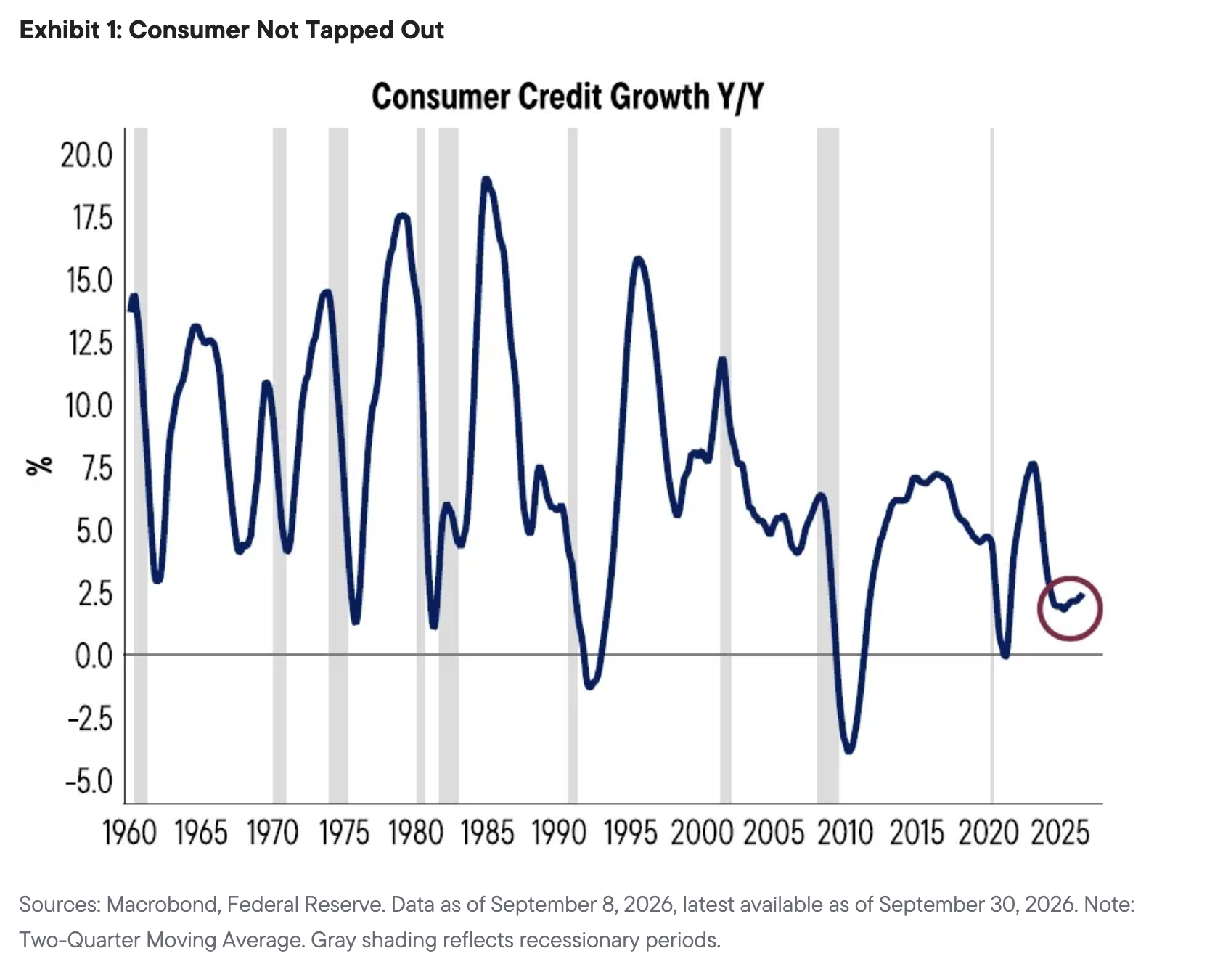
Additionally, consumers in aggregate have strong balance sheets and should be able to absorb modestly higher borrowing costs without cutting back on spending. For struggling consumers, untapped borrowing capacity could act as a buffer to support consumption—over the past few years, consumer credit has been growing at the weakest non-recessionary levels in history.
See more: Should the Next Fed Move Impact Your Investment Strategy?
Higher Rates Come at a Moment of Strength
Markets have already priced in the new hiking cycle. Federal-funds futures have swung from expecting multiple rate cuts in February 2026 to pricing more than four total hikes today; the expected federal-funds rate for July 2027 has risen by 165 basis points over the same time frame. That repricing accounts for part of the recent rise in long-term Treasury yields.
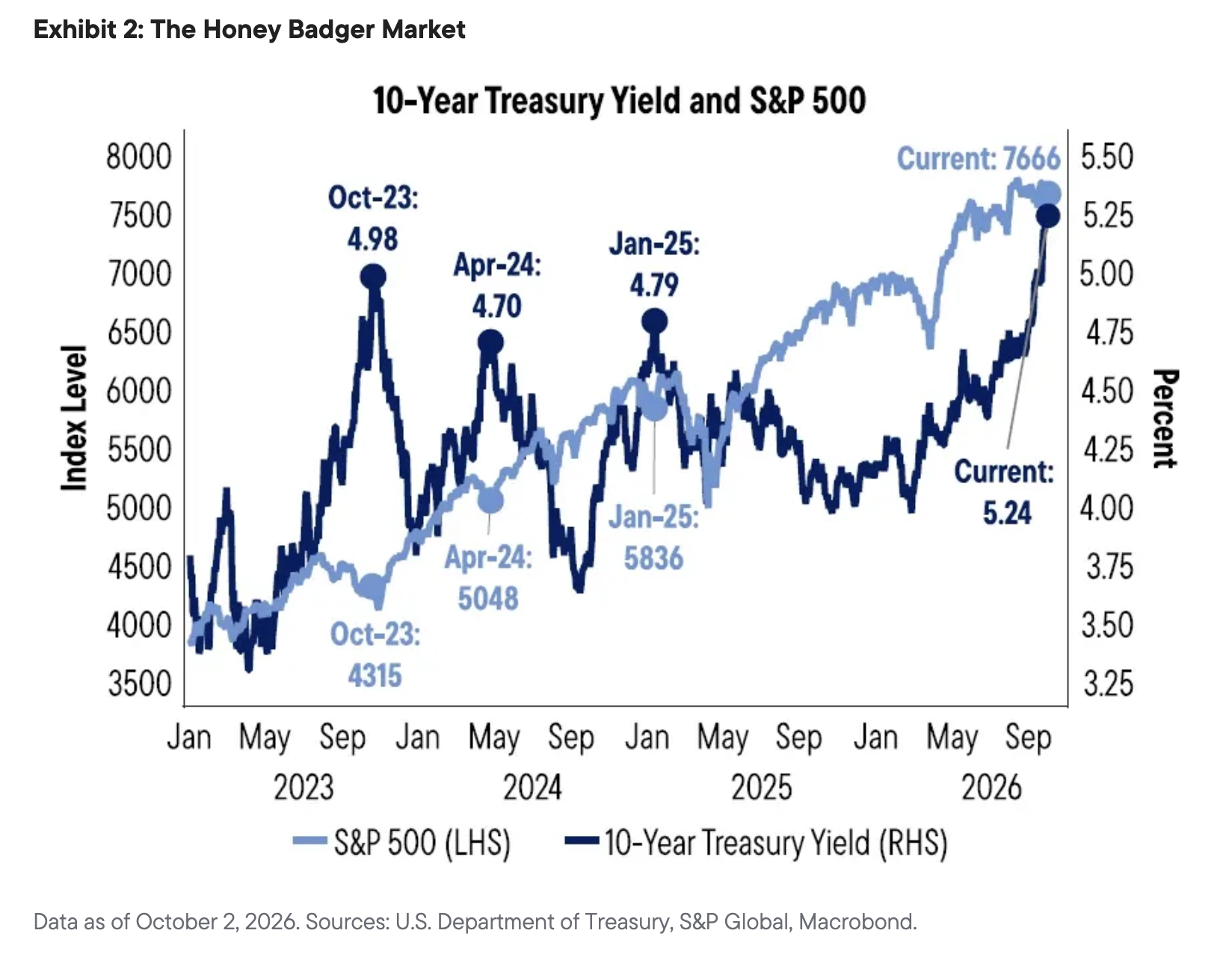
Expectations of additional hikes are not the only thing driving long-term rates higher: as we noted last month, the rise in longer-term bond yields can be characterized as normalization after the period of secular stagnation following the Global Financial Crisis (GFC). Importantly, investors have seen this higher-rate story before: the 10-year Treasury yield has spiked into the high 4% range in each year since the Fed’s 2022 hiking cycle began. Despite that headwind, the S&P 500 Index has continued to advance, with robust earnings growth more than offsetting the drag from contracting valuation multiples. Higher yields, in other words, have so far been a test the market has passed rather than a blow it could not absorb.
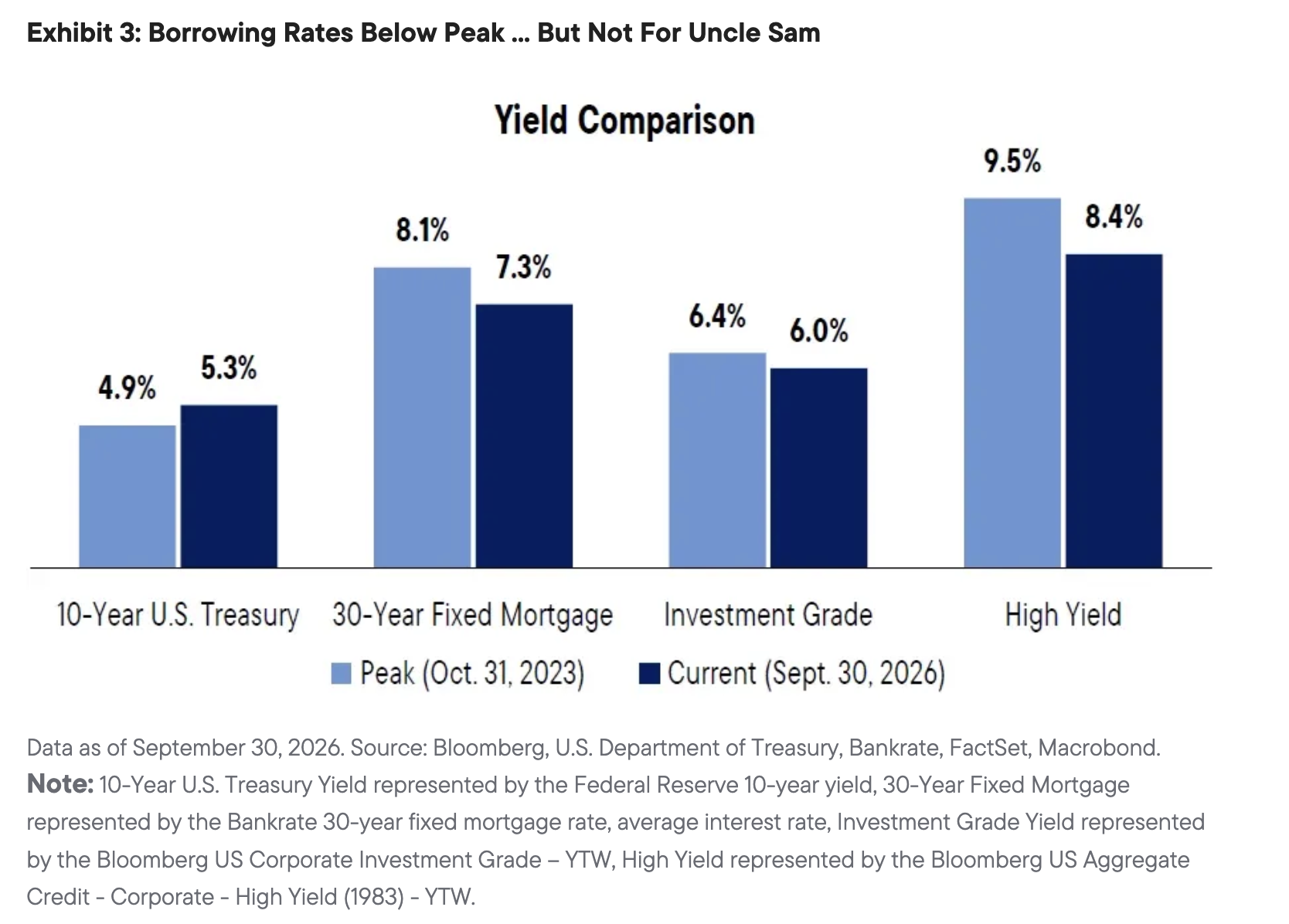
The 10-year yield is an incomplete guide to what credit actually costs in the real economy. Most of the borrowing rates that households and businesses pay remain below the peaks reached in 2023, the last time the 10-year neared 5%. Bankrate’s average 30-year fixed mortgage rate now stands at 7.3%, compared with 8.1% during that earlier peak. Investment-grade corporate bonds yield about 6.0% versus 6.4% in 2023, and high-yield bonds 8.4% versus 9.5%. These are the rates that consumers and businesses actually pay; they shape decisions to buy homes, fund expansions and refinance debt. With these rates still below peak levels seen just three years ago, we believe higher rates will weigh less on the underlying economy than the move in Treasurys alone suggests.
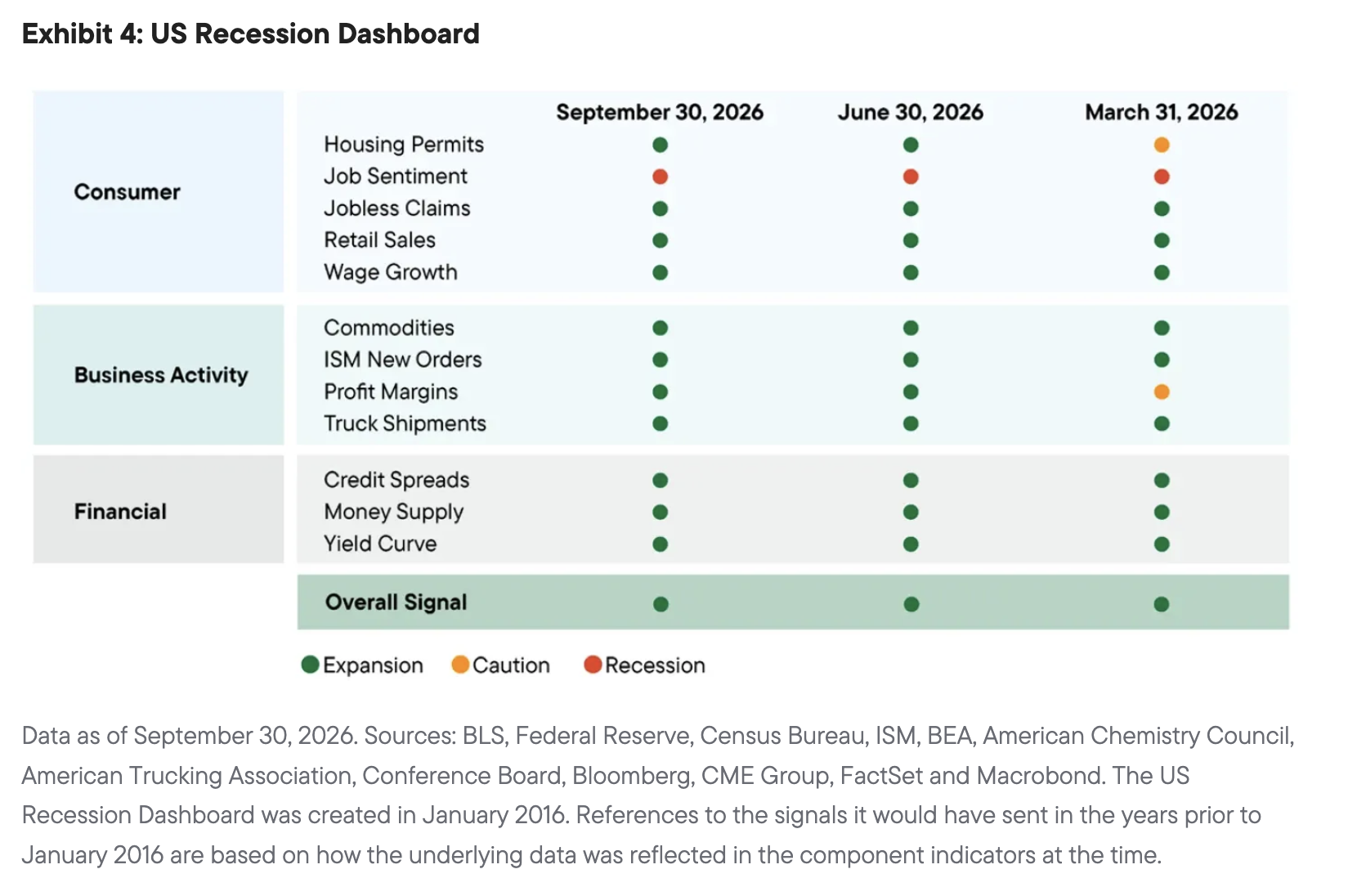
The beginning of a tightening cycle and the end of an economic cycle are typically separated by a considerable period. The recession, if one comes, is the product of the cumulative hiking cycle and how long rates are held in restrictive territory. The strength of the economy that the Fed is hiking into is a pivotal consideration when assessing the durability of an expansion during a hiking cycle. Thankfully, the starting point for this hiking cycle is one of strength for the US economy, as evidenced by the Recession Dashboard. At present, the dashboard sports a strong overall green expansionary signal with Job Sentiment the sole indicator in red territory. There were no individual indicator changes last month.
What often determines how much economic or market pain follows is the overall magnitude of the hike cycle. Tightening of 425 basis points (bps) in 2004–06 preceded the GFC, while the Fed raised rates by 525 bps in 2022–23. That latter hike cycle came at the fastest pace in four decades and pushed stocks into a bear market, although the economic expansion outlasted the monetary tightening and continues to the present day.
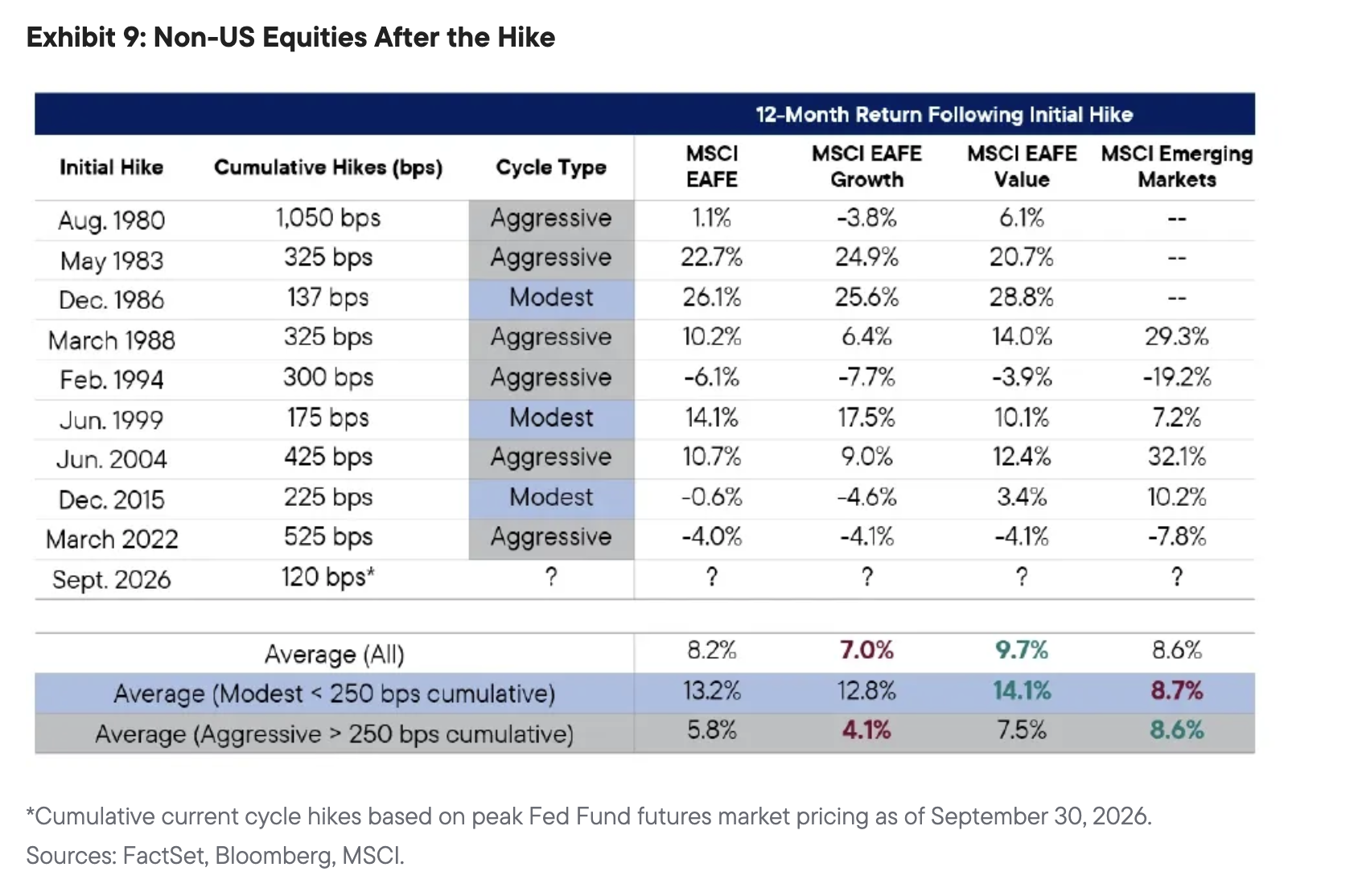
Today, federal-funds futures price roughly 115 bps of cumulative hikes occurring in just over one year, an even more aggressive path than what is implied by the “Fed dots.” If the market pricing comes to fruition, this hike cycle would be the most modest in modern history, which should limit economic damage. We believe this would also be conducive to the typical pattern of early volatility and modest multiple compression, followed by earnings-driven gains, playing out in the months following the initial hike.
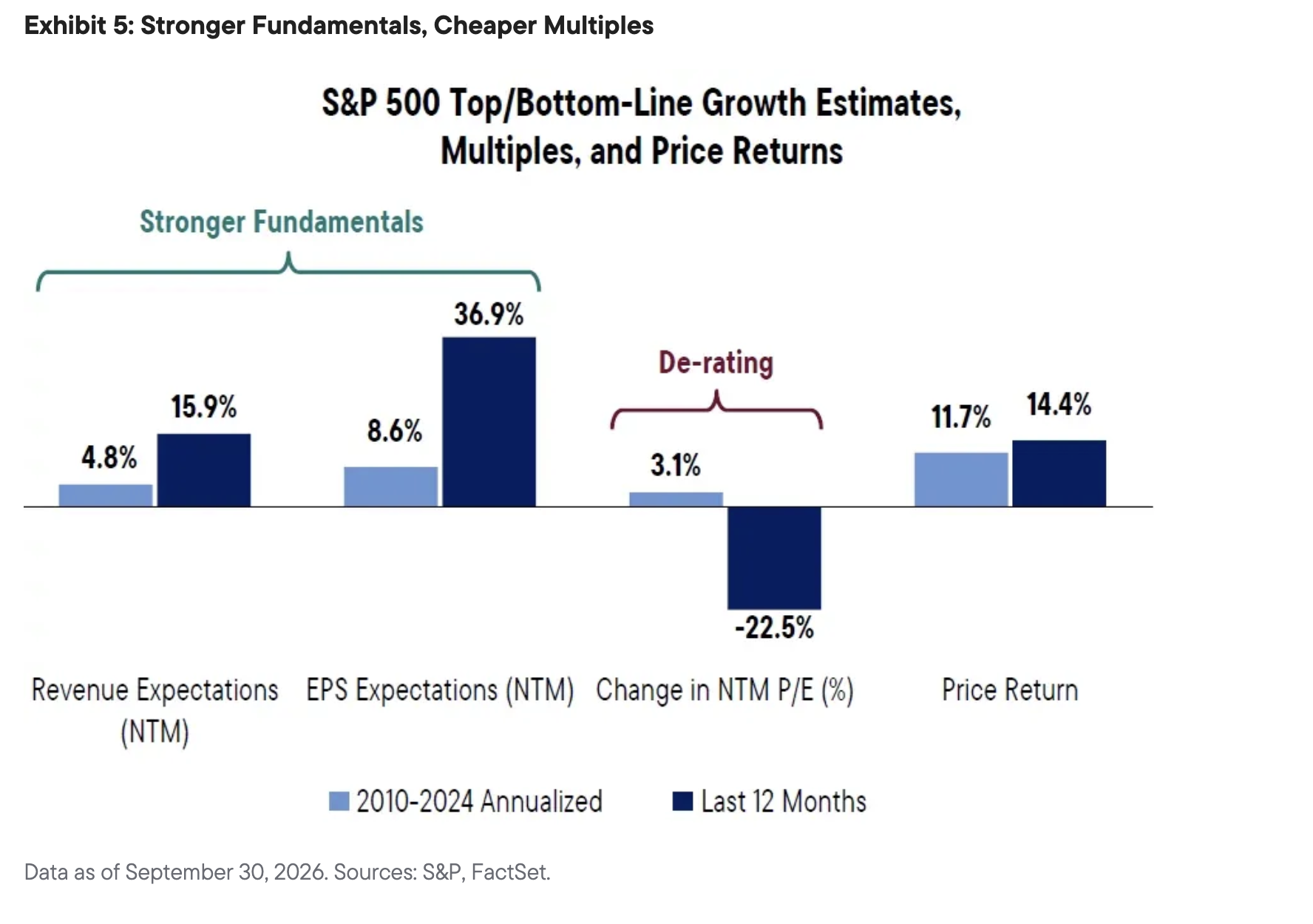
Market dynamics over the past year already resemble that pattern and look very different from the post-GFC era. Over the past 12 months the S&P 500 has been supported by materially stronger revenue and earnings growth expectations, while valuations have compressed rather than expanded. In our view, the opportunity presented by stronger fundamentals combined with P/E derating is attractive for long-term investors, should the underlying drivers of corporate profits remain healthy. With the potential for continued upside from AI spending and adoption, US equities may be poised to enter a new regime.
Strong Earnings Could Broaden the Market
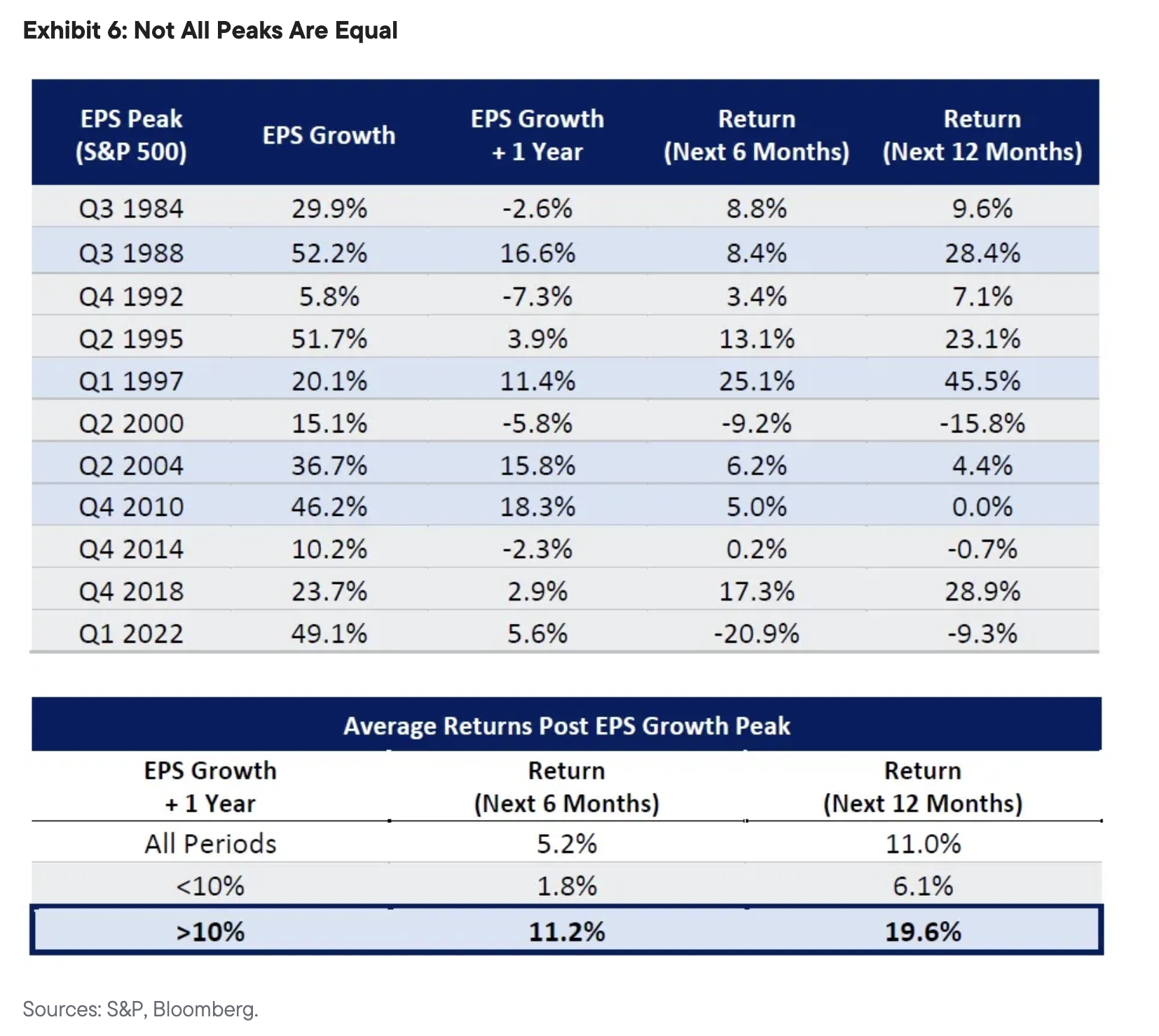
Investors often treat peak earnings growth like the first rate hike: a warning sign that the good times are ending. However, history shows that the peak itself is less important than where earnings settle afterward. Since 1980, the S&P 500 has returned 19.6% on average in the year after peak EPS growth when EPS growth remained above 10%, versus 6.1% when EPS growth slowed below 10%. Consensus suggests that peak EPS growth is upon us, but expectations for the next 12 months currently stand at 18.7%, comfortably above the 10% threshold and well within the stronger of the two historical cohorts.
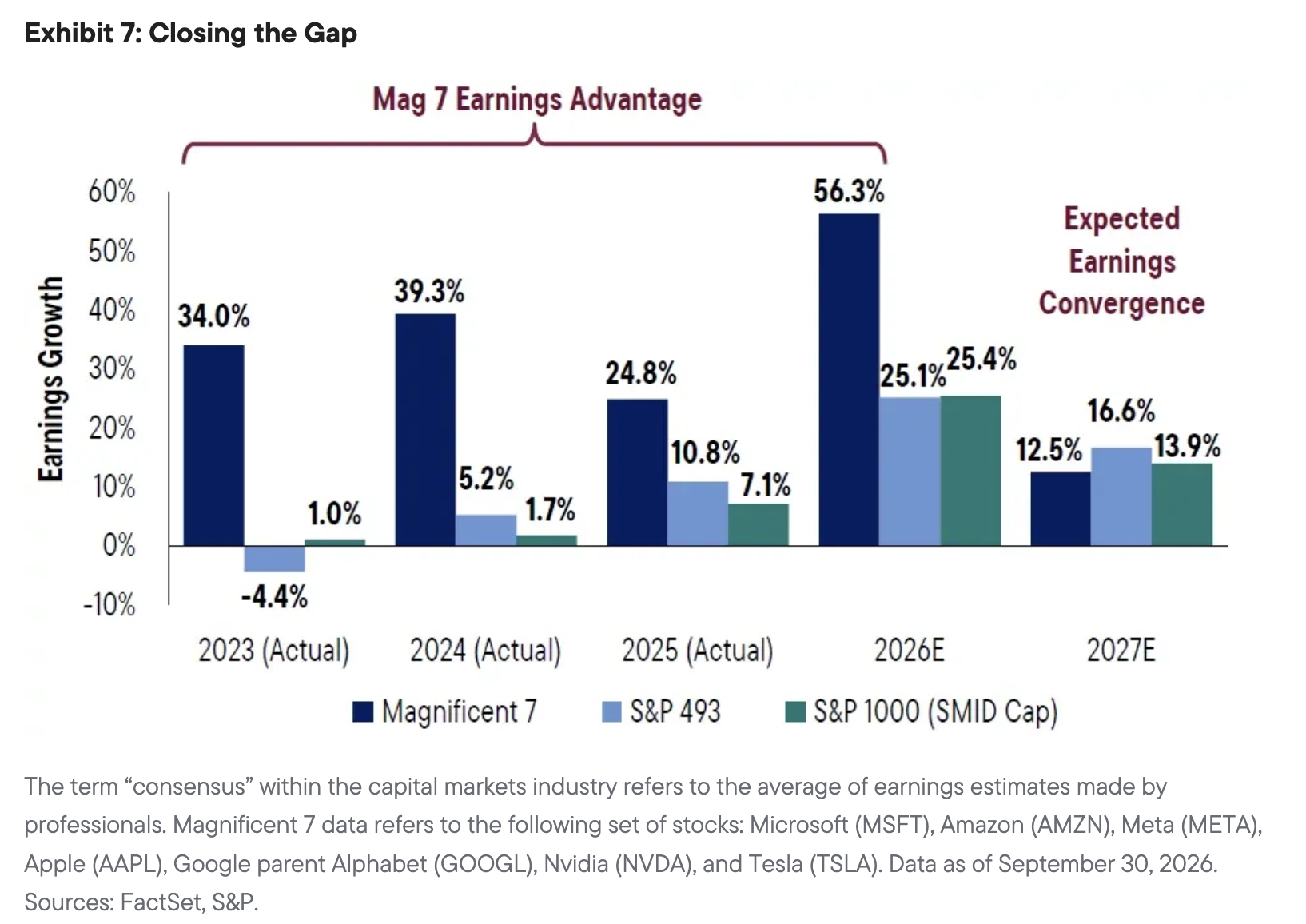
Where that earnings growth comes from matters tremendously for investors. The Magnificent Seven’s multiyear outperformance has rested on superior earnings growth that consistently outpaced the broader market, justifying elevated valuations and an outsize share of index returns. Consensus forecasts, however, show this earnings advantage is expected to fade in 2027 as growth for the S&P 493 and S&P 1000 (SMID) converges with the Magnificent Seven. A narrower gap could broaden market leadership as investors revisit areas that have lagged during the past few years of mega cap dominance.
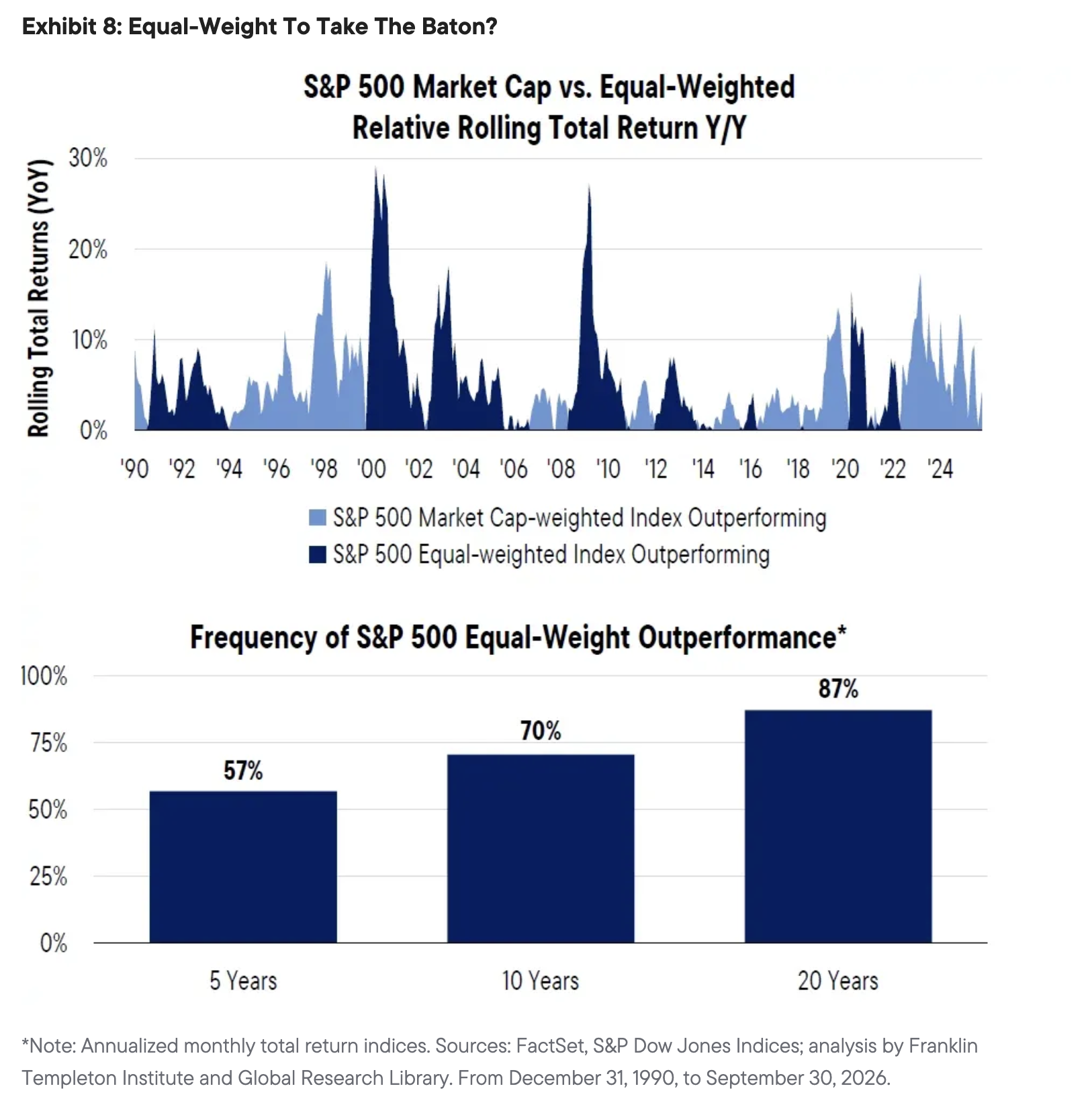
If realized, this shift would carry important implications for equal- versus cap-weighted leadership in the S&P 500, which has oscillated frequently throughout history. Although the past decade has predominately witnessed cap-weighted leadership, history shows that equal-weight could be poised to reclaim the baton. Since 1990, the S&P 500 Equal Weight Index has outperformed 70% of the time during rolling 10-year periods, as concentrated leadership has tended to give way to broader participation. If the Magnificent Seven versus S&P 493 earnings gap keeps narrowing as expected, we believe the backdrop would become increasingly supportive of a sustained period of equal-weight outperformance.
The case for broadening also extends beyond US borders. Historically, non-US equities have proven resilient in the year following the start of a Fed rate hike cycle, though the magnitude of the cycle is an important factor. A shallower hike cycle is less likely to tighten global financial conditions than an aggressive one while rate hike expectations for this cycle remain modest by historical standards. Even if the market is directionally but not precisely right about the size of this cycle, history suggests that non-US developed equities could see outsize benefits, giving investors another way to participate in broadening market leadership.
First Hike Is Not a Fatal Blow
With all of that said, the adage about the Fed and bull markets still holds. The Fed may kill bull markets in the end, but the first hike is not the fatal blow. We believe the adage is most useful in pointing investors toward general, not specific, parts of the cycle. A deeper analysis shows that the danger zone for investors typically comes after the Fed has finished hiking interest rates, when monetary policy is well into restrictive territory and the long and variable lags have passed.
Signs that tighter policy is biting include an inverted yield curve, widening credit spreads and a rollover in leading indicators of employment and activity. None of these classic signs are evident today and, in our view, a modest hiking cycle (if realized) won’t materially dent today’s resilient economic backdrop in the year ahead.
This next chapter of the ongoing economic expansion, one marked by tightening policy, has historically rewarded investors who stay focused on earnings, watch for late-cycle warnings and take advantage of the volatility that typically follows an initial hike. An updated version of the adage that old age doesn’t kill bull markets should probably include something to the effect that a young hiking cycle rarely does either.
Jeffrey Schulze, CFA, Head of Investment Strategist
DEFINITIONS
The S&P 500® Index is an unmanaged index of 500 stocks that is generally representative of the performance of larger companies in the United States. The S&P 493 excludes the magnificent 7 stocks.
The S&P 500® Equal Weight Index (EWI) is the equal-weight version of the widely-used S&P 500. The index includes the same constituents as the capitalization weighted S&P 500, but each company in the S&P 500 EWI is allocated a fixed weight - or 0.2% of the index total at each quarterly rebalance.
The S&P 1000® Index combines the S&P MidCap 400® and the S&P SmallCap 600® to form an investable benchmark for the mid- to small-cap segment of the US equity market.
WHAT ARE THE RISKS?
All investments involve risks, including possible loss of principal. Past performance is no guarantee of future results. Please note that an investor cannot invest directly in an index. Unmanaged index returns do not reflect any fees, expenses or sales charges.
Equity securities are subject to price fluctuation and possible loss of principal. Large-capitalization companies may fall out of favor with investors based on market and economic conditions. Small- and mid-cap stocks involve greater risks and volatility than large-cap stocks.
Commodities and currencies contain heightened risk that include market, political, regulatory, and natural conditions and may not be suitable for all investors.
US Treasuries are direct debt obligations issued and backed by the “full faith and credit” of the US government. The US government guarantees the principal and interest payments on US Treasuries when the securities are held to maturity. Unlike US Treasuries, debt securities issued by the federal agencies and instrumentalities and related investments may or may not be backed by the full faith and credit of the US government. Even when the US government guarantees principal and interest payments on securities, this guarantee does not apply to losses resulting from declines in the market value of these securities.
Important Information
This material is intended to be of general interest only and should not be construed as individual investment advice or a recommendation or solicitation to buy, sell or hold any security or to adopt any investment strategy. It does not constitute legal or tax advice. This material may not be reproduced, distributed or published without prior written permission from Franklin Templeton.
The views expressed are those of the investment manager and the comments, opinions and analyses are rendered as at publication date and may change without notice. The underlying assumptions and these views are subject to change based on market and other conditions and may differ from other portfolio managers or of the firm as a whole. The information provided in this material is not intended as a complete analysis of every material fact regarding any country, region or market. There is no assurance that any prediction, projection or forecast on the economy, stock market, bond market or the economic trends of the markets will be realized. The value of investments and the income from them can go down as well as up and you may not get back the full amount that you invested. Past performance is not necessarily indicative nor a guarantee of future performance. All investments involve risks, including possible loss of principal.
Any research and analysis contained in this material has been procured by Franklin Templeton for its own purposes and may be acted upon in that connection and, as such, is provided to you incidentally. Data from third party sources may have been used in the preparation of this material and Franklin Templeton ("FT") has not independently verified, validated or audited such data. Although information has been obtained from sources that Franklin Templeton believes to be reliable, no guarantee can be given as to its accuracy and such information may be incomplete or condensed and may be subject to change at any time without notice. The mention of any individual securities should neither constitute nor be construed as a recommendation to purchase, hold or sell any securities, and the information provided regarding such individual securities (if any) is not a sufficient basis upon which to make an investment decision. FT accepts no liability whatsoever for any loss arising from use of this information and reliance upon the comments, opinions and analyses in the material is at the sole discretion of the user.
Franklin Templeton has environmental, social and governance (ESG) capabilities; however, not all strategies or products for a strategy consider “ESG” as part of their investment process.
Products, services and information may not be available in all jurisdictions and are offered outside the U.S. by other FT affiliates and/or their distributors as local laws and regulation permits. Please consult your own financial professional or Franklin Templeton institutional contact for further information on availability of products and services in your jurisdiction.
Issued in the U.S. by Franklin Templeton, One Franklin Parkway, San Mateo, California 94403-1906, (800) DIAL BEN/342-5236, franklintempleton.com. Investments are not FDIC insured; may lose value; and are not bank guaranteed.
You need Adobe Acrobat Reader to view and print PDF documents. Download a free version from Adobe's website.
CFA® and Chartered Financial Analyst® are trademarks owned by CFA Institute.
A message from Advisor Perspectives and VettaFi: Discover something new! Click here to register for our upcoming webcasts.
© ClearBridge Investments
More Closed End Funds Topics >