Across the world, nations are dealing with rising costs from energy and debt service. These costs are compounding as time goes on.
The conflict in the Middle East has settled into a prolonged stalemate, while kinetic activity in the Russia-Ukraine war carries on. Combined, the losses of energy export and refining capacity have created a global surge in the cost of fossil fuel products. Price pressures have broadened beyond energy, adding upward pressure to bond yields and bringing most central banks back to a tightening posture.
This comes at a bad time for governments. Debt service costs are rising just as elected leaders seek more fiscal headroom to support their economies.
Despite these headwinds, advanced economies have maintained momentum. While risks are rising, we expect growth to remain resilient.
See more: Neutral Rates Nosing Up
Following are our outlooks for the world’s major markets.
United States
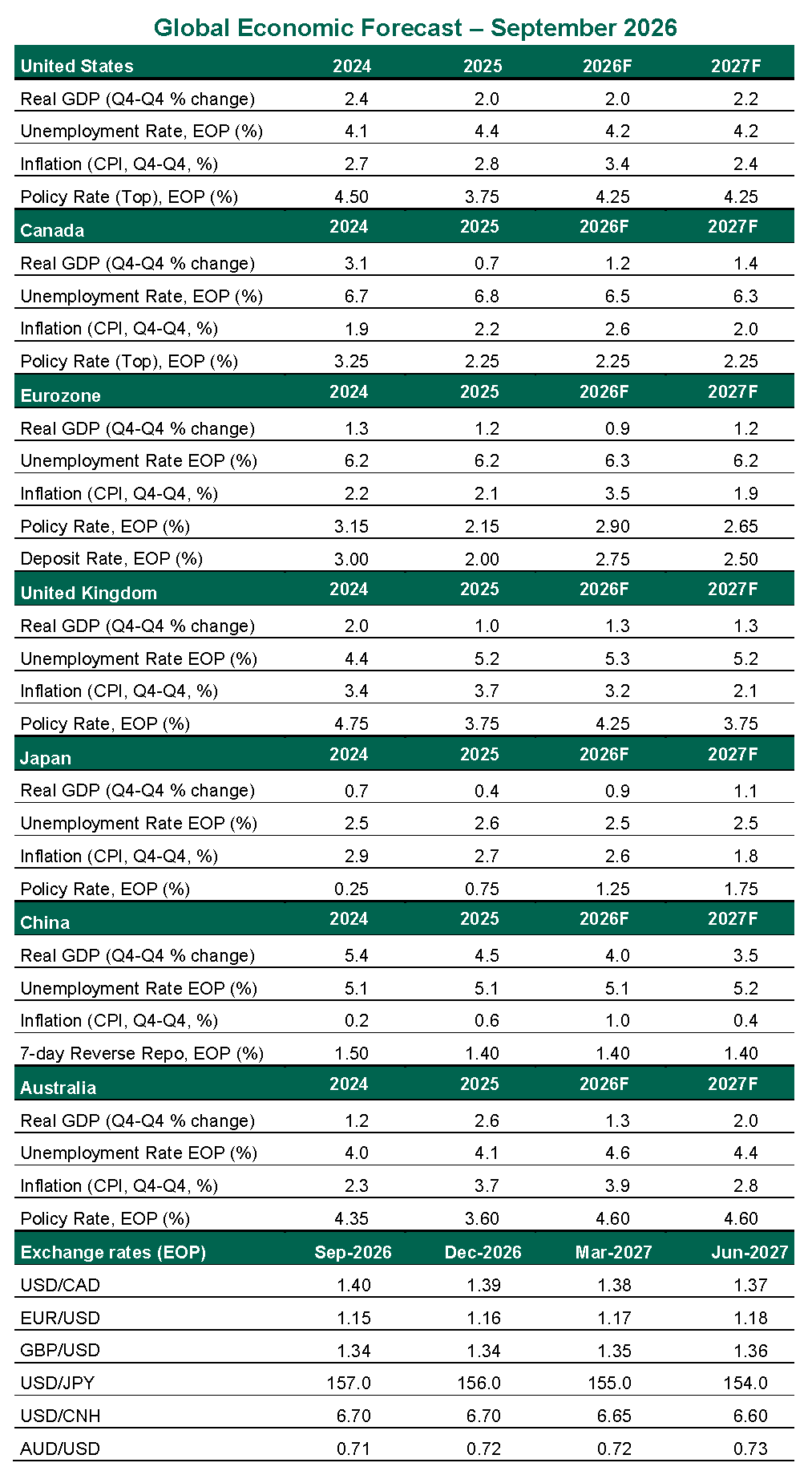
- The U.S. economy continues to perform well. The August employment report showed a surprisingly strong gain of 162,000 jobs, with upward revisions to prior months. Weekly unemployment claims confirm a labor market that is not slowing. Consumer spending has stayed resilient, along with business investment. However, concerns about inflation are weighing on popular sentiment. The August consumer price index (CPI) was little changed at 2.4% over the past year, or 3.4% core (excluding food and energy). Inflation, robust credit demand, and a wide budget deficit are depressing bond prices.
- The Federal Reserve could not ignore persistent inflation and the rise in the yield curve, raising the Fed Funds Rate by 25 basis points at its September meeting. We anticipate one additional hike in the fourth quarter, with a risk of further tightening if prices show signs of reheating.
China
- China has been well-insulated from most global challenges, possessing ample strategic reserves of key commodities. However, the nation’s growth outlook has not improved. Policy in the 15th Five-Year Plan to improve consumption and investment will take time to implement; the housing and retail sectors remain moribund. China’s borrowing costs have been tame, with longer-term bond yields falling in the wake of persistently weak data. After a deflationary interval, consumer price inflation is hovering below 1%. Exports remain the sole bright spot, accelerating more than 18% year over year in August, amid relentless demand for technology products. A broader revival of growth will require a concerted investment plan that is only starting to take shape.
- President Xi’s visit to meet President Trump produced few tangible outcomes. The trade truce extension of only two months to January 2027 is likely to be extended further. Dialogue may continue, but difficult issues around AI advancements, Taiwan and terms of trade will keep the relationship tense.
Australia
- With limited natural reserves and refining capacity, Australia depends on imports for over 90% of its energy needs, making the nation especially susceptible to energy shocks. Inflation is set to rise further from the second quarter measure of 3.9%, and government bond yields are climbing in tandem. The unemployment rate has trended up to 4.6% in August from 4.1% to start the year. The high cost of living and falling property prices have damaged confidence and put domestic demand into a cooler trend.
- The Reserve Bank of Australia has been quick to react to inflationary risks, raising rates in March and May; we expect the job is not finished, with one more hike in store this year. With firm inflation even before the Middle East conflict, and a high demand for investment to reduce oil dependency pushing up the nation’s neutral rate, we do not see a path to lower rates in the year to follow.
A message from Advisor Perspectives and VettaFi: Discover something new! Click here to register for our upcoming webcasts.
Information is not intended to be and should not be construed as an offer, solicitation or recommendation with respect to any transaction and should not be treated as legal advice, investment advice or tax advice. Under no circumstances should you rely upon this information as a substitute for obtaining specific legal or tax advice from your own professional legal or tax advisors. Information is subject to change based on market or other conditions and is not intended to influence your investment decisions.
© 2026 Northern Trust Corporation. Head Office: 50 South La Salle Street, Chicago, Illinois 60603 U.S.A. Incorporated with limited liability in the U.S. Products and services provided by subsidiaries of Northern Trust Corporation may vary in different markets and are offered in accordance with local regulation. For legal and regulatory information about individual market offices, visit northerntrust.com/terms-and-conditions.
© Northern Trust
More Alternative Investments Topics >